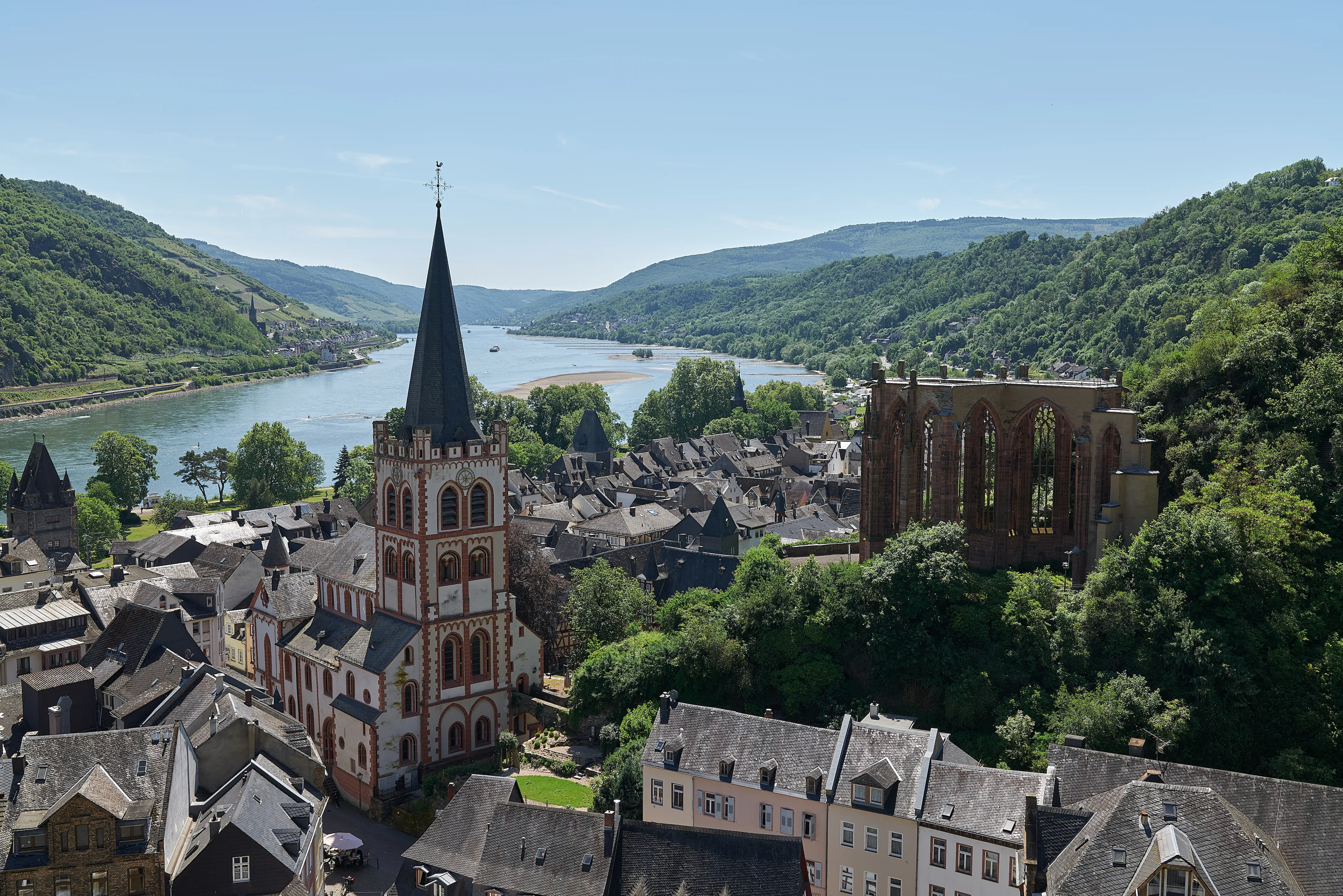
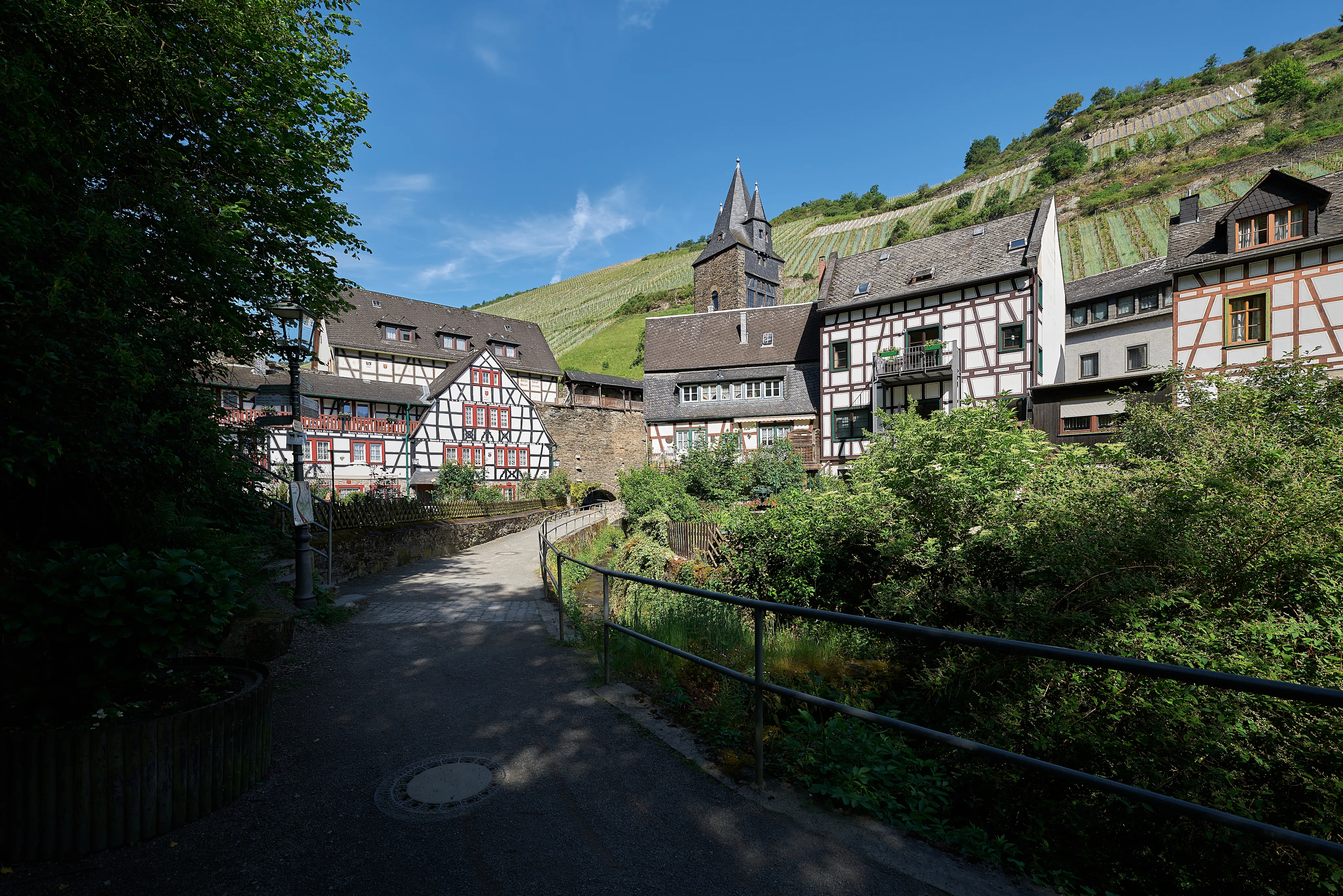
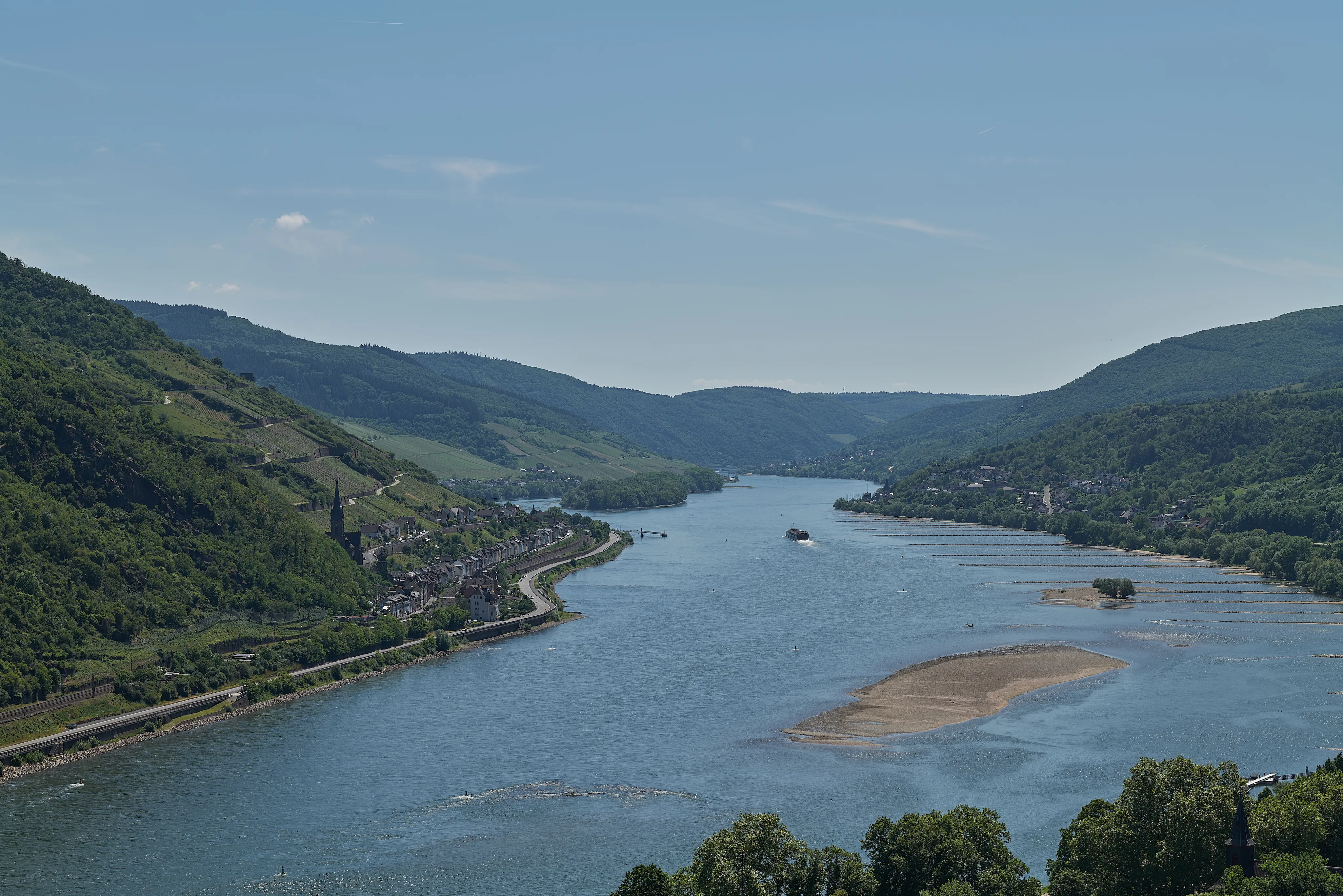
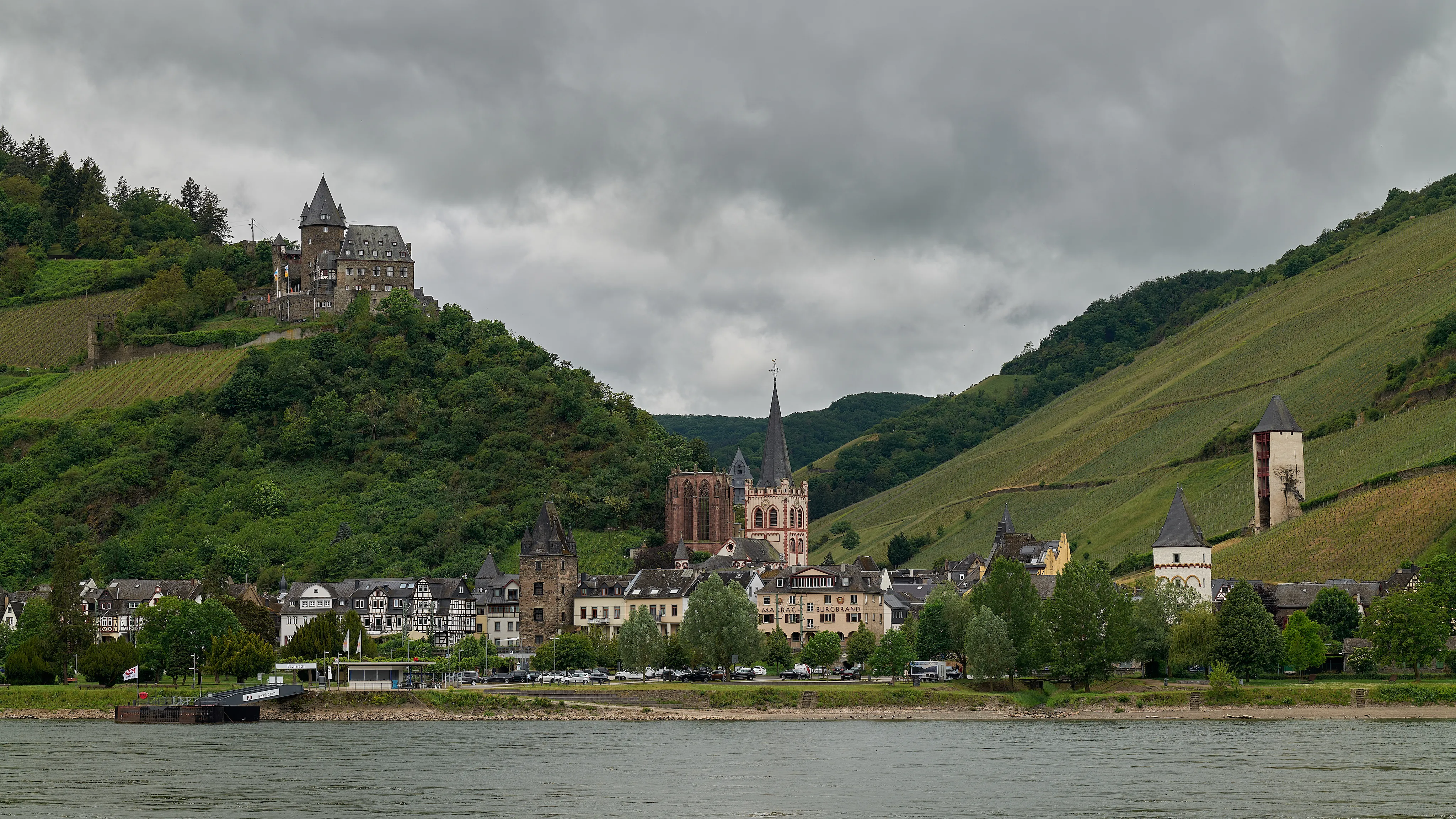
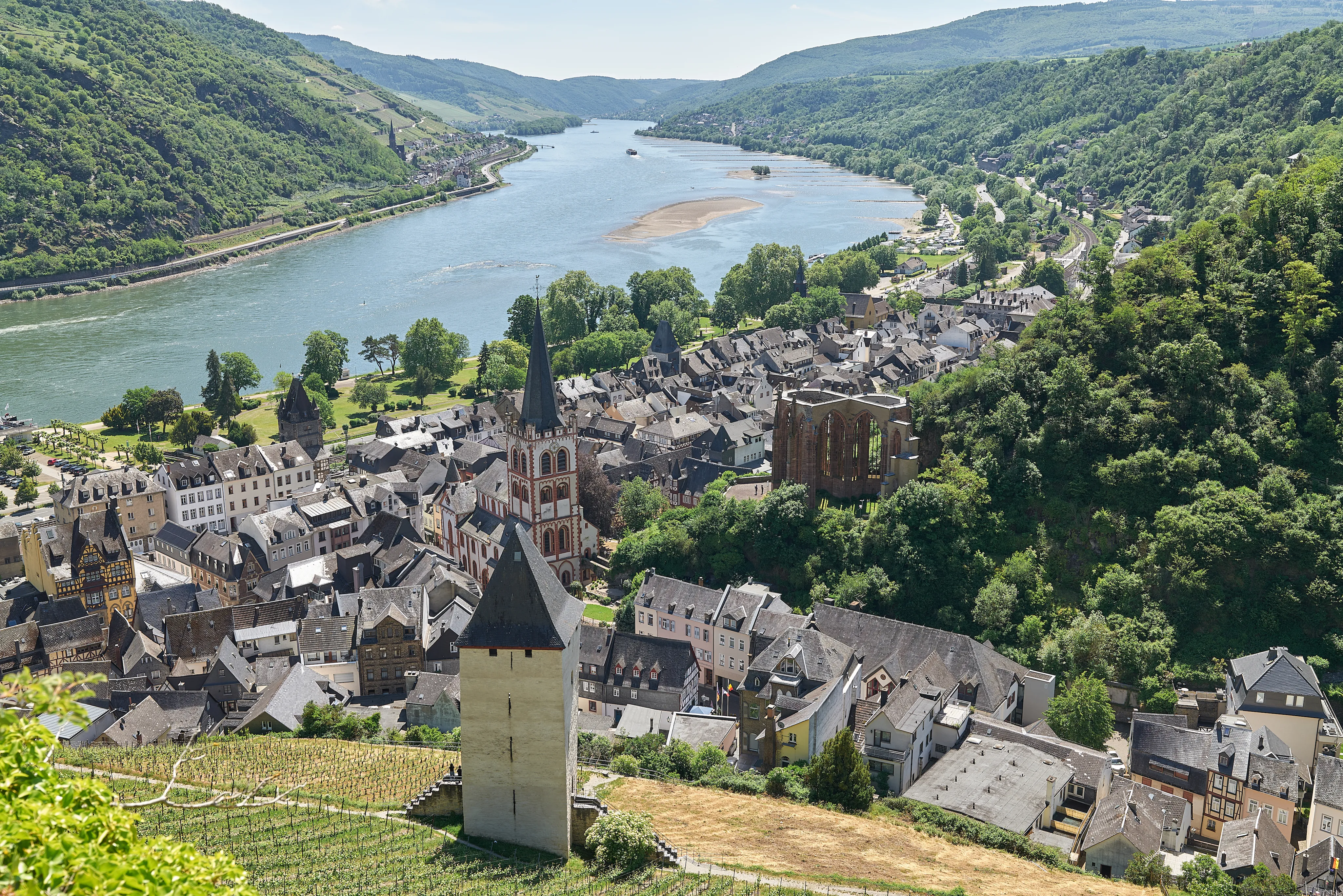
Bacharach is a small town on the left bank of the Rhine that is easy to miss if you simply rush along the road beside the river or sail past on a ferry without stepping ashore. But once you stop, set foot on a cobbled street and allow yourself to get lost in its alleys, it gets under your skin forever. There is no loud tourist glitter here, no desire to show off for the cameras. Bacharach simply lives. For more than a thousand years it has stood in its place, where the Steeg and Rhine valleys meet, and it seems that time does not flow here but slowly circles, like autumn mist over the vineyards.
The town does not try to be the most beautiful in the Middle Rhine Valley. It simply is — whole, a little weathered by the centuries, yet astonishingly alive. It is part of the UNESCO World Heritage list together with this entire remarkable valley, but unlike its more hyped neighbours, there is no sense of a stage set here. Bacharach feels like a place where the medieval layout still dictates the rhythm of life: narrow streets, steep climbs, the smell of old stone and of the wine that has been made and drunk here since Roman times.
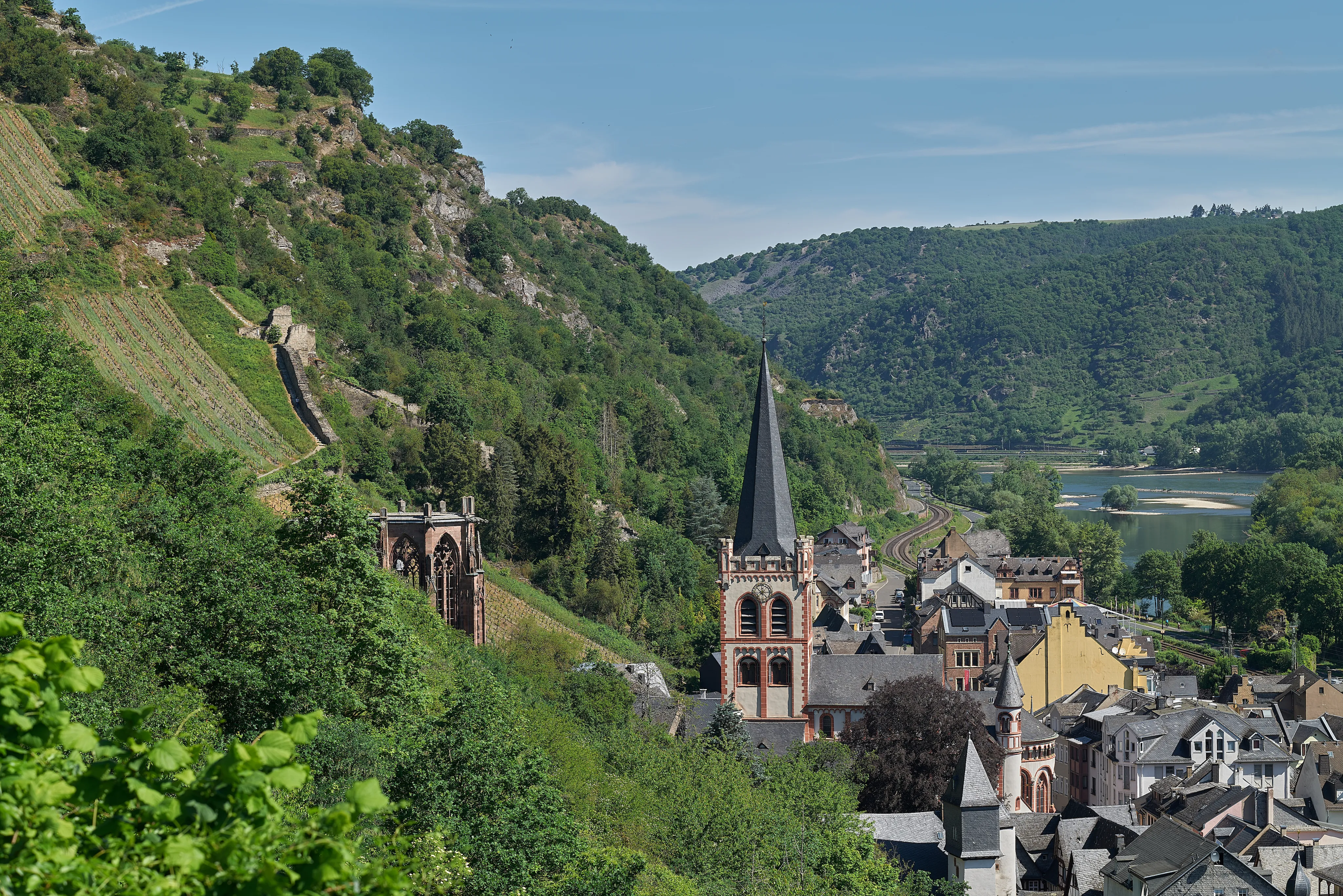
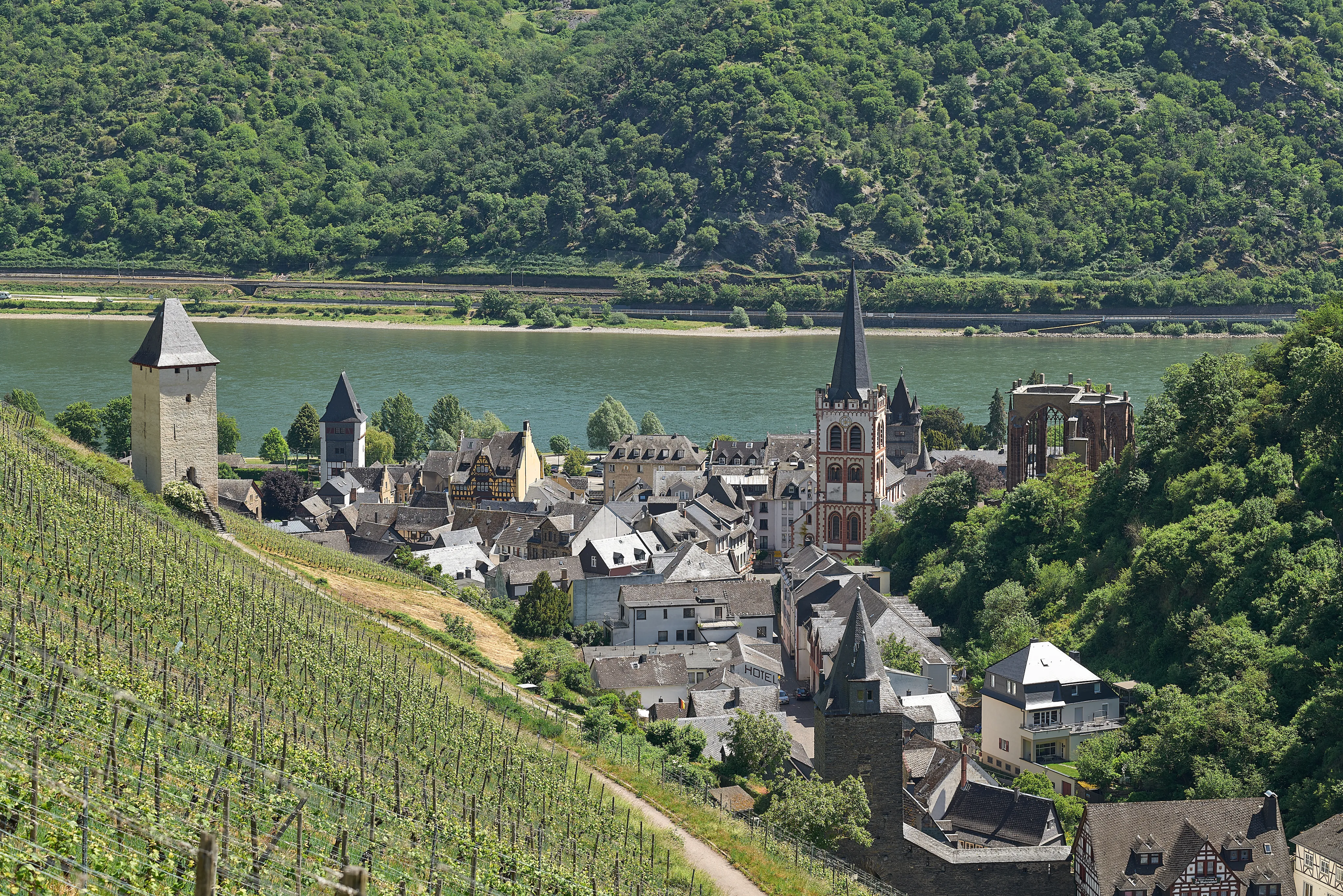
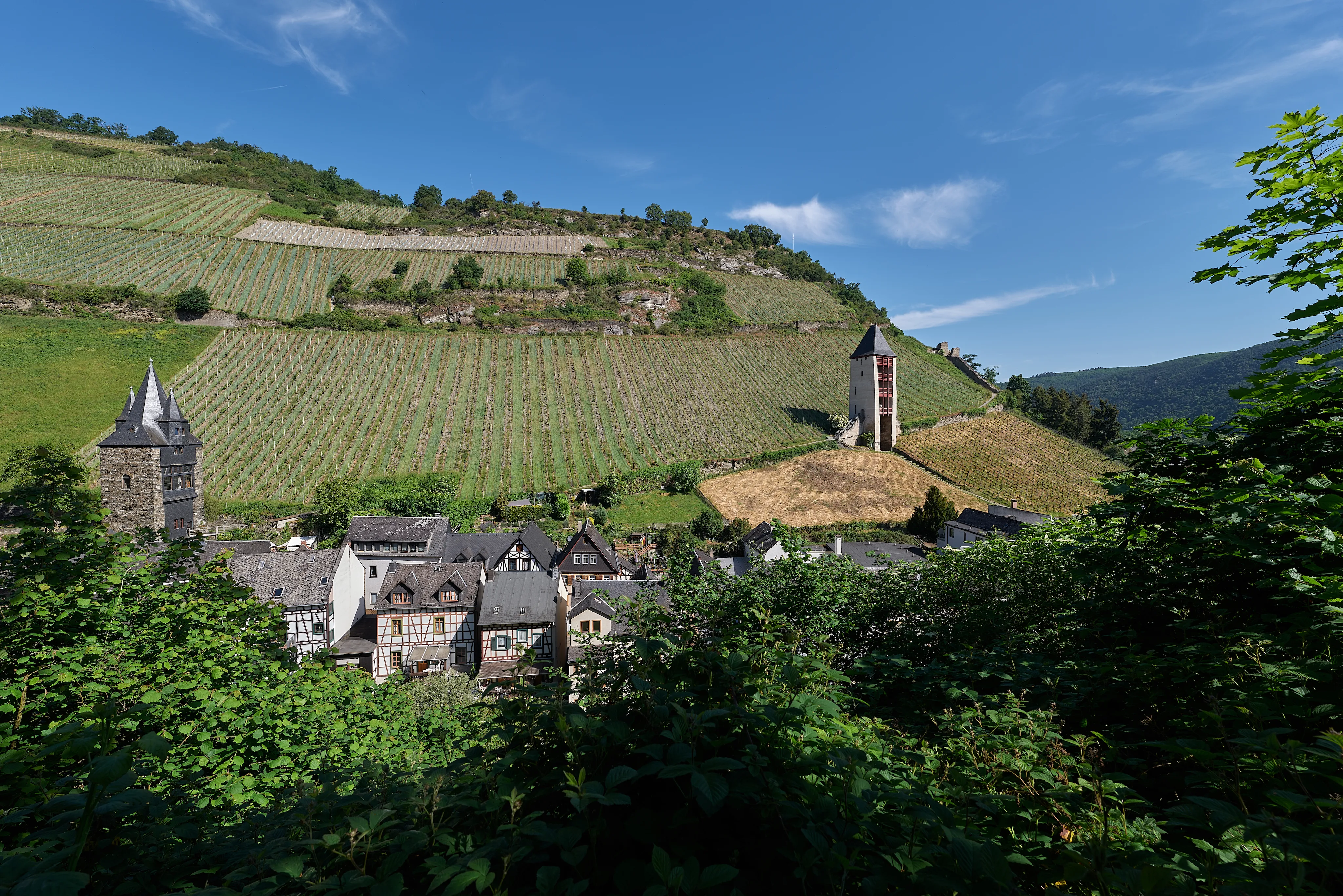
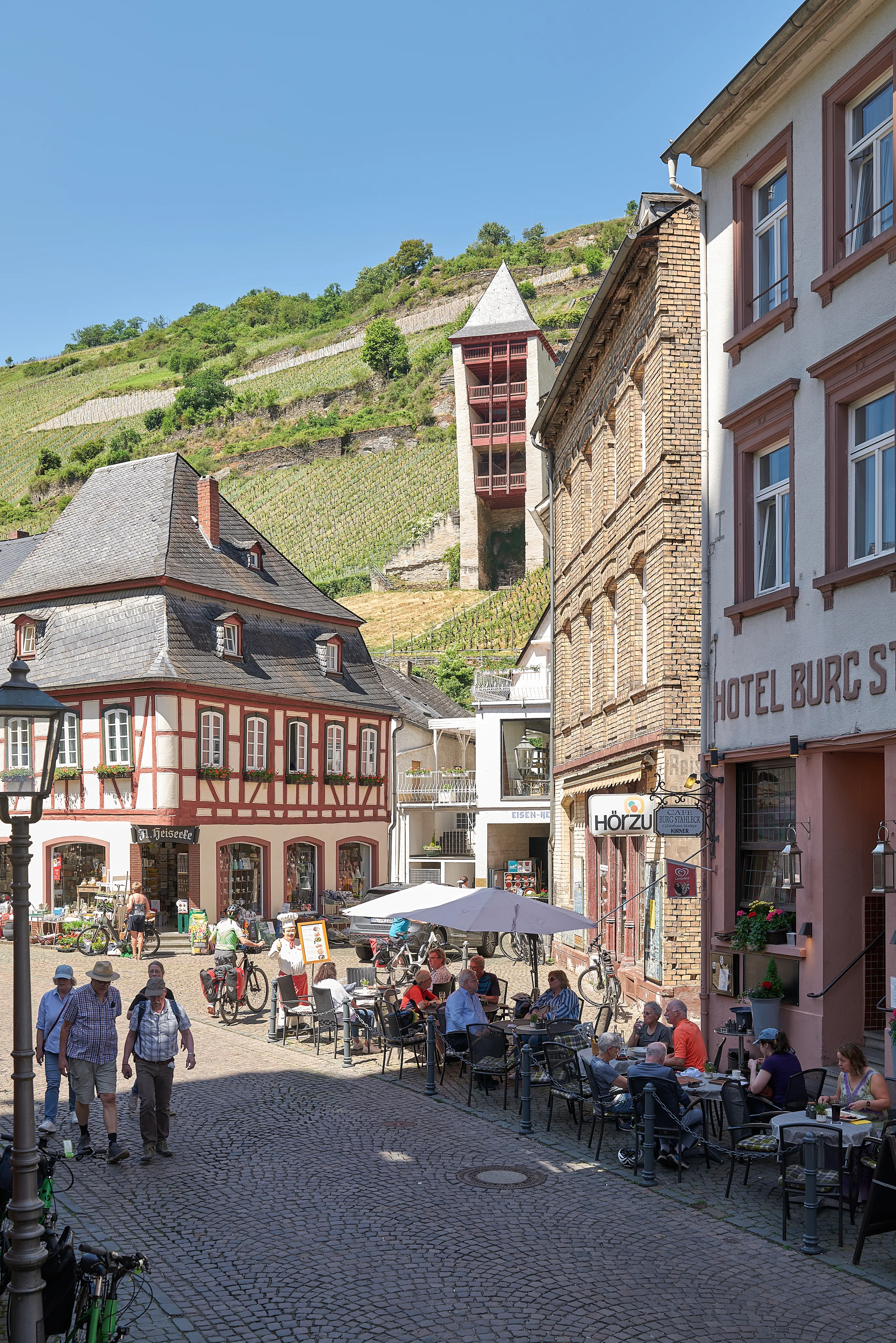
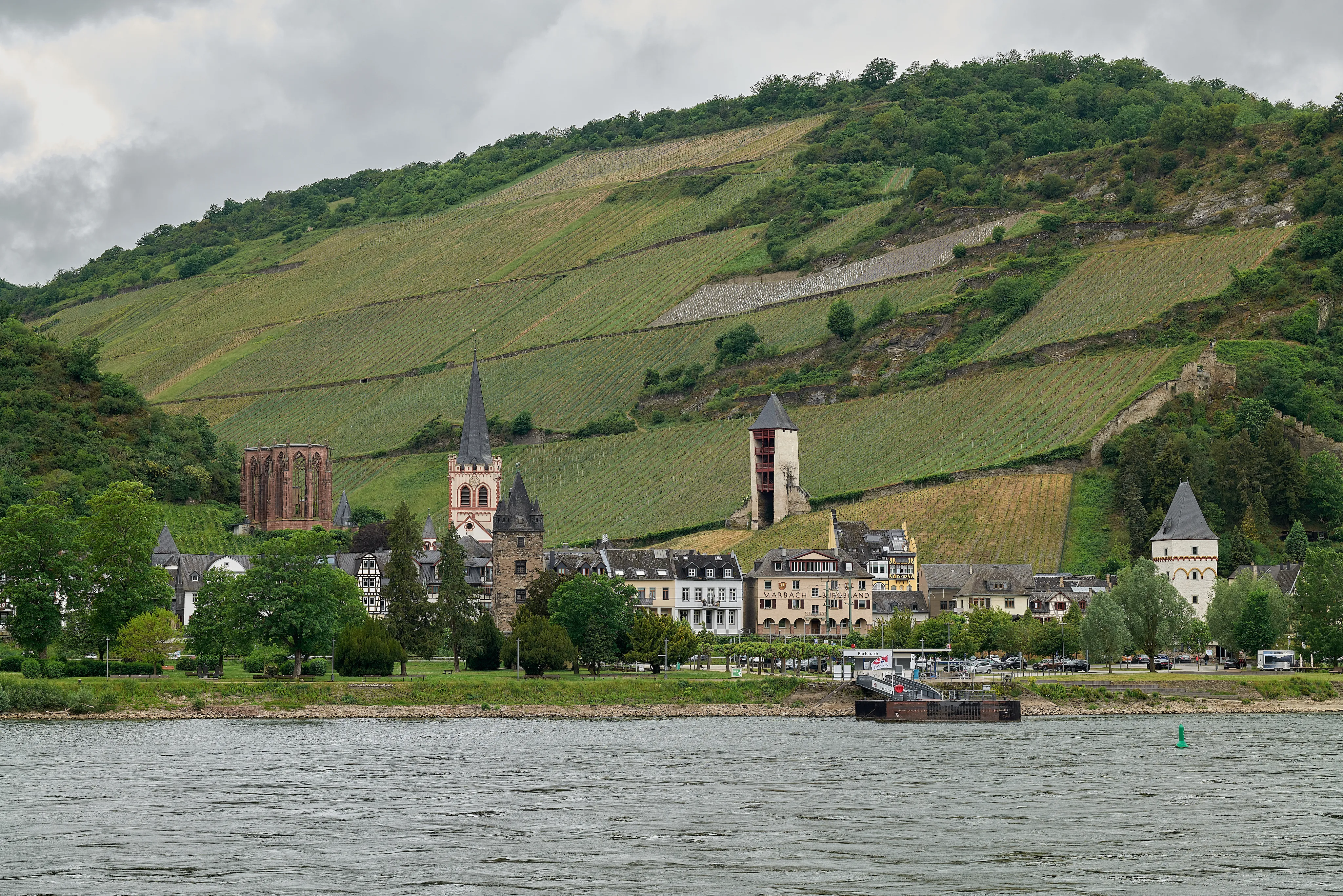
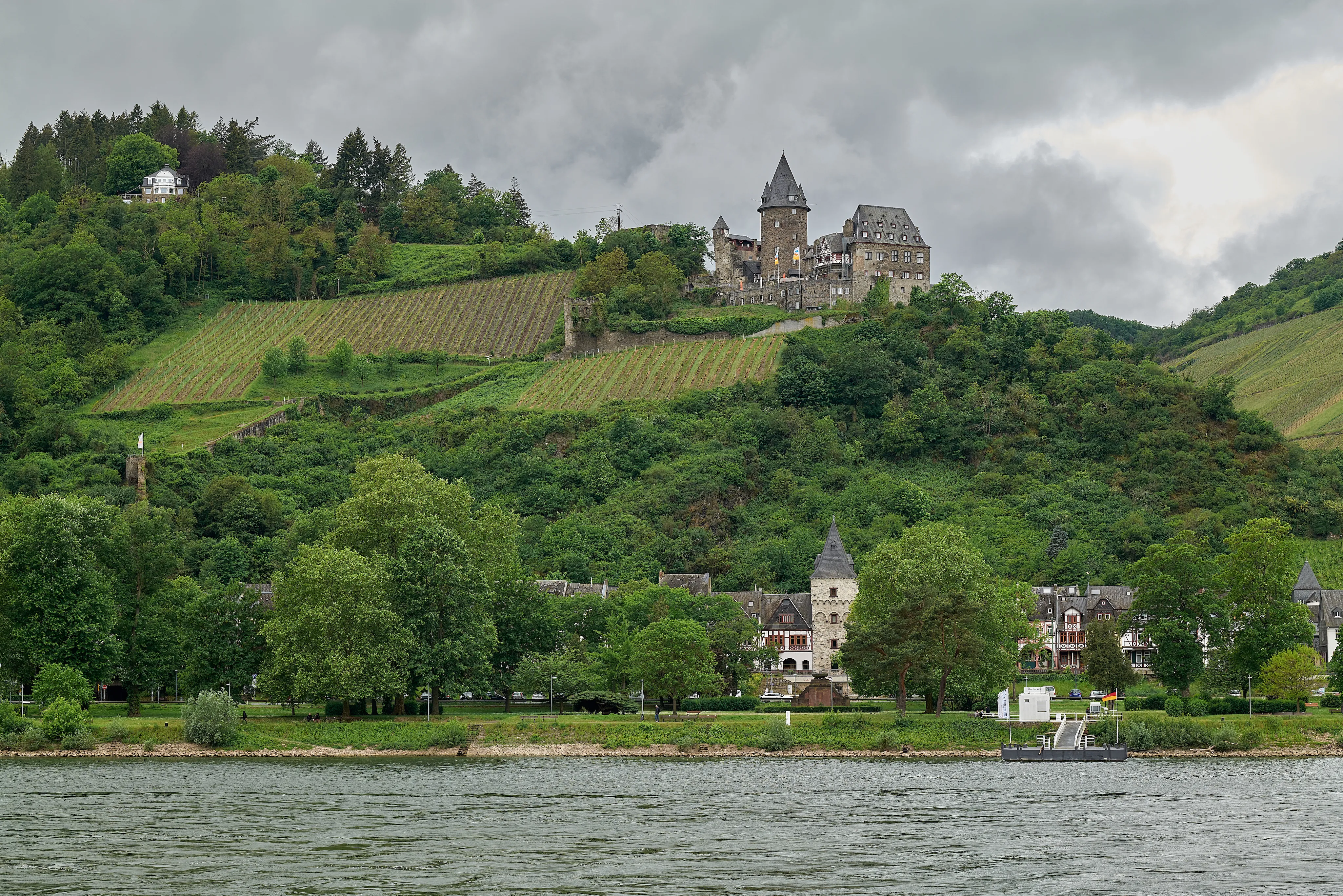
According to one version, the town’s name goes back to an “altar of Bacchus” — the Roman god of wine. And this is not merely a pretty legend. Vineyards have covered the steep slopes around Bacharach from time immemorial. Already in Celtic and Roman times the vine was cultivated here, and in the Middle Ages the town became one of the main centres of Rhine wine trade. Because of the dangerous stretch of river known as the Binger Loch, where large ships could not pass, barrels of wine were transshipped here: from small vessels onto larger ones. “Bacharacher” was the name given to this wine, and it was known far beyond Germany’s borders. It is said that even Pope Pius II preferred it and ordered it by the barrel to Rome. Today the Riesling from these slopes is still regarded as one of the most characteristic in the Middle Rhine region. The vineyards are not scenery. They are part of the town’s body. People walk among them and tend them by hand, because the slopes are too steep for machinery.
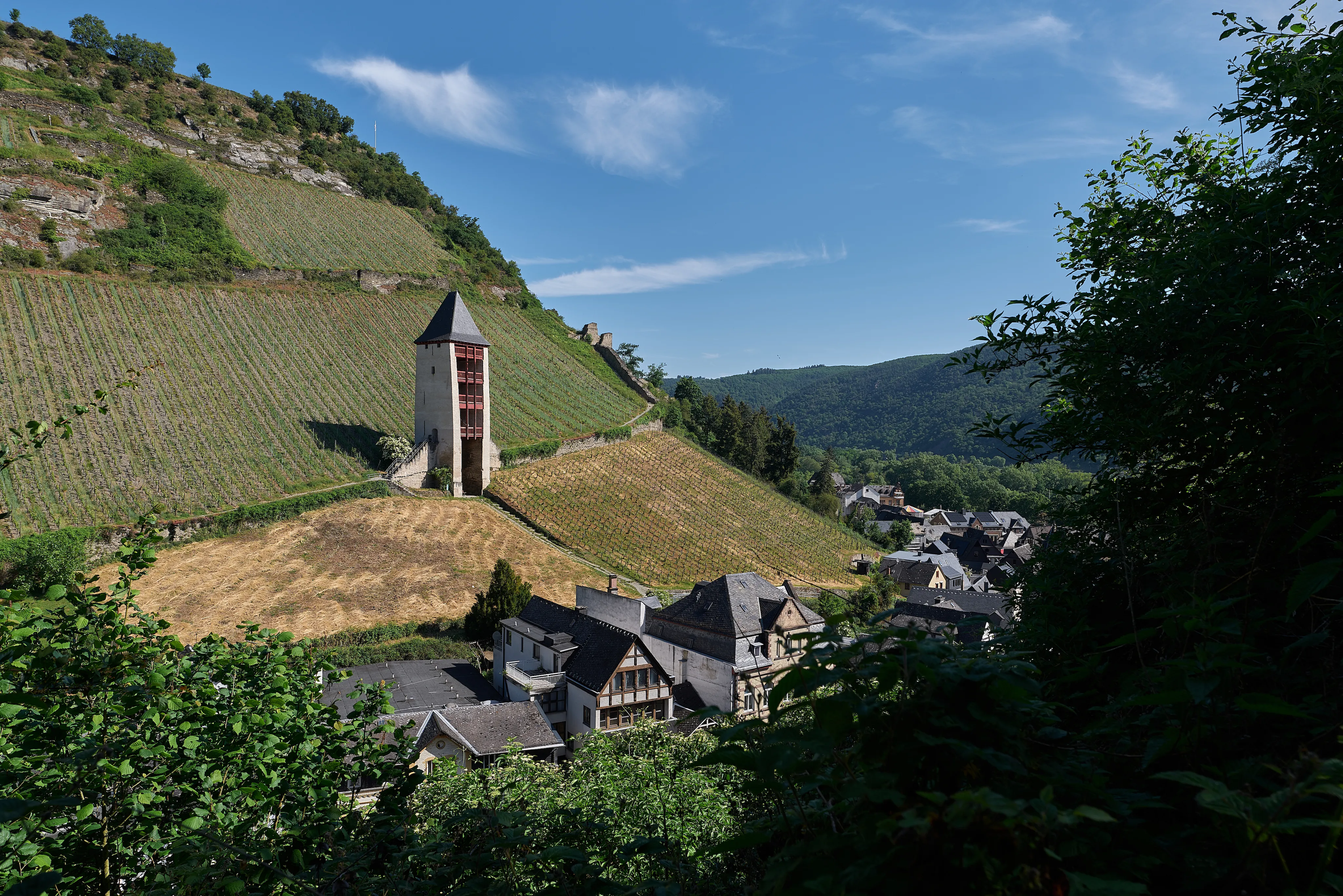
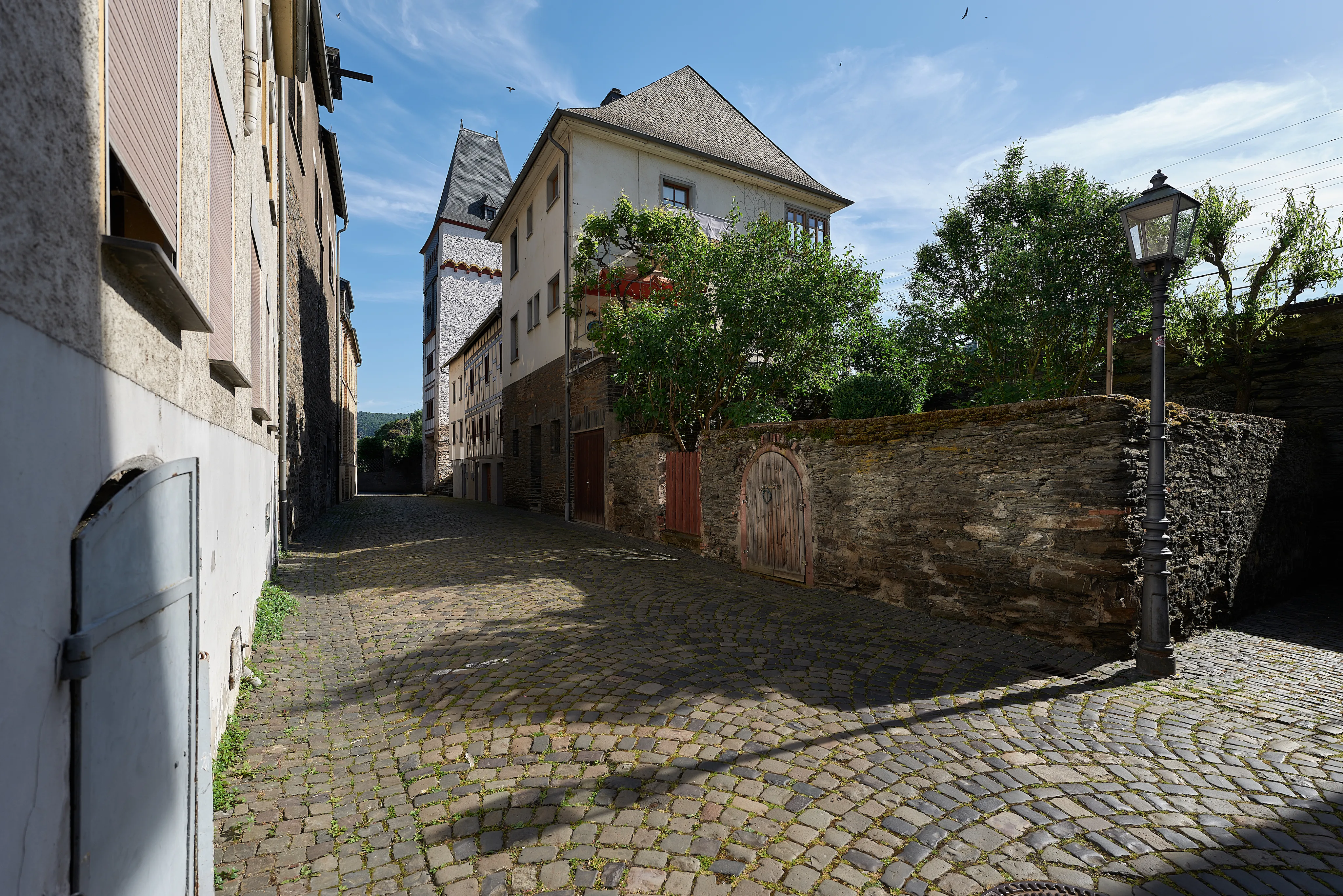
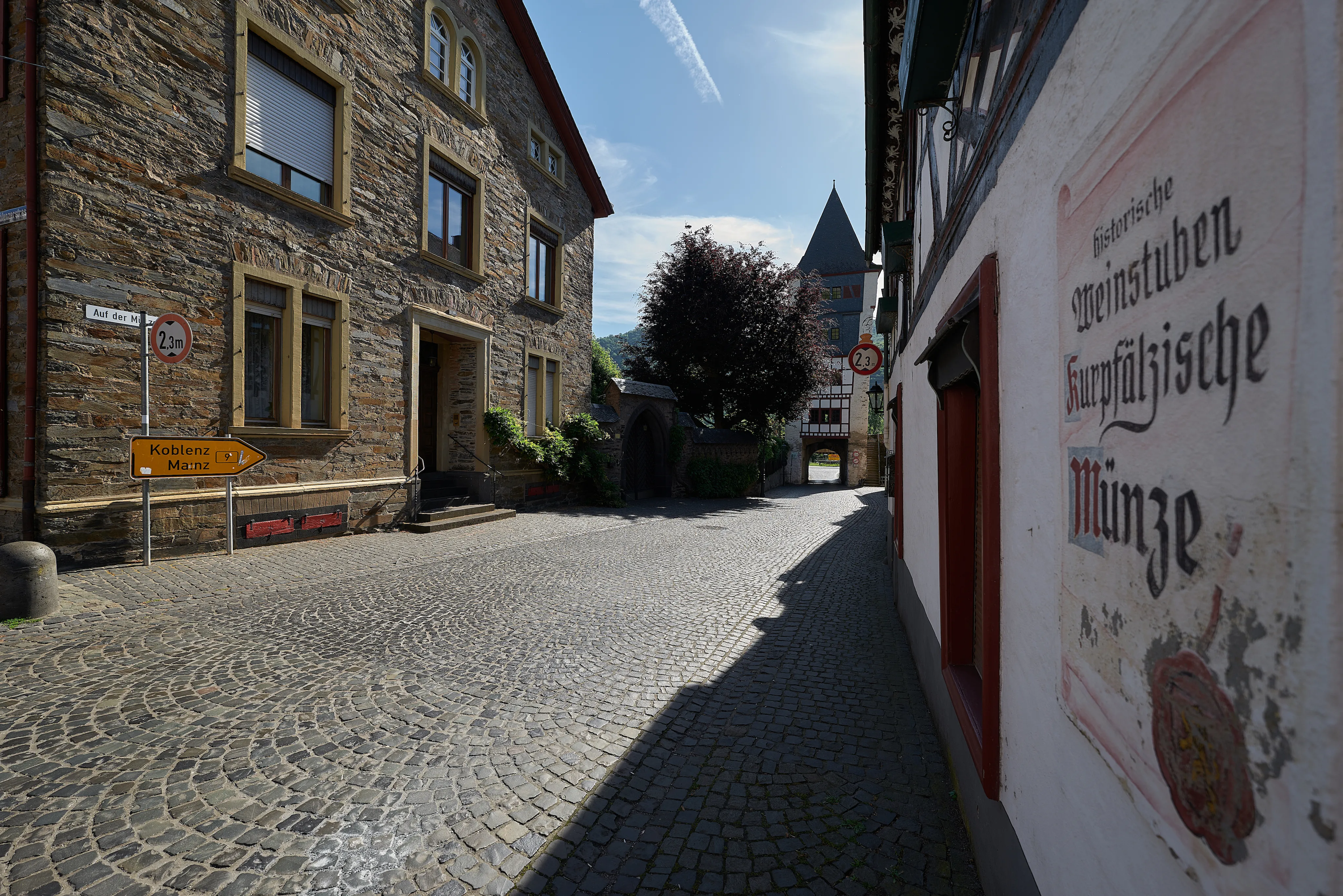
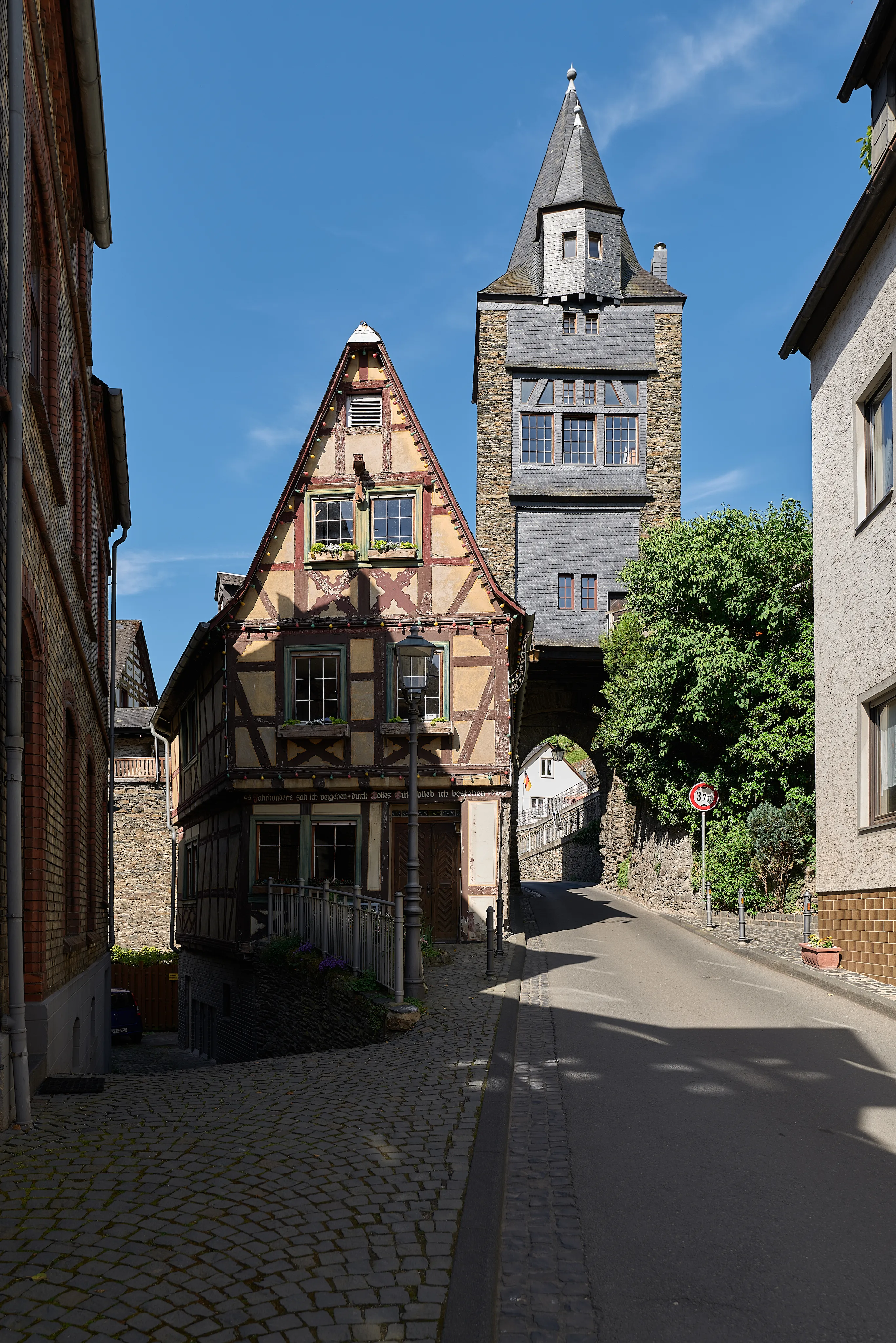
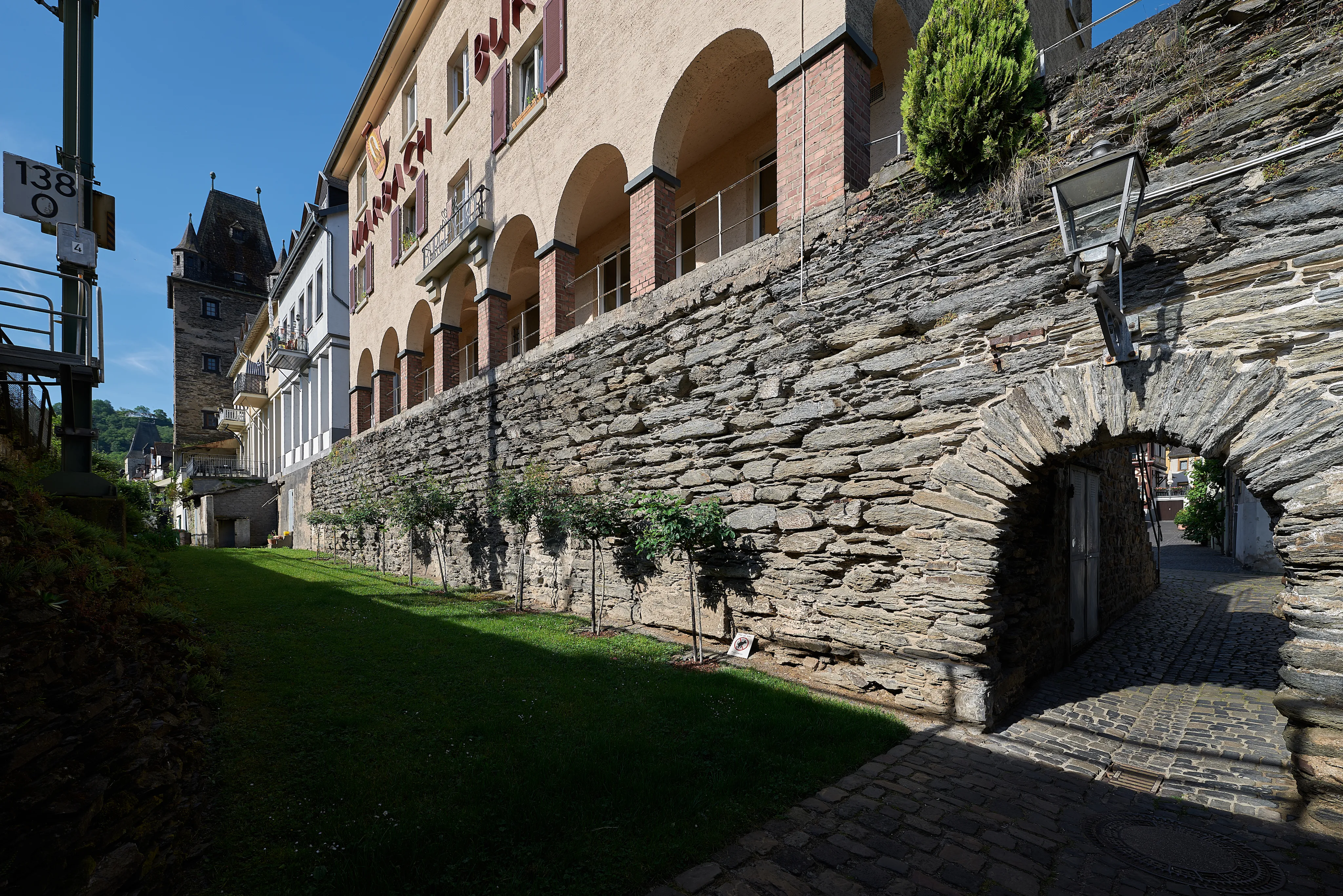
If you approach Bacharach from the river, the first thing that catches the eye is the town wall. Construction began in 1344 and was completed around 1400. Once it almost completely encircled the town, with sixteen towers. Today substantial stretches and several towers survive — the Postenturm, Marktturm, Kranentor, Liebesturm and others. They do not stand as museum exhibits. They are woven into everyday life: someone lives nearby, someone uses them as landmarks, and in the evenings they are softly lit, their shadows falling across the half-timbered houses as if to remind us that the town once knew how to defend itself.
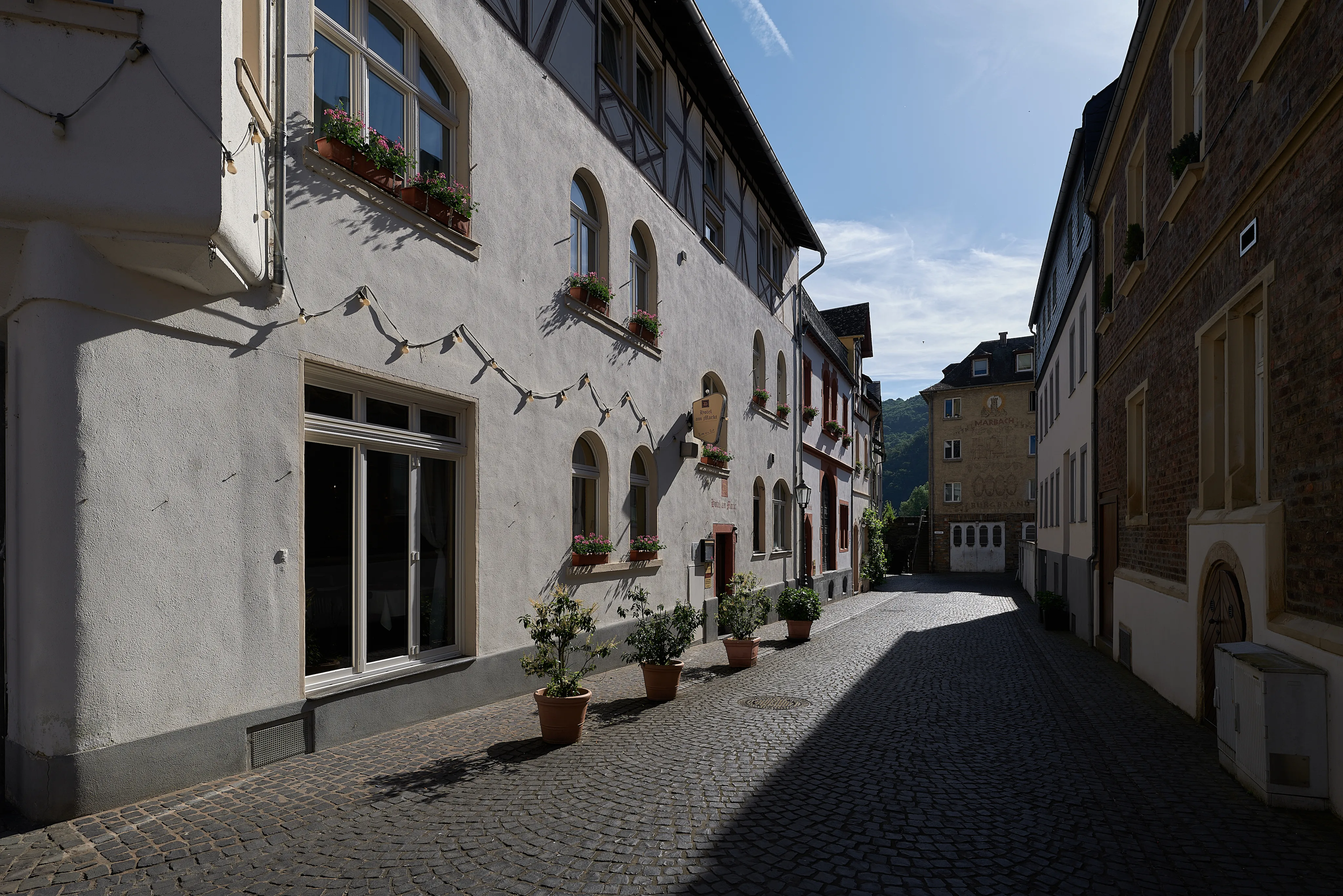
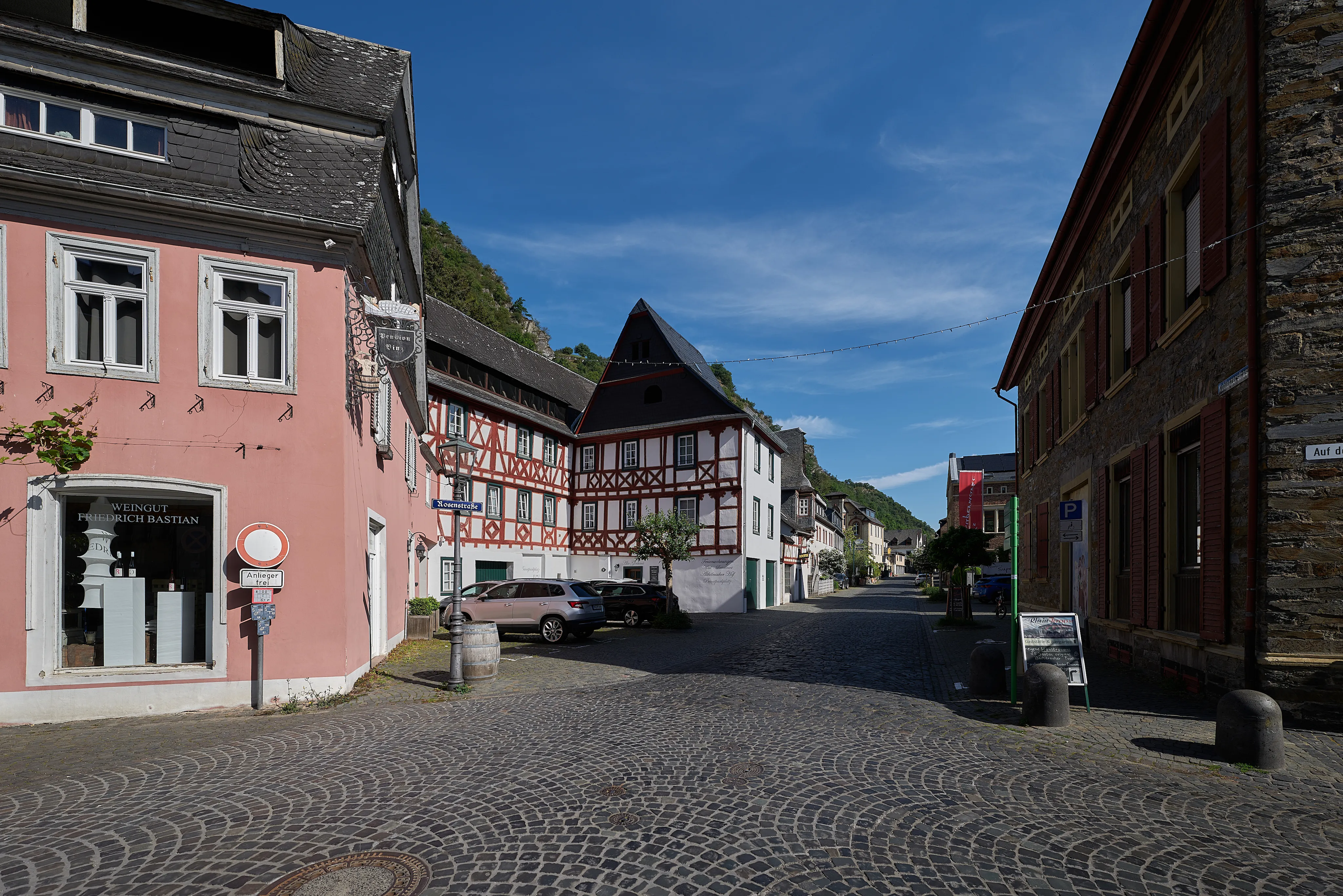
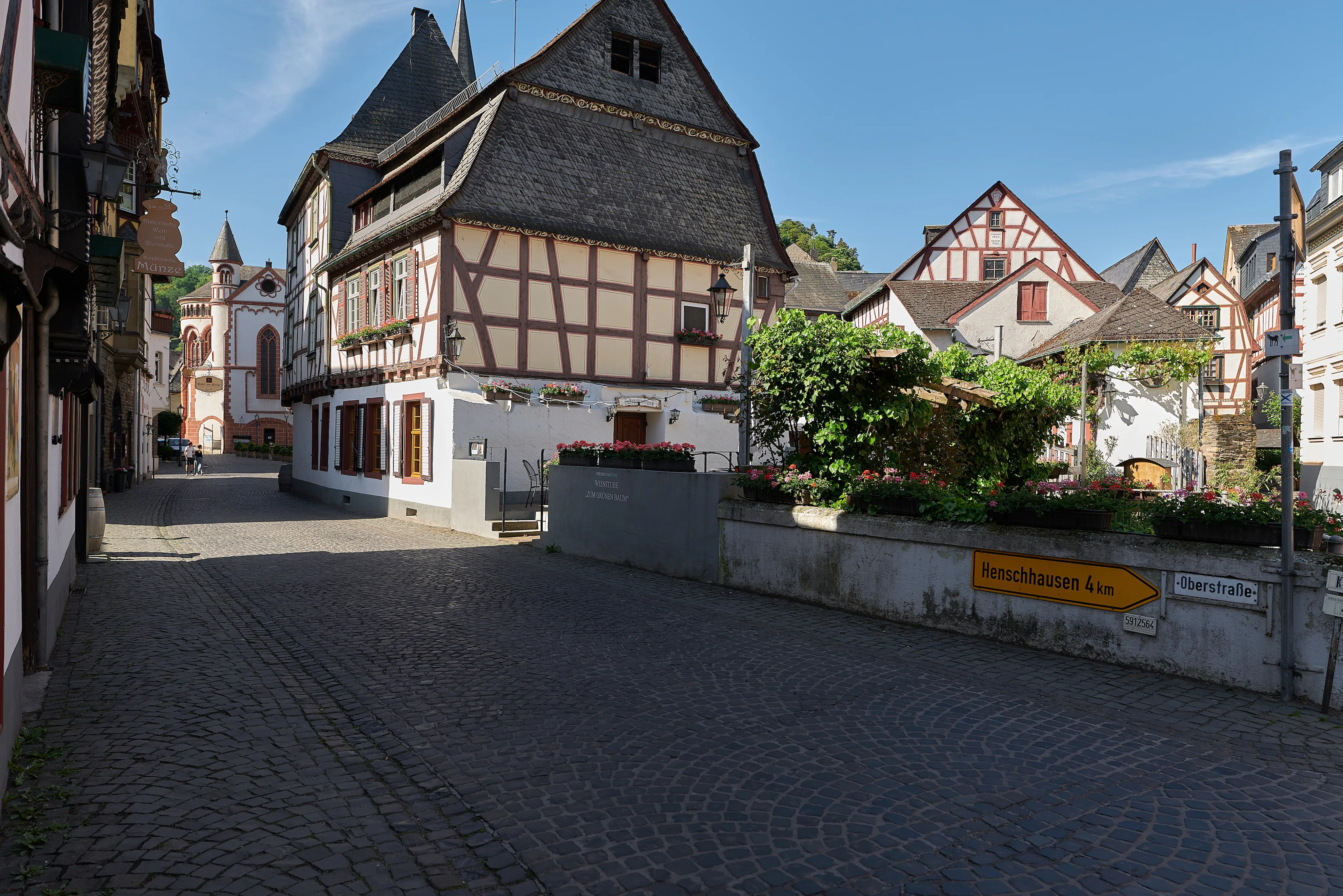
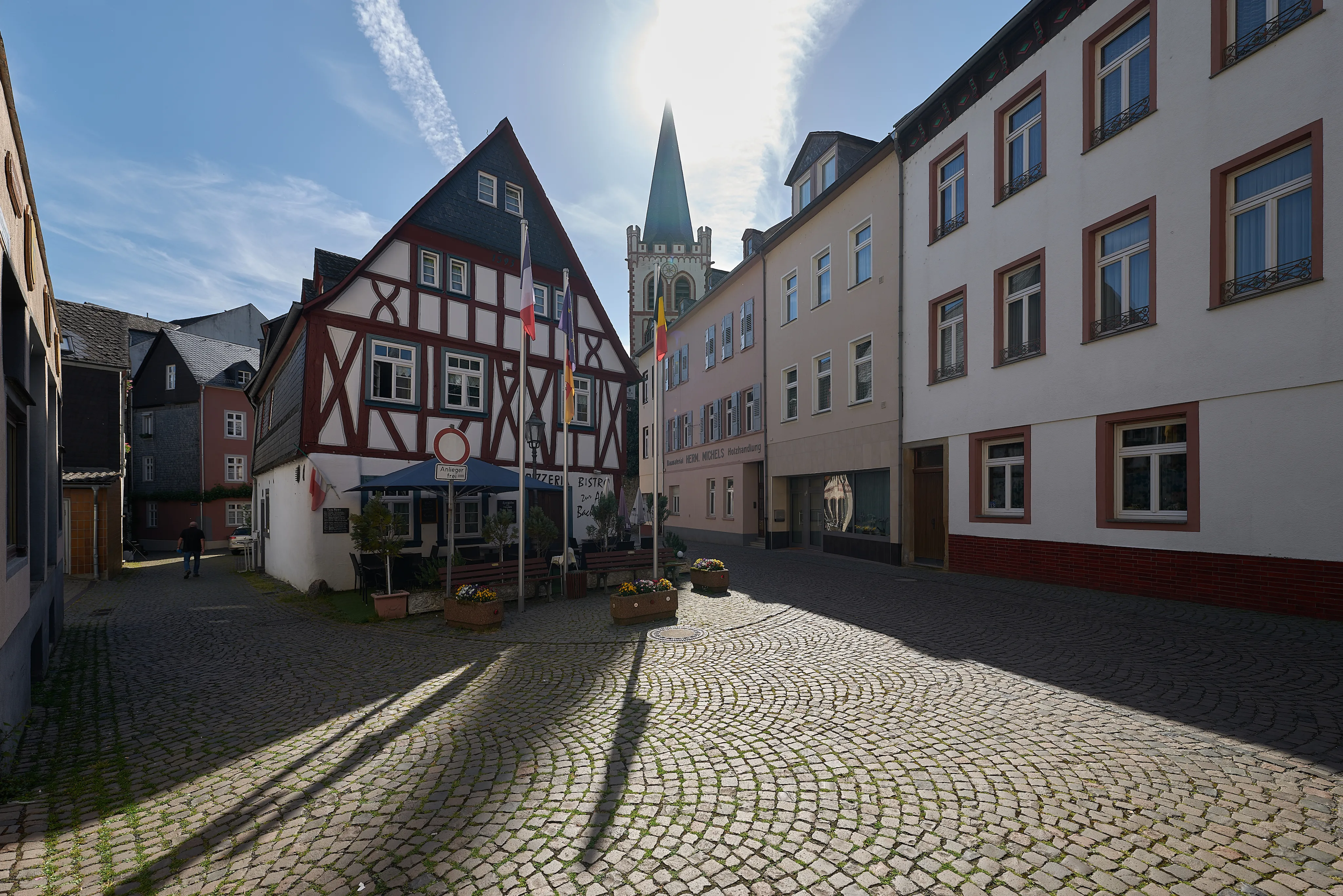
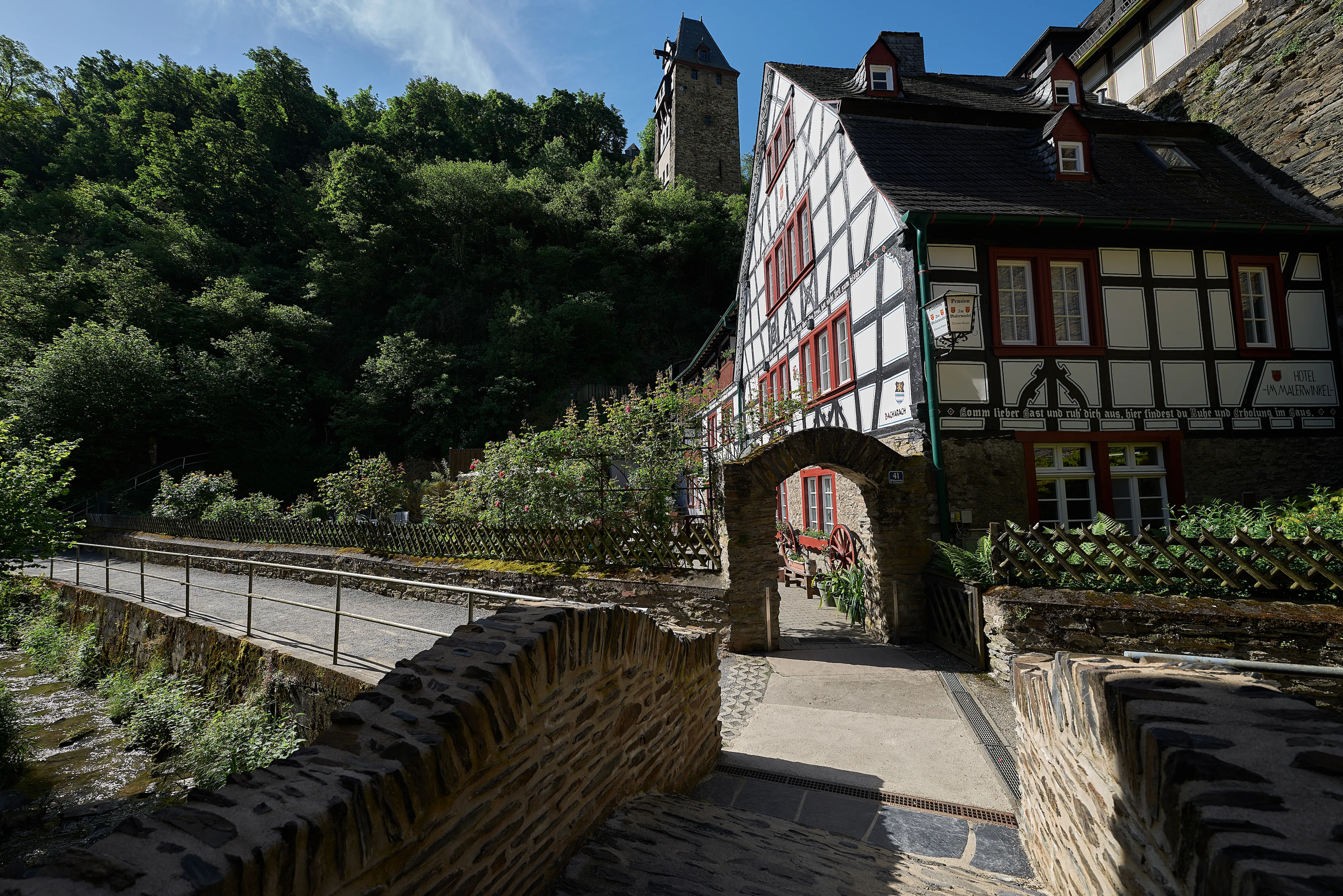
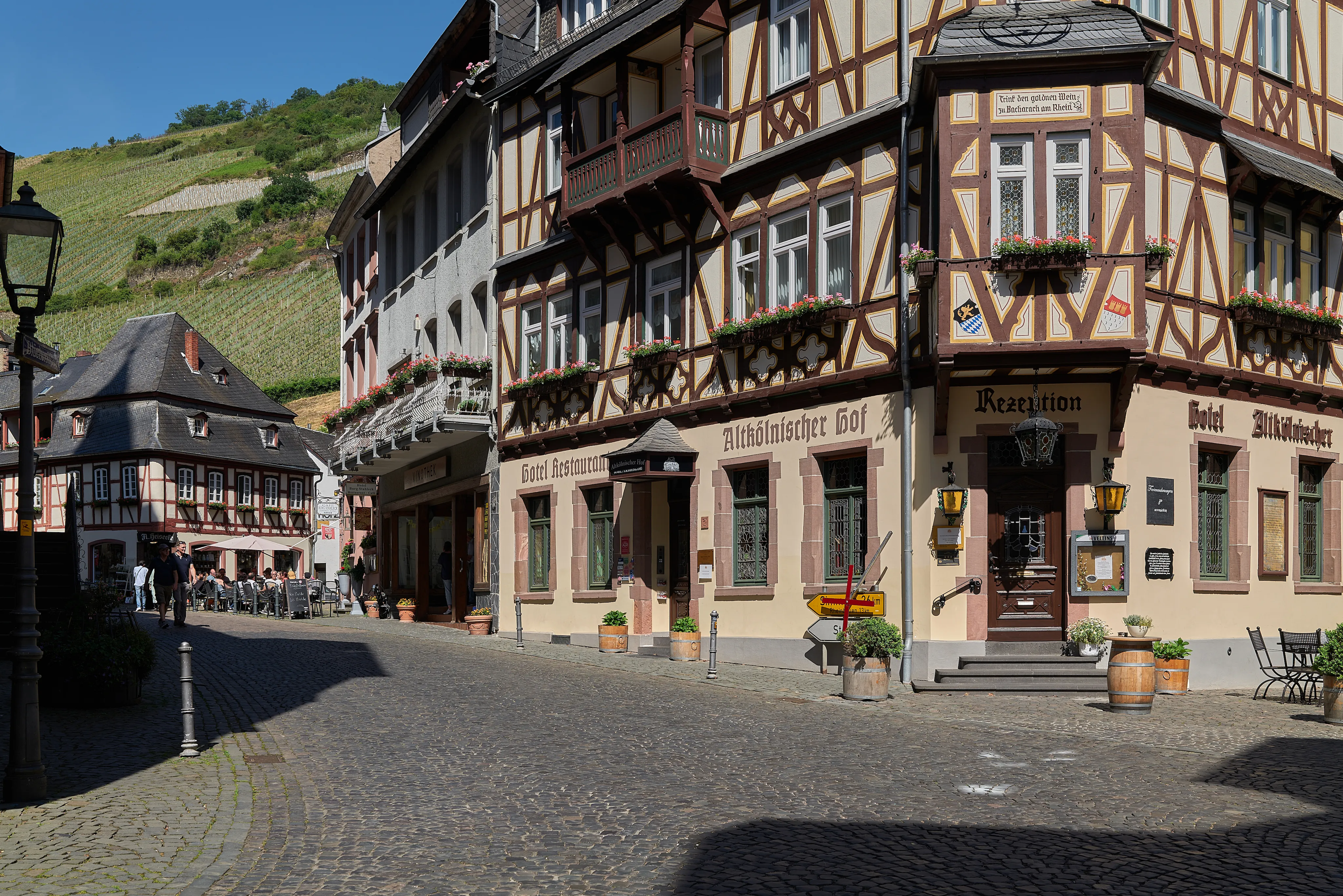
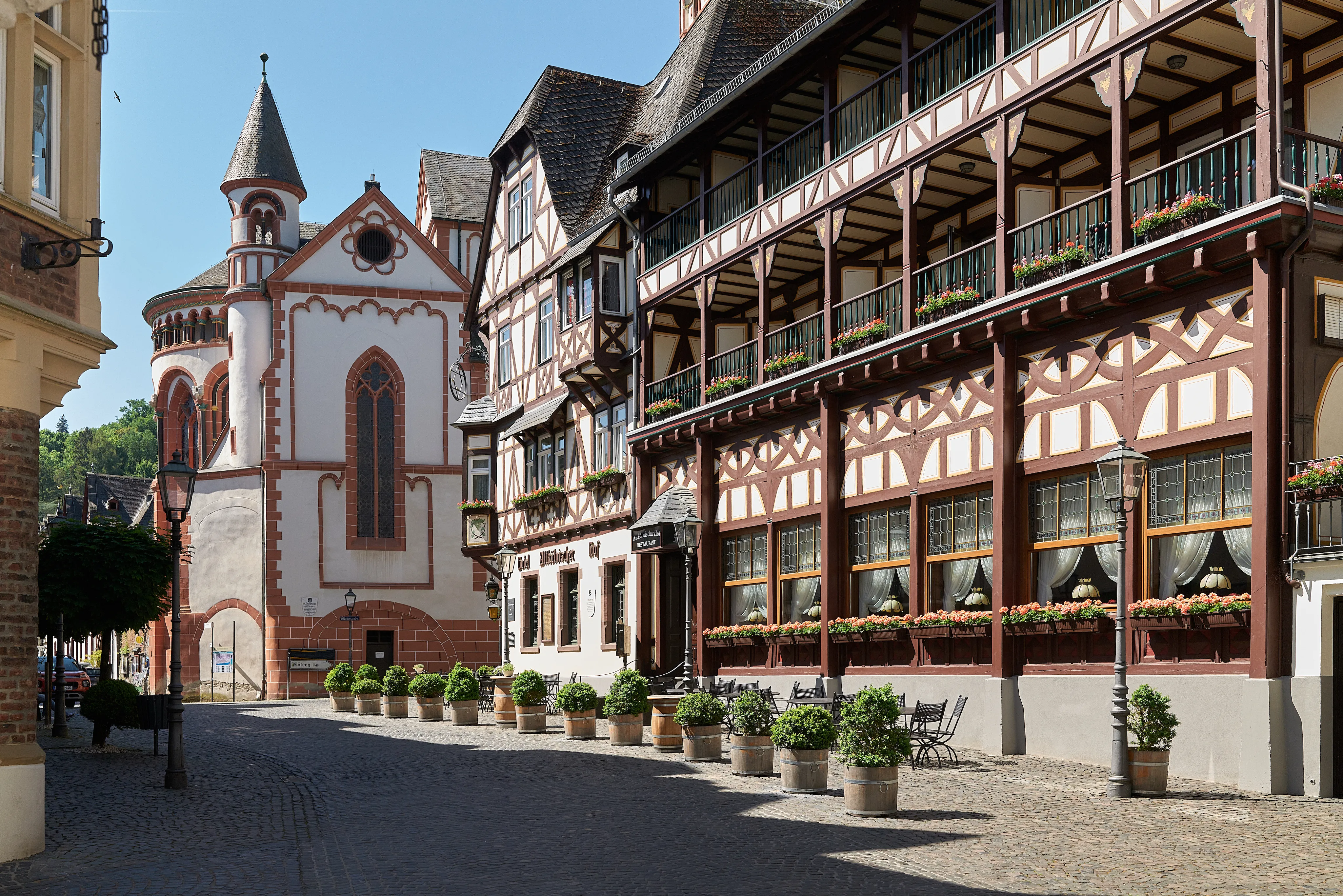
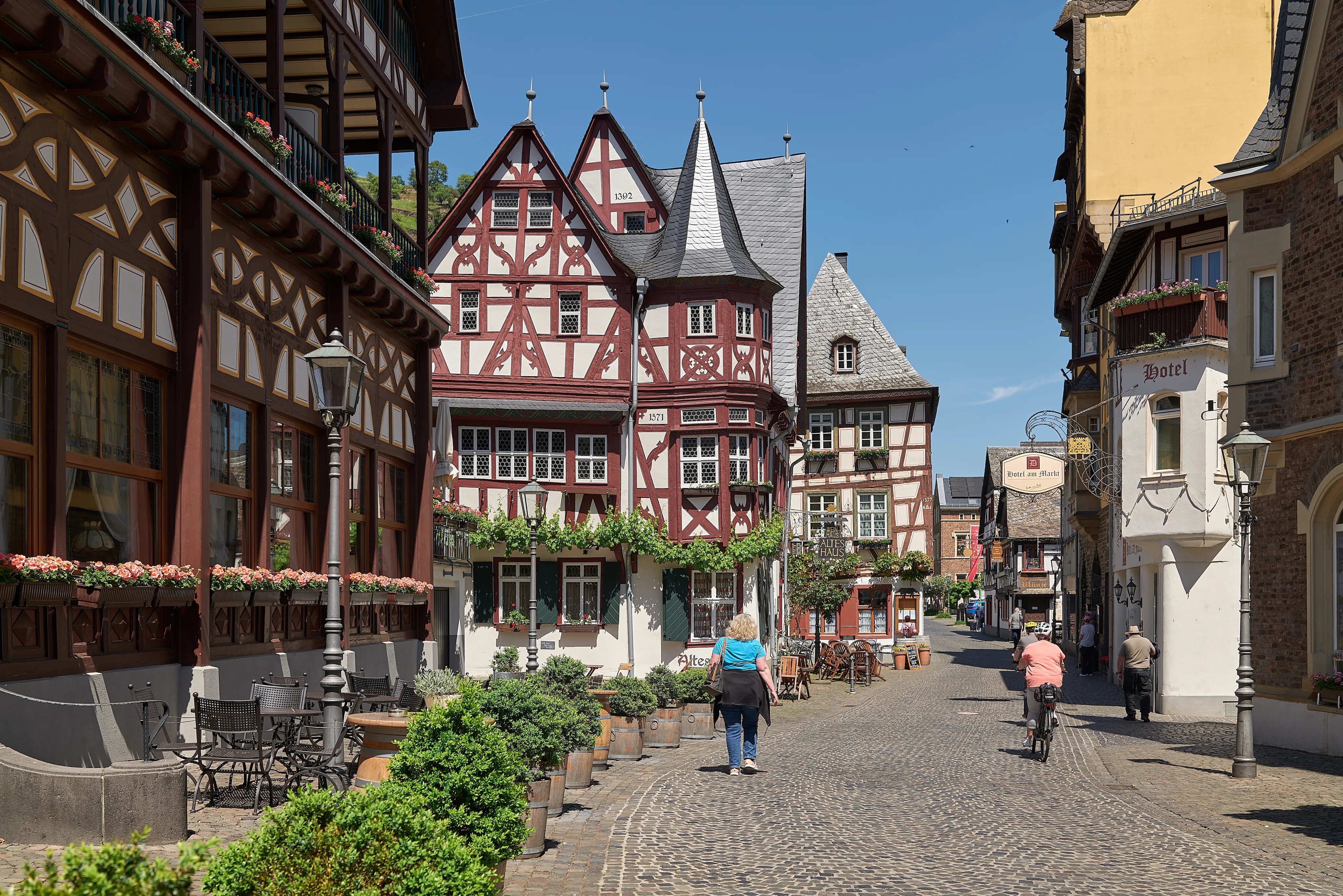
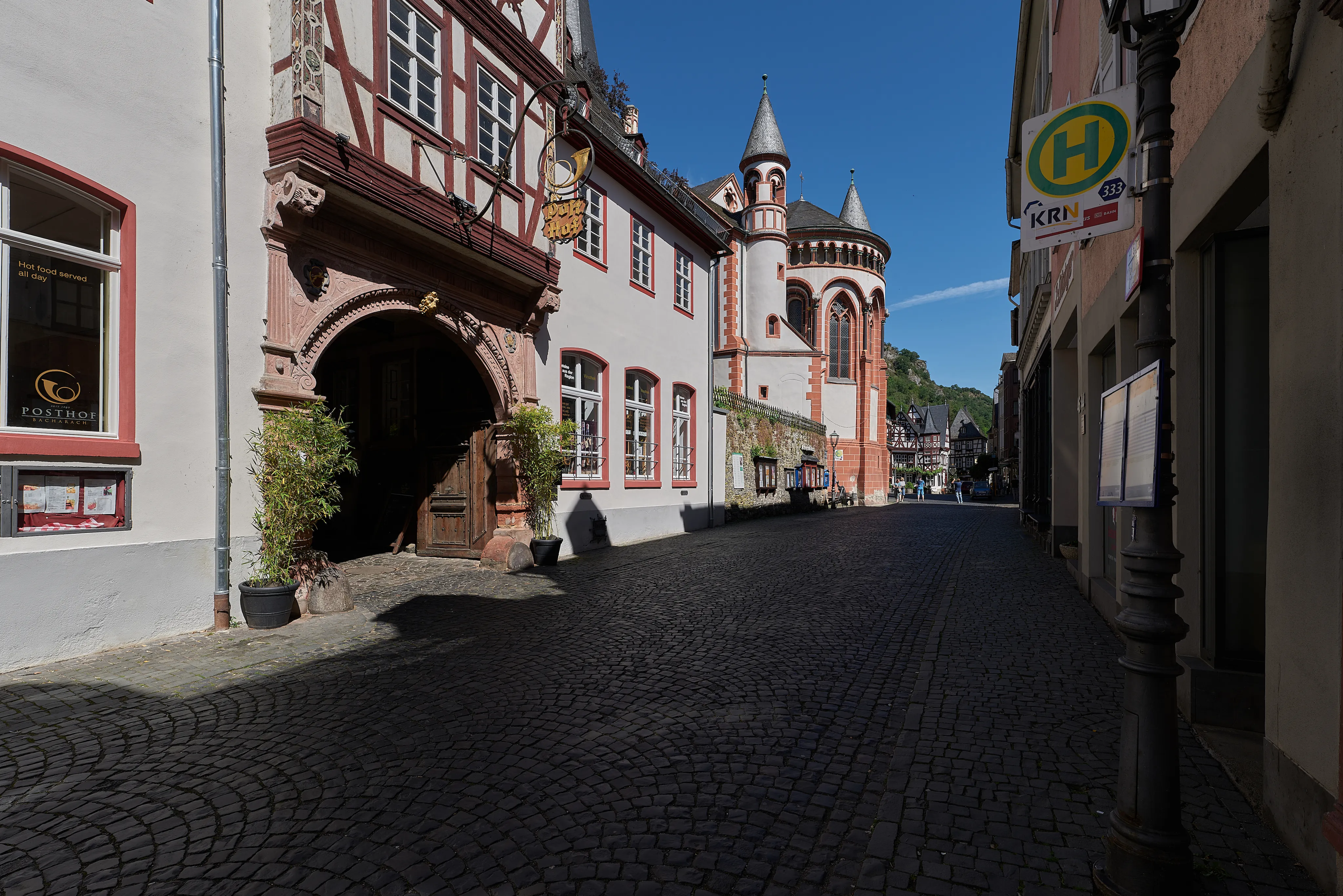
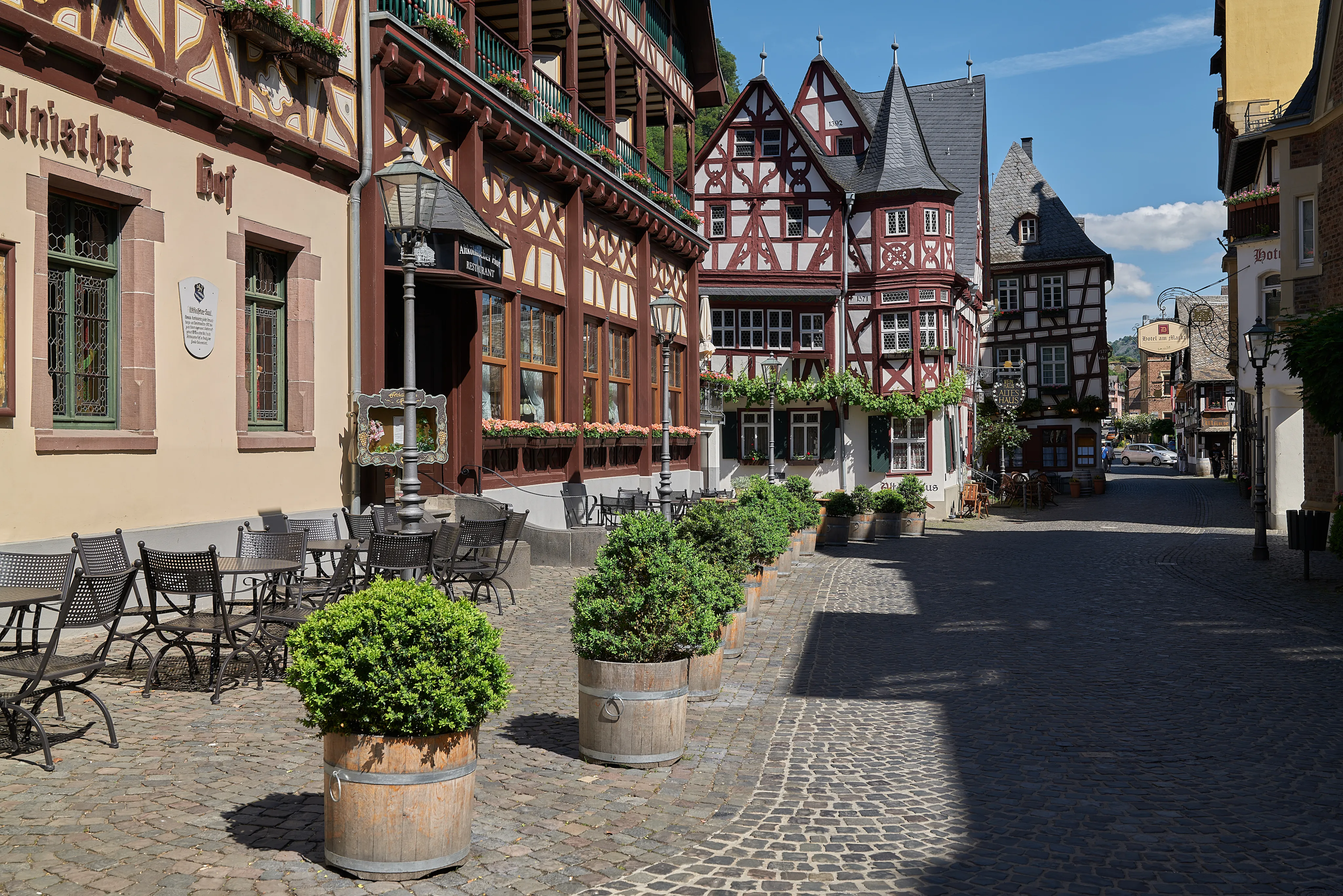
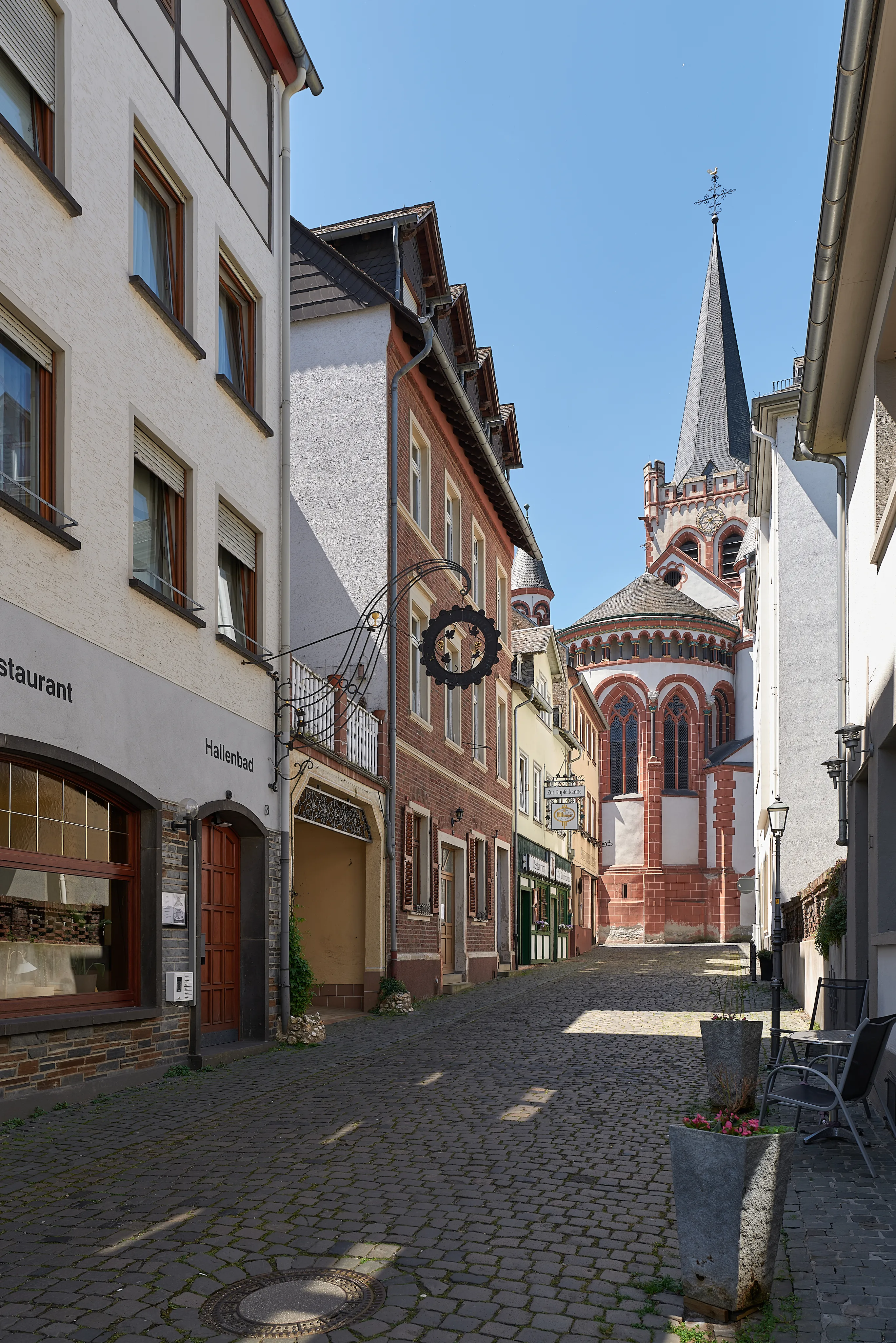
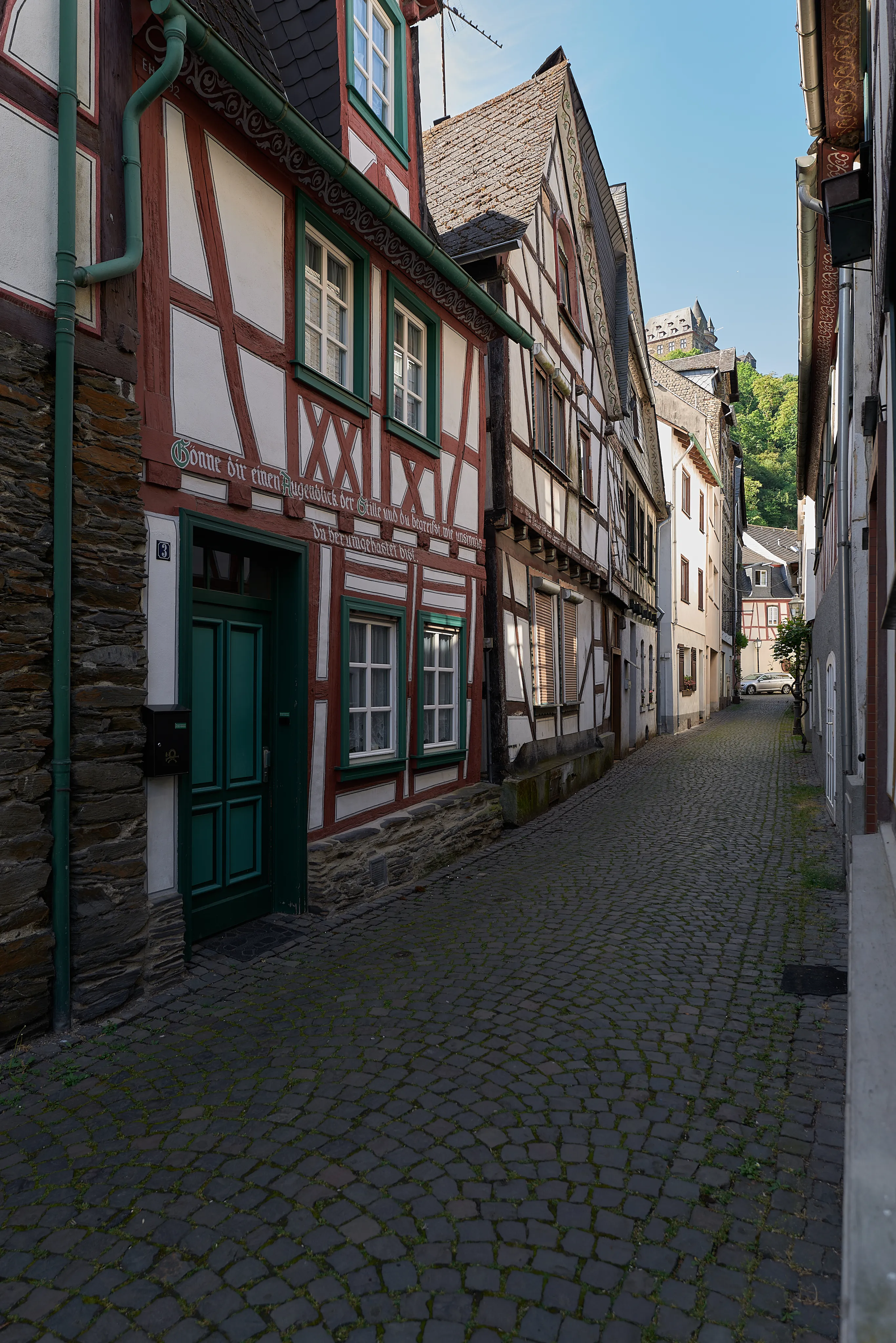
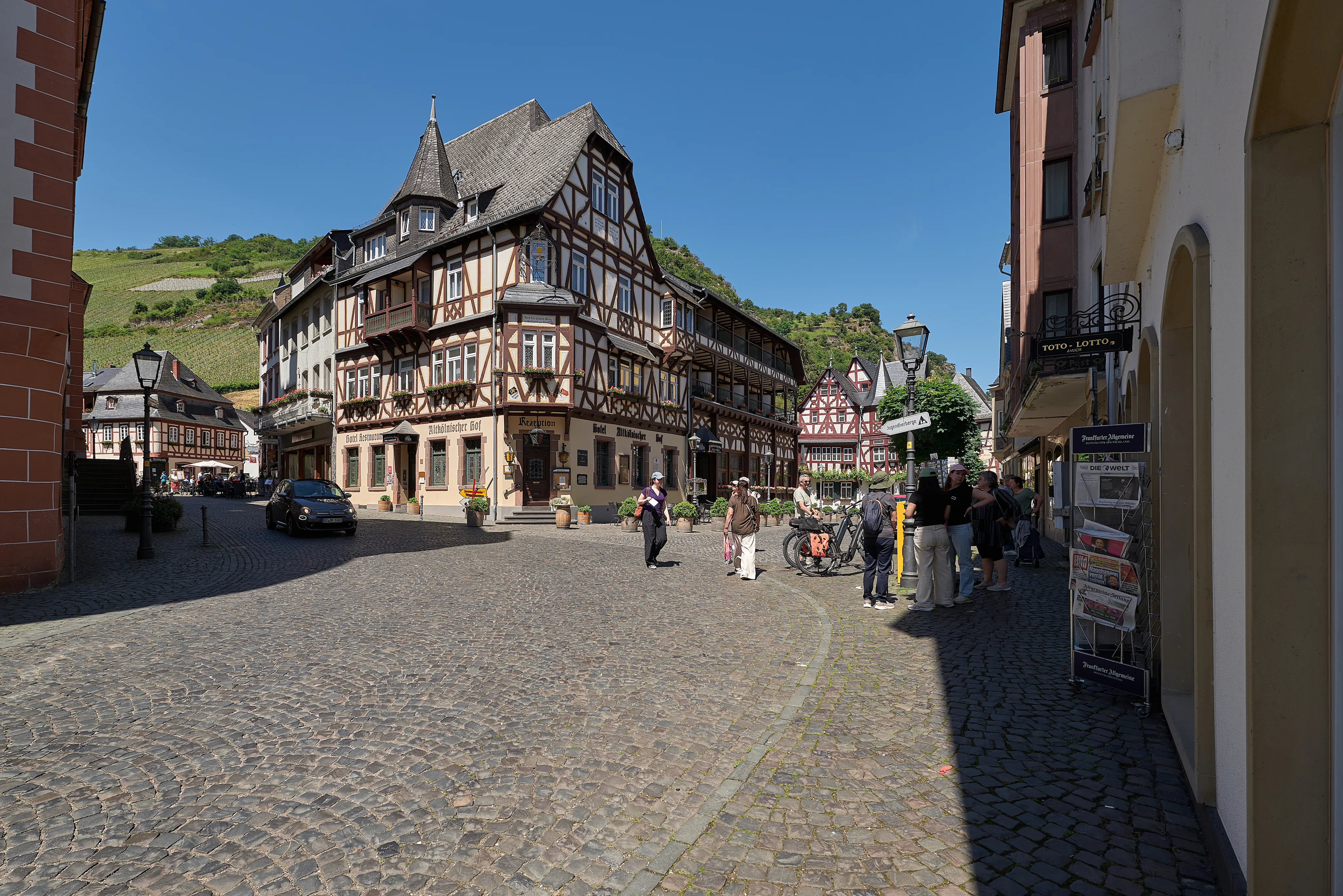
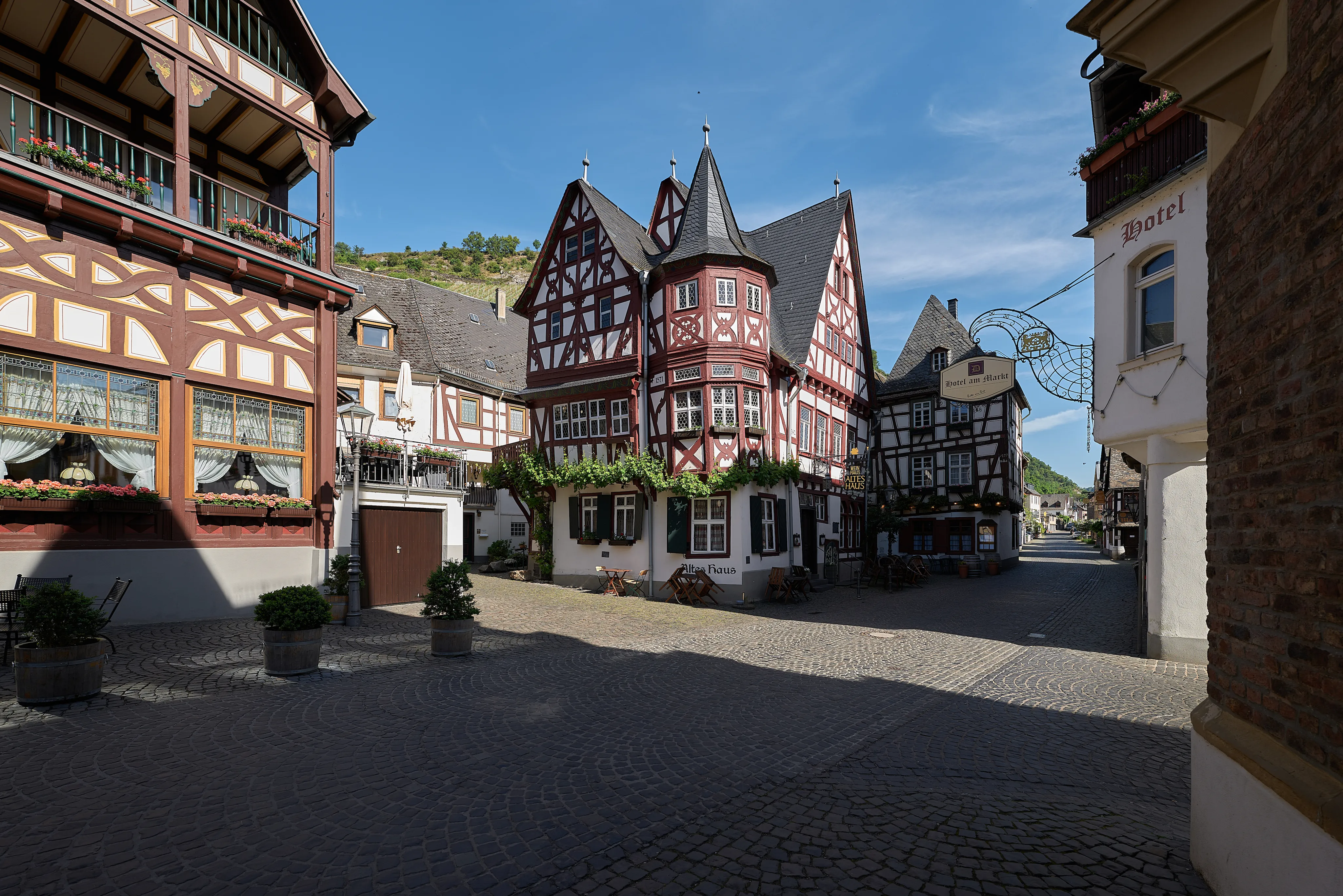
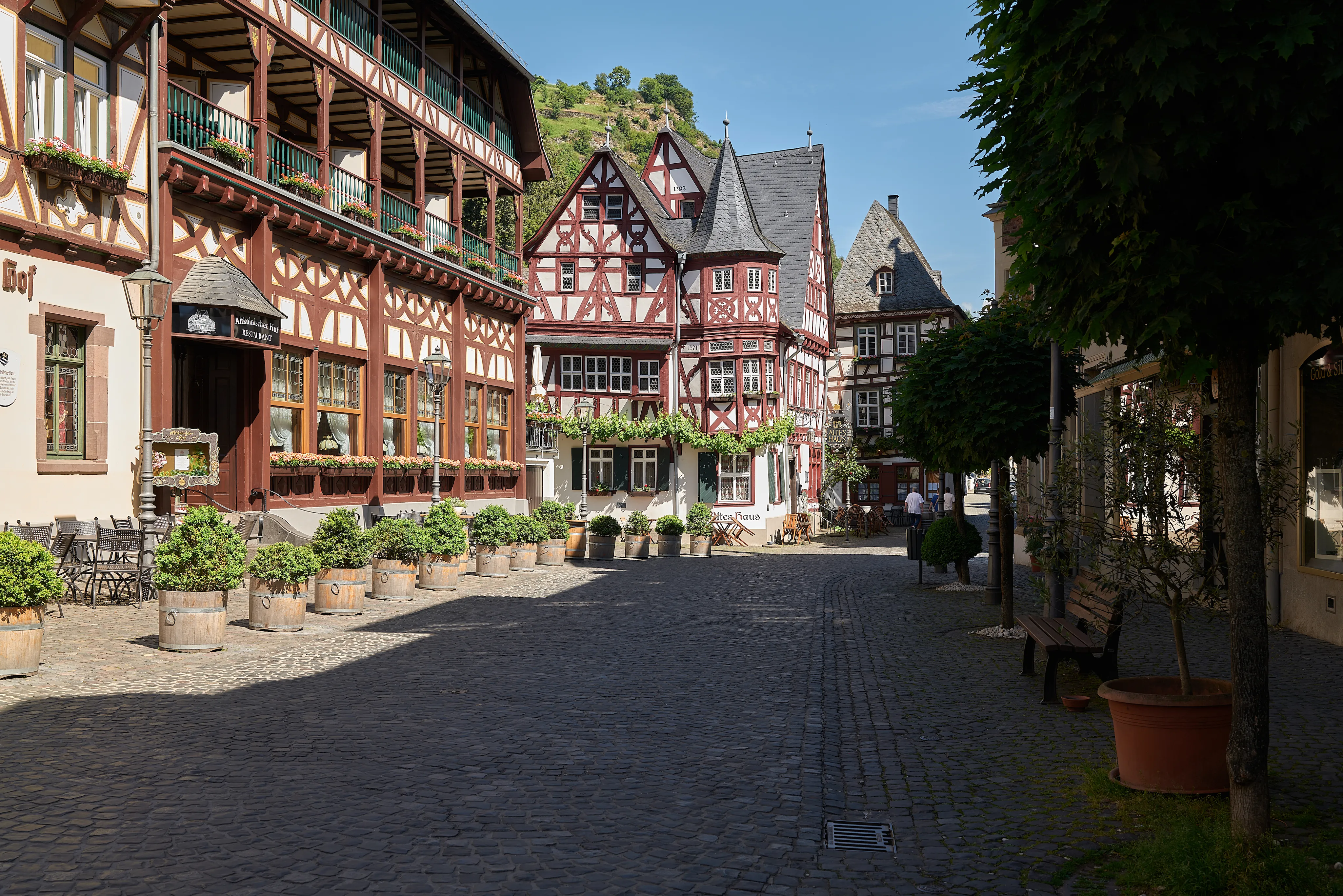
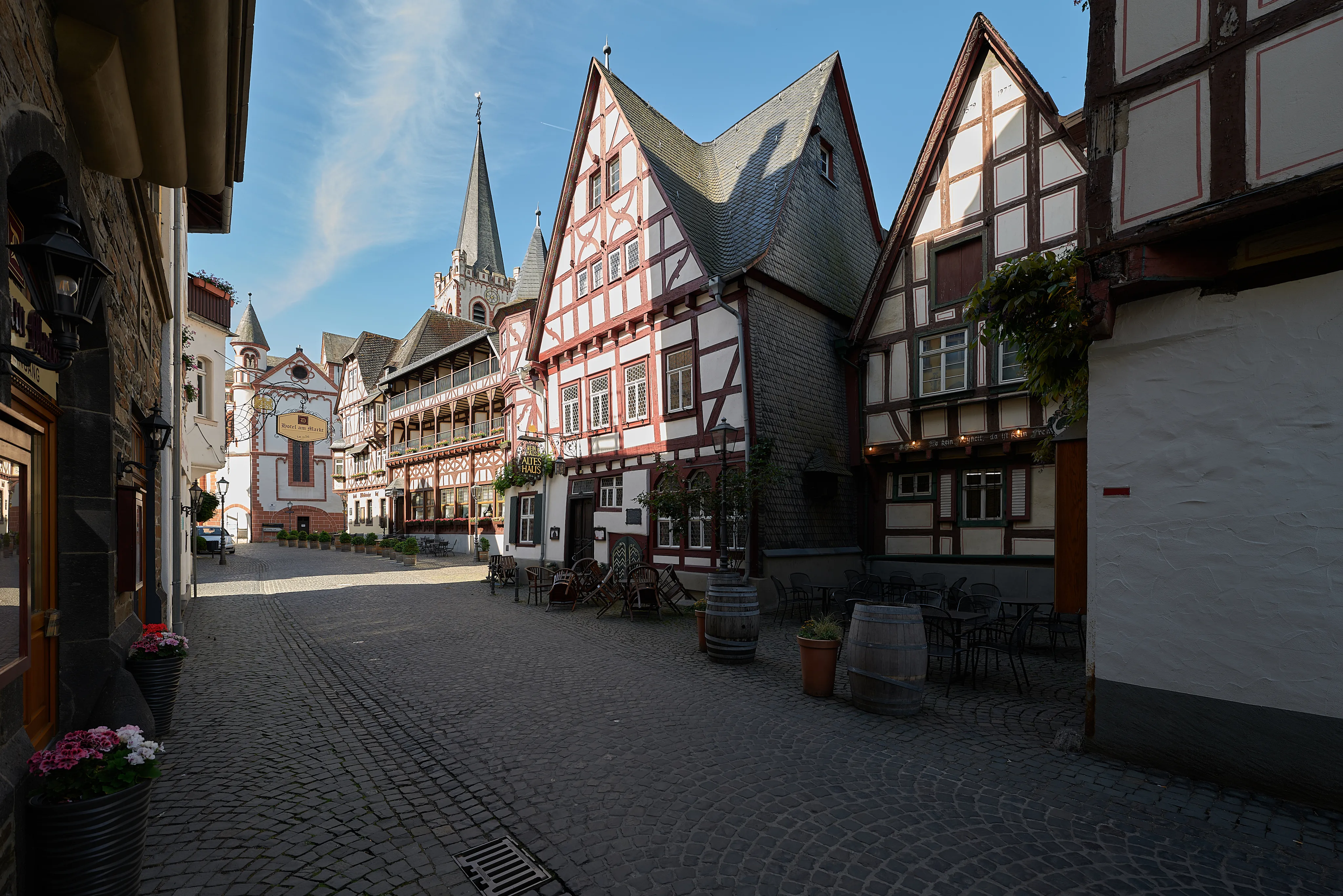
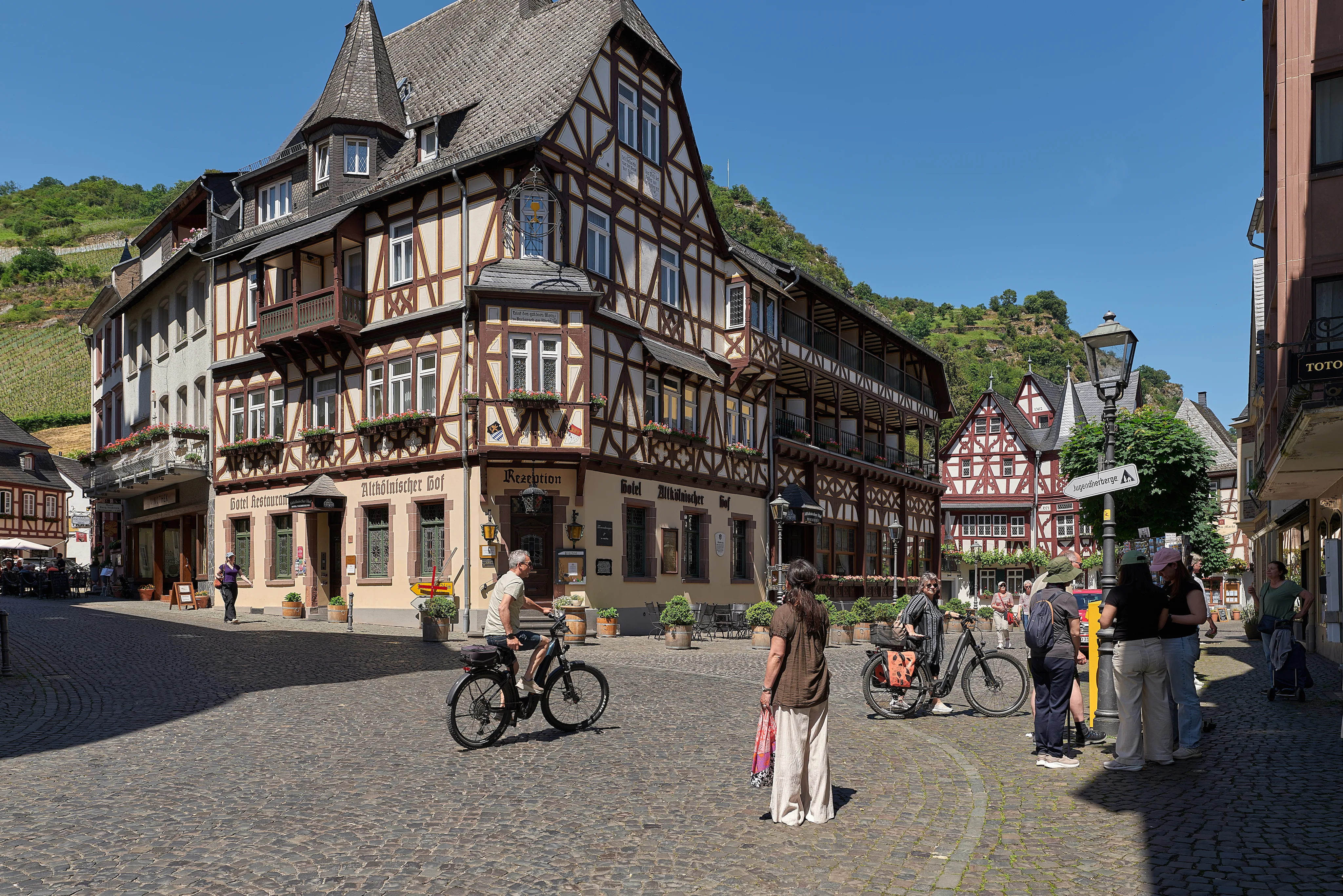
You enter through one of the old gates — for example the Kranentor, where a crane once stood for loading goods from the river — and at once find yourself in another age. The streets are narrow, paved with uneven stones; the houses stand close, almost shoulder to shoulder. Many of them are classic half-timbered buildings: a wooden frame filled with brick or plaster, the beams darkened by time. The most famous is the Altes Haus on the market square. Its history goes back to 1368, although its present appearance took shape in 1586. Red half-timbering, carved details, windows with fine leaded panes — it looks as if it were finished only yesterday. Today it houses a wine tavern where you can taste the very local wine. Nearby is the old post courtyard, the Posthof, where horses were once changed and news from distant lands was received.
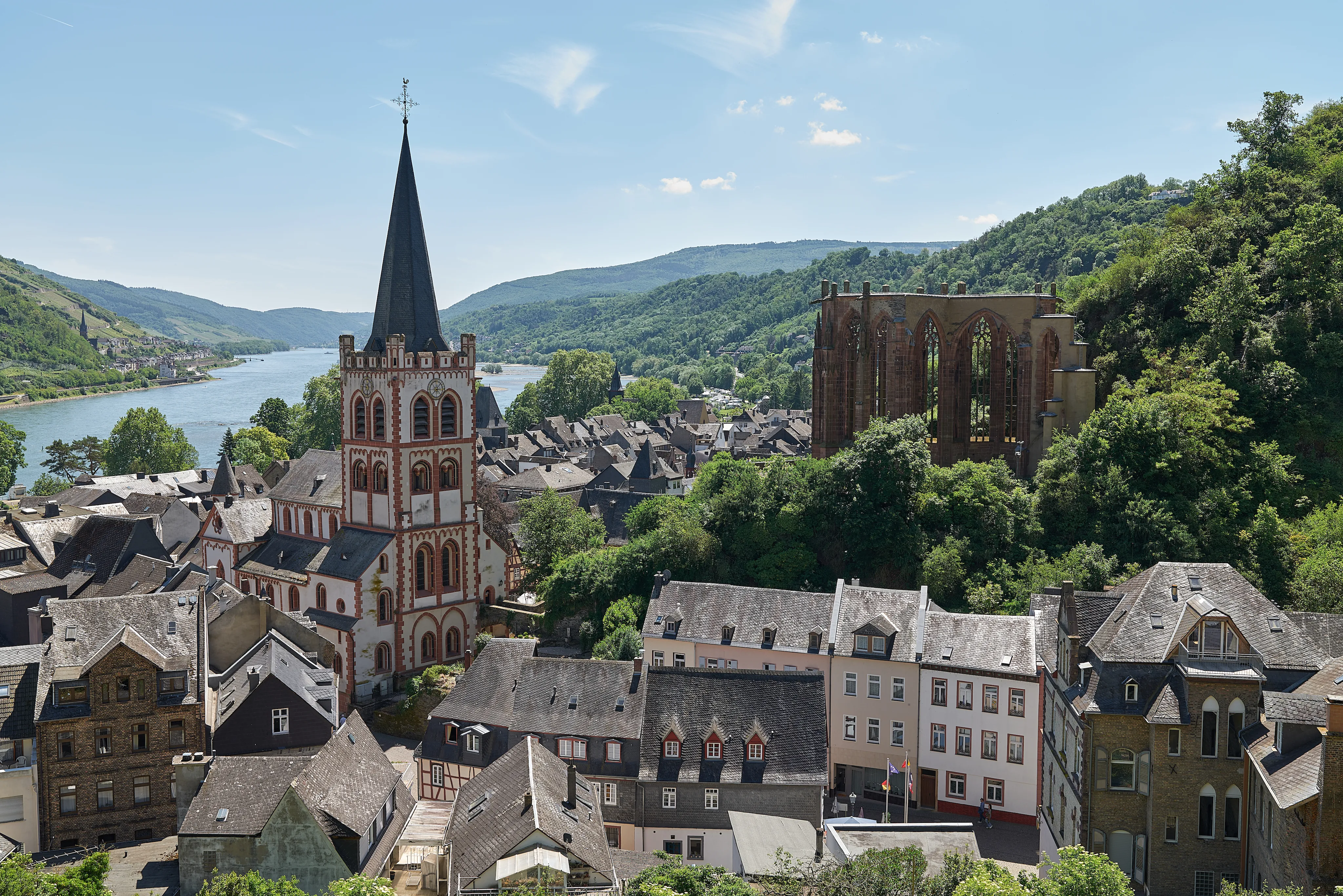
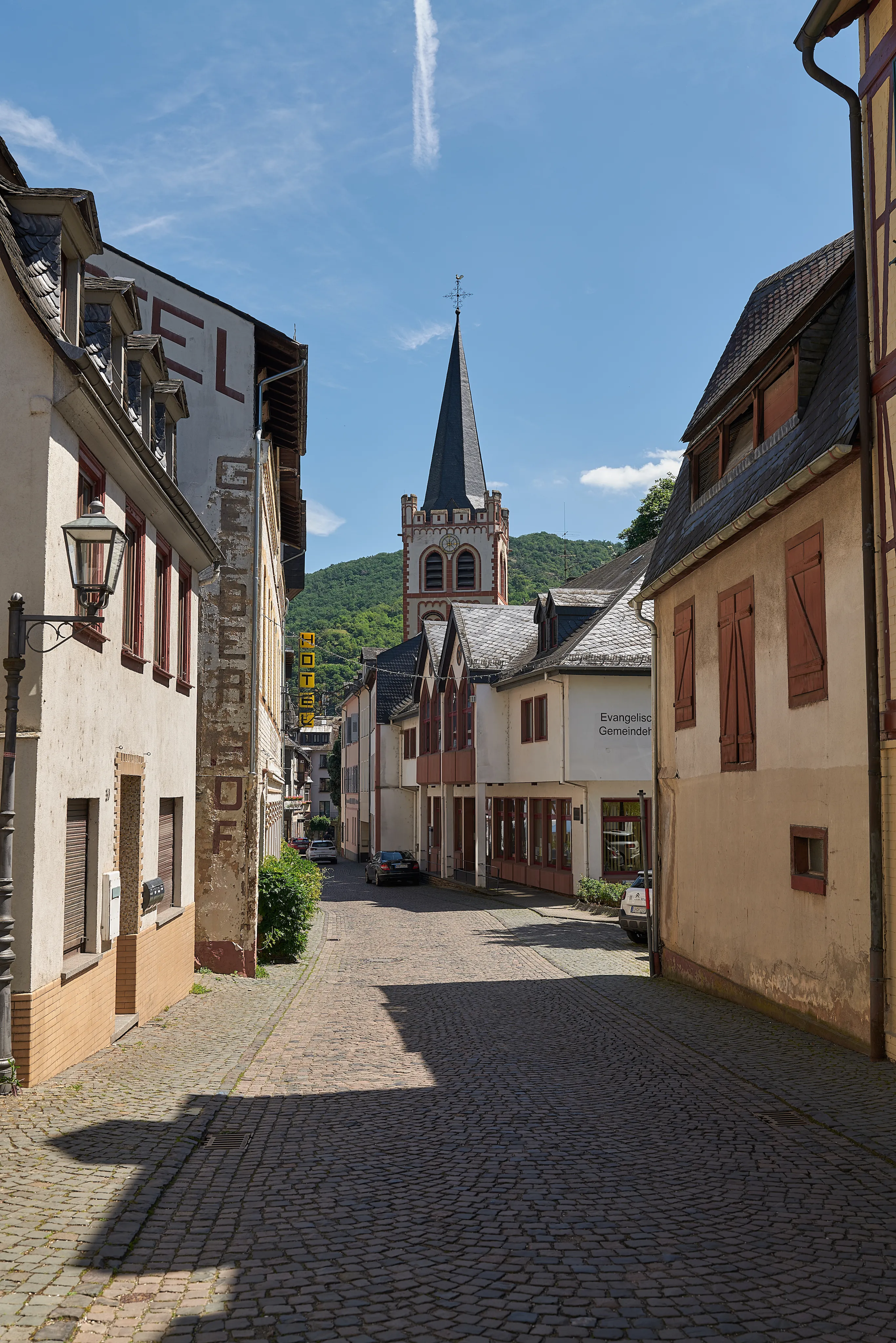
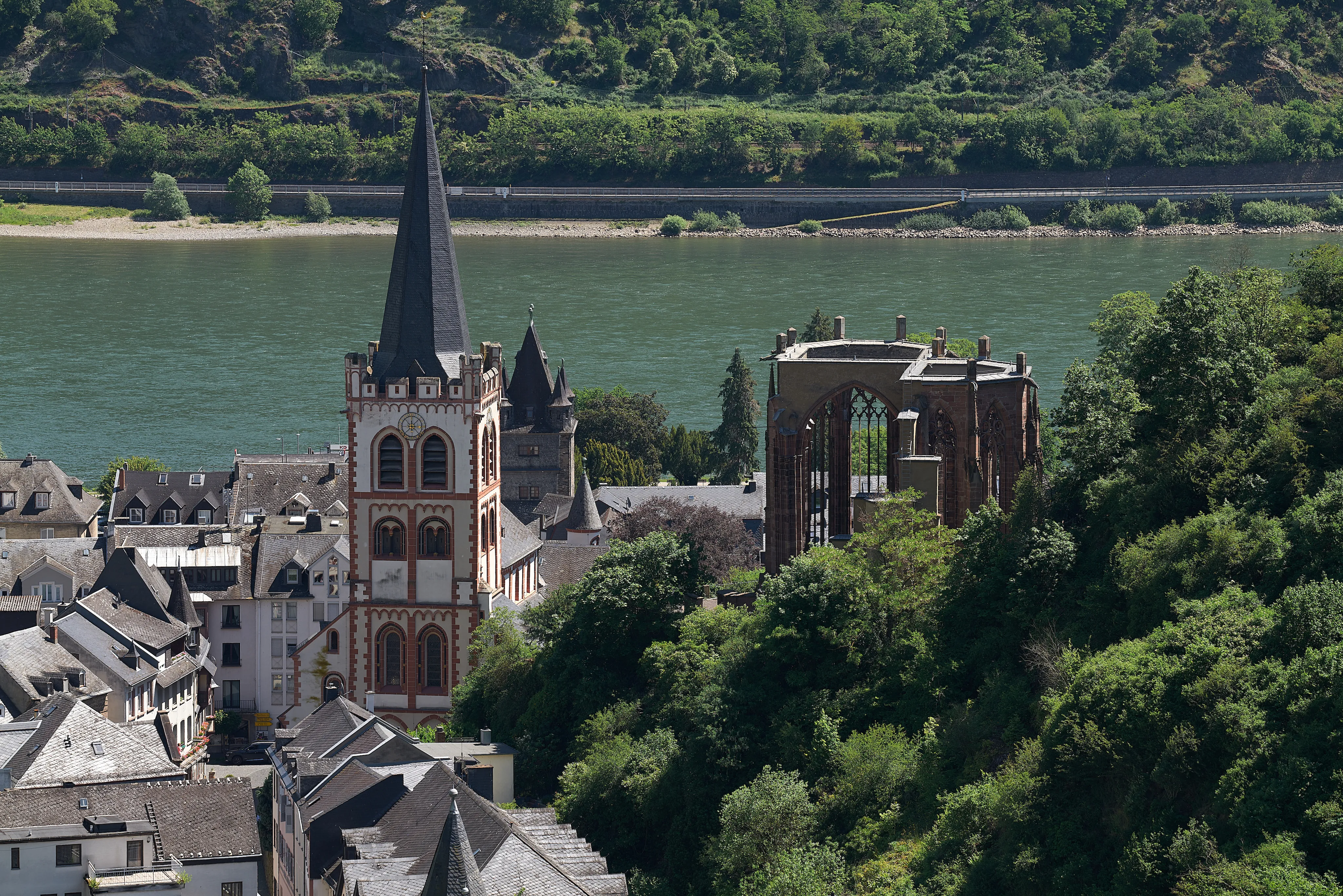
Right in the centre stands the Church of St Peter, the Peterskirche. Building began around 1230–1240 in the late Romanesque style with early Gothic elements. It is not a vast cathedral but a true town church — warm, on a human scale. The tall windows let in light so that even on a dull day it seems brighter inside than out. Frescoes, a carved altar and a sense that generations of Bacharach’s inhabitants have come here — to pray, to marry, to bury their dead — have been preserved. The church is not a museum. Services are still held, and the voice of the organ sometimes drifts across the square, mingling with the sound of the wind from the Rhine.
But the true soul of Bacharach reveals itself when you climb higher — along the path that leads from the old town up the slope. First you pass the vineyards, where the vines cling to stone terraces, and then you come to the ruins of the Wernerkapelle. This is one of the most moving places in the town. Construction of the chapel began around 1289 and continued for more than a hundred and forty years — until the 1430s. Gothic arches, slender columns, the stained-glass windows that once shone — all now open to the sky. The roof collapsed in 1689 when French troops blew up the castle above and the debris tumbled down. The ruins stand as a reminder of the fragility of even the strongest things.
A particularly heavy chapter of Bacharach’s history is linked to these ruins. In 1287 a tragedy occurred here that became the pretext for building the chapel. According to the medieval legend, a boy named Werner was found murdered, and this led to terrible pogroms against the Jewish communities in the region. The chapel was erected in his honour, and for long centuries pilgrims came here. Today a memorial plaque with a prayer by Pope John XXIII stands by the ruins, recalling the victims of that age and calling for peace. The ruins do not romanticise the past — they make you reflect. You stand there, the wind stirring the grass between the stones, and you realise how deeply history is woven into the landscape.
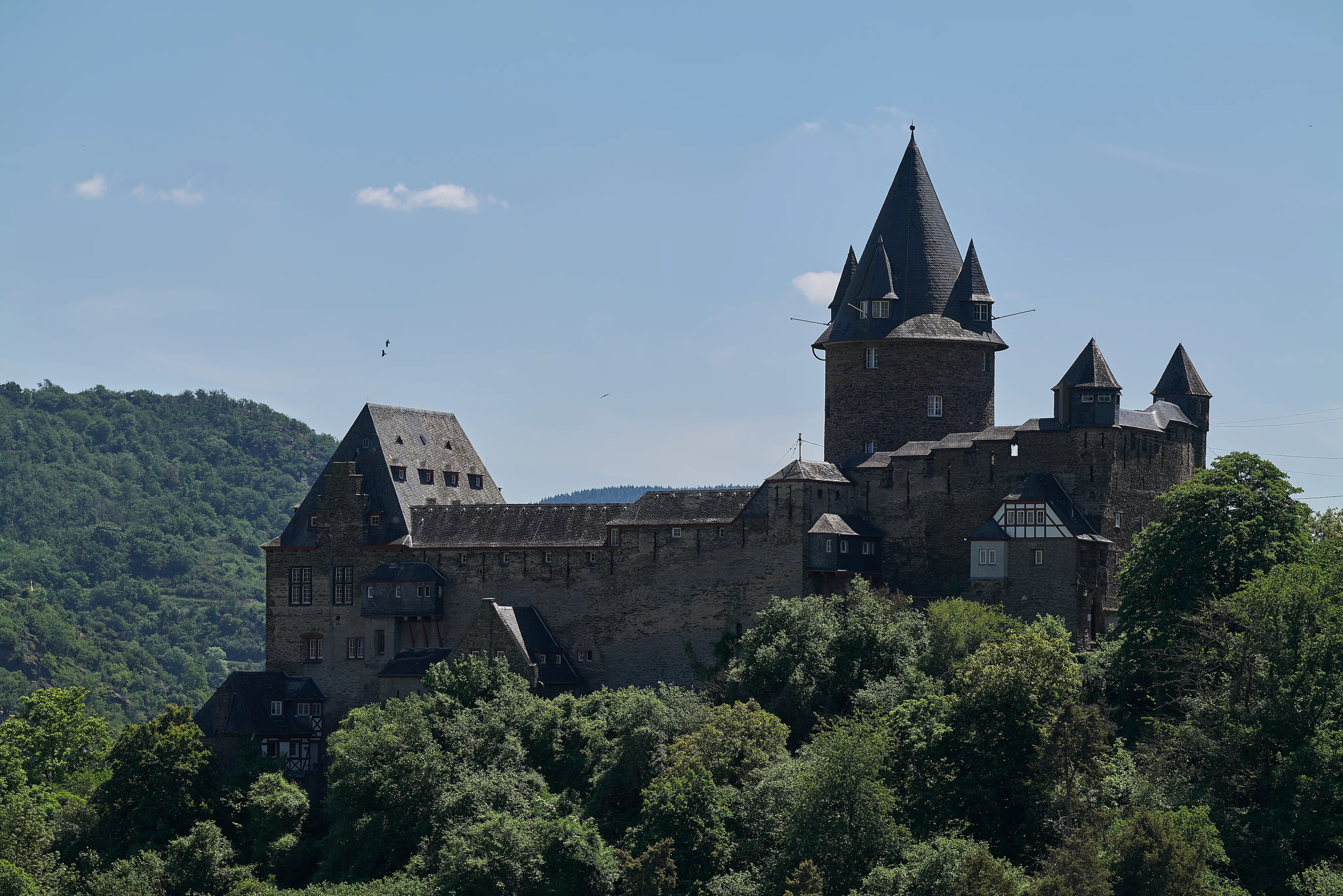
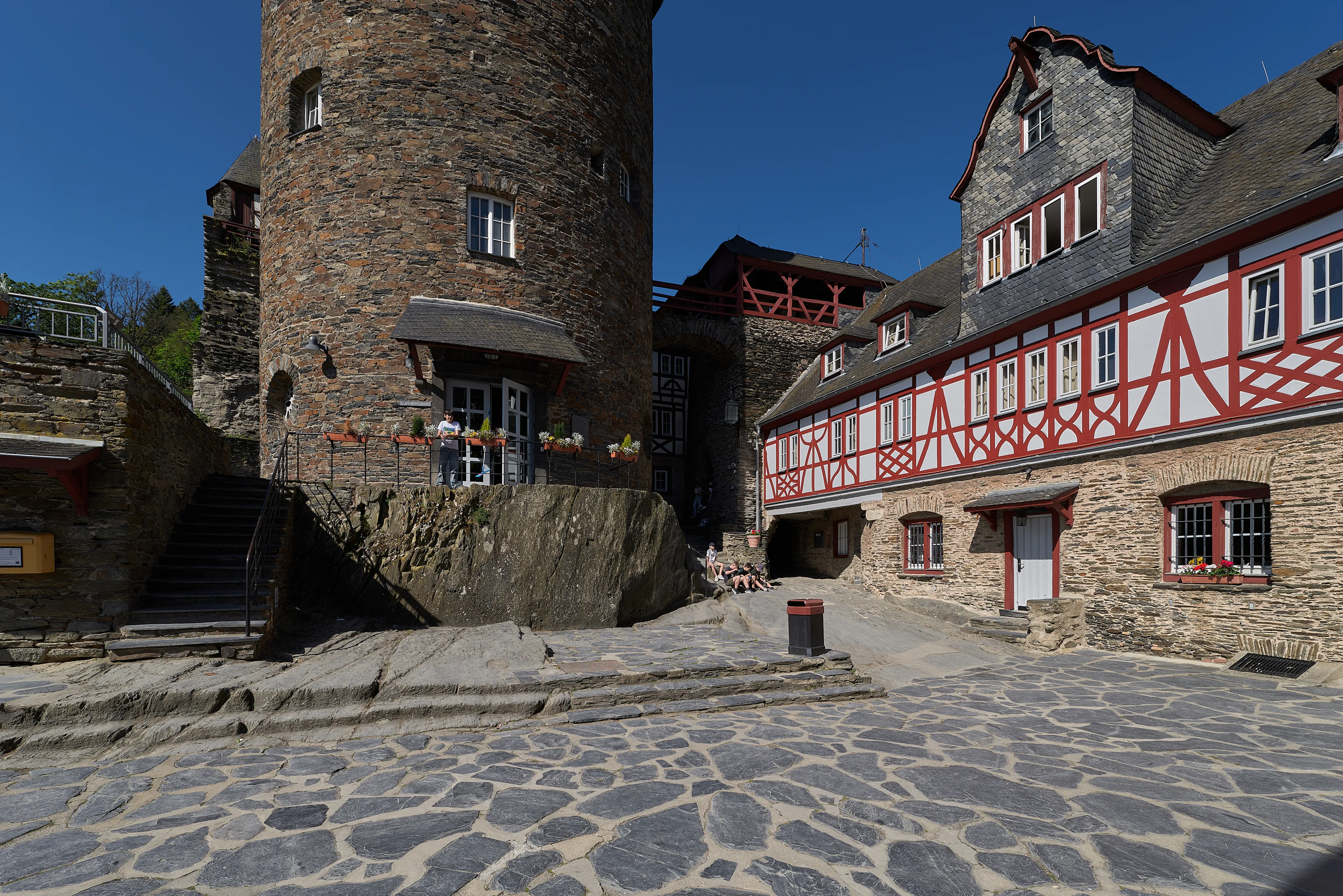
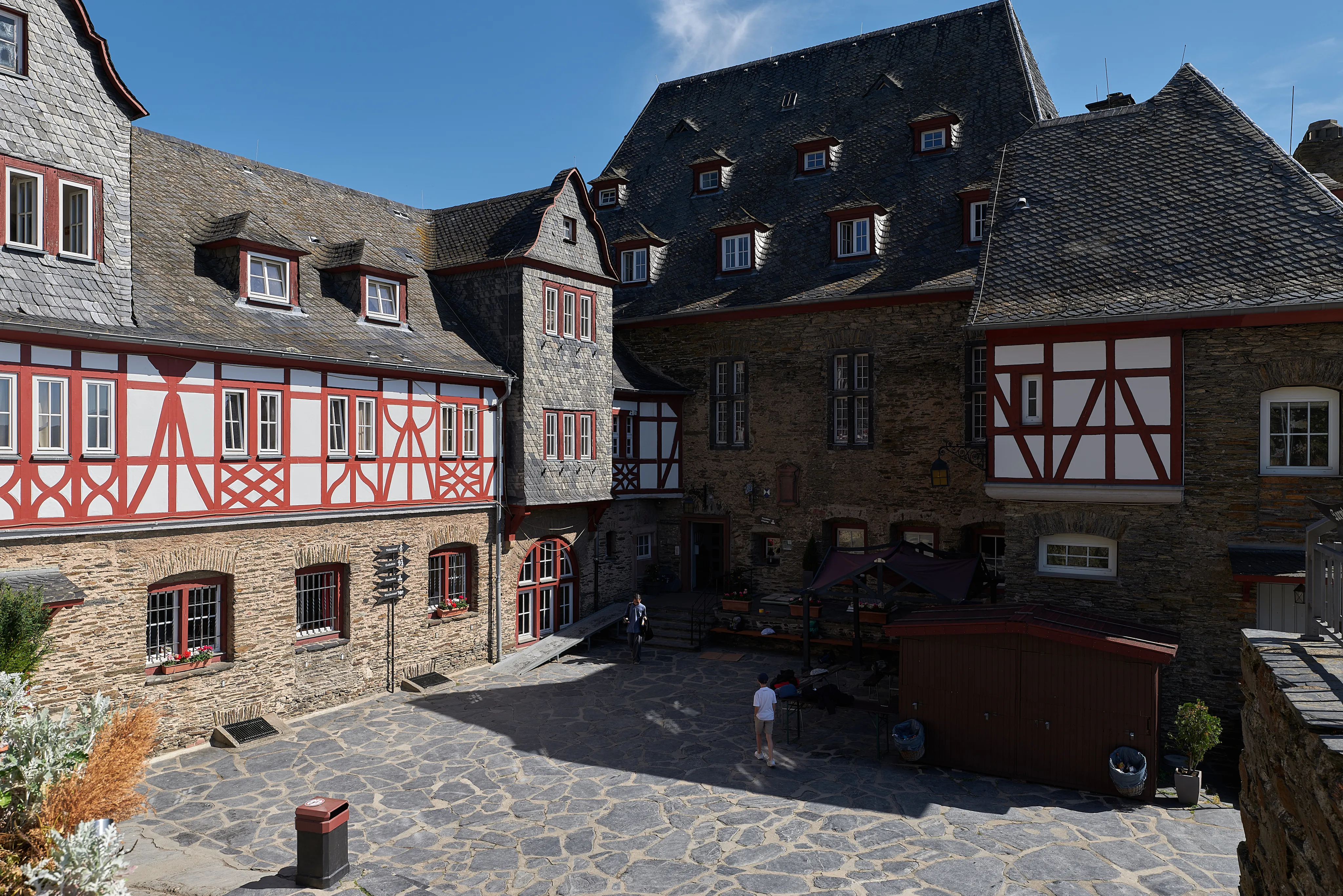
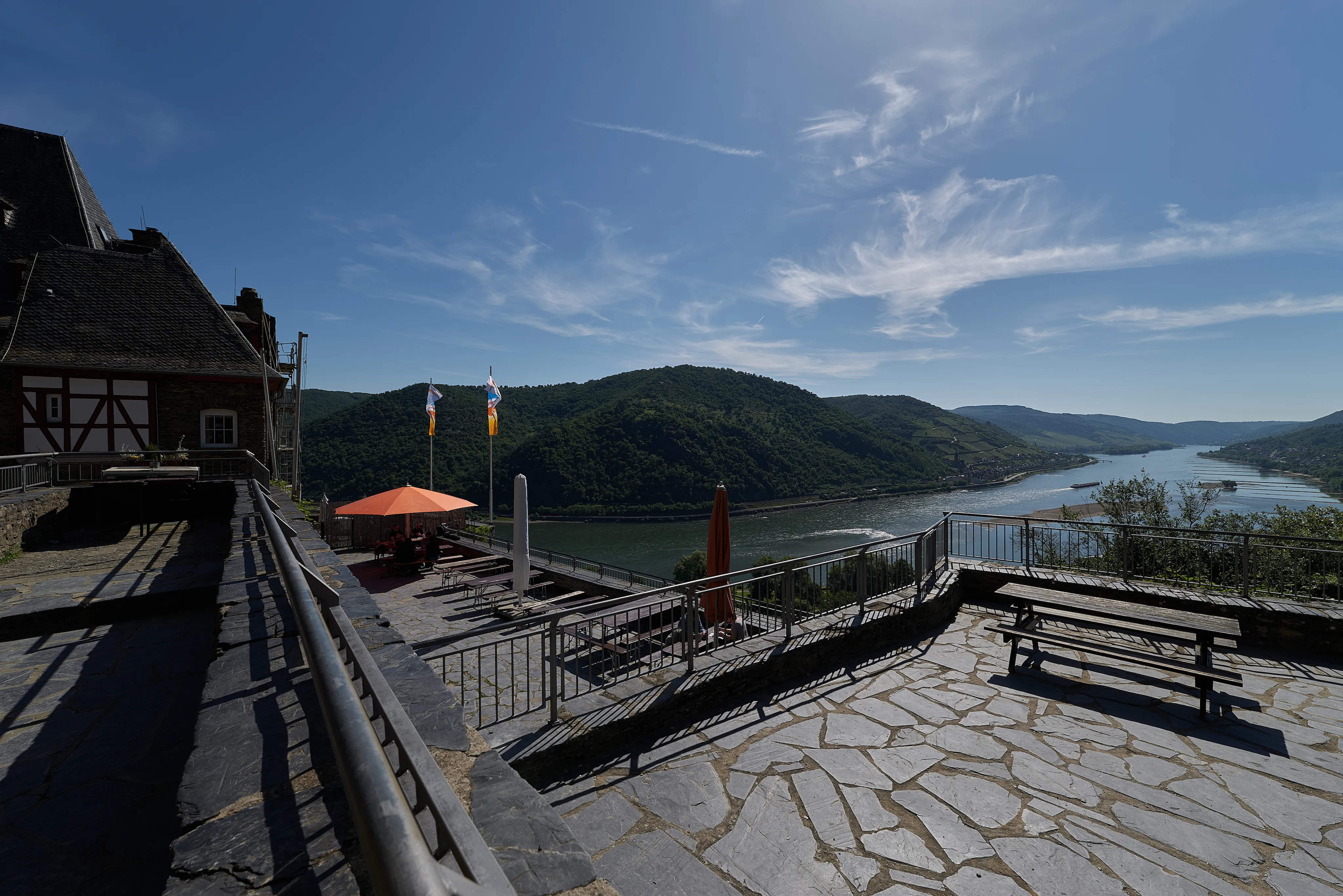
The path continues still higher — to Burg Stahleck. It stands on the rock above the town like a guardian. The castle was built in the twelfth century on the orders of the Archbishop of Cologne. The name translates roughly as “steel rock” or “impregnable corner” — and for a long time it truly remained impregnable. Here the Counts Palatine lived, collected tolls from passing ships and controlled trade. The castle saw sieges, changes of power, rise and decline. In 1689, during the War of the Palatine Succession, French troops blew it up. The walls collapsed, the towers were scattered. For two centuries it lay in ruins. It was restored in the twentieth century — between 1909 and 1913, and finally put in order by 1925–1927. Today it houses a youth hostel — one of the best-known in Germany. Travellers from all over the world spend the night here, and in the mornings the view from the windows takes your breath away: the whole of Bacharach below as if in the palm of your hand, the Rhine gleaming, the vineyards climbing the slopes.
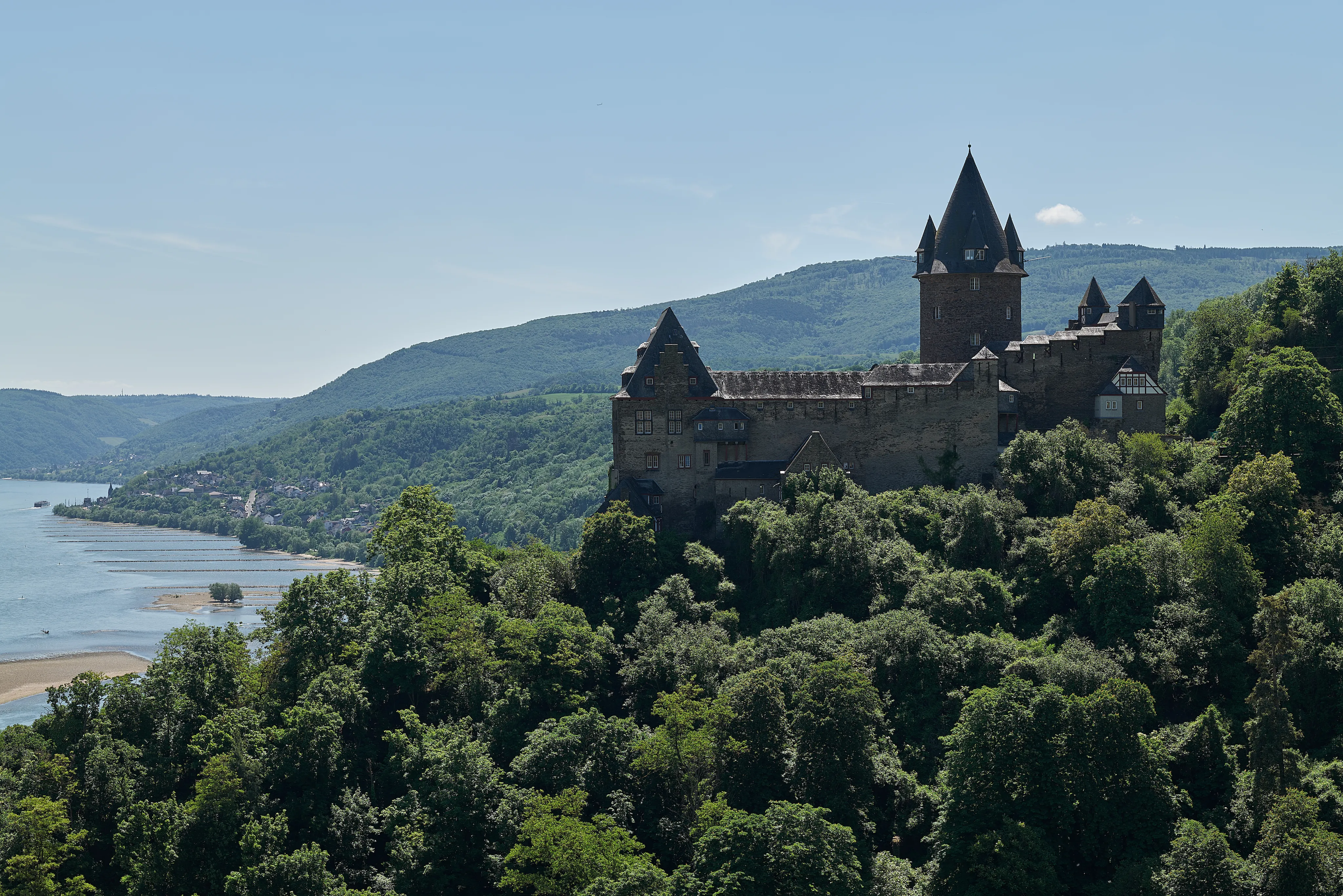
From the height of the castle it becomes especially clear how organically everything is arranged here. The town did not spread outwards — it grew upwards and inwards upon itself. The streets follow the contours of the hill. The walls once protected against enemies; today they protect the atmosphere. The towers — the Postenturm, which once served as a water reservoir, the Marktturm by the market square where wine was traded in the Middle Ages, the Kranentor by the river — stand like sentinels. Some are partly ruined, yet that is precisely what gives them life. Not museum pieces, but real, with moss, cracks and history in every stone.
If you descend again into the town and walk along the main street — Oberstraße — you see how past and present intertwine. People live in the half-timbered houses. In the cellars there are wine vaults. In the cafés on the square they serve Riesling and simple Rhine food: sausages, potatoes, fresh bread. In summer the town fills with voices — tourists, but not crowds, rather those who come precisely for the atmosphere. In winter there is silence, smoke from the chimneys, and it seems that time stopped somewhere in the fifteenth century.
Bacharach has endured a great deal. In the Middle Ages the population reached six thousand — a large and wealthy town for its time. It was free, possessed rights, traded and grew rich. Then came the Thirty Years’ War, plague, fires, French invasions. In 1689 the town suffered severely. It was called the “cuckoo town” — the old inhabitants had gone, and newcomers settled the empty houses like a cuckoo in another’s nest. Then came Napoleon, the Prussian period, decline when the harbour silted up and trade moved away. But in the nineteenth century the romance of the Rhine arrived — poets, painters, Victor Hugo, Heinrich Heine, Clemens Brentano. They sang the praises of these places, and Bacharach came back to life.
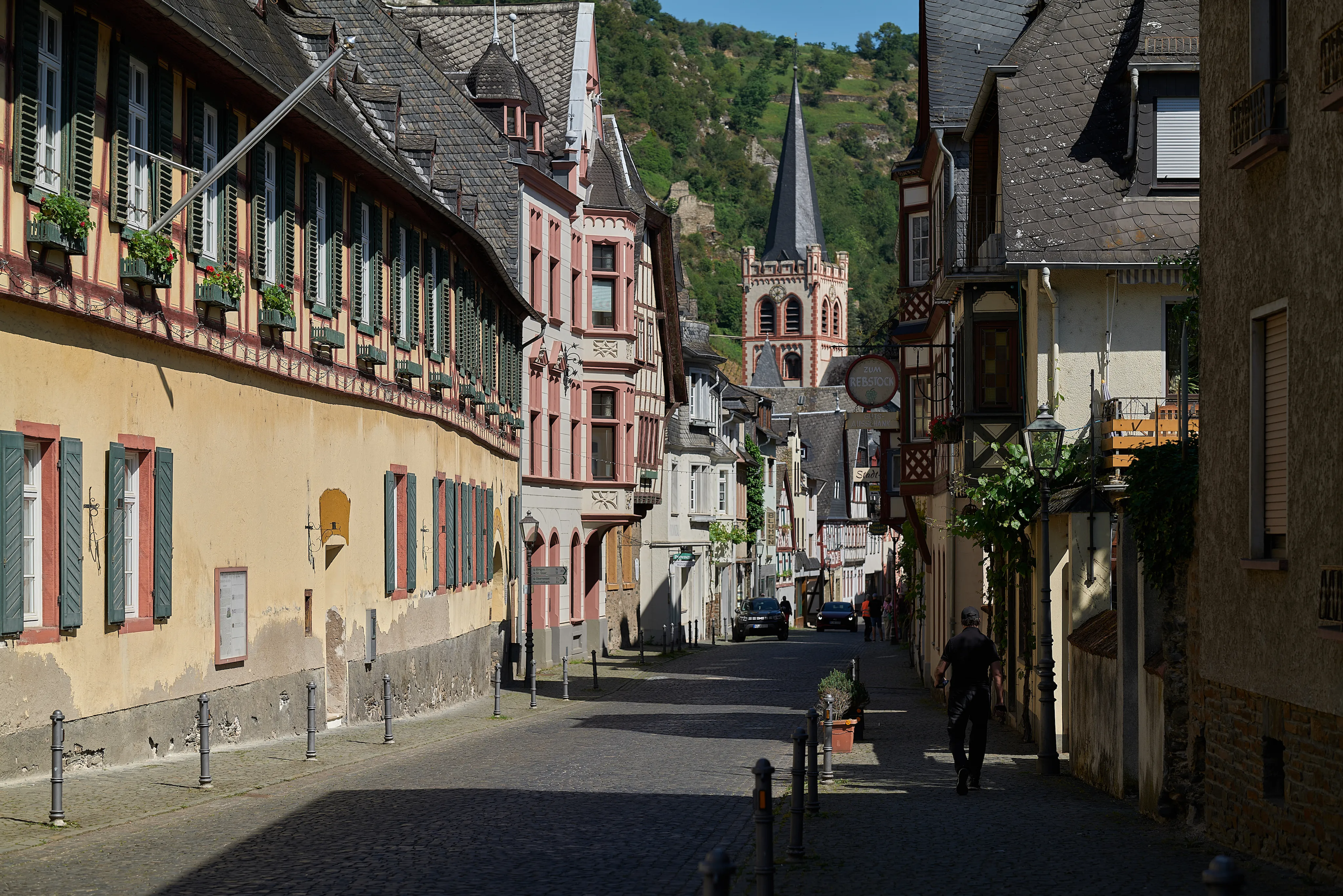
Today the town has about one thousand eight hundred inhabitants. It is not an open-air museum. People live, work and raise children here. Winegrowers tend the vines, innkeepers welcome guests, locals in the taverns tell stories of their ancestors. And all of this takes place against the backdrop of the same walls, the same towers, the same views as hundreds of years ago.
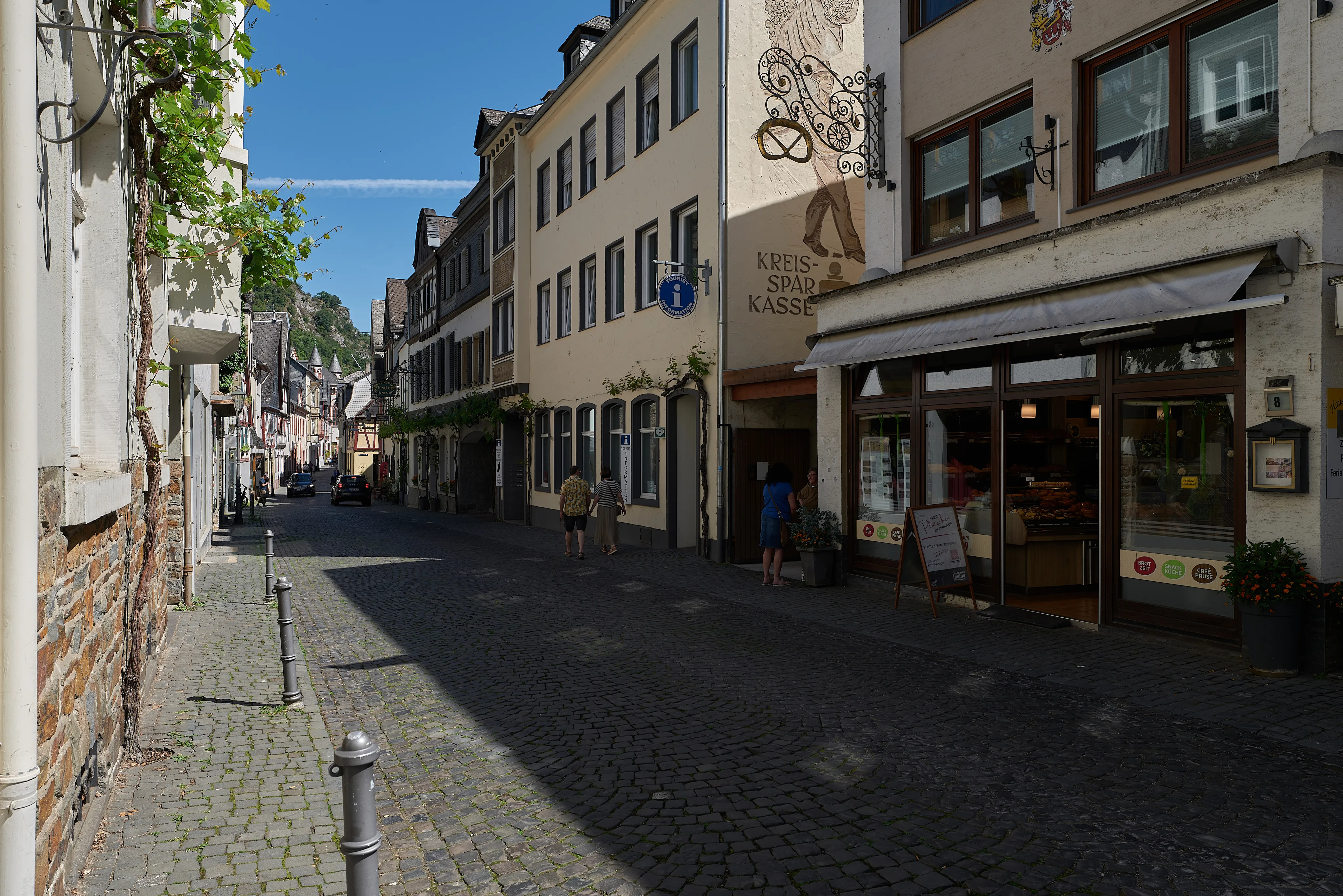
If one tried to describe Bacharach in a single word, it would be “wholeness.” Everything is connected here: the river feeds the vineyards, the vineyards feed the town, the town is protected by the walls and the castle, and the castle looks out over the river. The half-timbered houses stand where they stood in the fourteenth century. The ruins of the chapel recall the dark pages of history, yet also how people are capable of creating beauty even after tragedies. St Peter’s Church gathers its congregation. The castle receives young travellers. Wine flows like a river — in both the literal and the figurative sense.
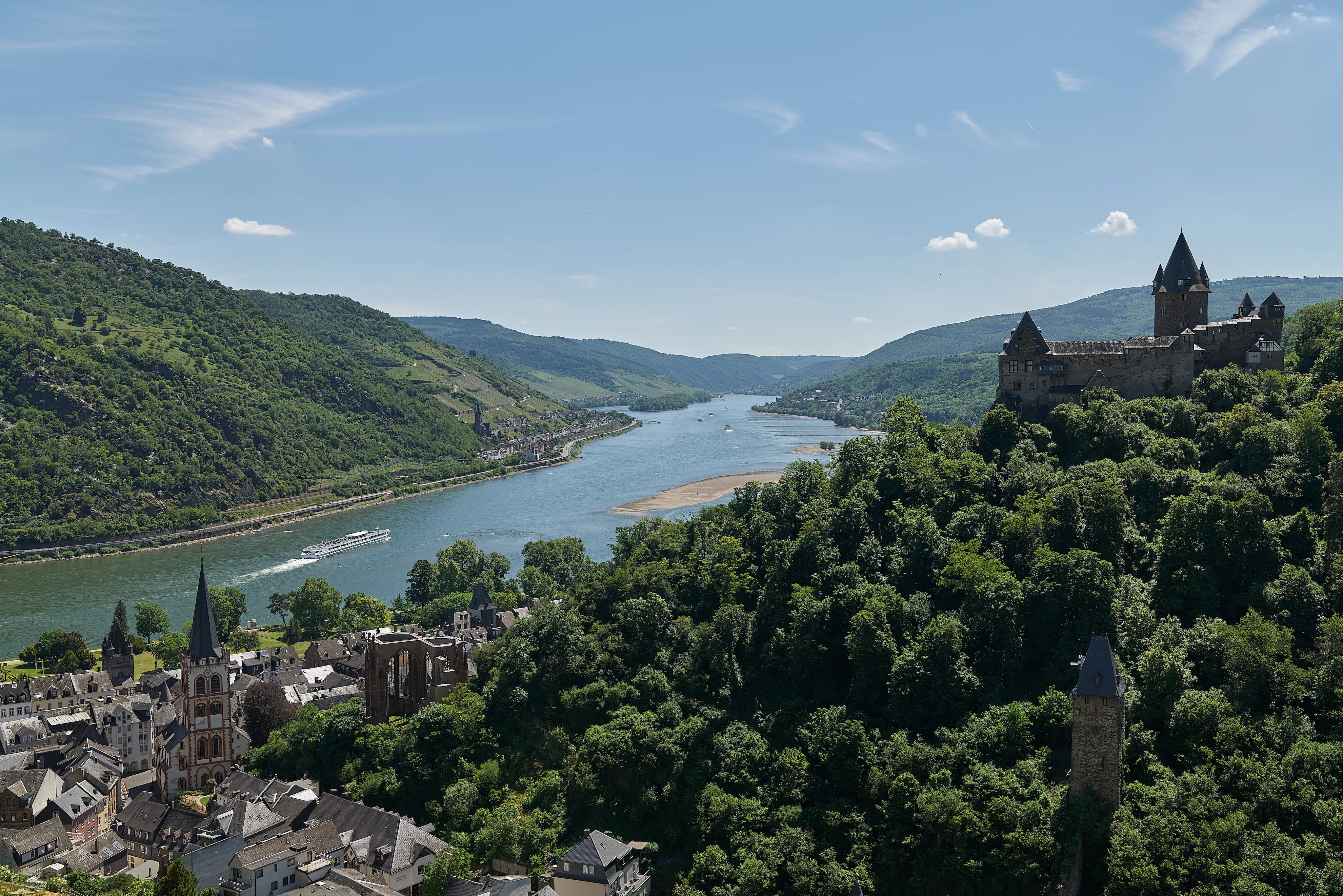
There is no need to seek out individual sights. It is enough simply to walk along the street, look around, breathe in the smell of wet stone after rain and listen to the Rhine murmuring below. Bacharach does not tell its story loudly. It whispers. And if you listen carefully, you will hear its entire history: from the Roman winegrowers to today’s vintners, from the medieval merchants to the present inhabitants who simply live in one of the most atmospheric places on the Rhine.
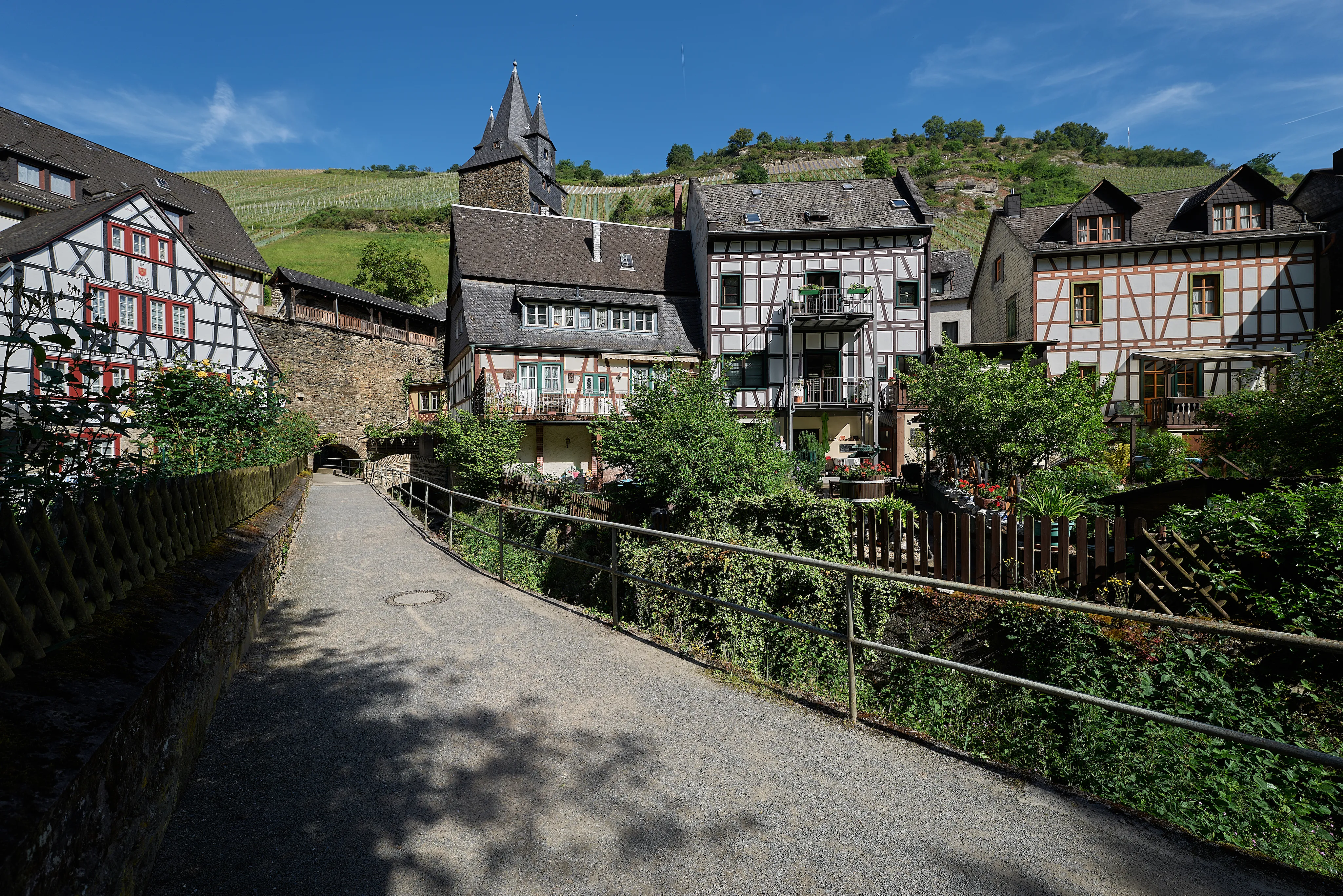
The town does not change for the sake of tourists. It remains itself. And that is precisely why, when you leave, you understand: you were not in a museum. You were in a home that has stood for nine hundred years and, it seems, intends to stand for as many more. Quiet, proud, a little weathered by time, yet full of life. Bacharach.
Gallery