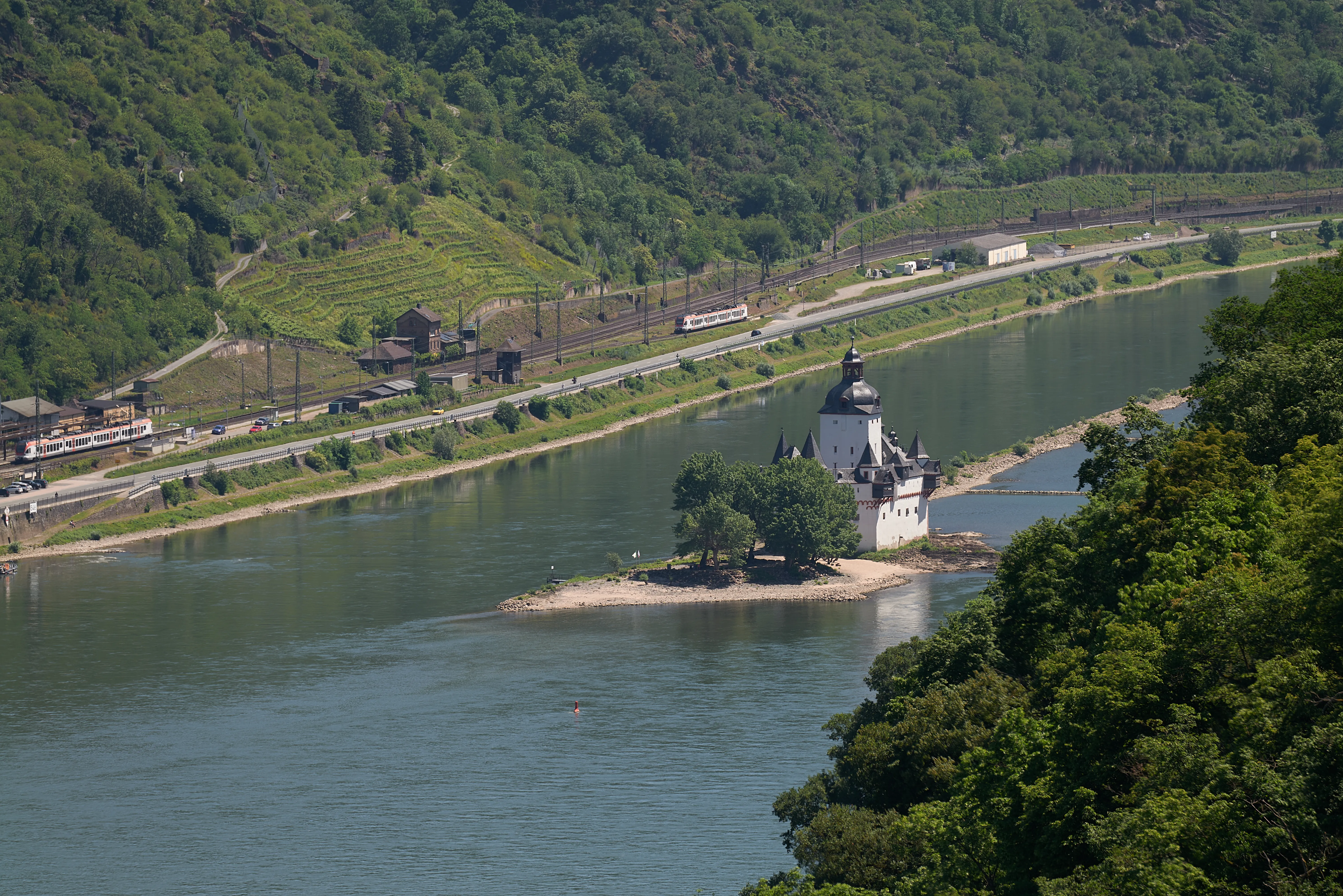
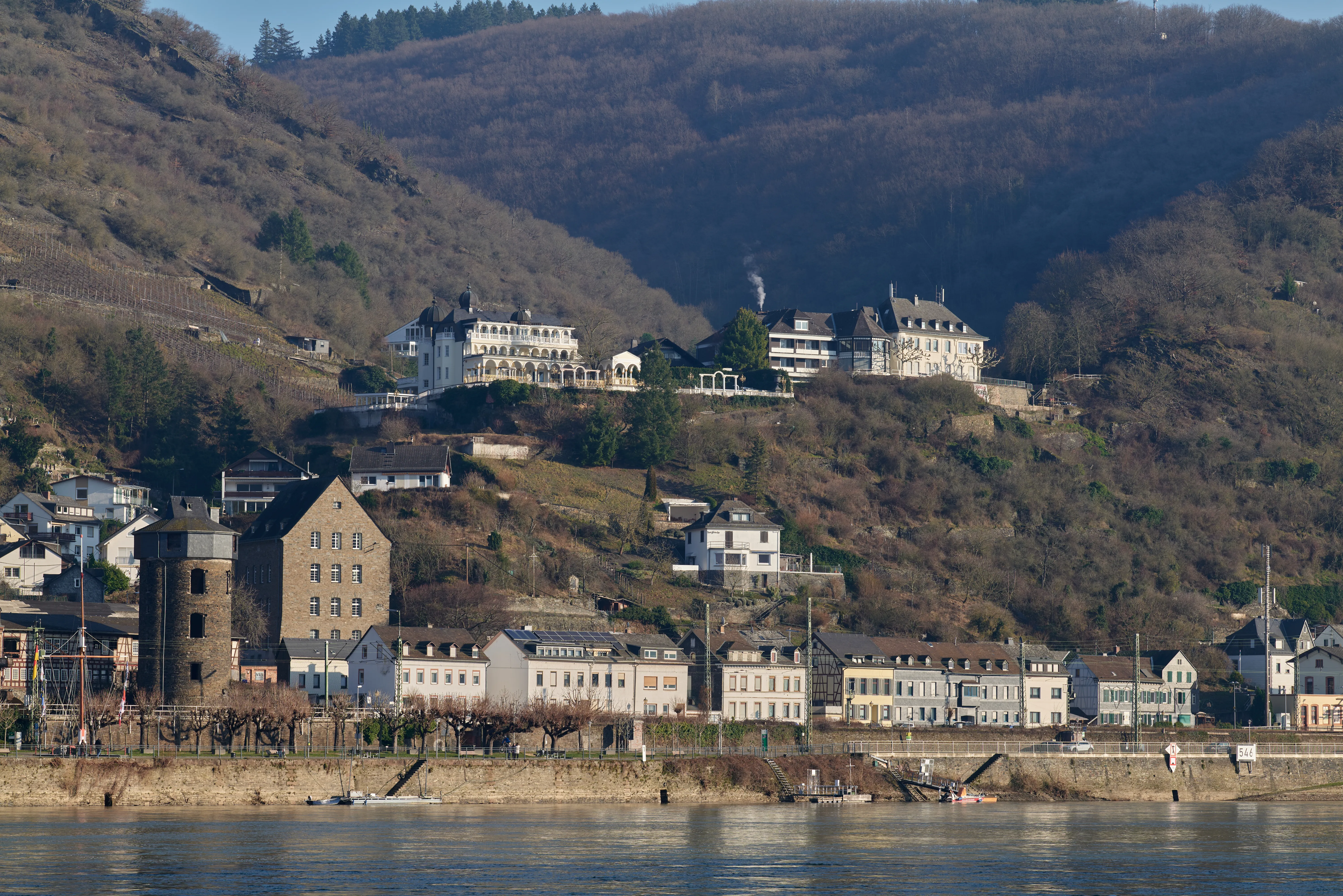
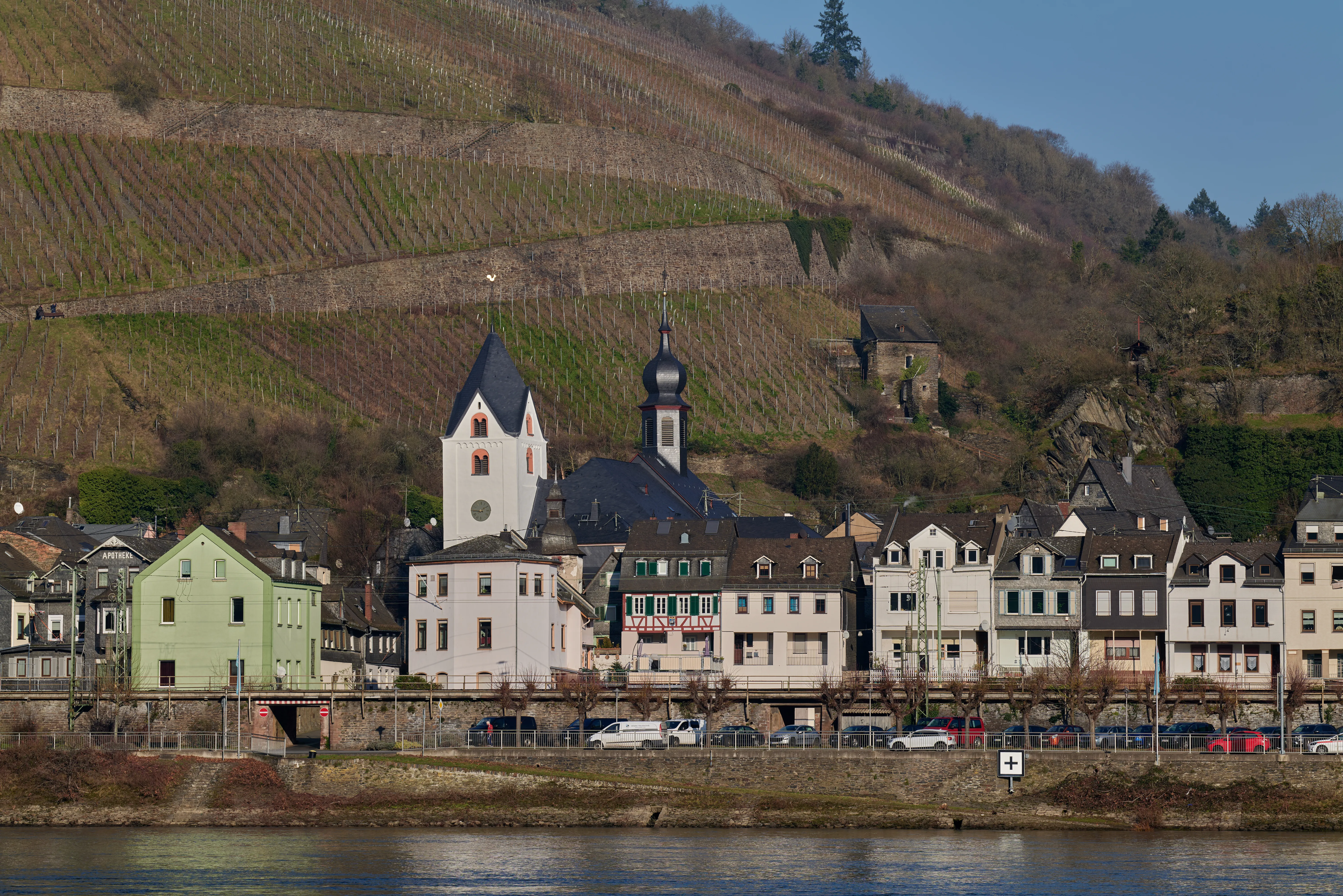
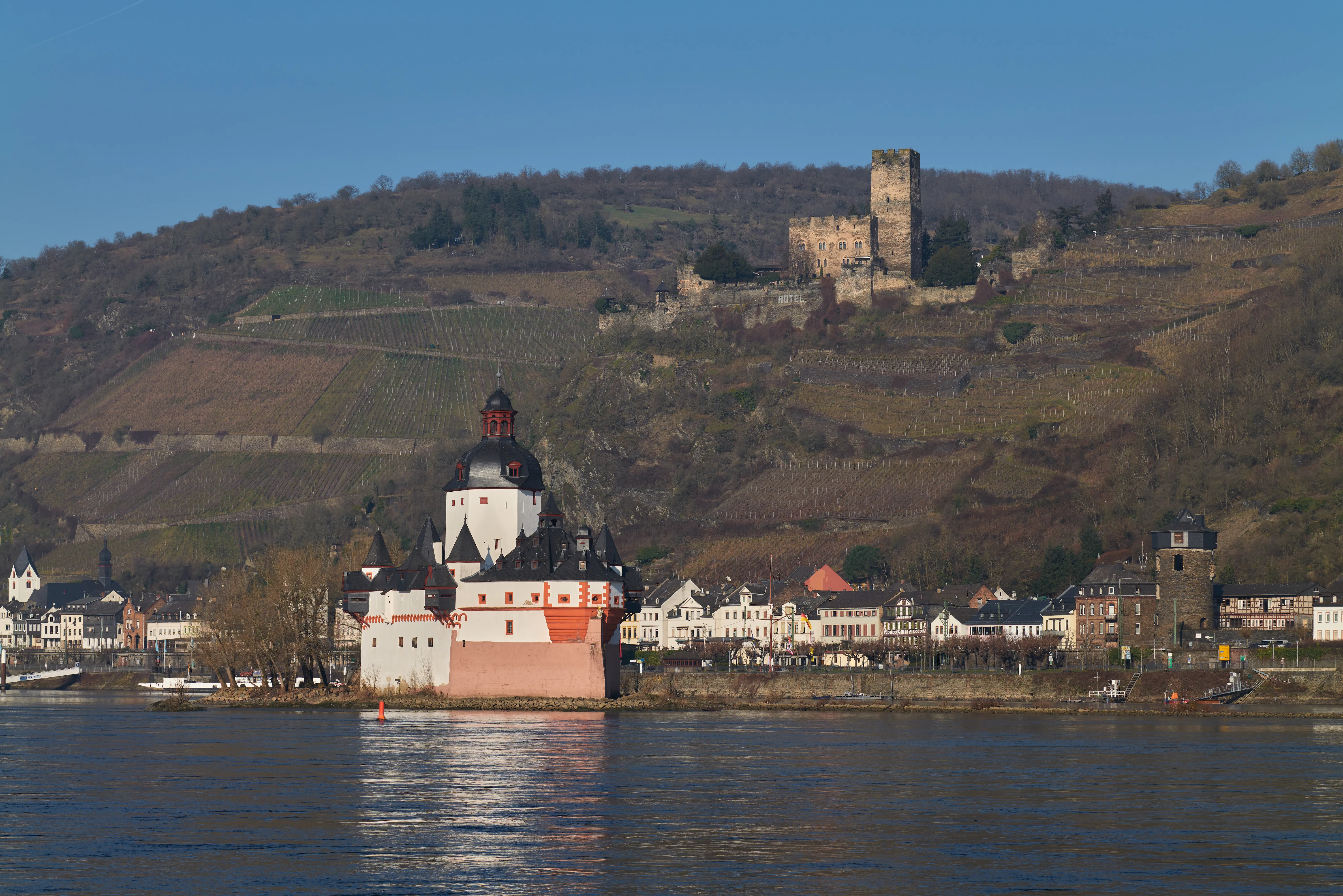
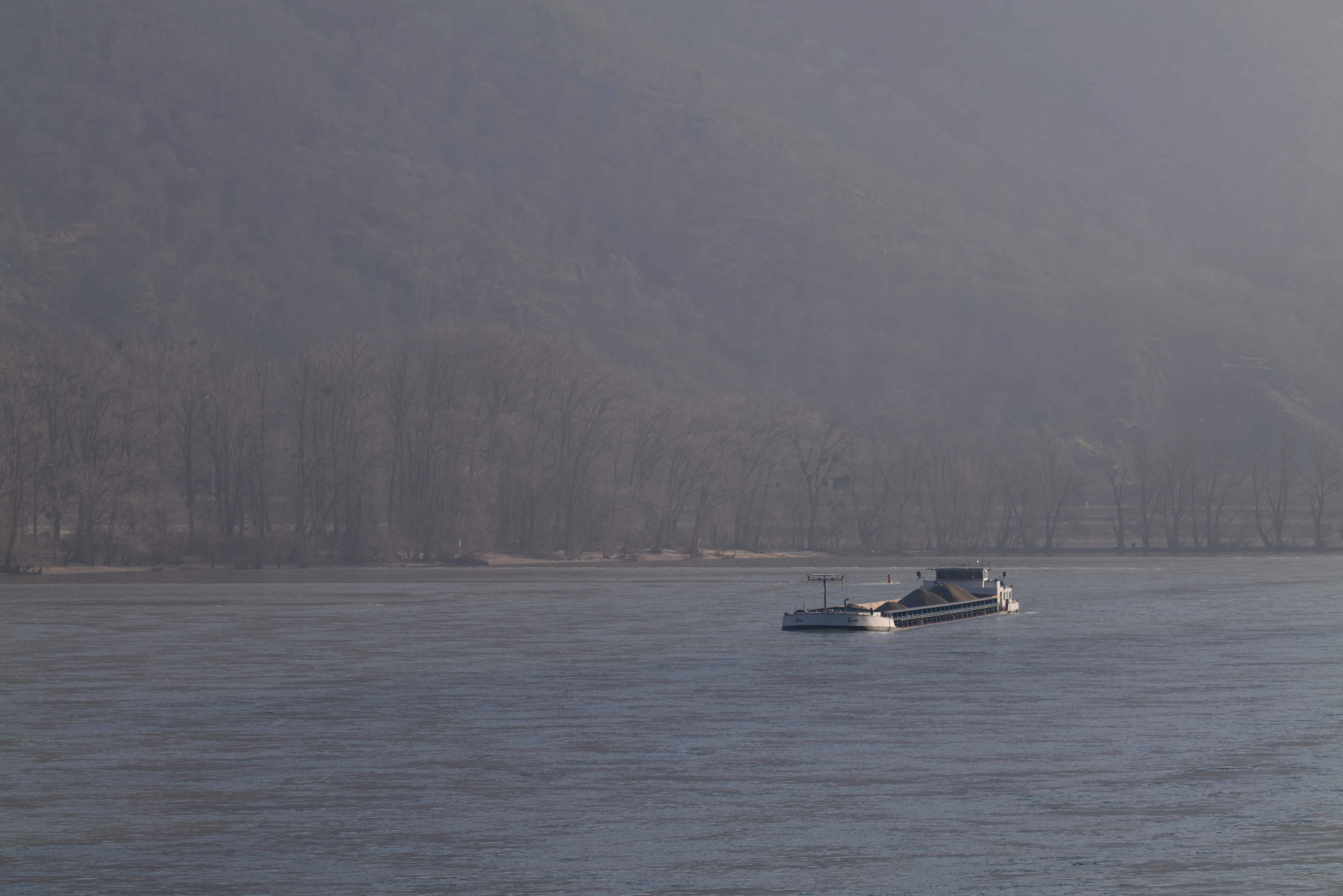
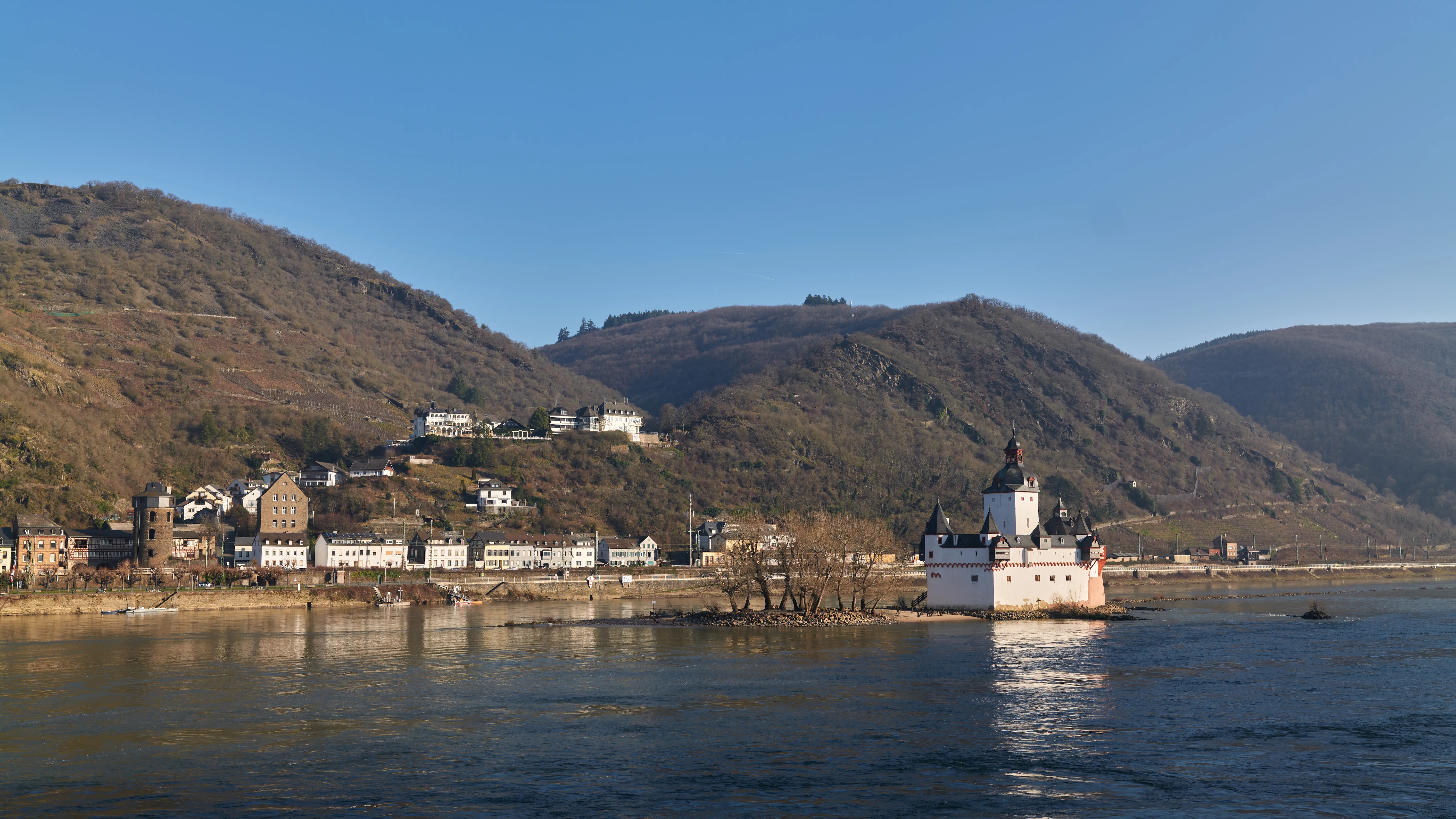
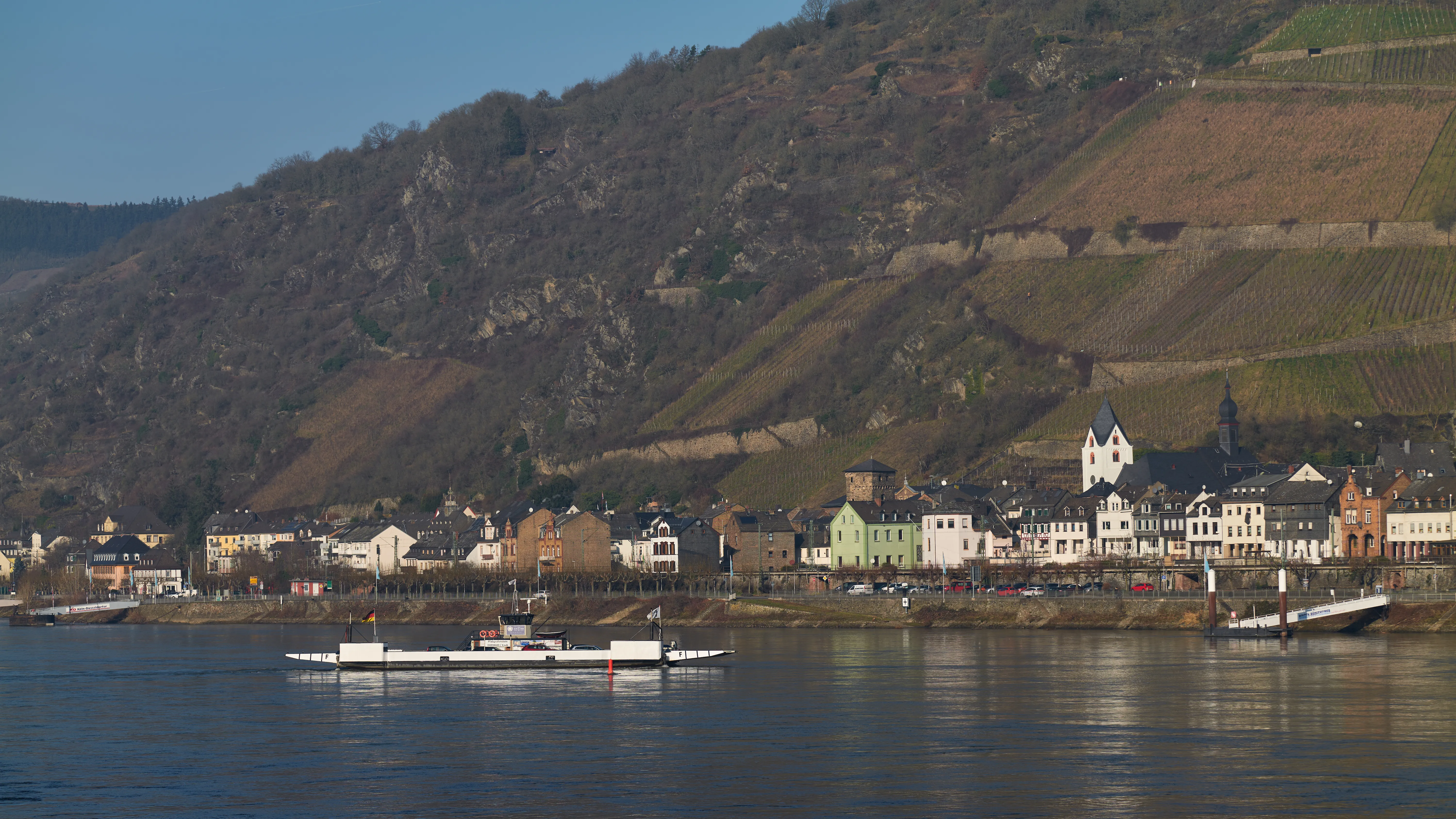
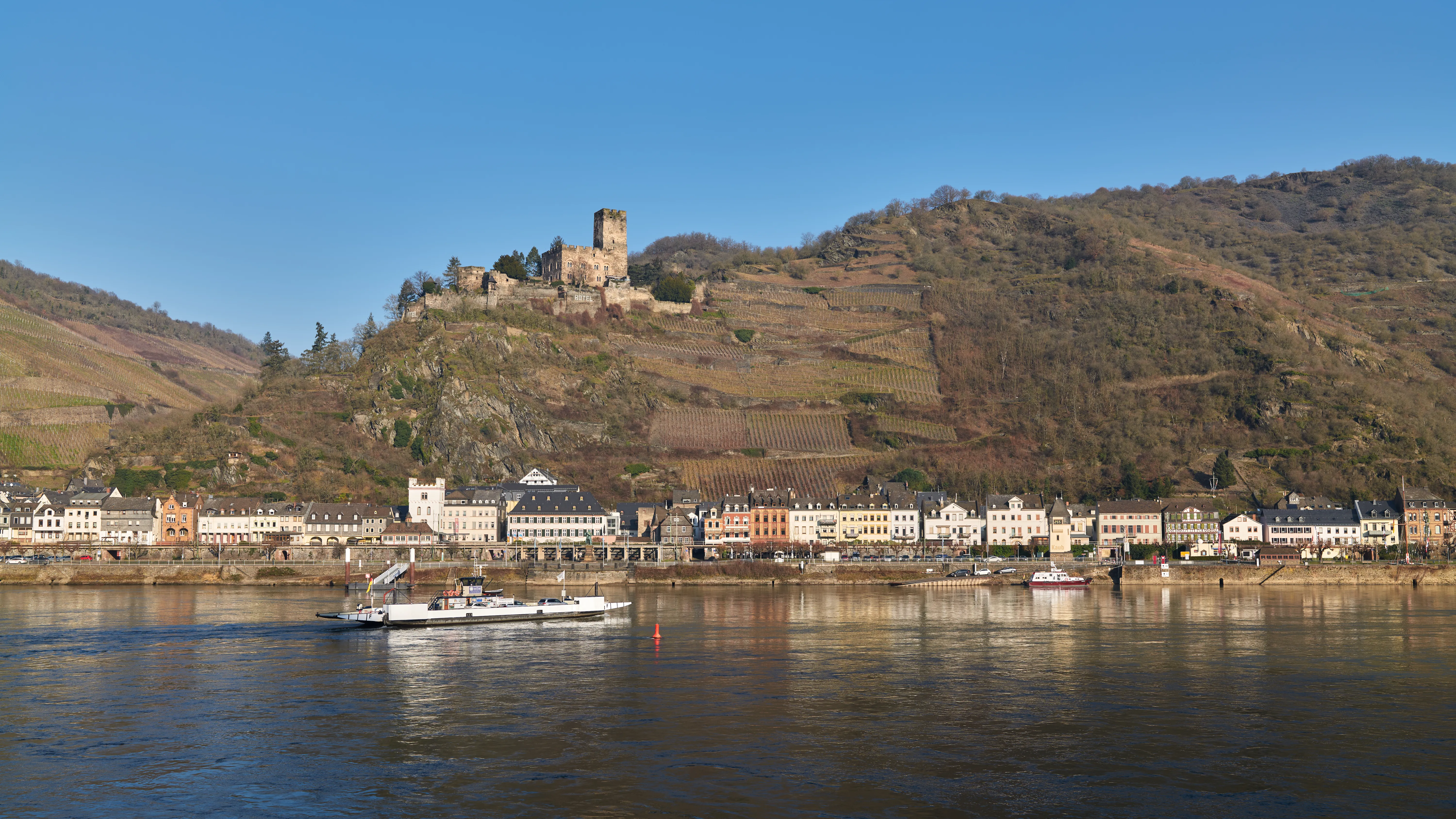
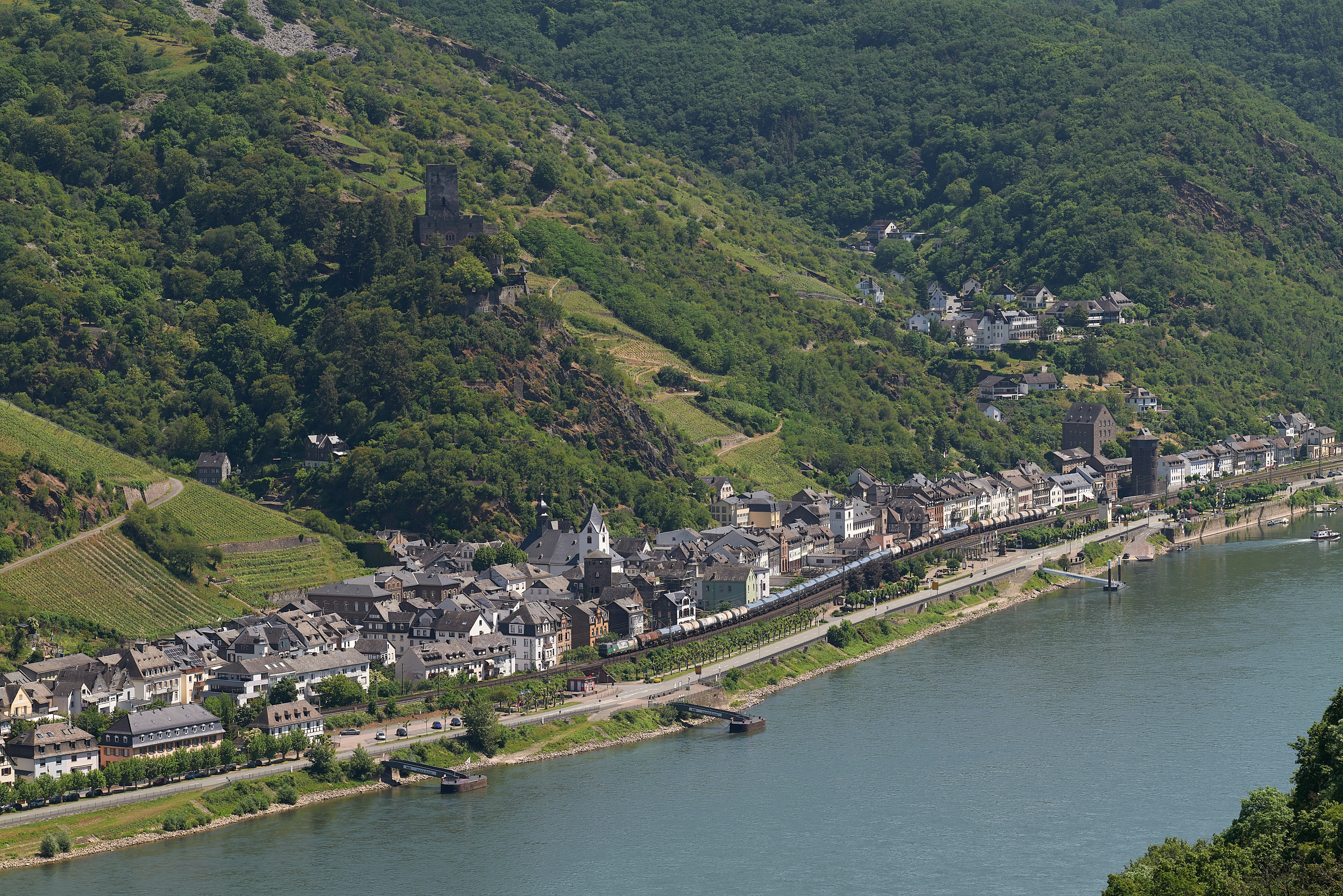
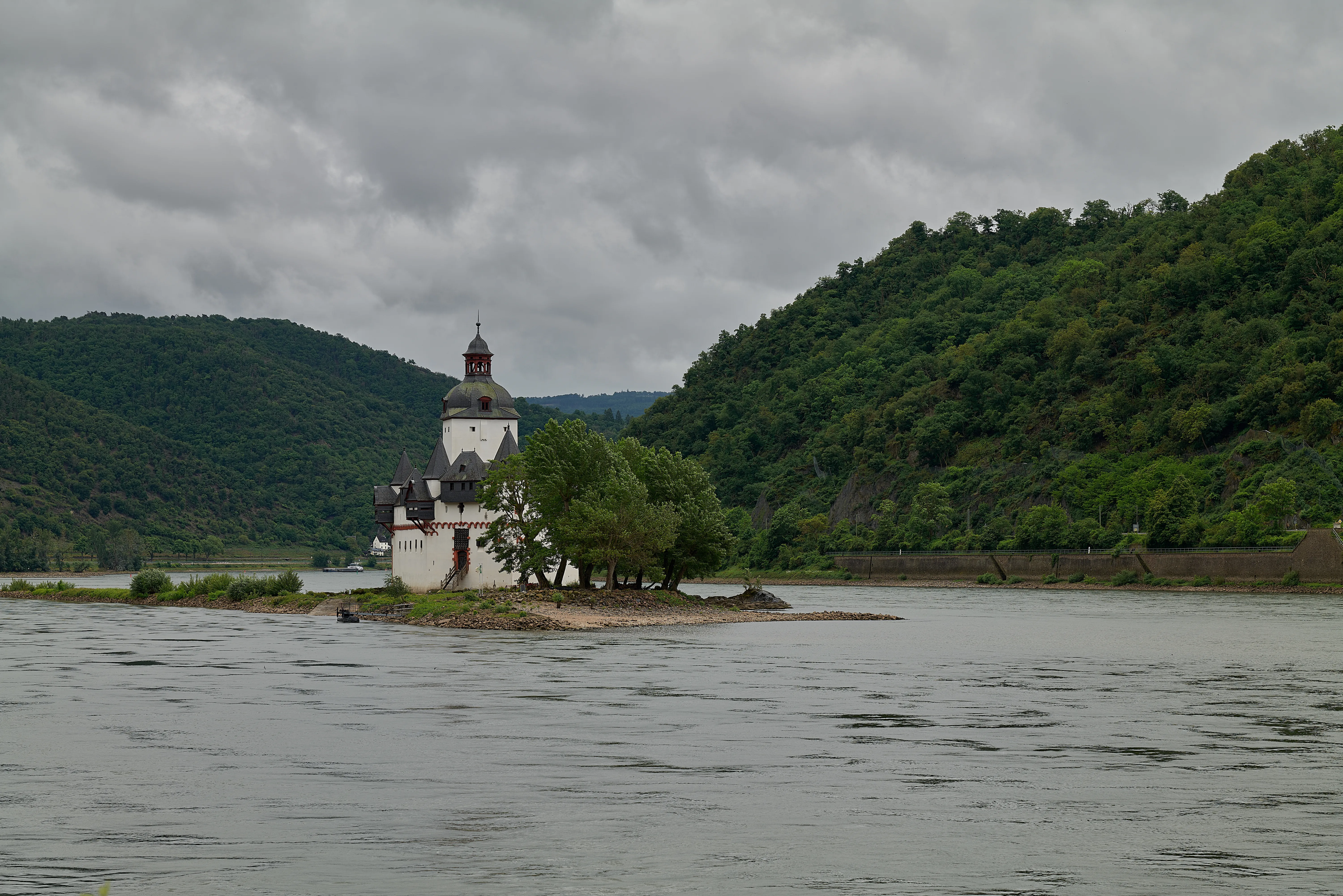
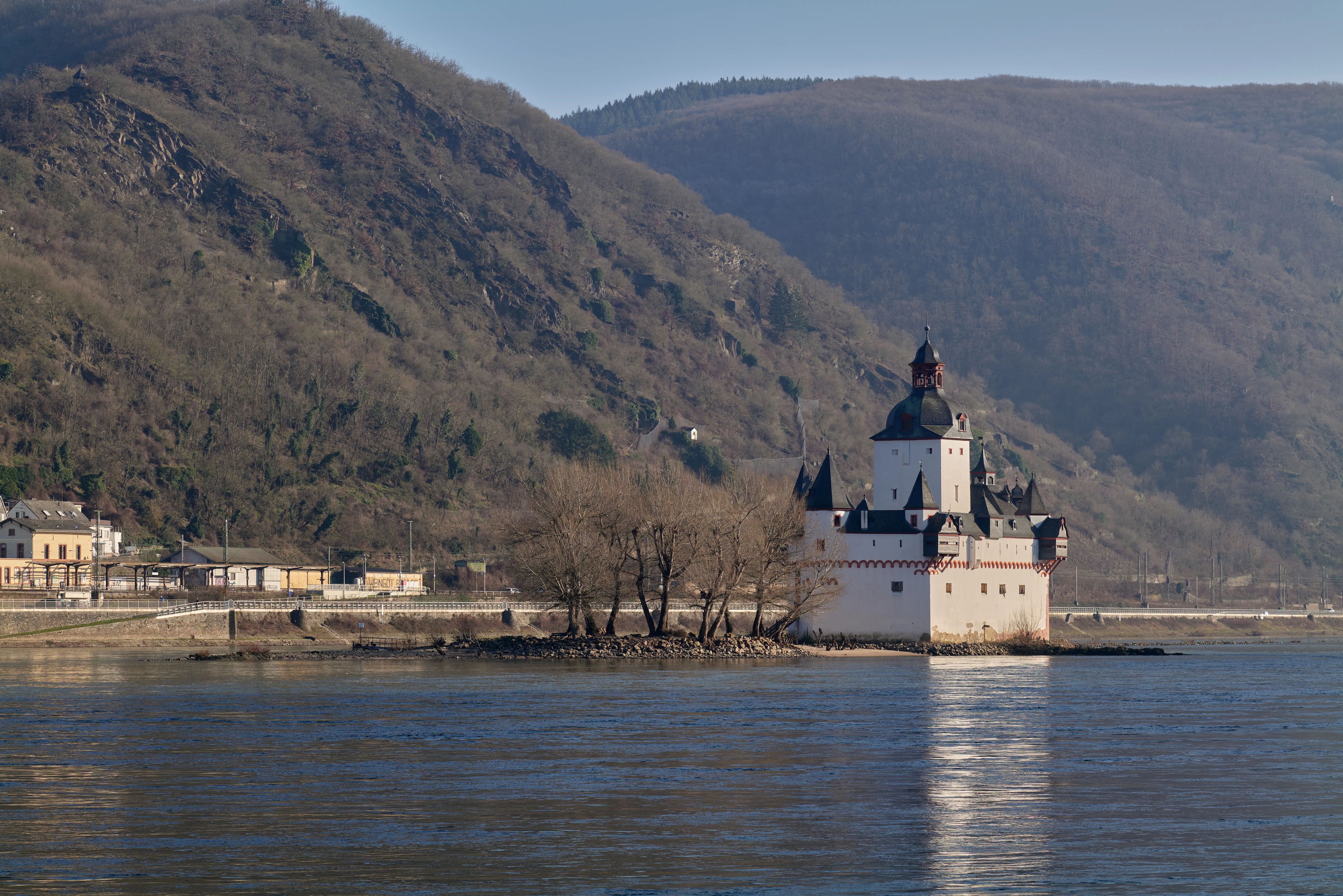
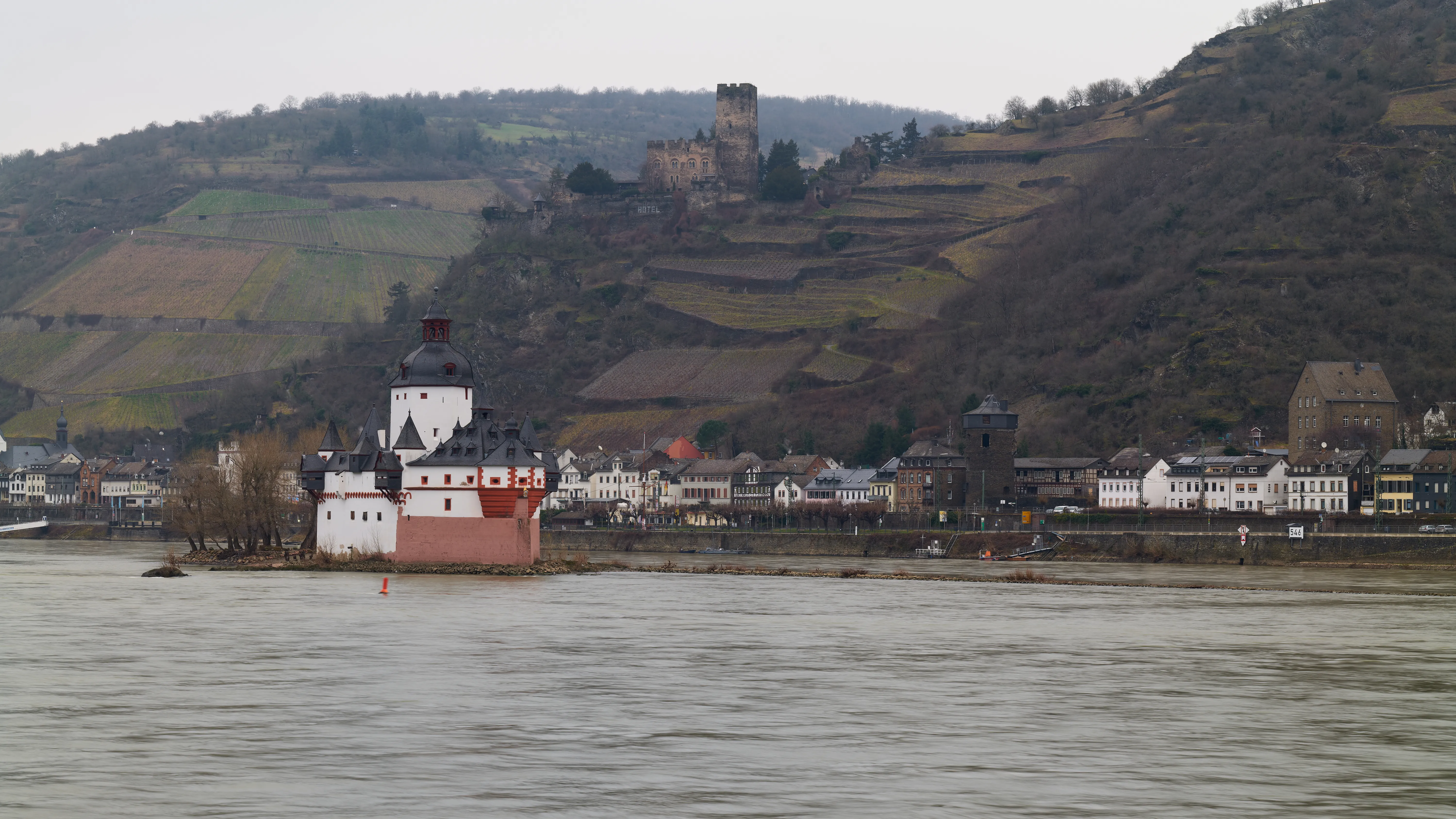
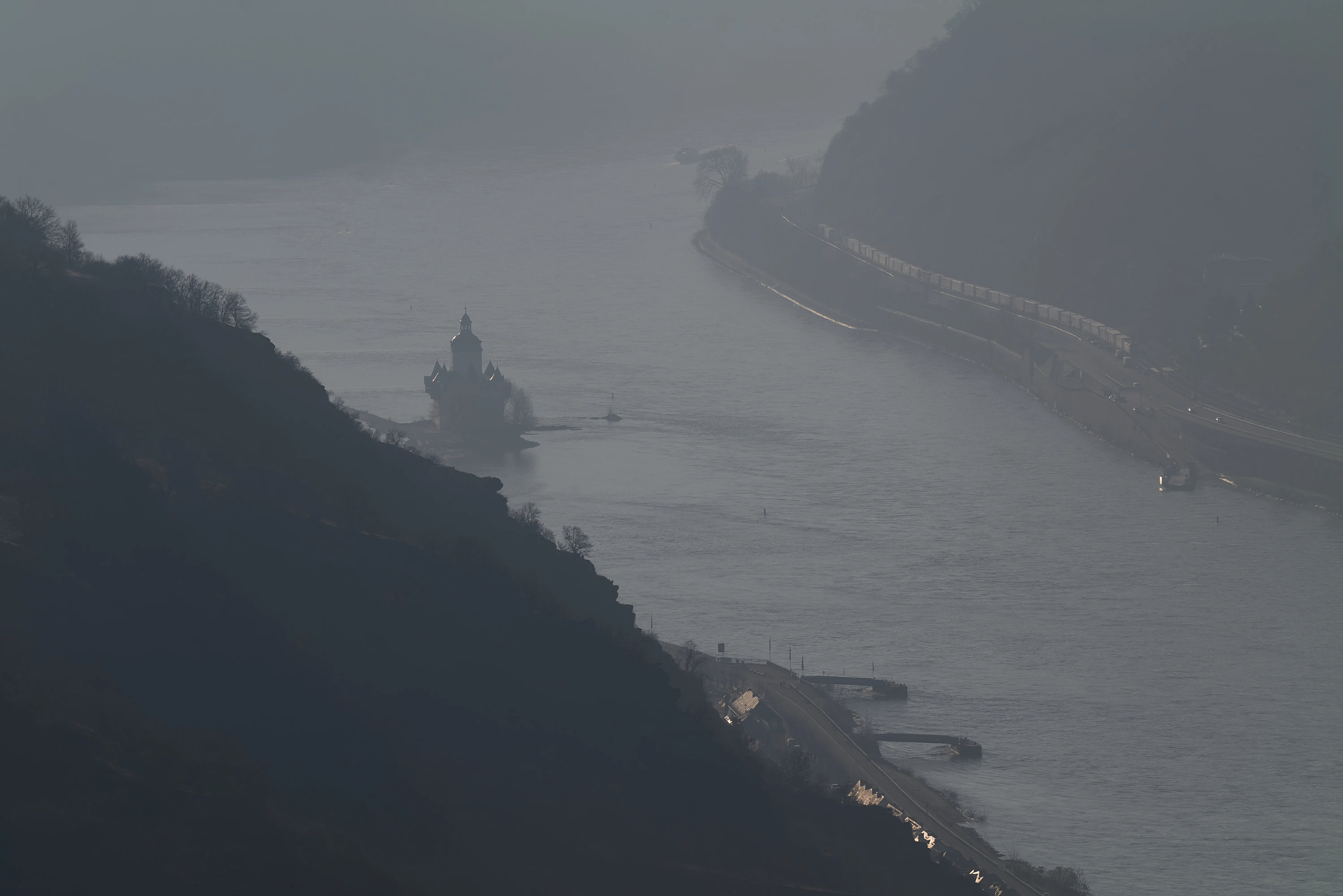
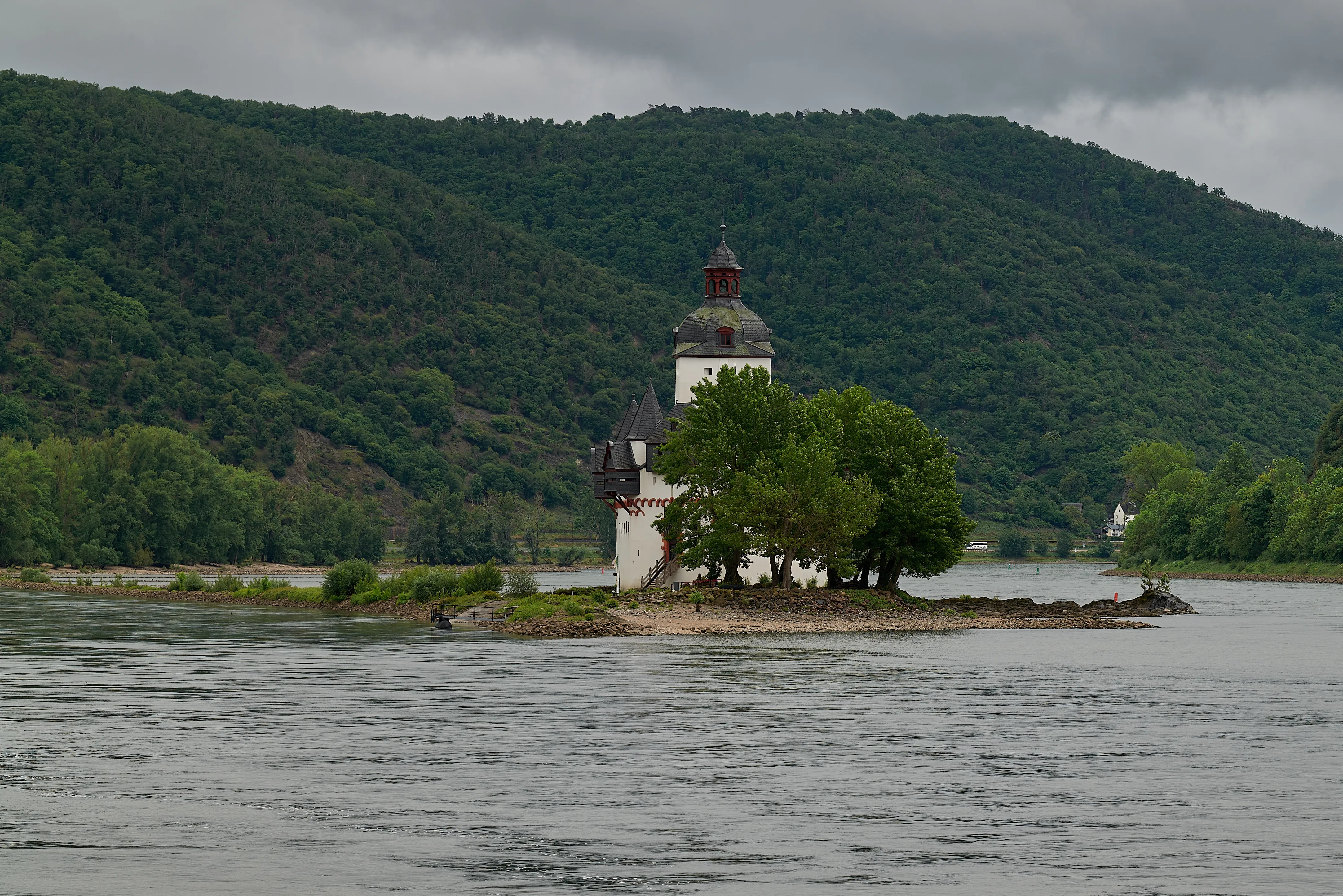
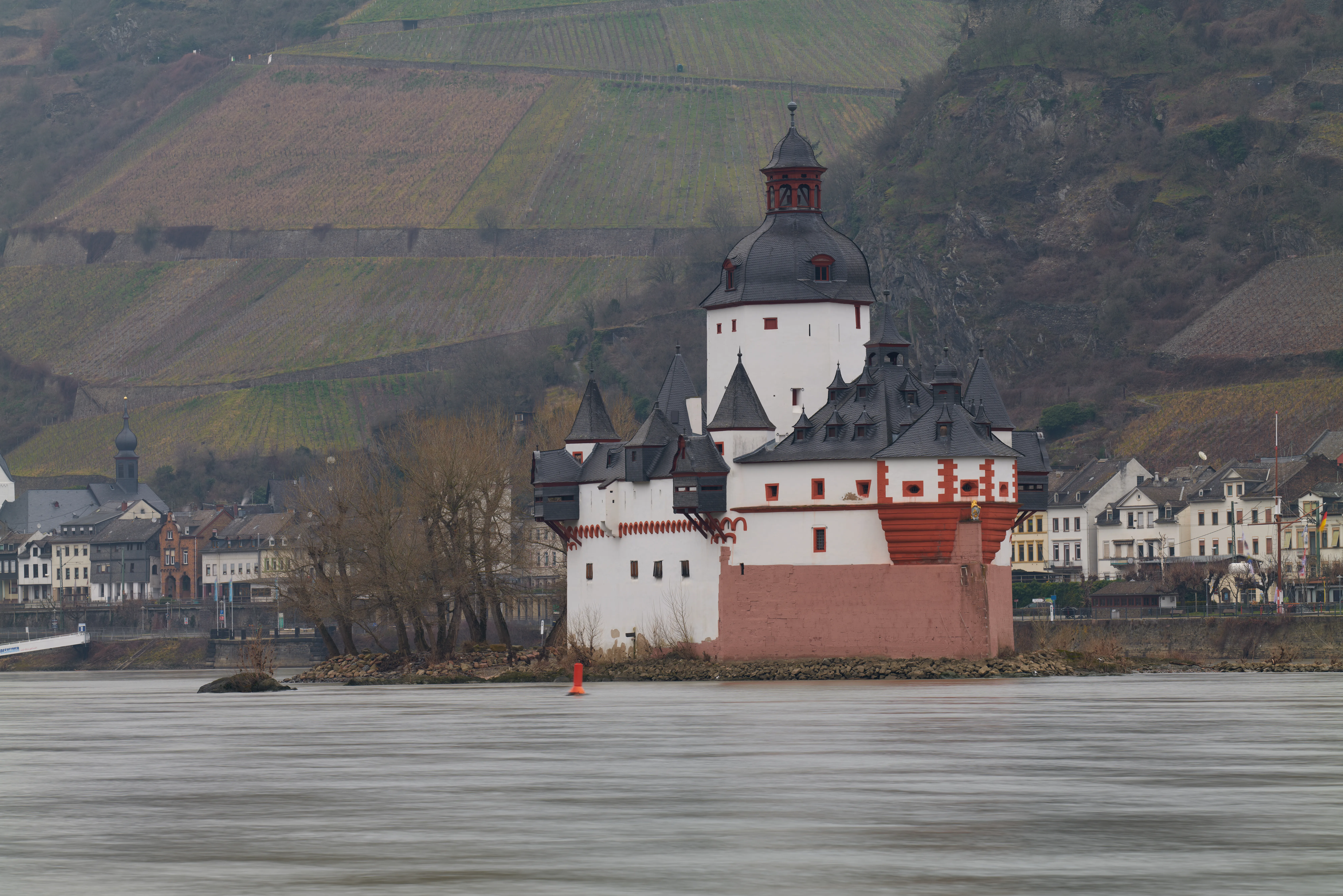
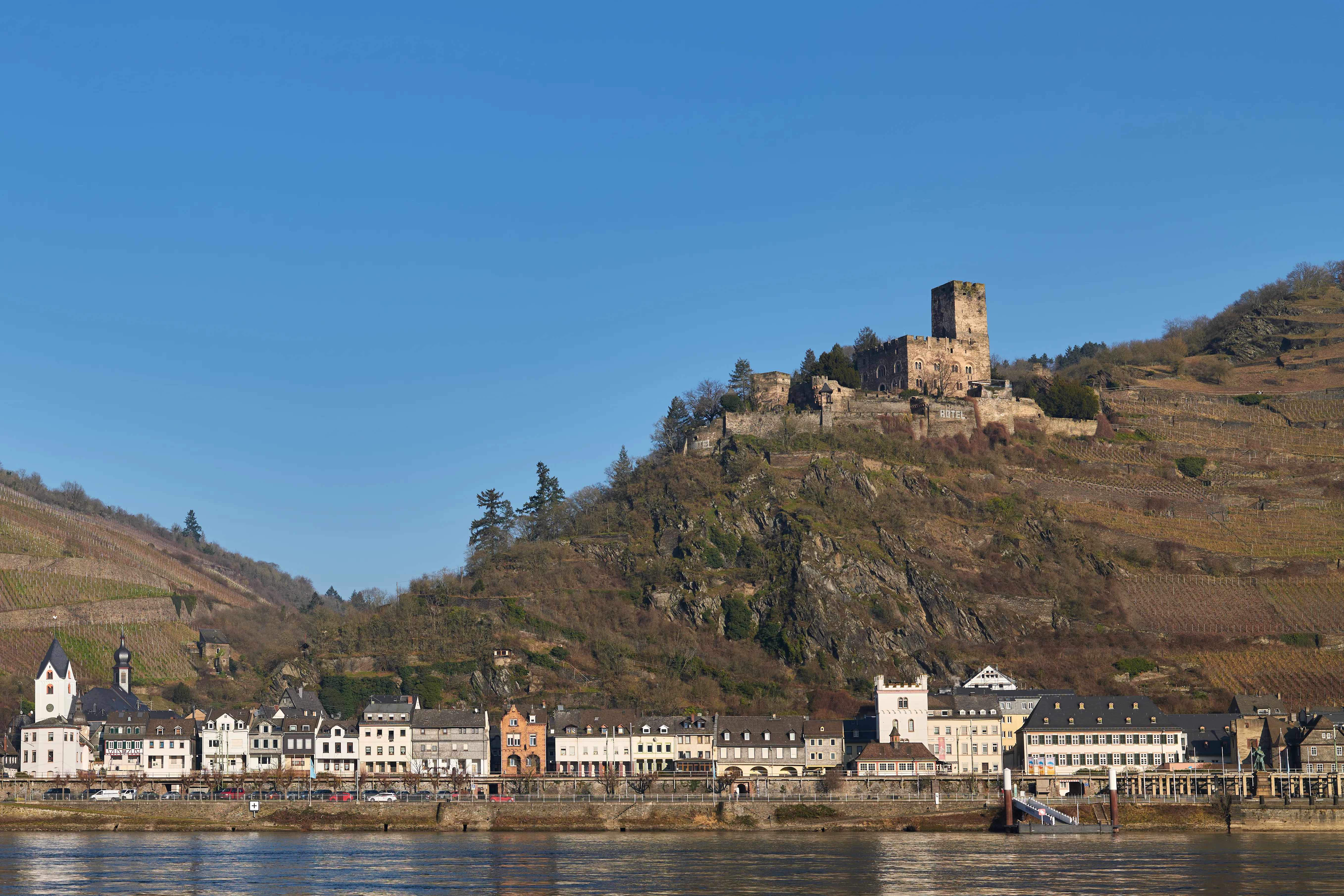
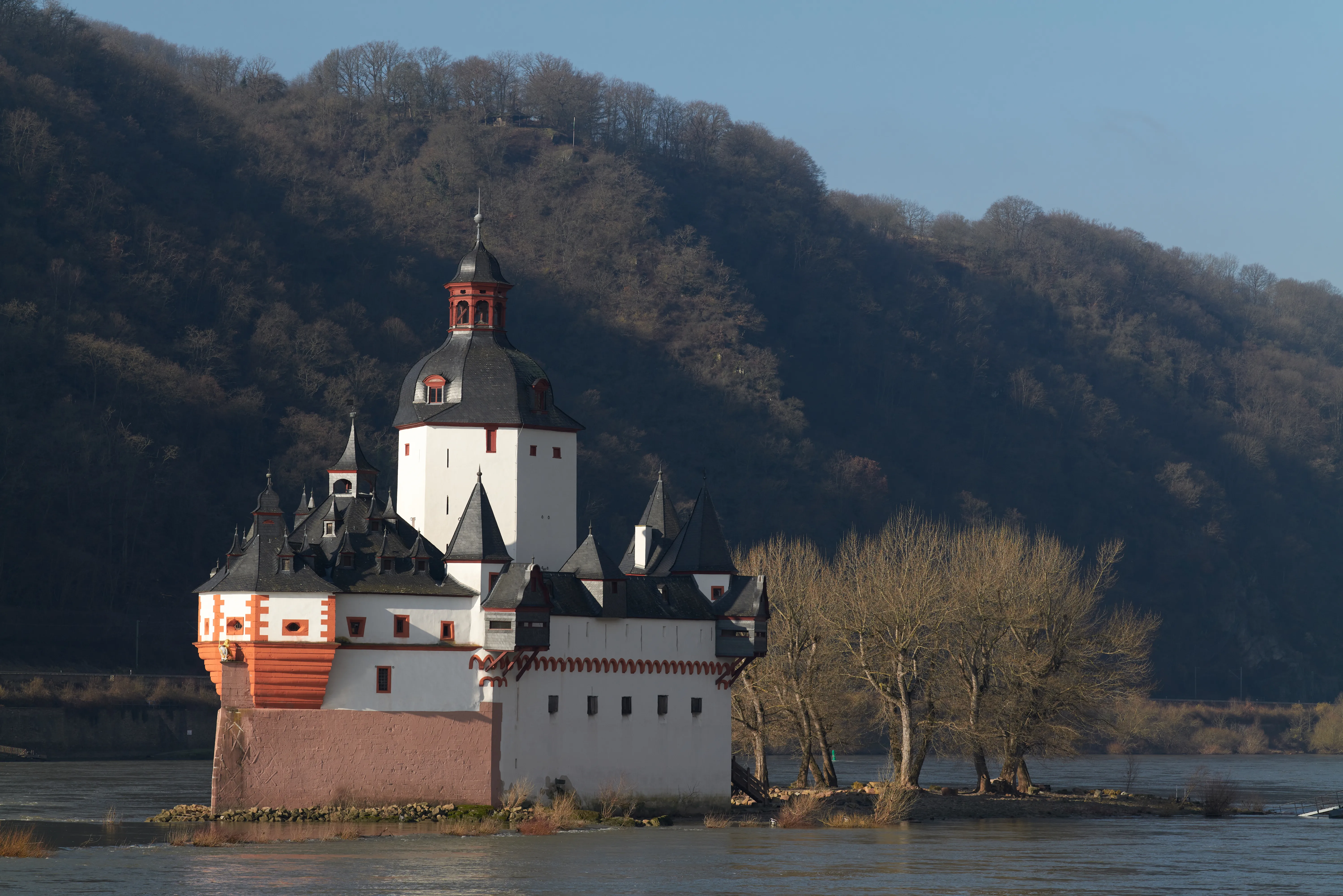
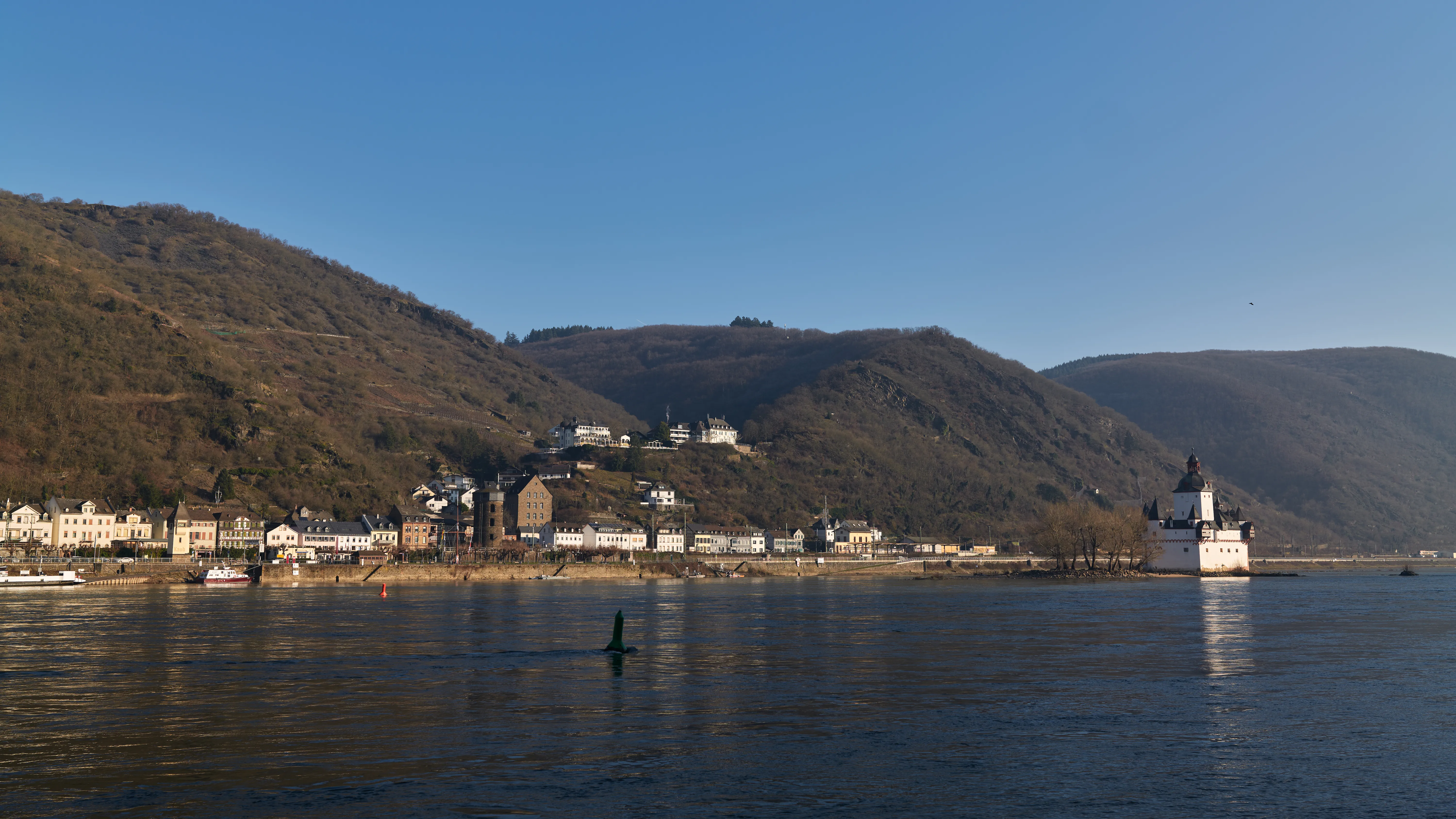
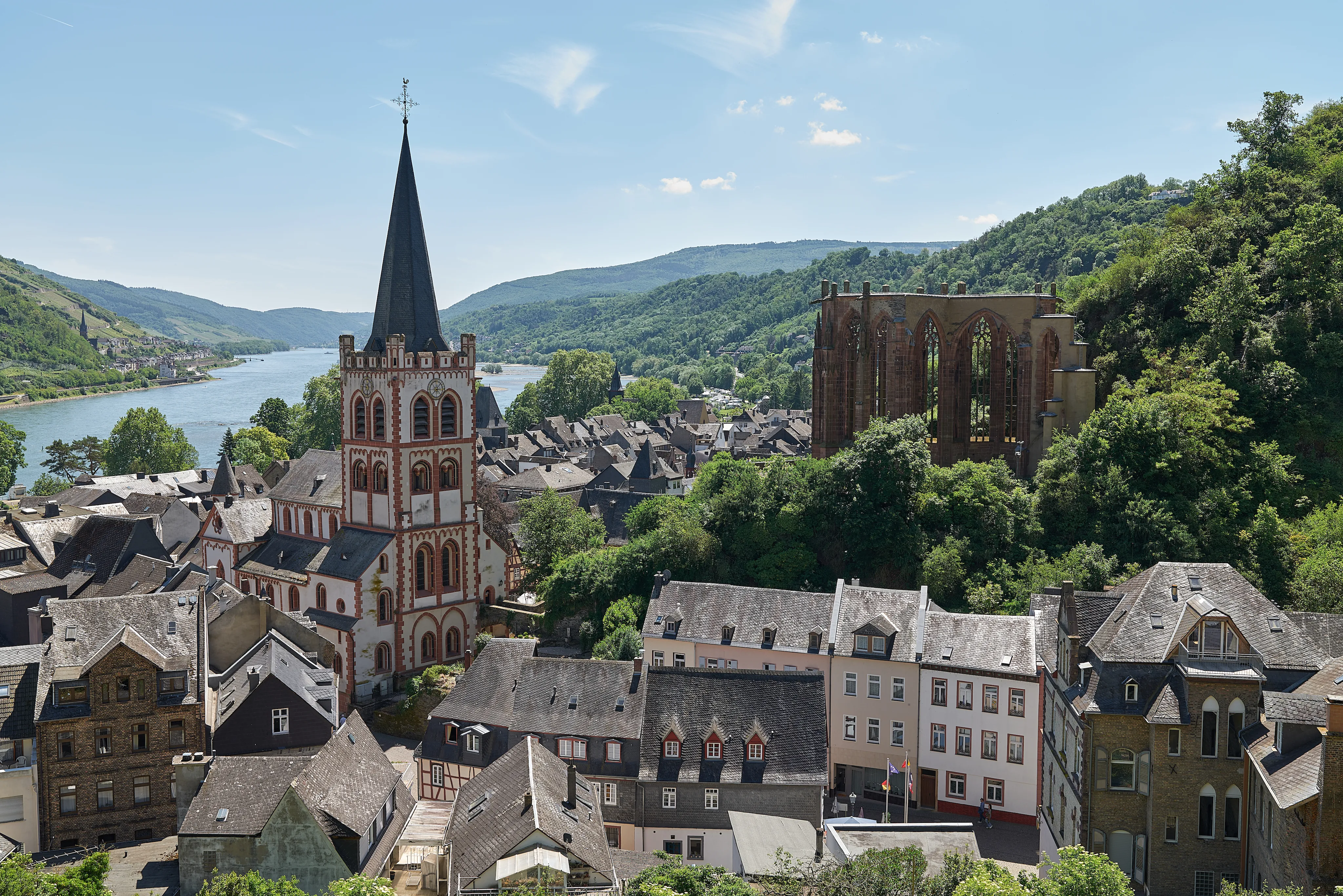
In the middle of the rushing, ever-living Rhine, where the river winds between hills and vineyards, there stands a lonely stone guardian – the castle of Pfalzgrafenstein. It is hard to mistake it for any other fortress: not perched on a hilltop, not hidden in a forest, but right on a small island in the midst of the current, like an ancient ship, moored forever, with its tower like a mast reaching into the sky. Those who travel along the river near Kaub notice it first of all – and every time the heart skips a beat at the sight. Here there is no glitter of knightly halls, no splendid palace facades, but something stronger: austere beauty, the persistence of stone, and the sense that time flows on while the castle remains.
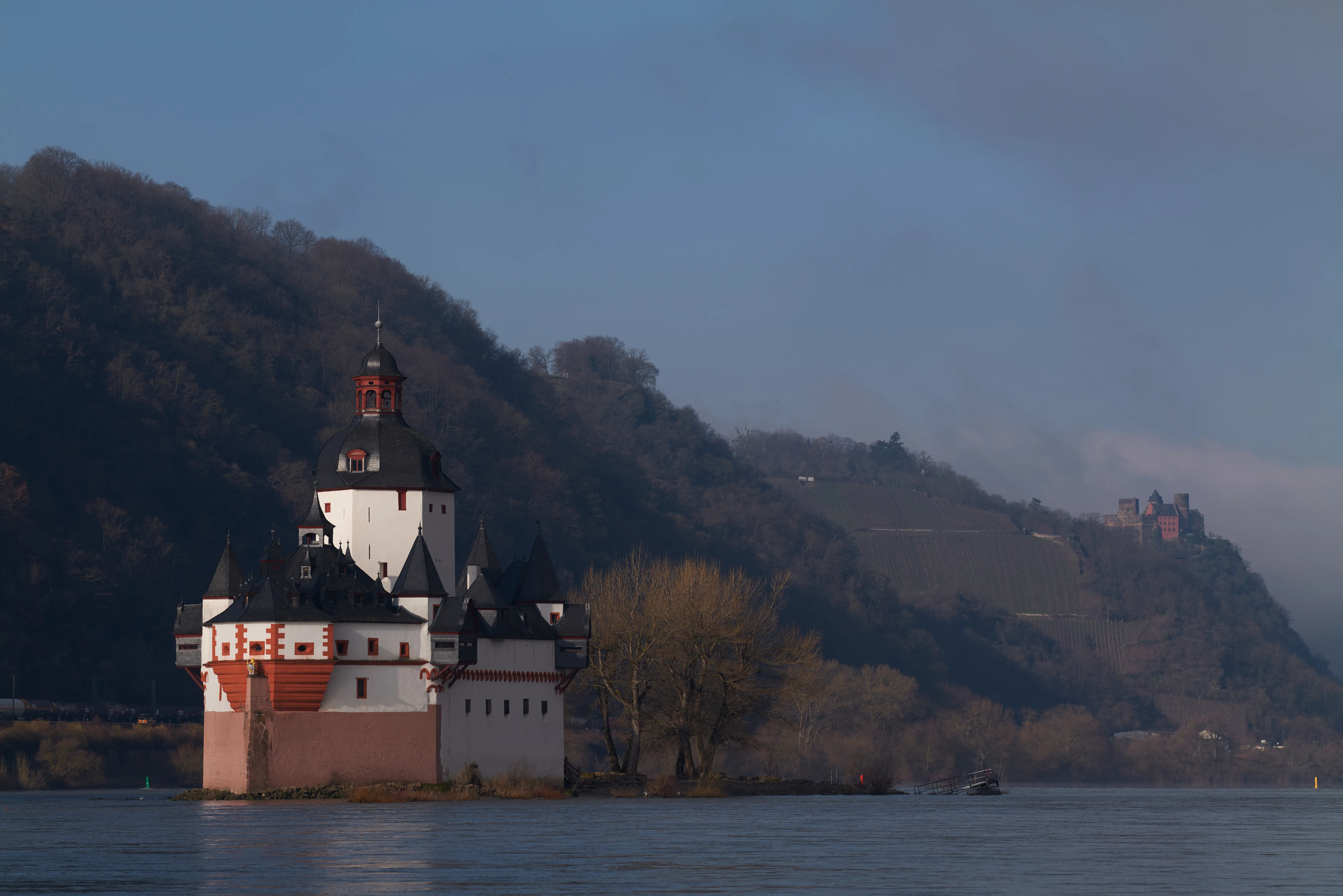
The history of Pfalzgrafenstein goes back to the 14th century. Elector Ludwig of Bavaria sought to secure his power over the Rhine not only politically, but also materially: precisely here, at the narrow fairway, ships could easily be stopped and tolls collected. In 1327 the great tower arose, planted directly on the rock in the middle of the water. Soon walls, battlements, and bastions followed, and the castle gained the appearance that still stirs imagination today. It was never a knight’s residence in the usual sense. Its purpose was far more prosaic: a customs station. Yet it was precisely this prosaic function that turned into poetry, for the very image of the castle – a stone ship on the water – became an allegory of inevitability, a guardian of time, a symbol that the river is not only a road but also a barrier.
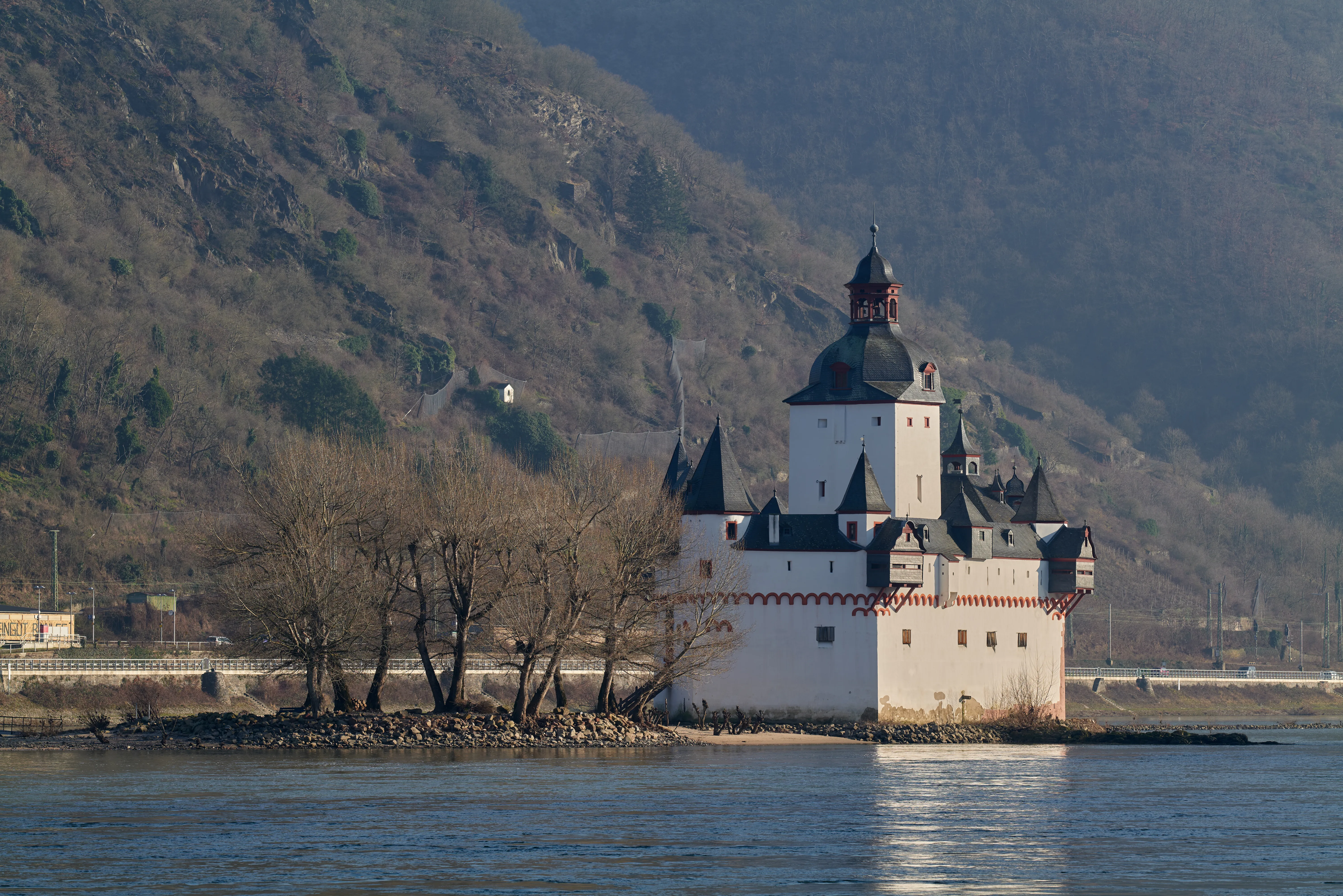
Travelers of the past, approaching Kaub, felt almost a shiver of awe. Victor Hugo, in his “Le Rhin,” called Pfalzgrafenstein “navire de pierre” – a stone ship, forever sailing and forever anchored before the town. In this image lay everything: immobility and movement, power and eternity. For the Romantics of the 19th century, who sought in nature and architecture the expression of feeling, the castle became the embodiment of stern reality and lofty metaphor at once. Heinrich Heine saw in the chain of Rhine fortresses a “poetic theater,” and Pfalzgrafenstein played a special role in that theater: a silent yet expressive figure, solitary and commanding.
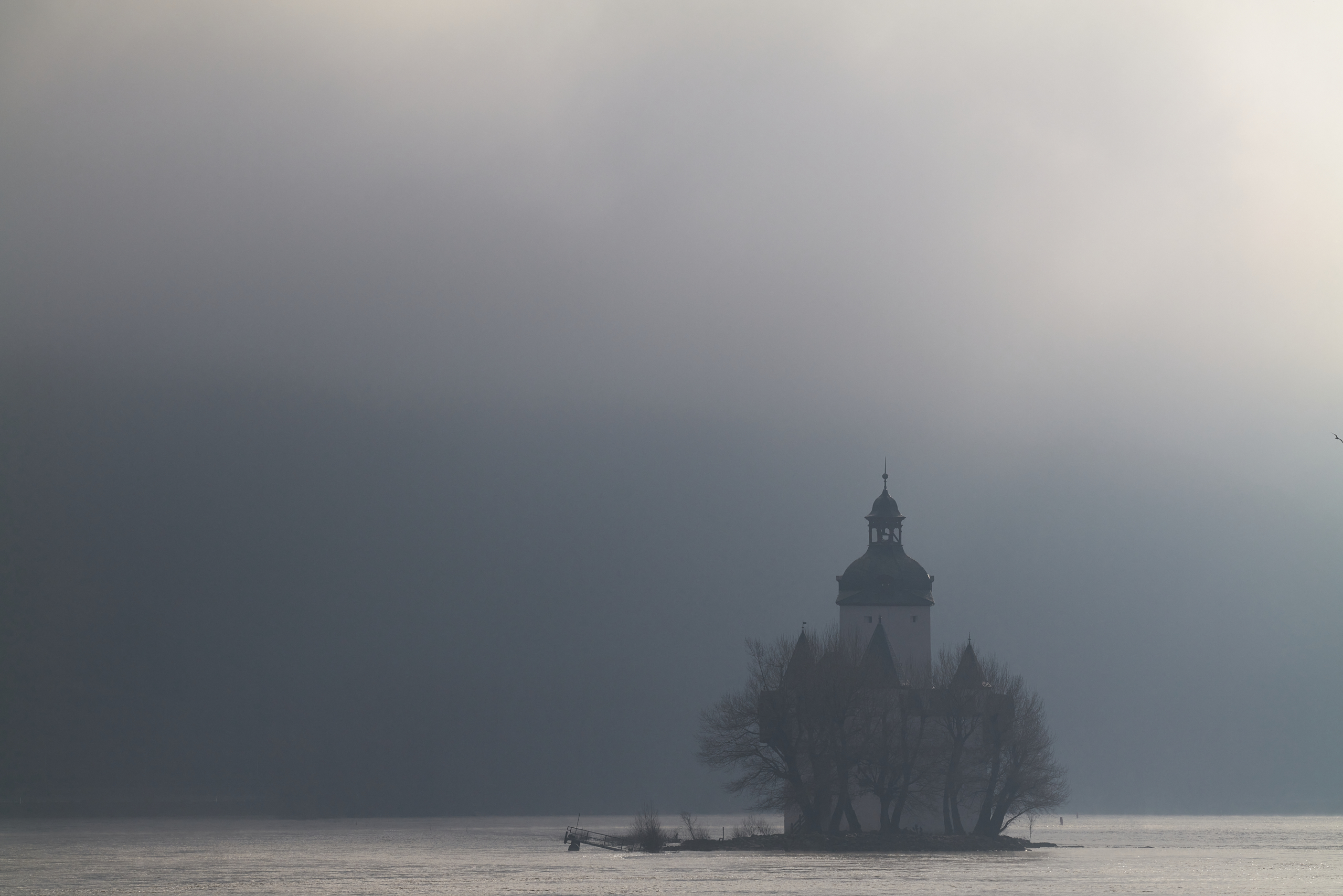
Painters could not pass it by either. Karl Bodmer and Rudolf Bodmer, as well as many nameless lithographers, left us watercolors and engravings where the castle appears at times in moonlight, at times in morning mist, at times against storm clouds. In all these depictions it seems to come alive: sometimes it becomes a ship ready to weigh anchor, sometimes a sentinel looming above the waters, sometimes a sign that the Rhine is not merely a road but a lifeline where power and beauty are inextricably entwined.
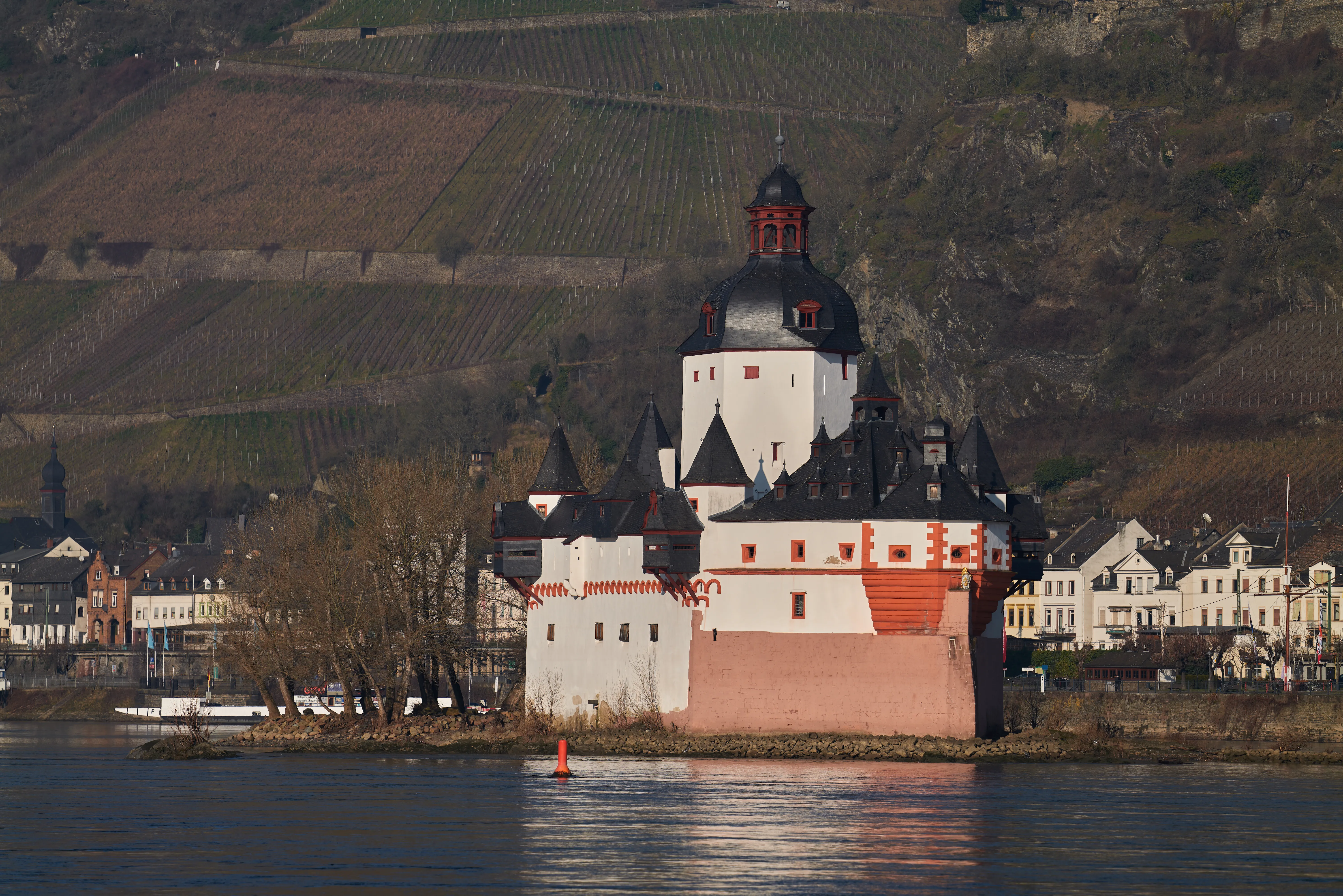
And yet Pfalzgrafenstein is not only poetry. For many merchants it was a dread: to pass without payment was impossible. Legends told that those who tried to avoid the toll encountered inexplicable obstacles: fog spread across the water, ships ran aground, and above the tower, they said, the clank of chains could be heard. The castle earned the nickname “the stone tollkeeper” – and that name lives on to this day.
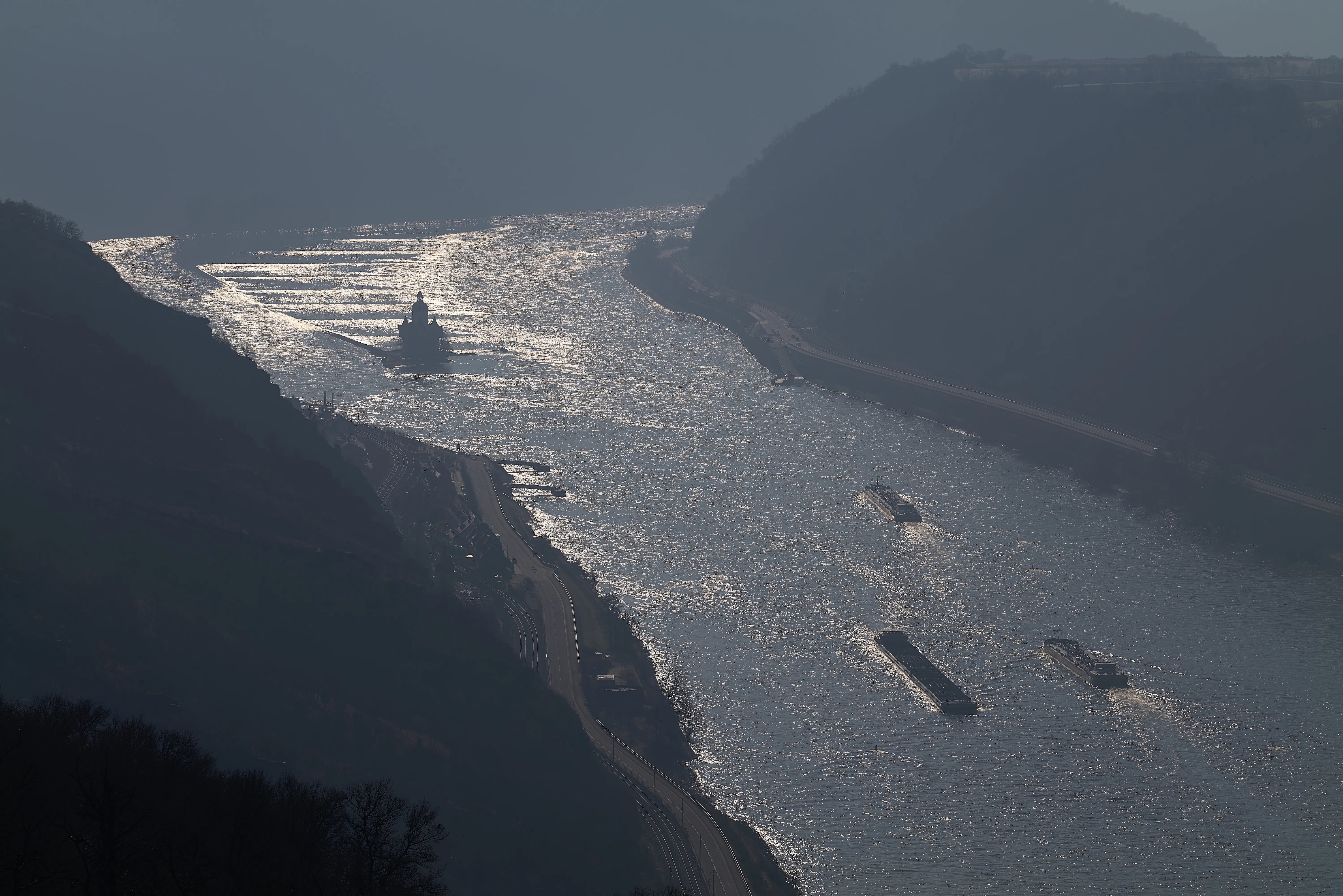
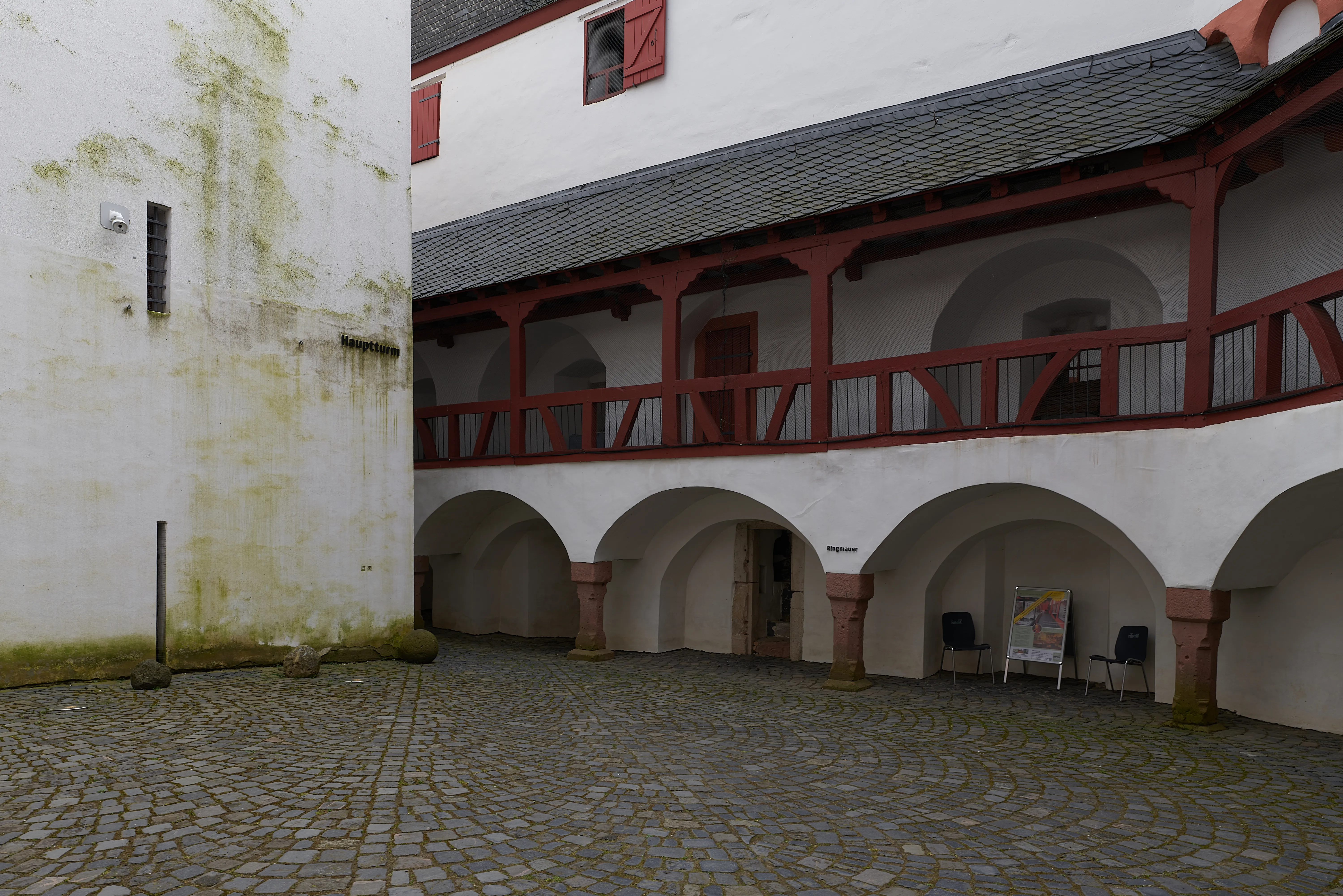
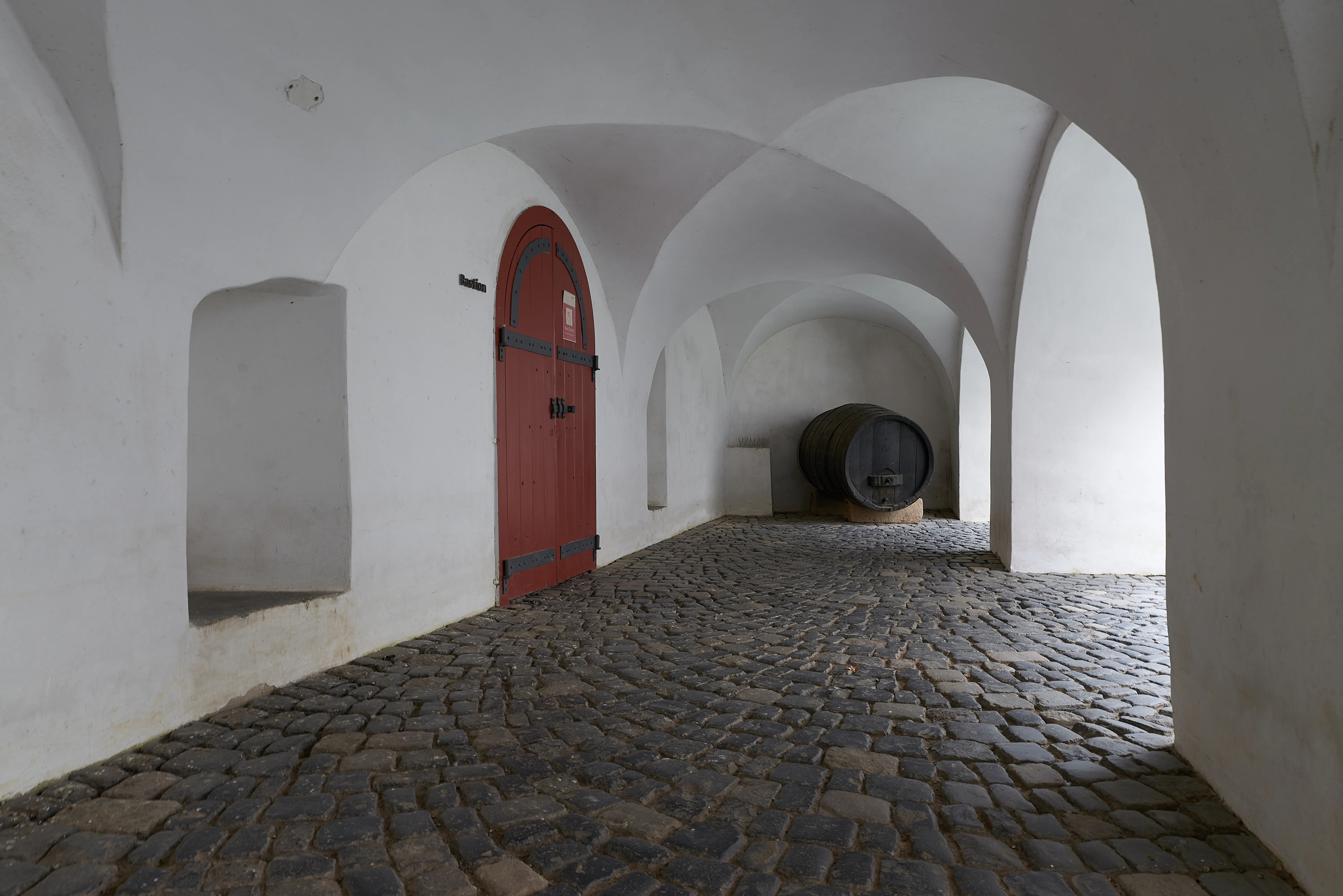
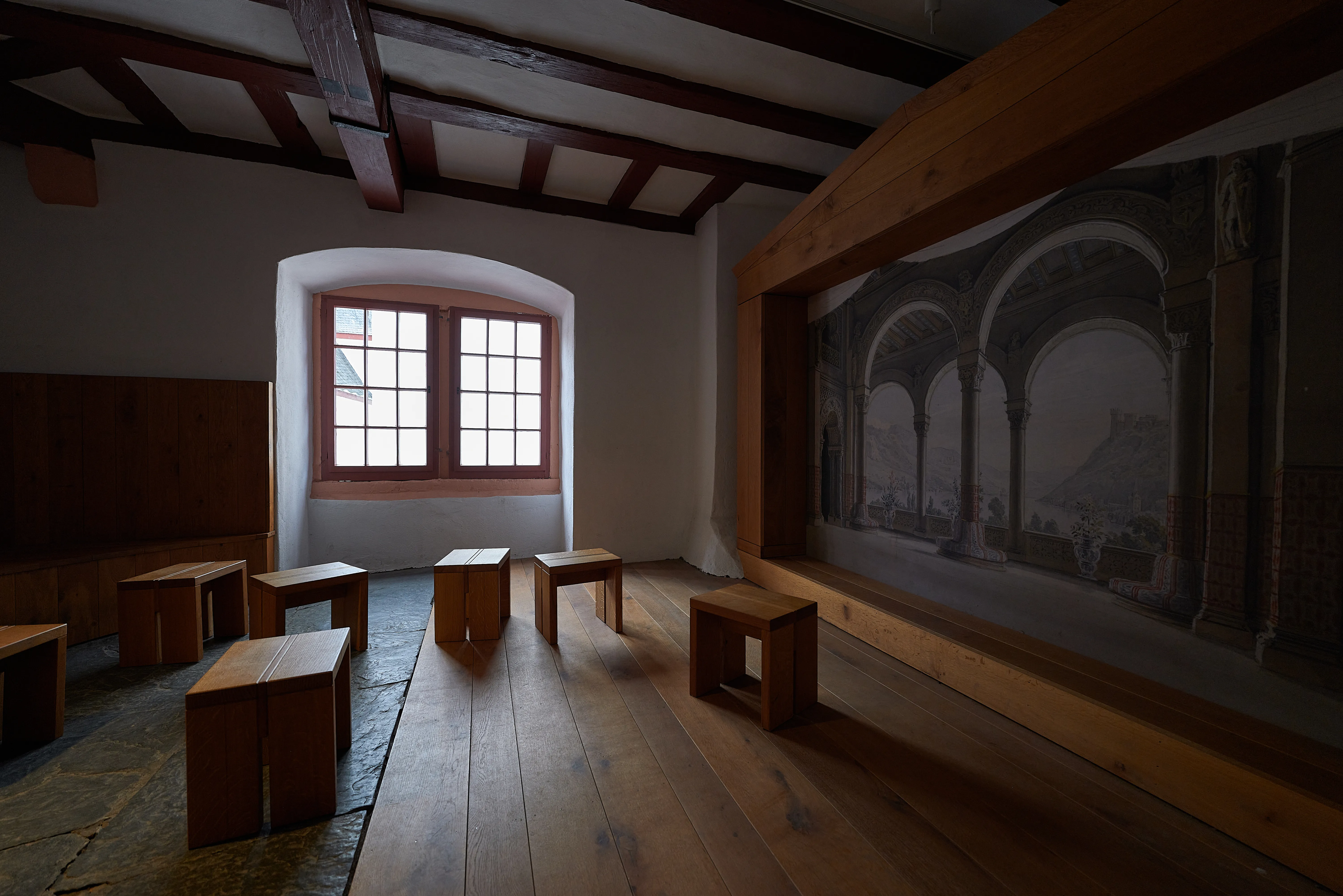
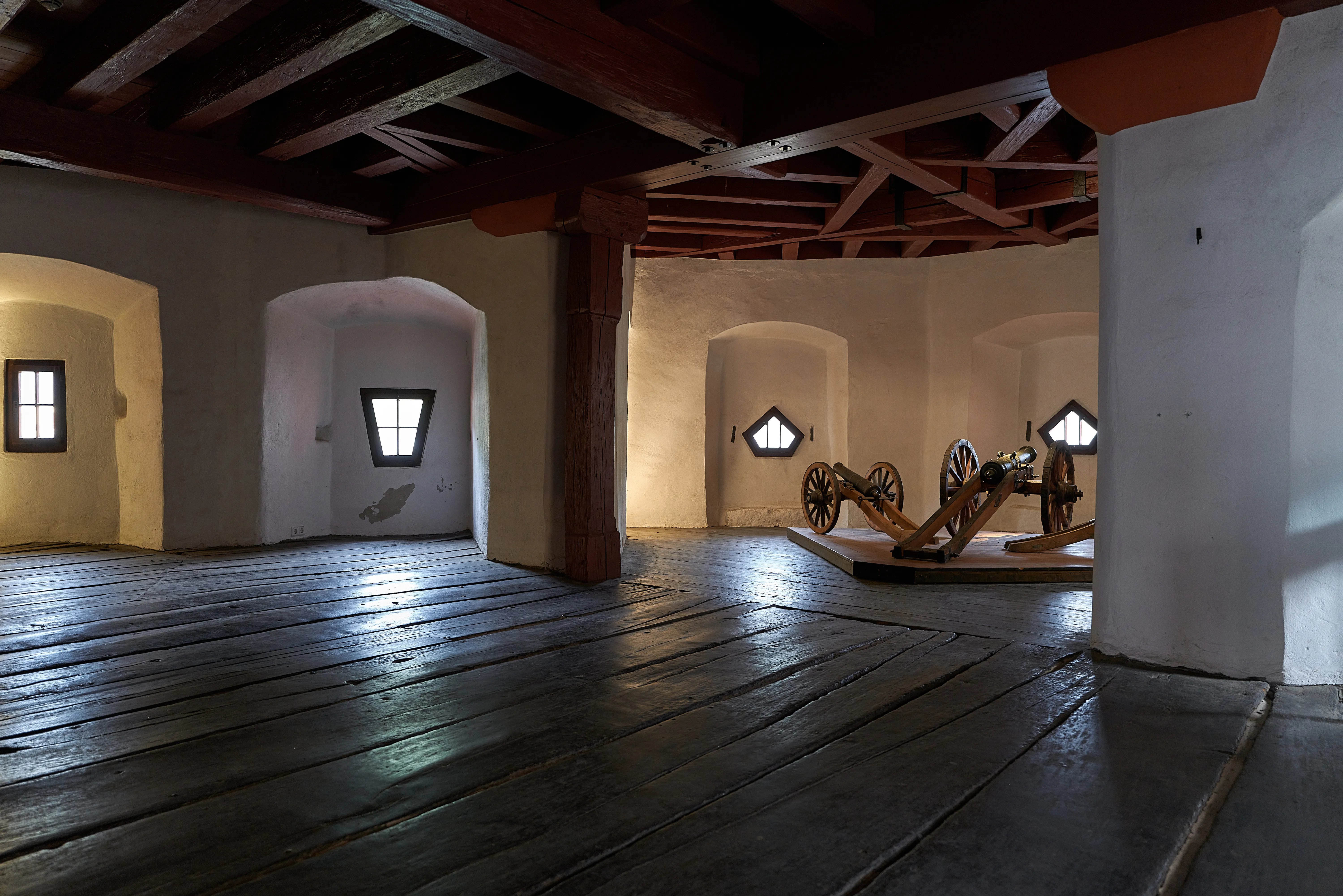
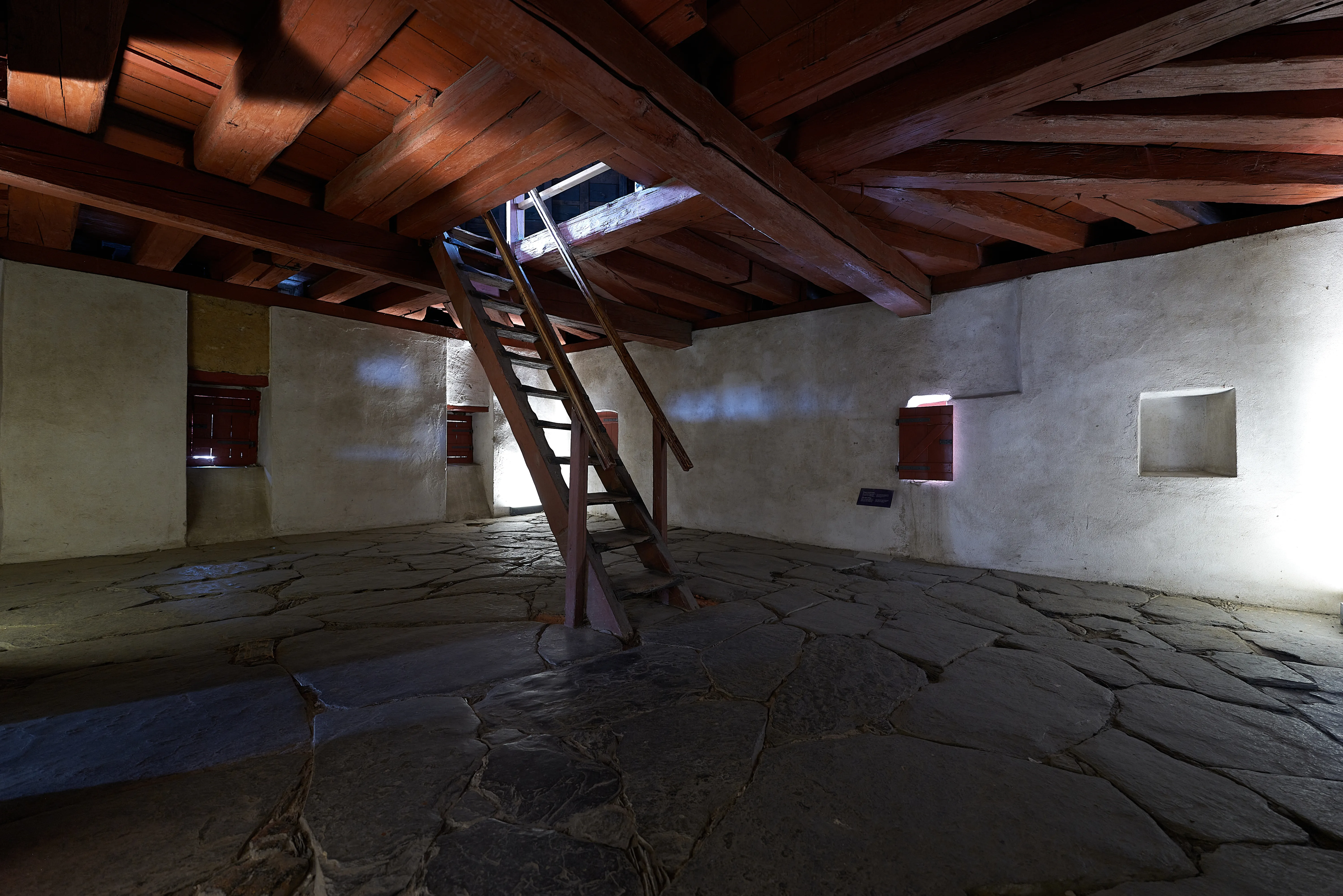
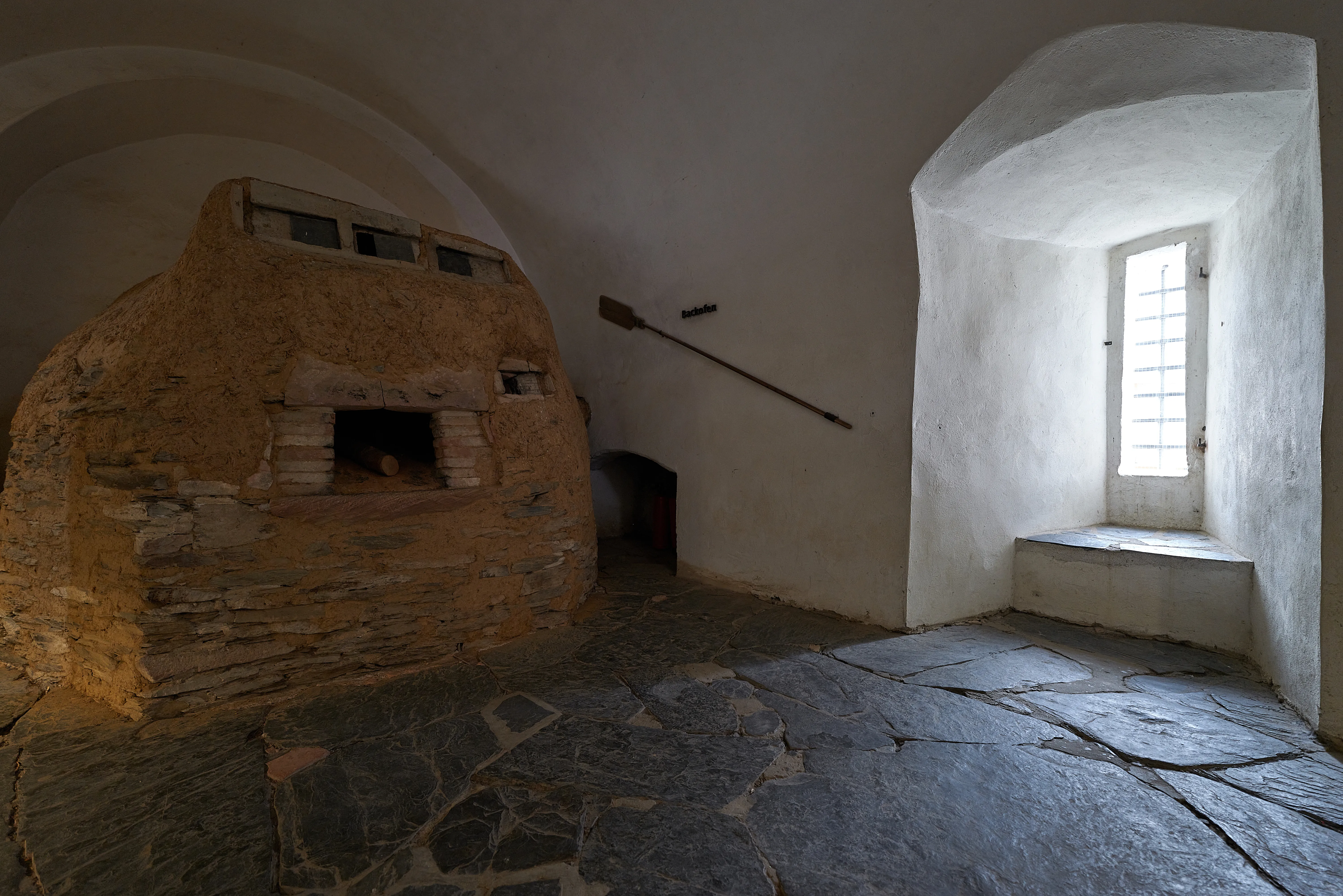
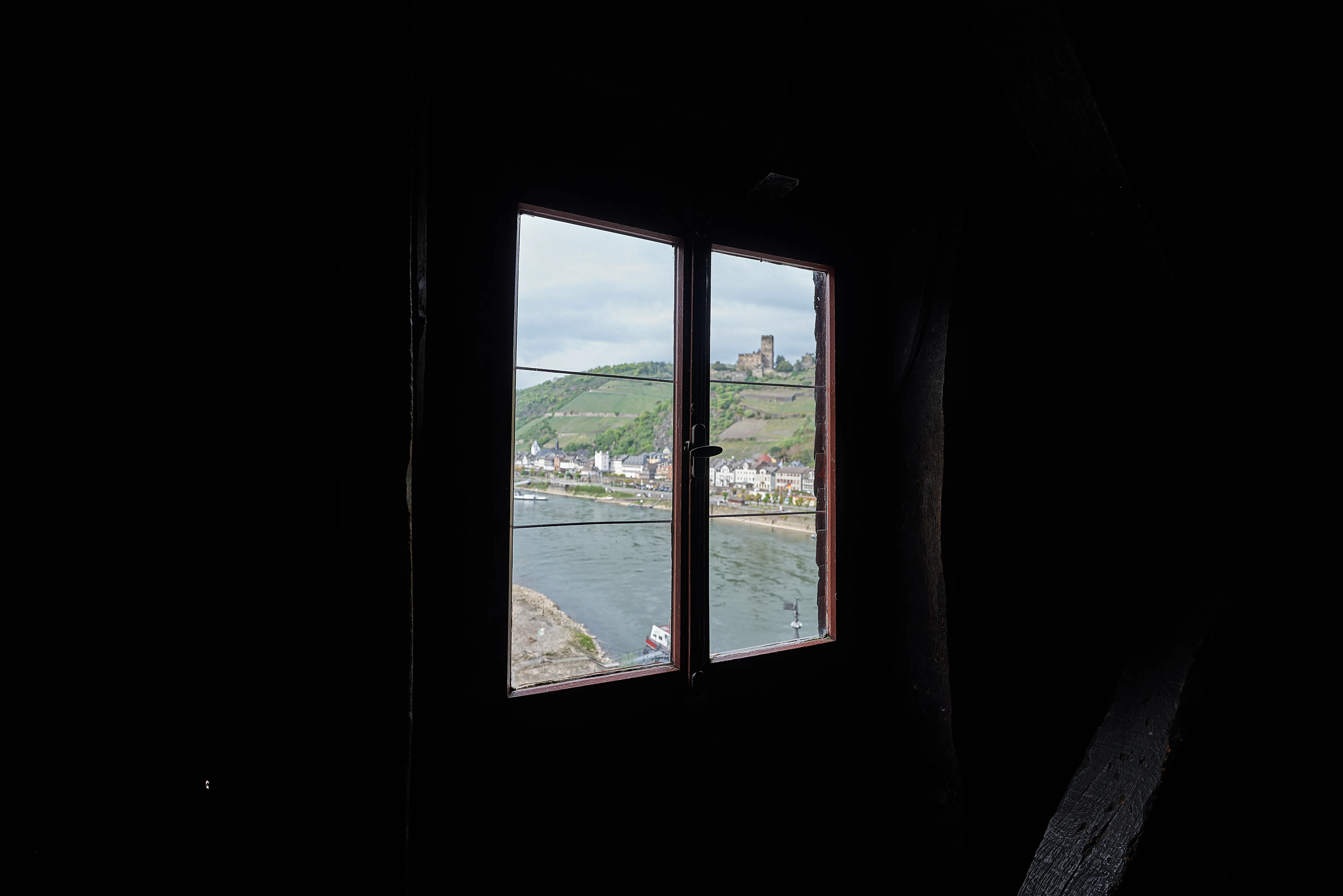
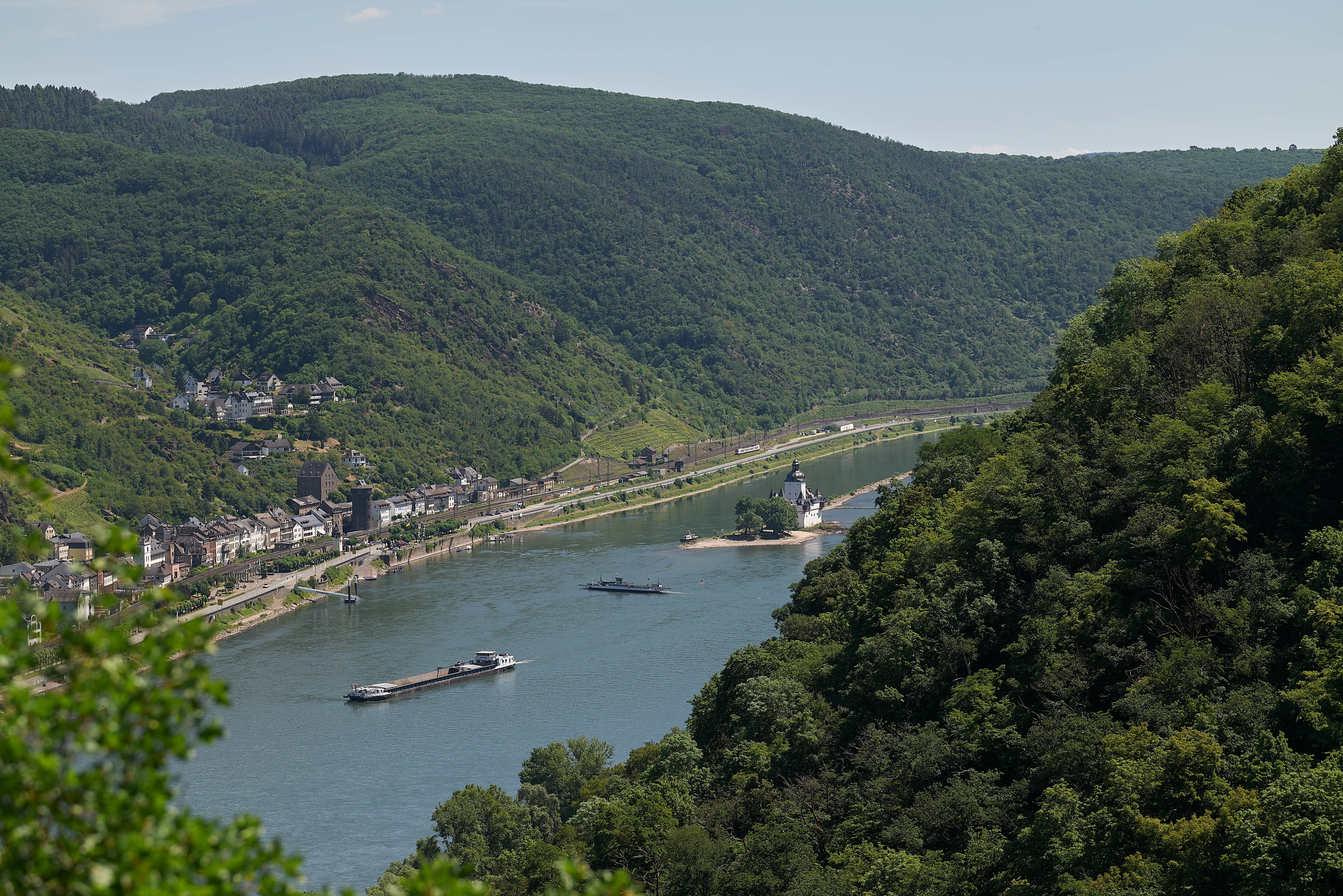
Today, centuries later, it no longer collects tolls, yet it still draws every gaze. Tourists who board the little ferry at Kaub undertake, in a way, a journey into the past. On the island there is nothing superfluous: only walls, the tower, and the sense that the river surrounds you on every side. Inside, one can climb narrow stairs, peer into the dim casemates, into the rooms where guards once warmed themselves by stoves. From there the view opens onto the Rhine – the same as it was for merchants four or five hundred years ago. And everyone who stands at an embrasure inevitably thinks how little has changed: only the ships have become steel and swift, while river and castle remain the same.
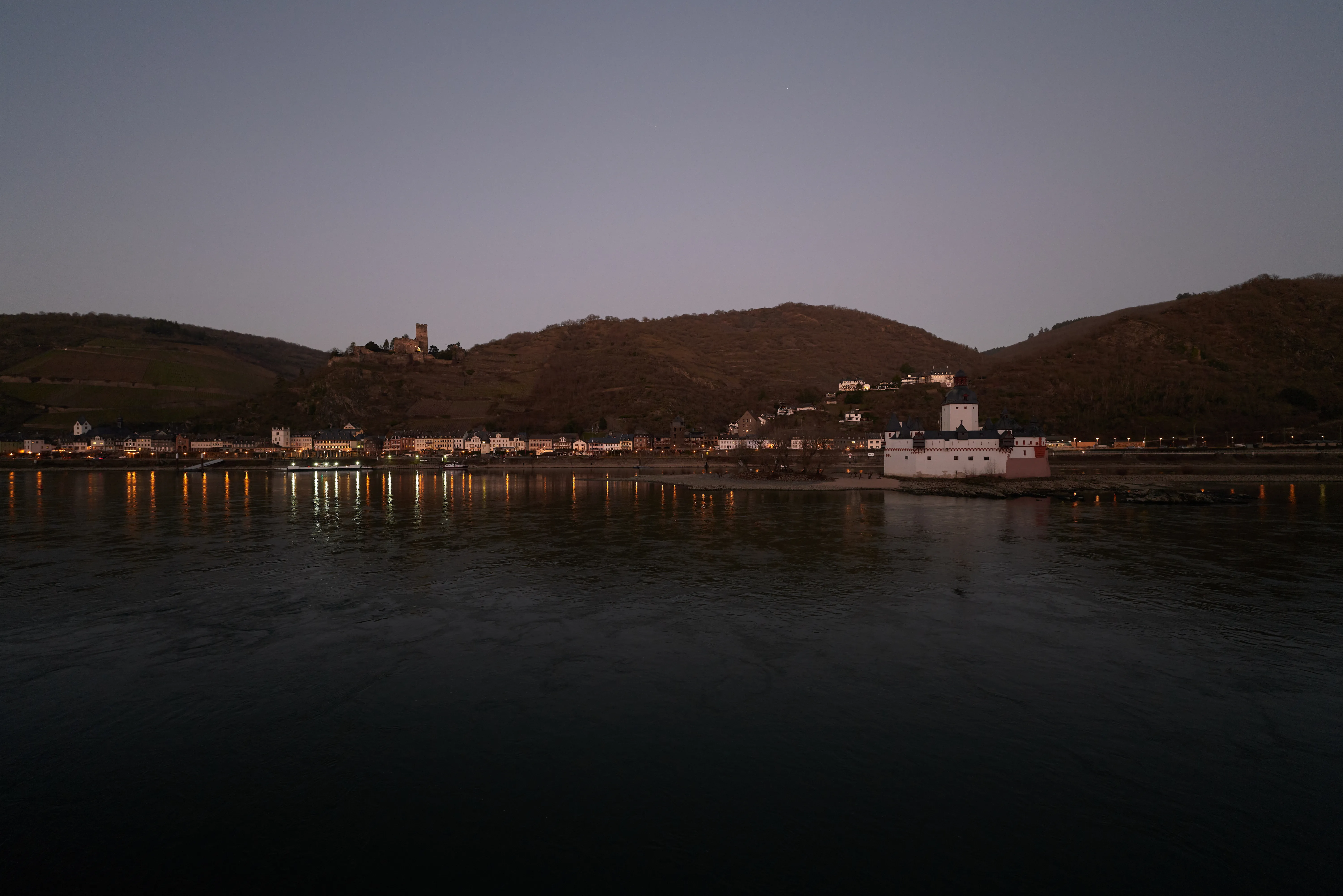
In the evening, when the sun sets and the water glows with golden-red tones, Pfalzgrafenstein once more becomes a legend. From the water it seems unreal – as if it were not a fortress at all, but a fantastic ship that has sailed out of the canvases of the Romantics. And at that moment one understands why it was precisely the Rhine that became the cradle of so many legends, why artists and poets came here to seek inspiration. The castle seems to bind together the centuries: the 14th, in which it was born; the 19th, in which the Romantics celebrated it; and our own 21st, in which tourists with cameras search in its stones for the same mystery.
For some it is only a castle on the river. For others – a museum where medieval life can be glimpsed. But for those who can feel beauty and hear silence, it is something more: a symbol of eternity, a reminder that stone and water together can create an image capable of outlasting generations. And in this lies its true romance.
Gallery