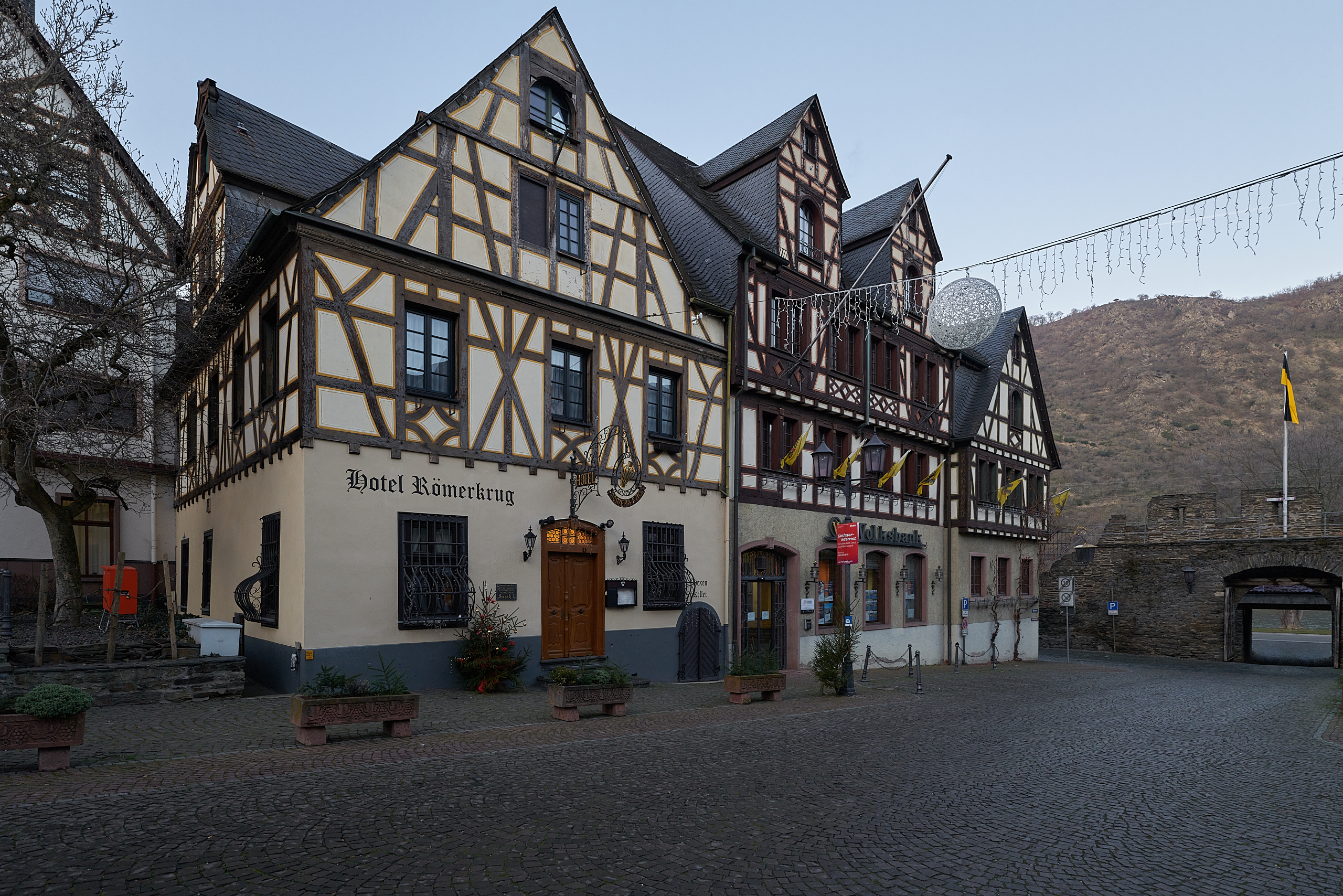
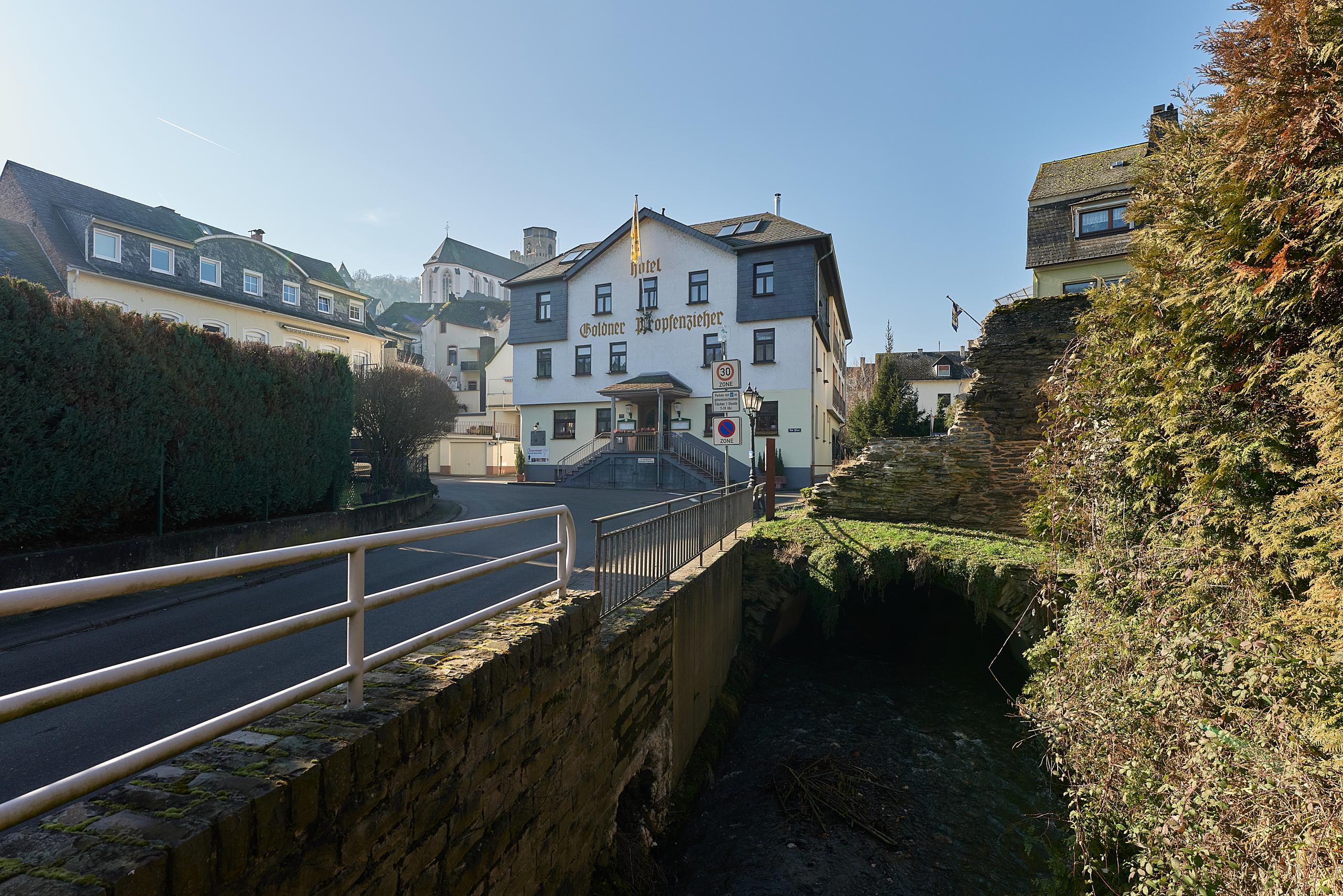
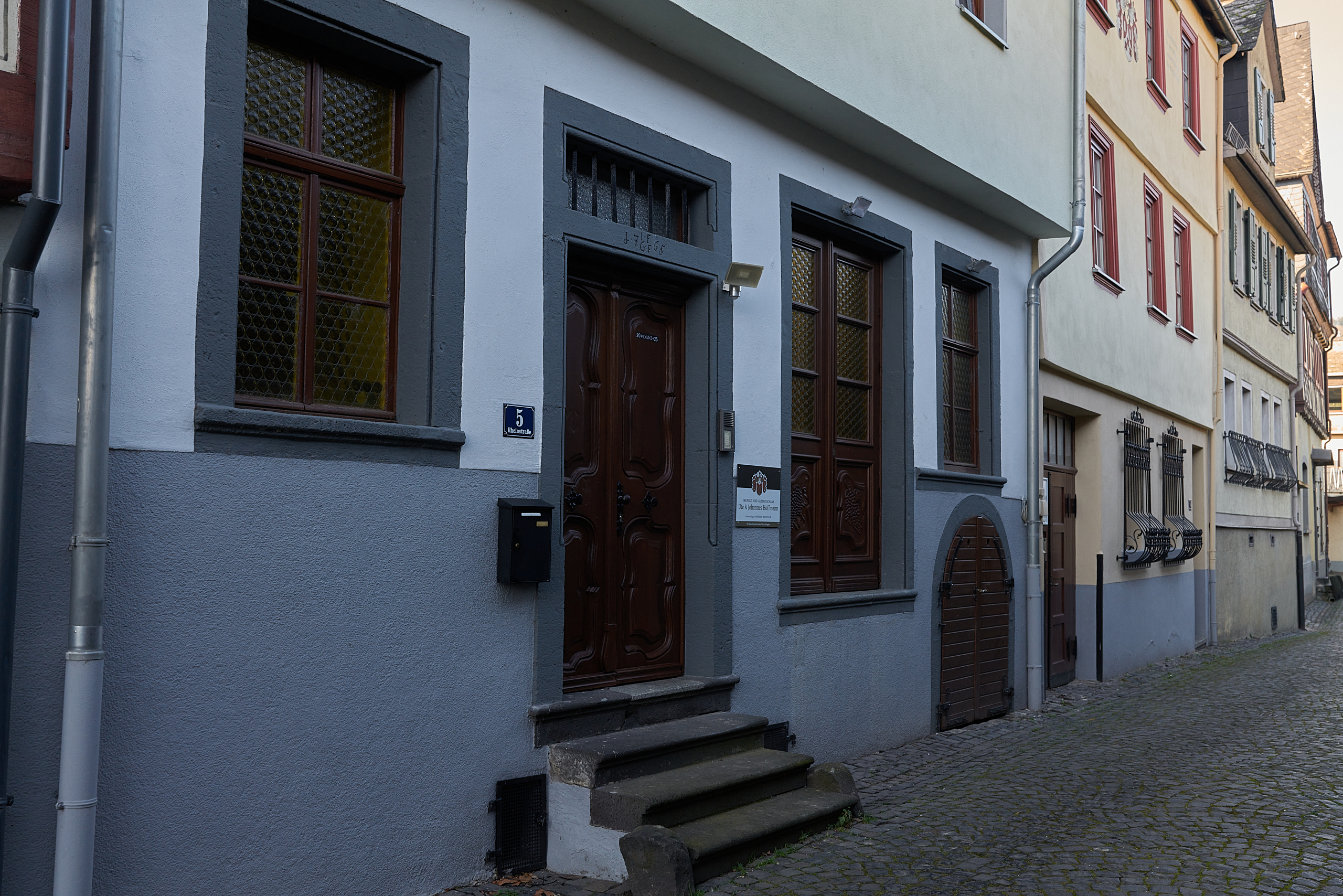
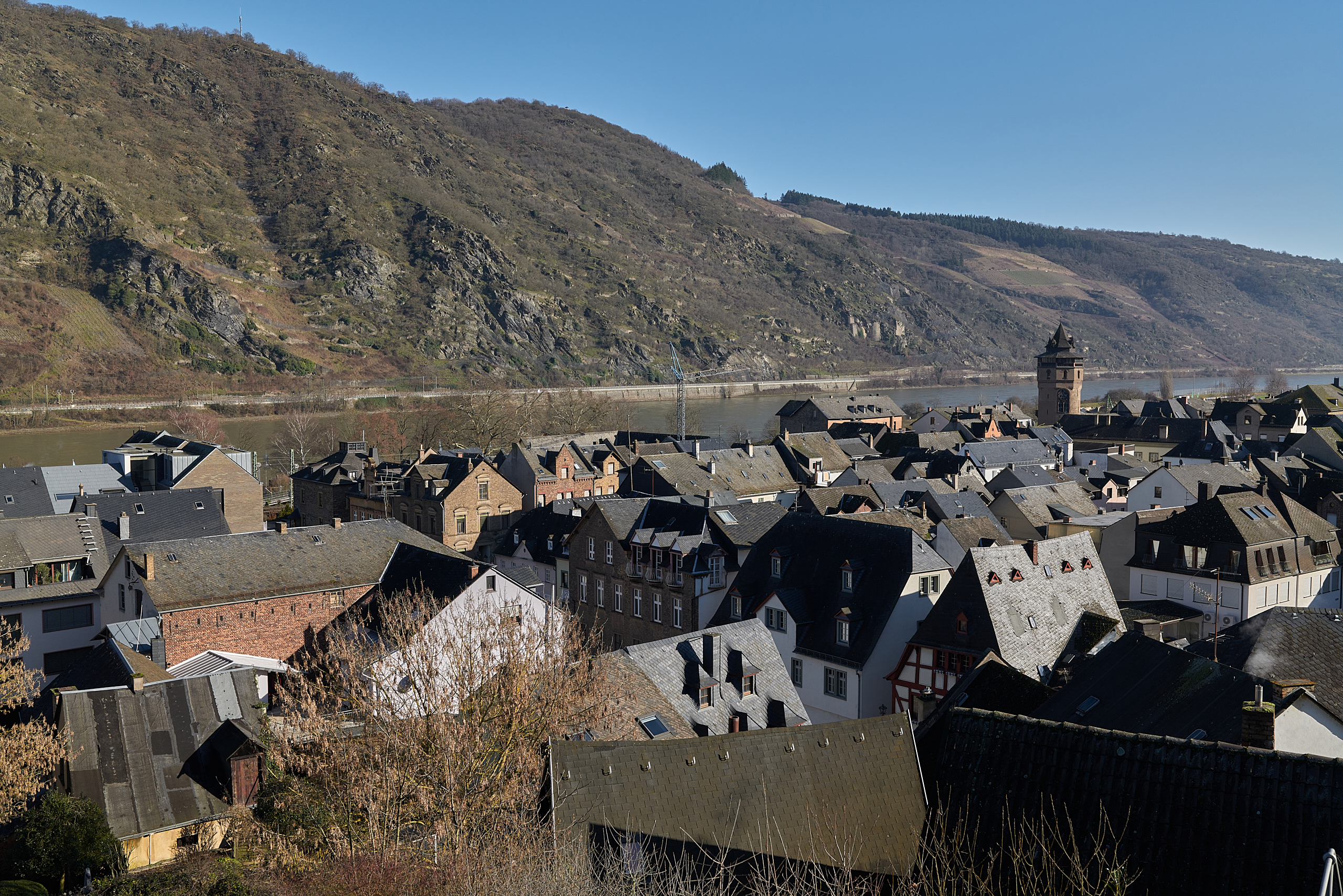
Oberwesel is a small town on the Rhine that is easy to miss if you simply drive along the river, but almost impossible to forget once you stop and wander through its streets. It does not shout about itself, does not try to impress, and does not look like a tourist decoration. On the contrary, it feels as though it has simply been living its life for many centuries, and you have ended up here by chance — like a guest who has stepped not into a museum, but into someone else’s very old house.
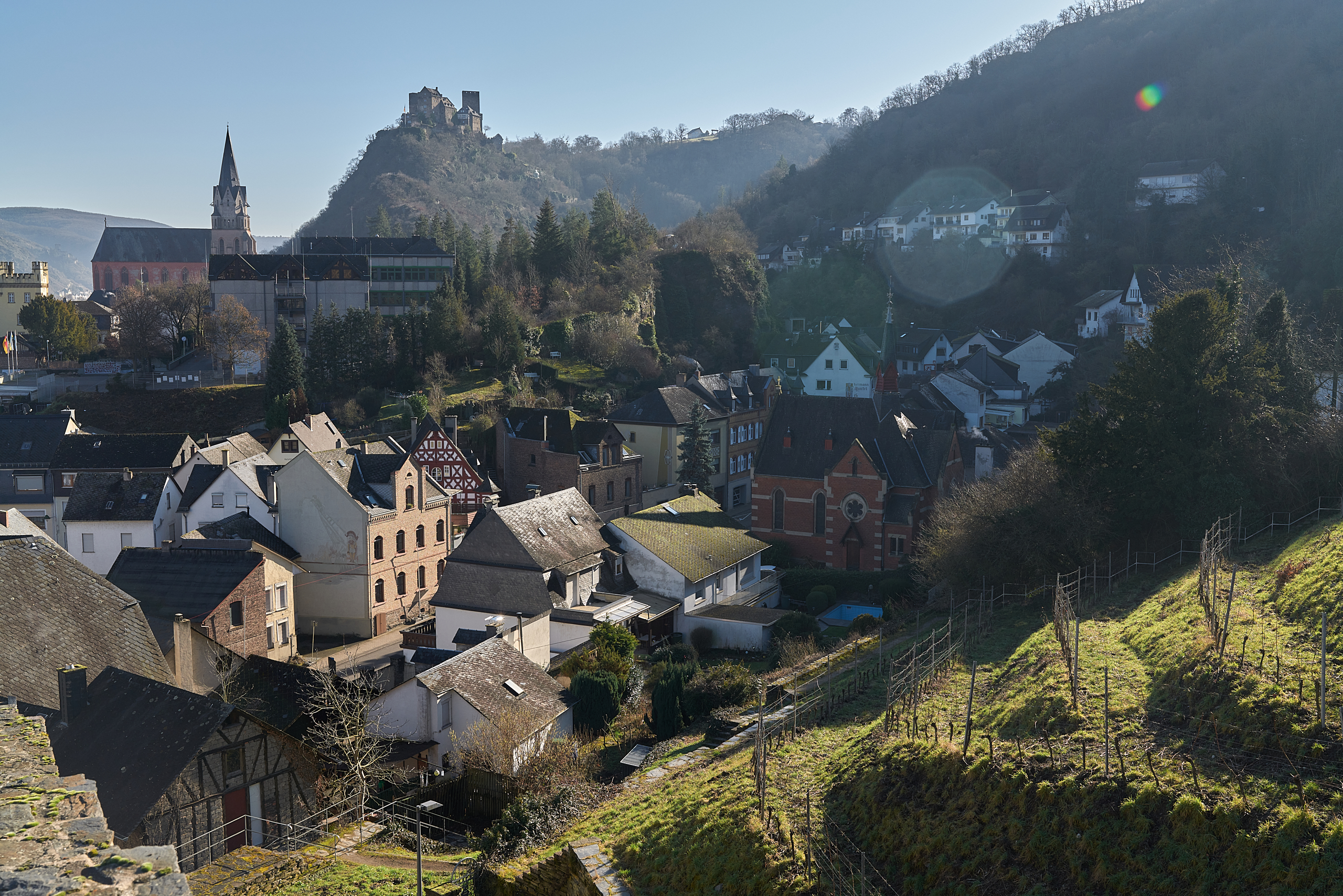
It is one of those towns in the Middle Rhine Valley that together form the overall image of a region inscribed on the UNESCO World Heritage List. But unlike its more famous neighbours, there is no sense of “parade” here. Oberwesel feels more cohesive: a place where the medieval urban structure has not merely been preserved, but continues to define its rhythm even today.
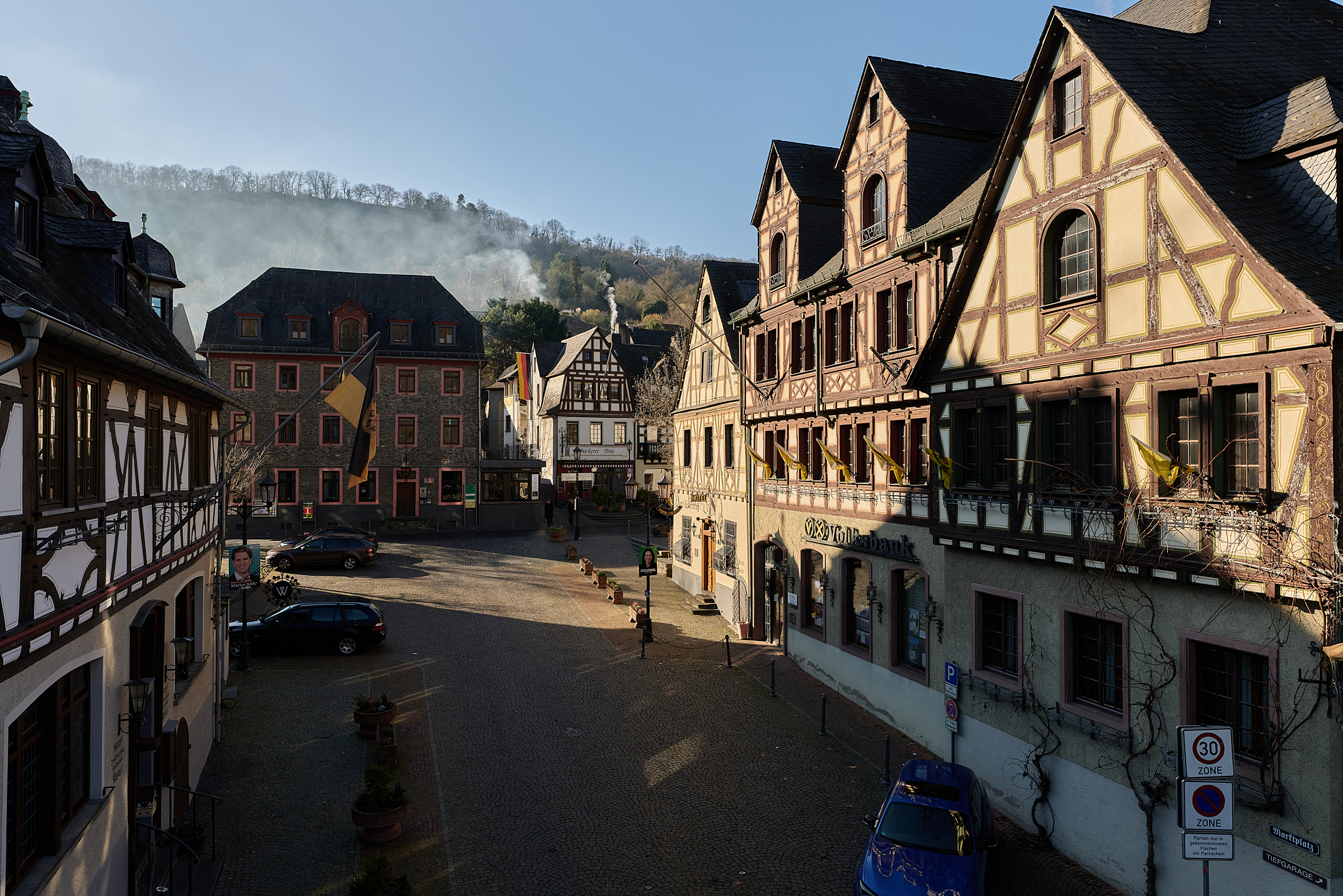
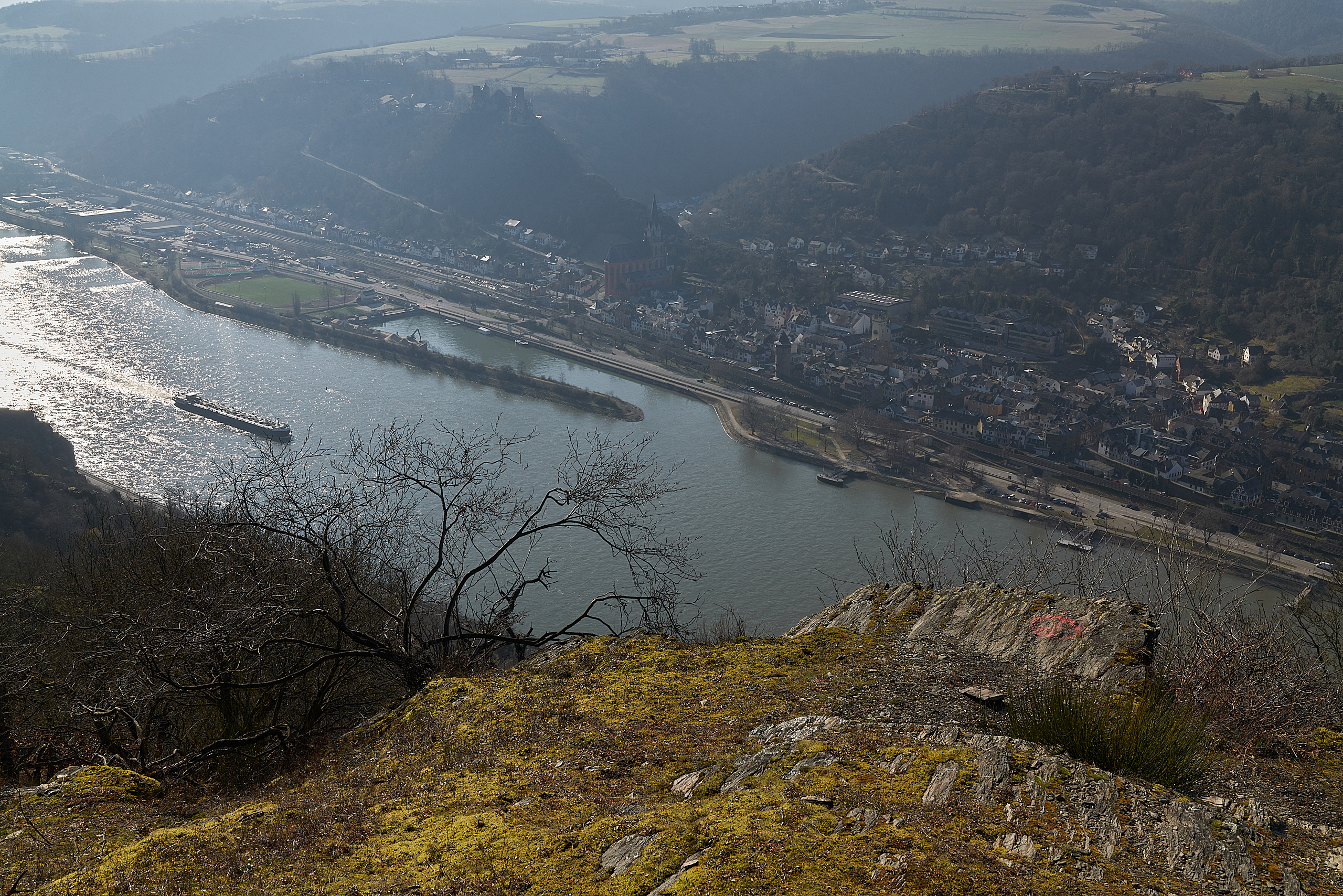
The town arose on a stretch of the Rhine that has long been important for trade and control of river traffic. As early as Roman times, there was a fortified point here, and in the Middle Ages Oberwesel became part of a system through which goods, money, and influence flowed. It belonged to the Electorate of Trier and eventually received the status of a free imperial city, which gave it economic freedom and allowed it to develop quite rapidly by the standards of the time.
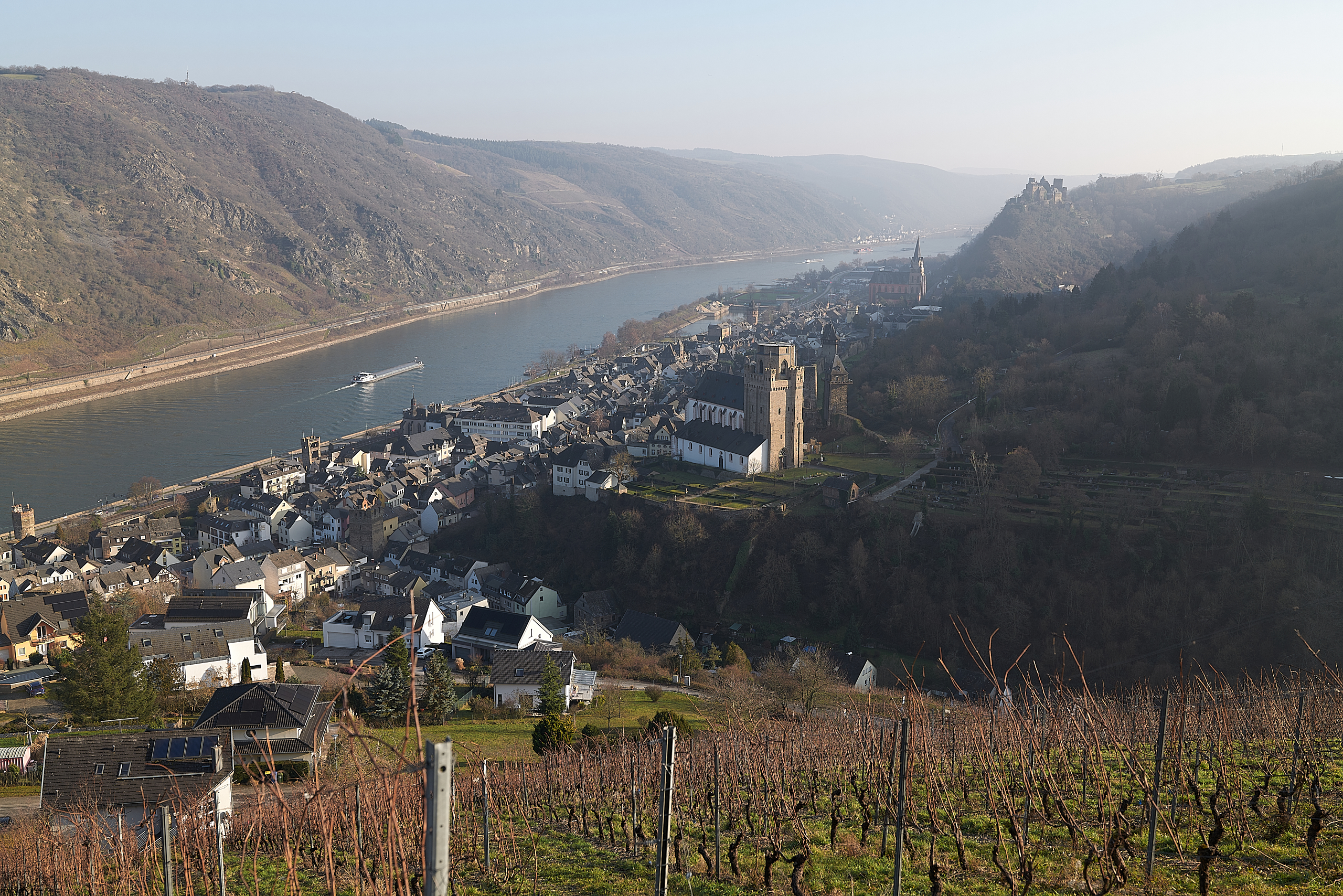
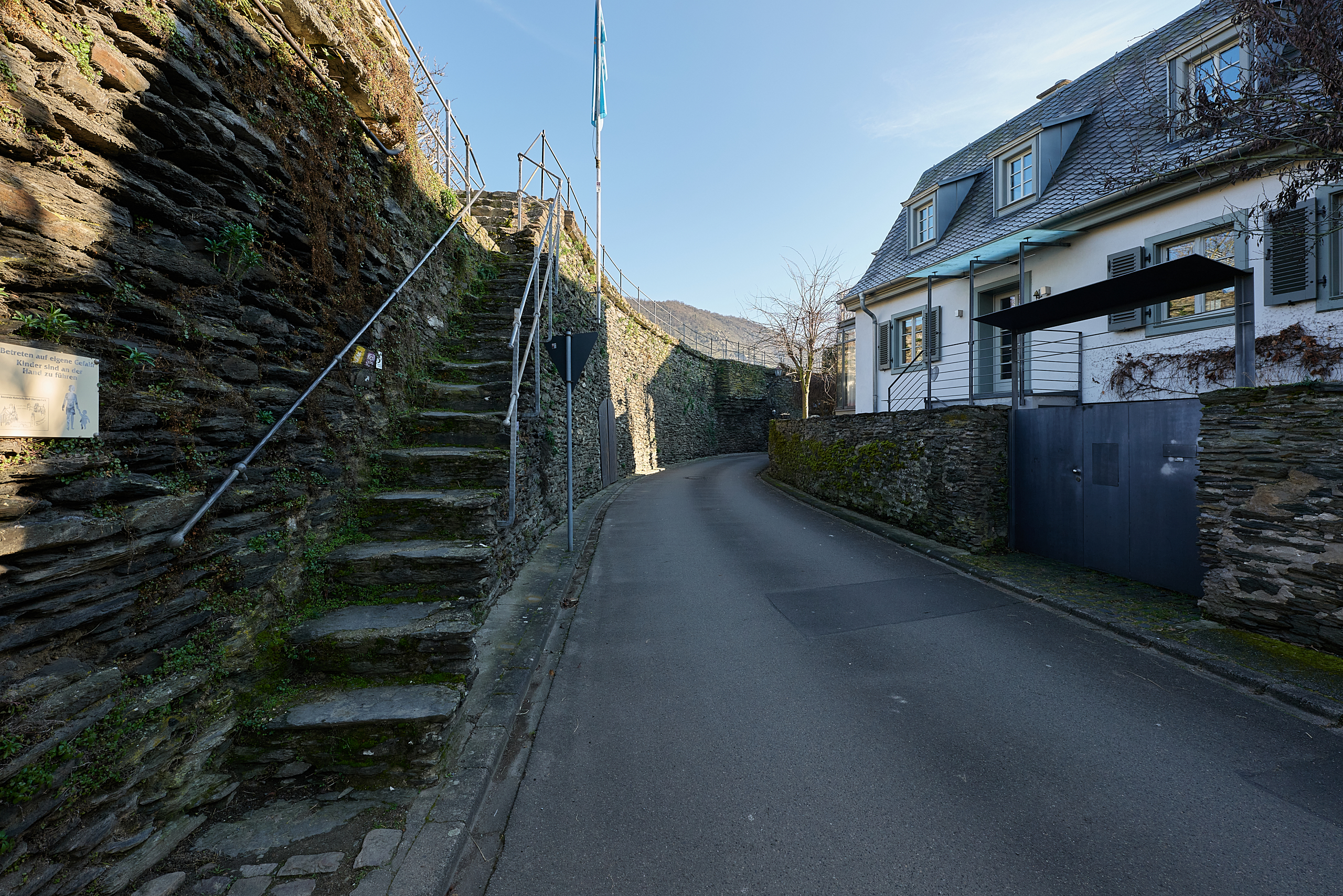
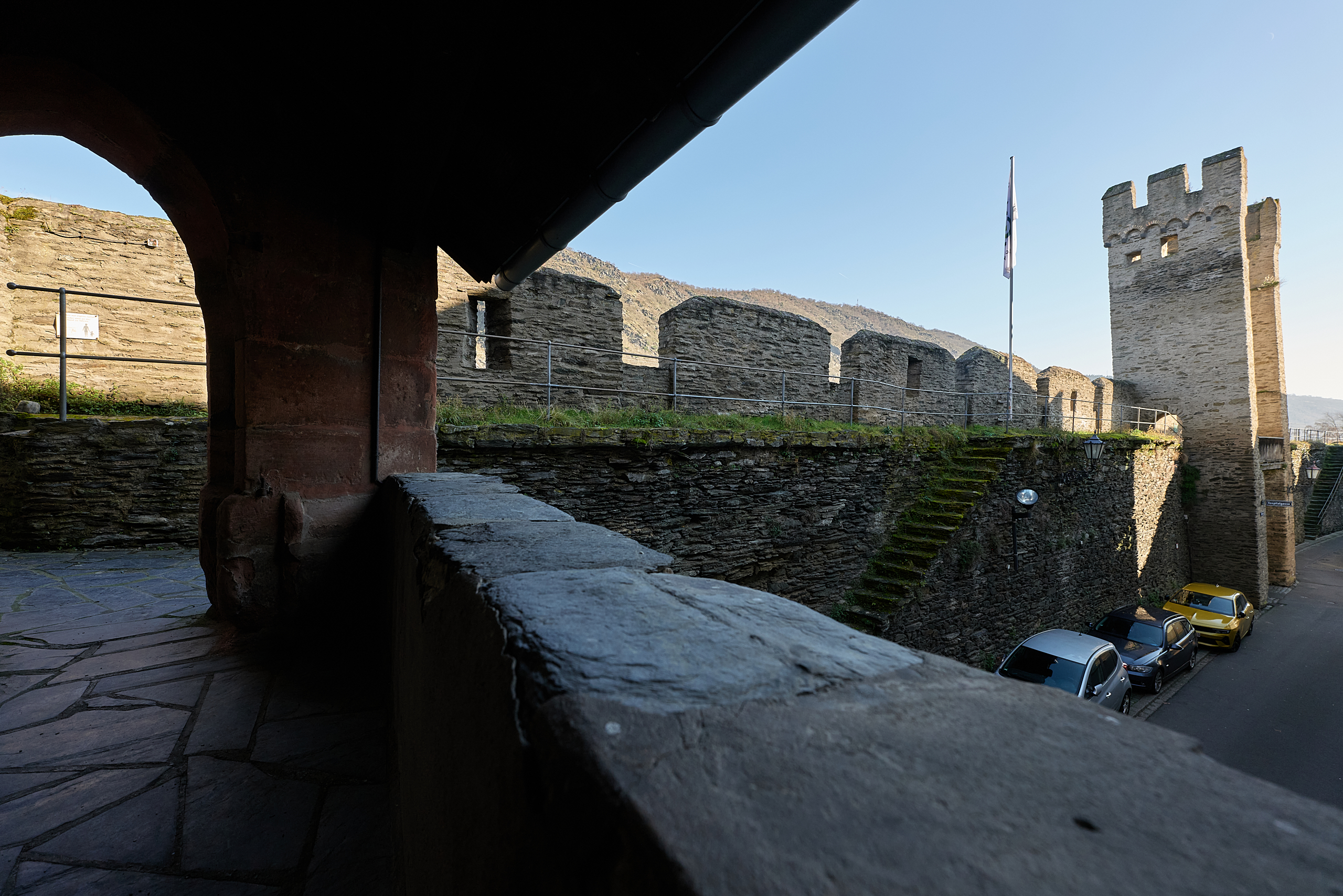
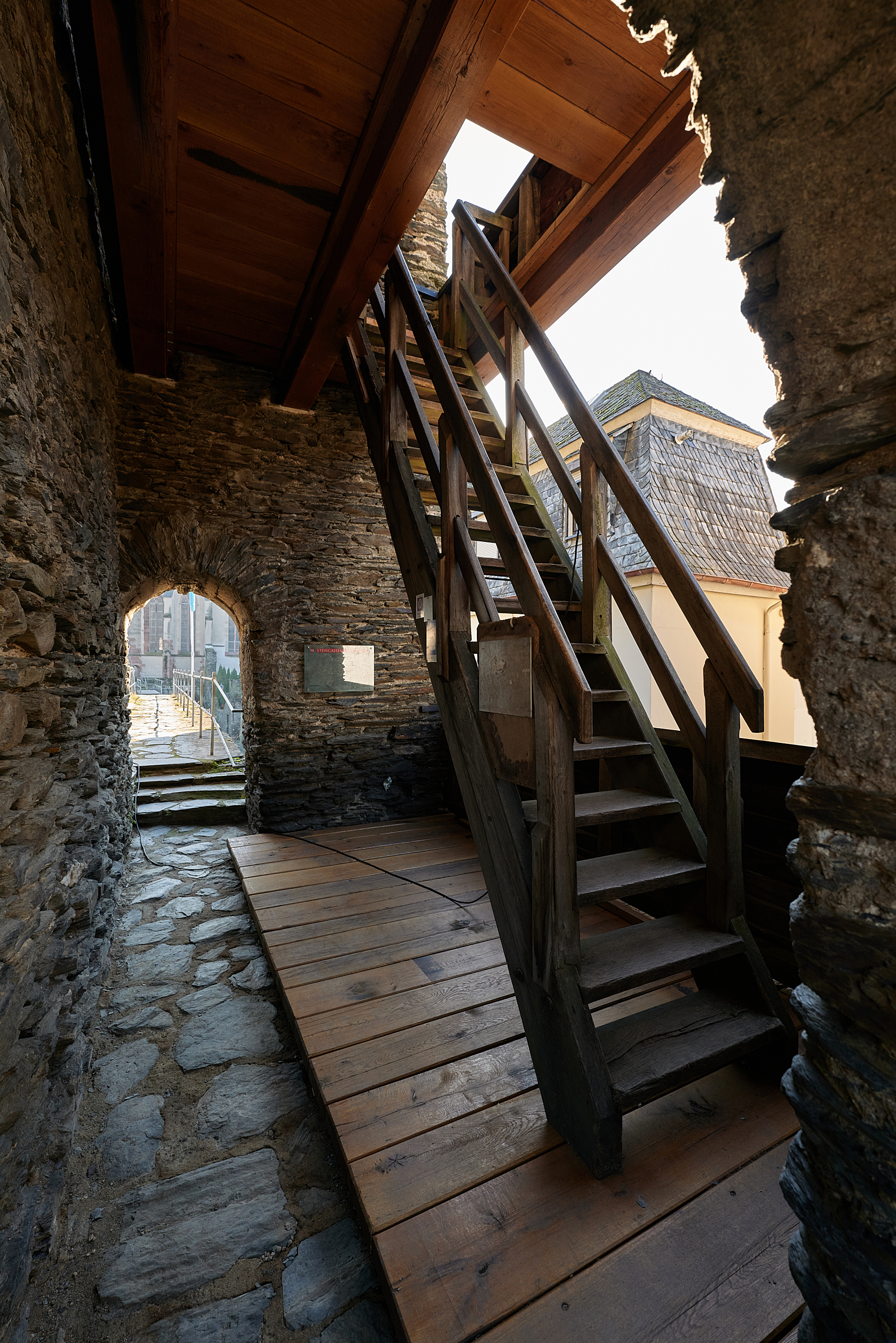
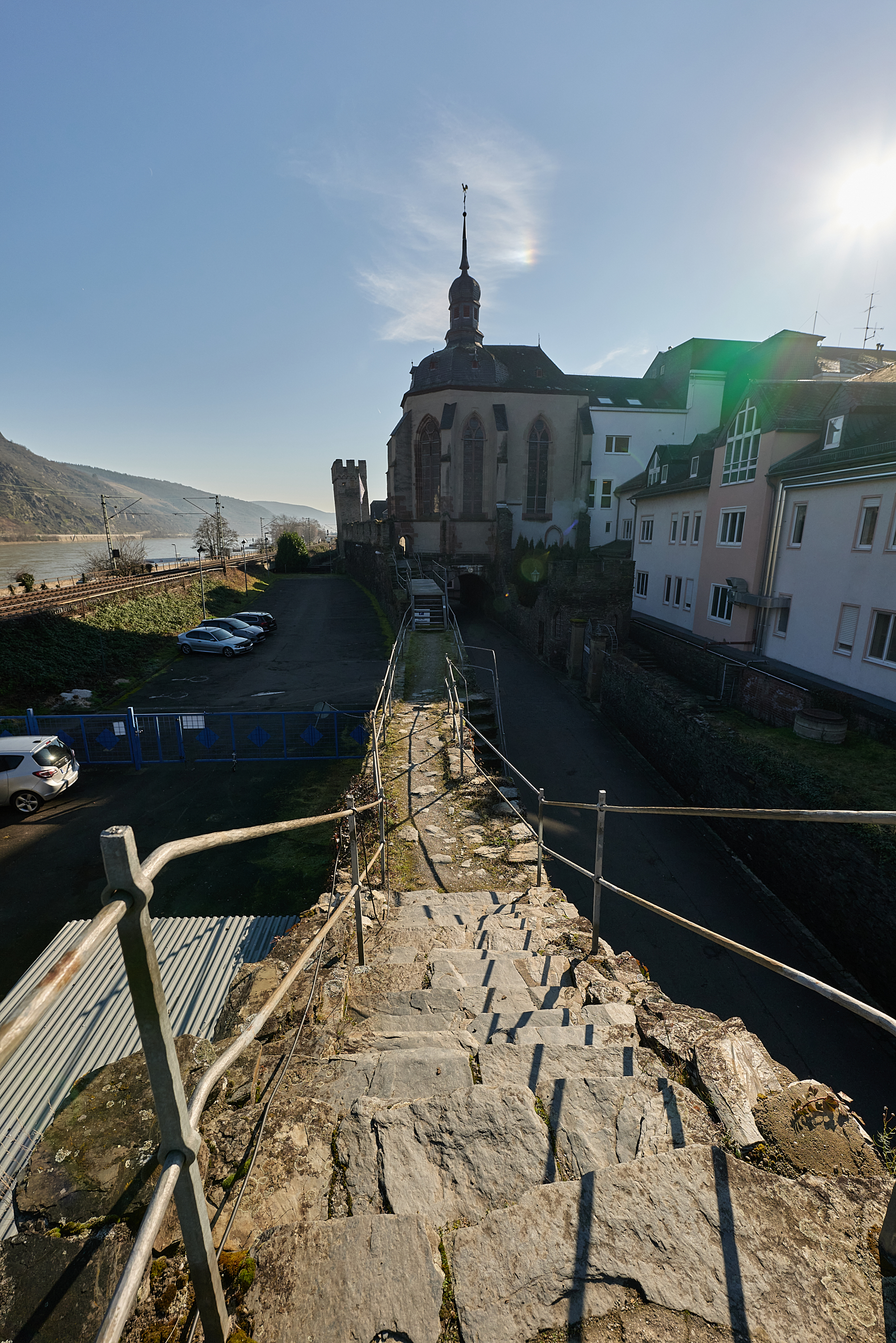
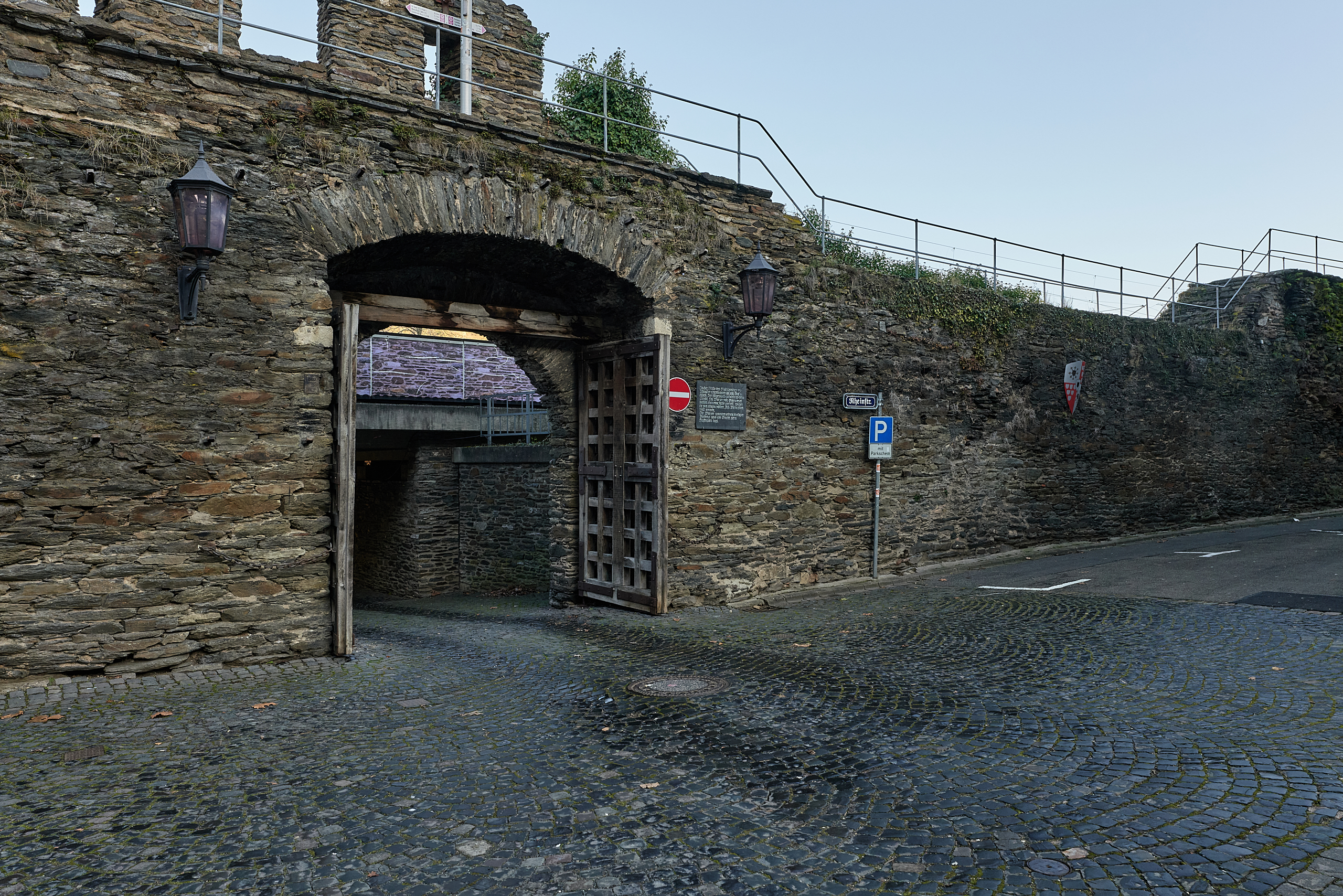
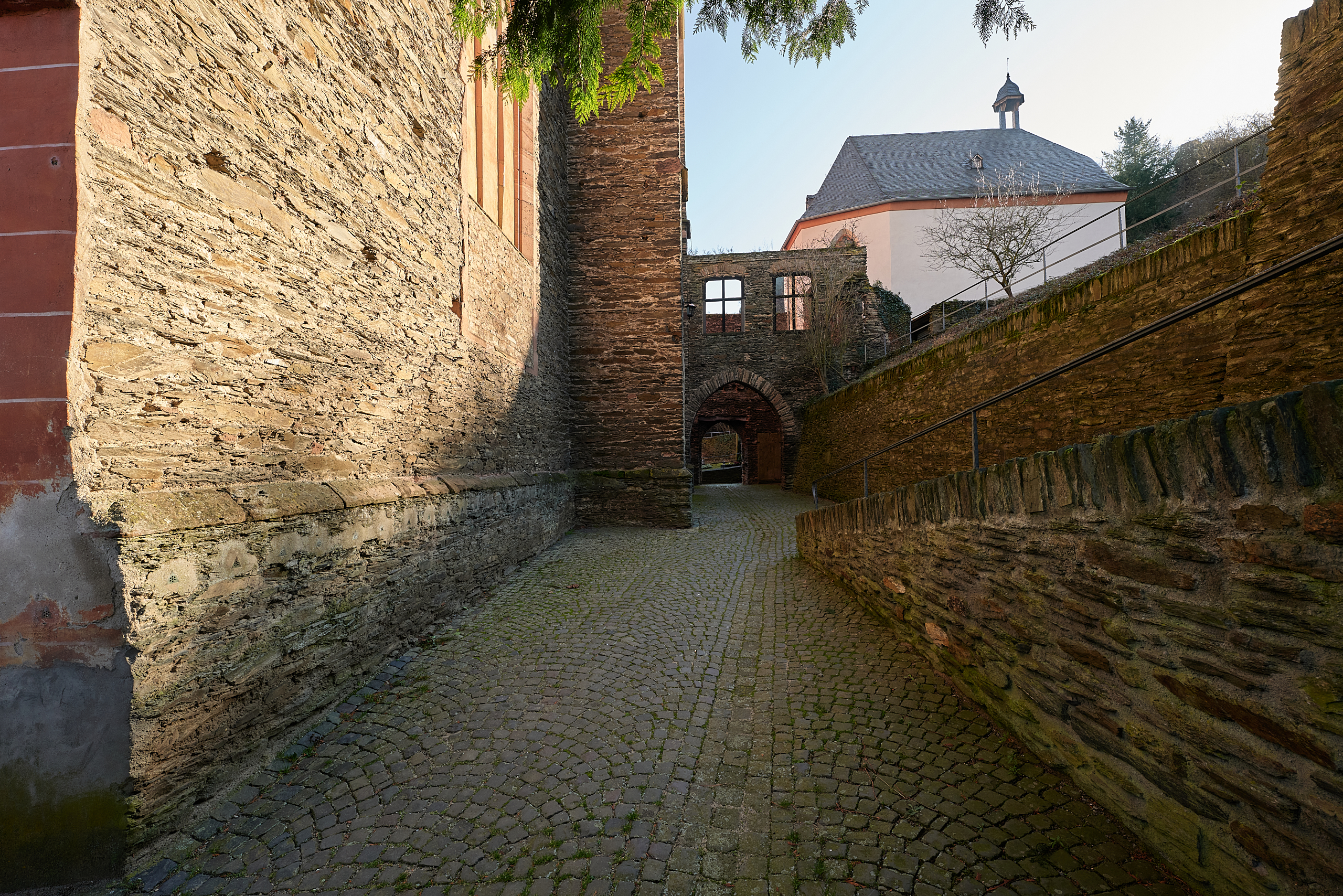
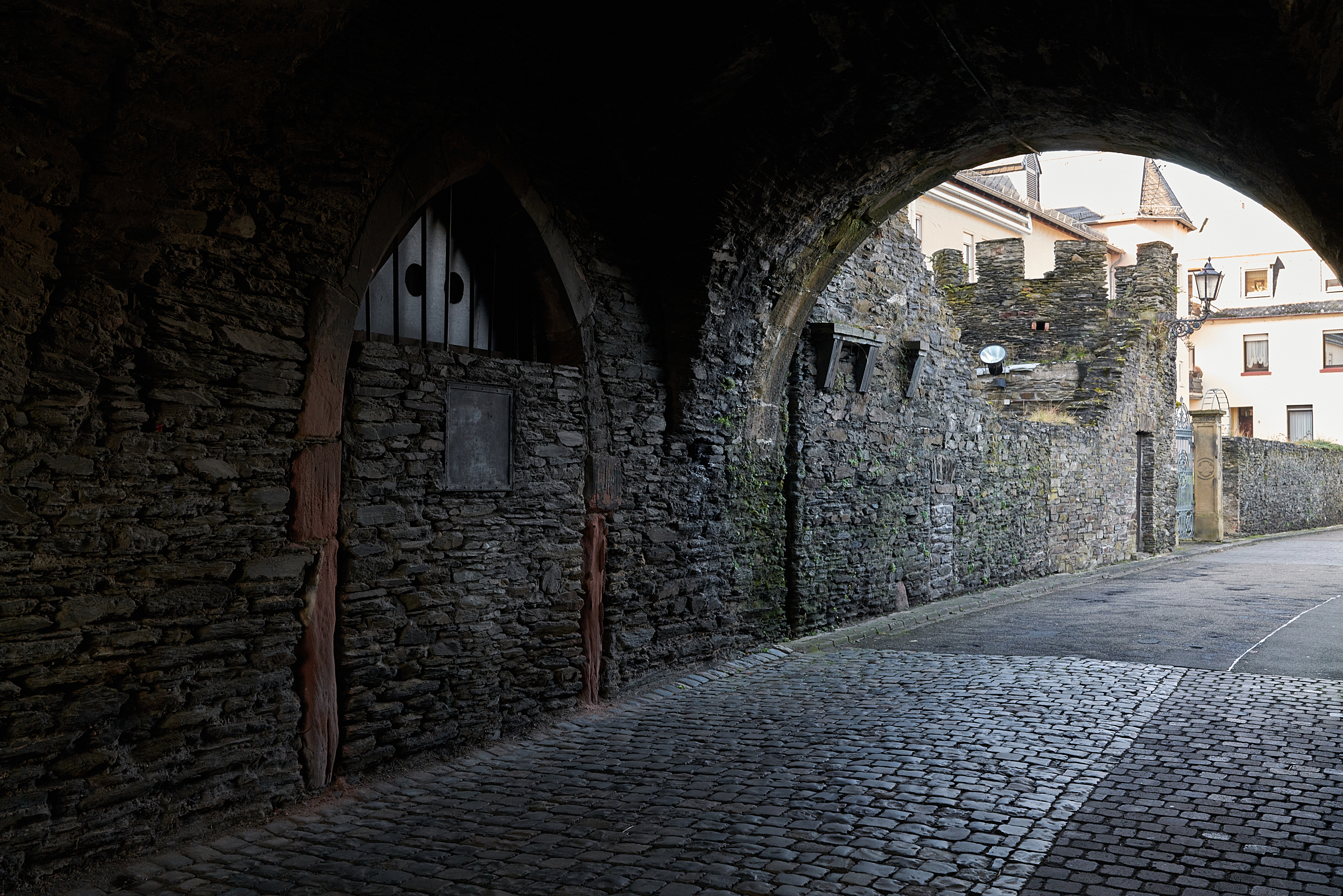
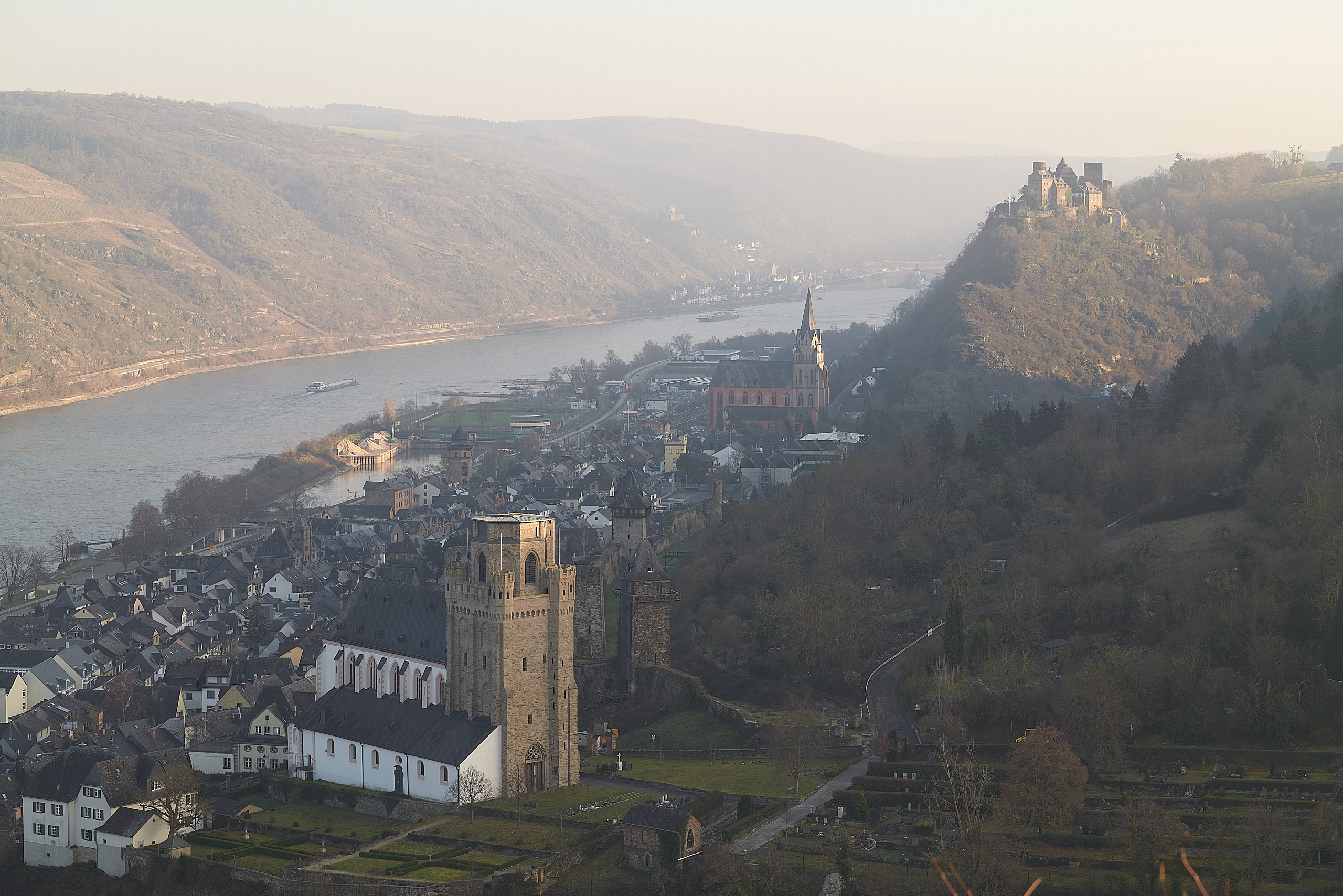
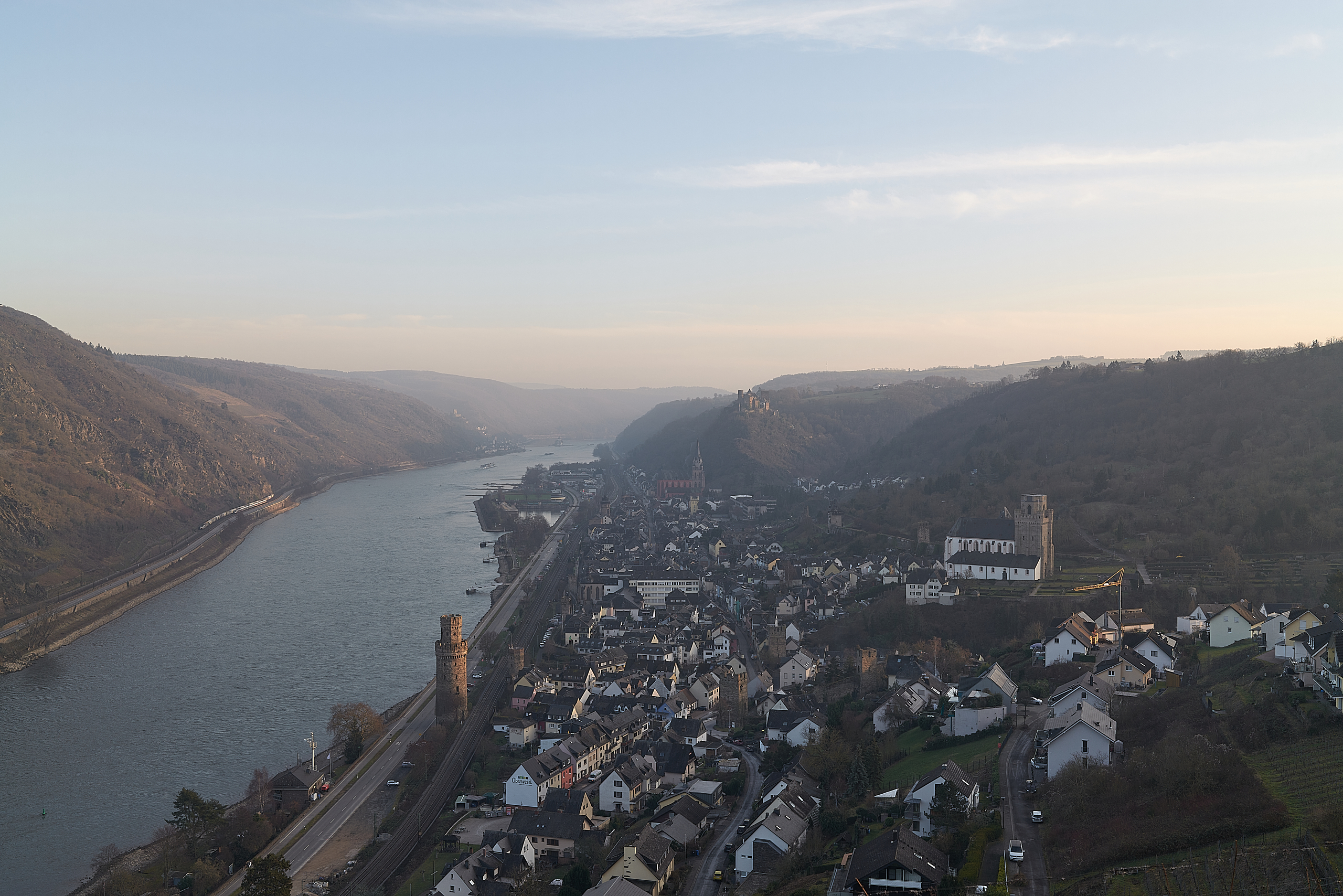
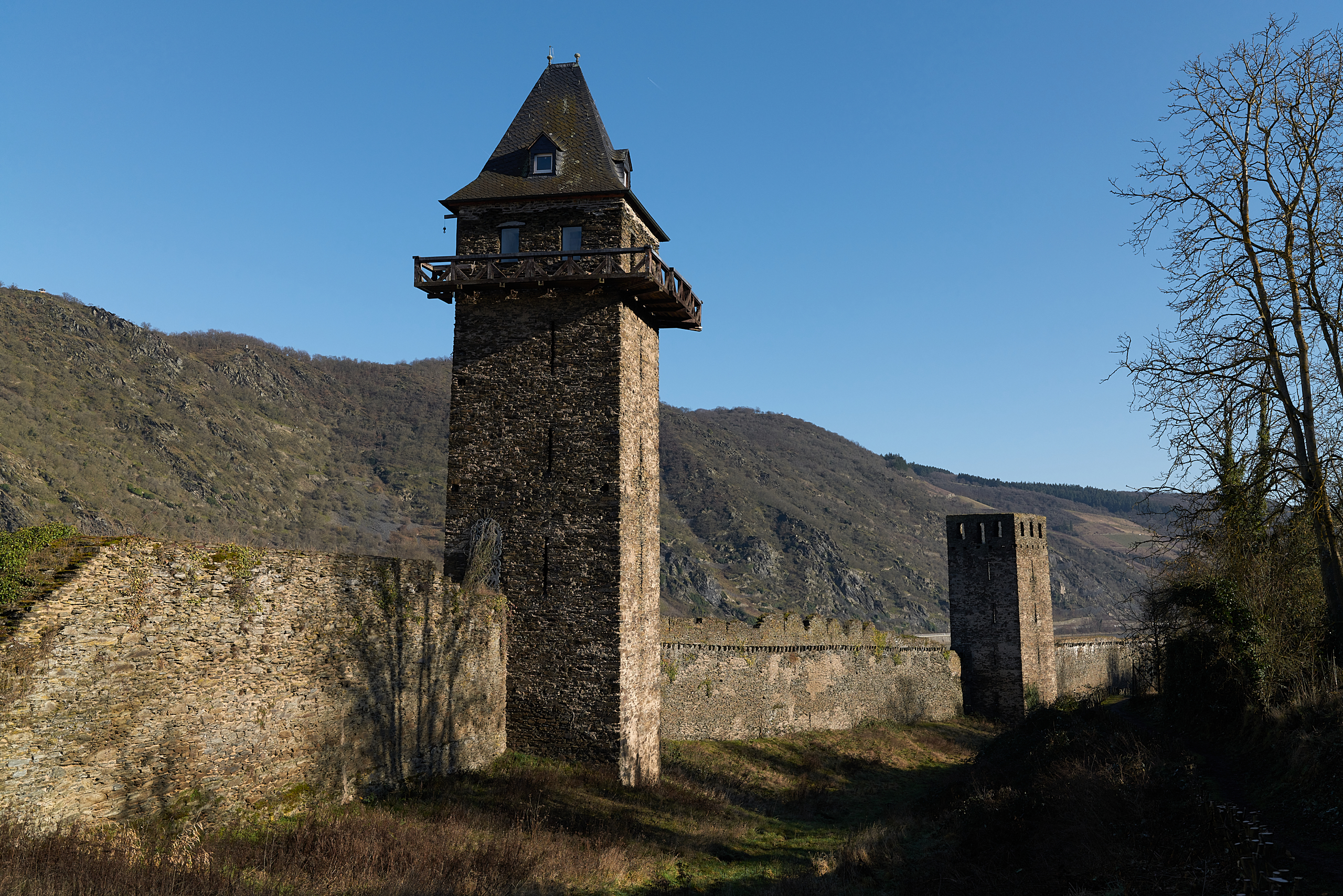
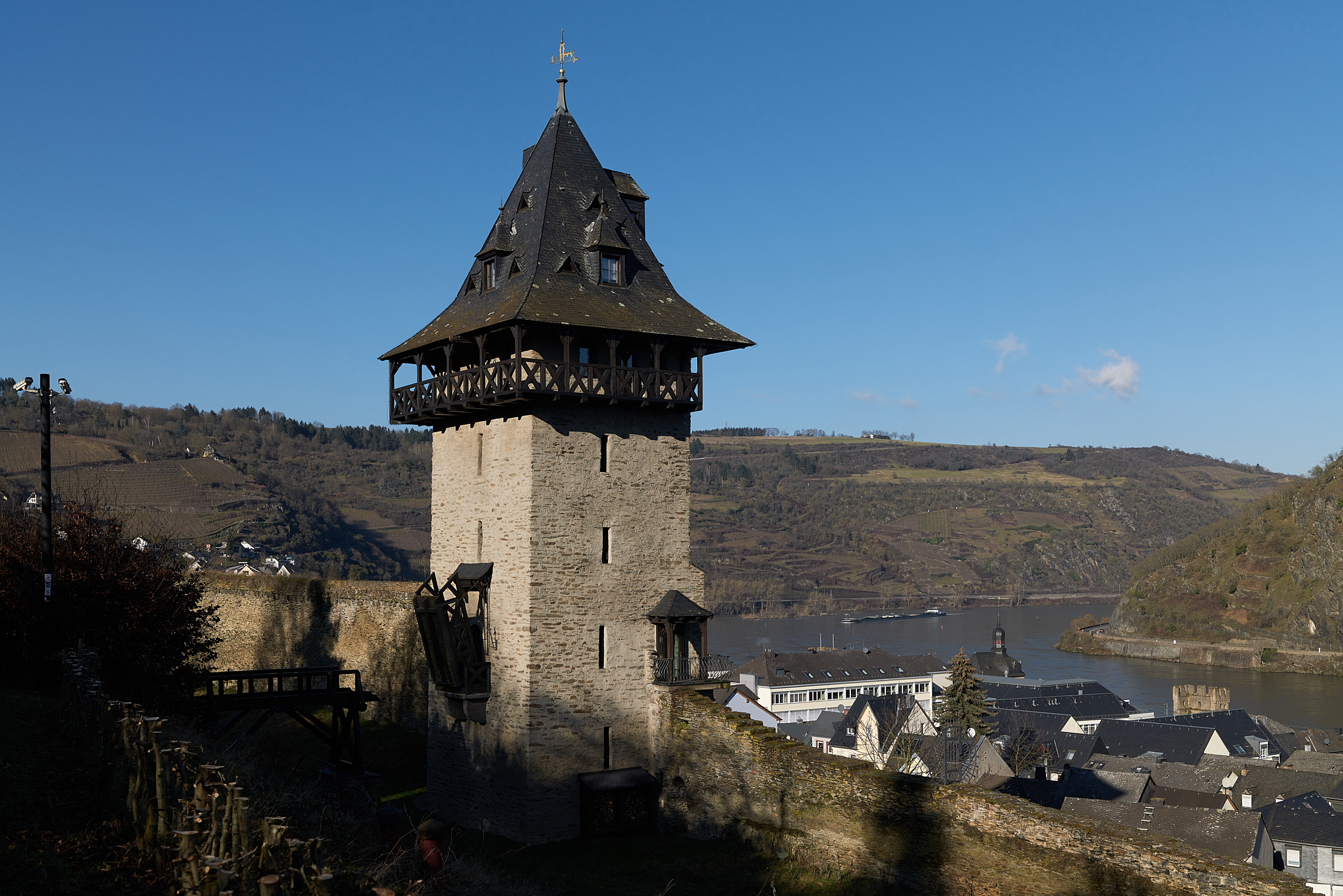
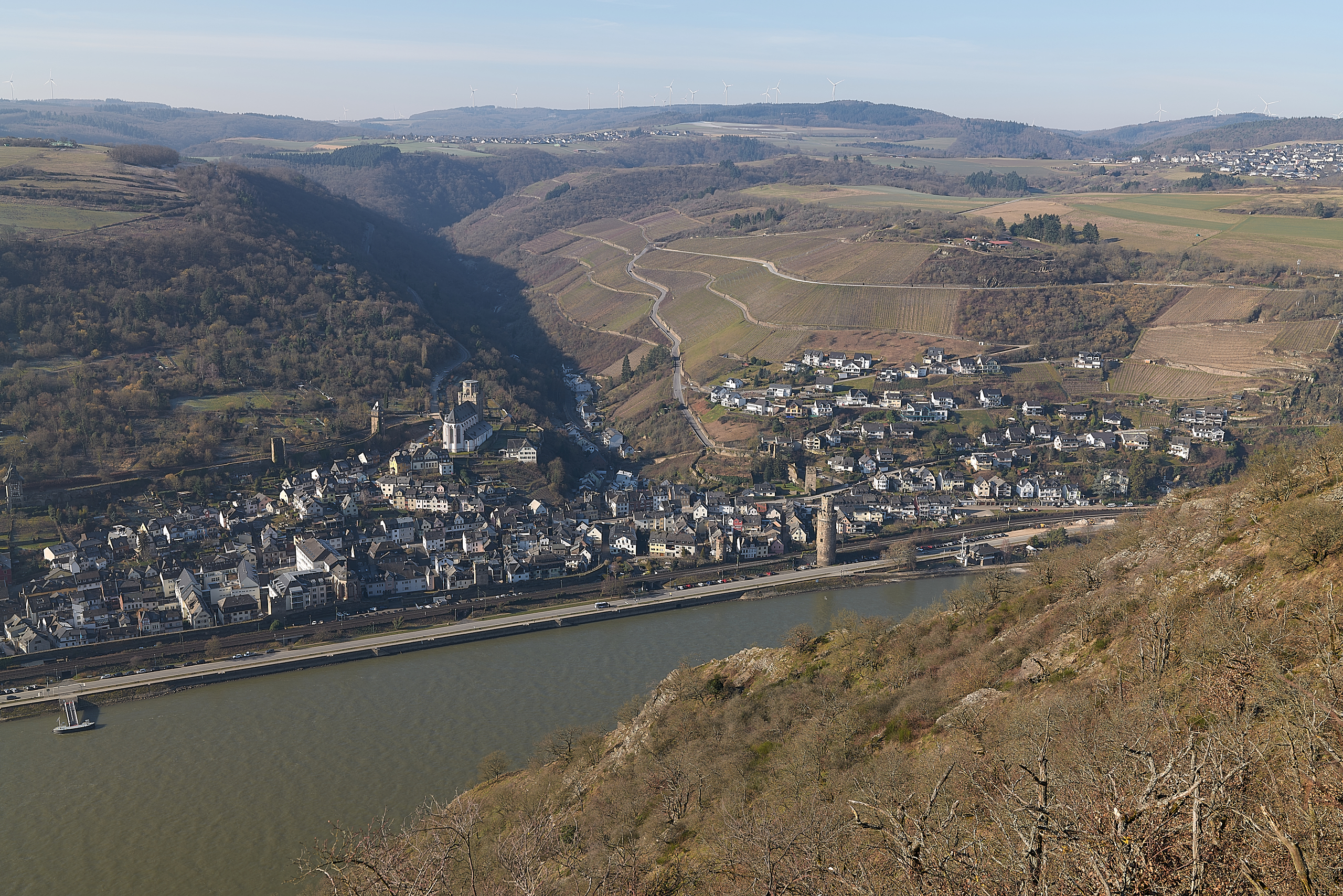
This development is clearly readable in the town’s very structure. Oberwesel is still surrounded by a powerful city wall — one of the best-preserved on the Rhine. It was built in the 13th–14th centuries and included about sixteen towers. Unlike many other towns where the walls were dismantled or only fragments remain, here they form an almost continuous ring. When you walk along them, you don’t get the feeling of ruins — rather, they are perceived as a fully integrated part of the town, simply very old.
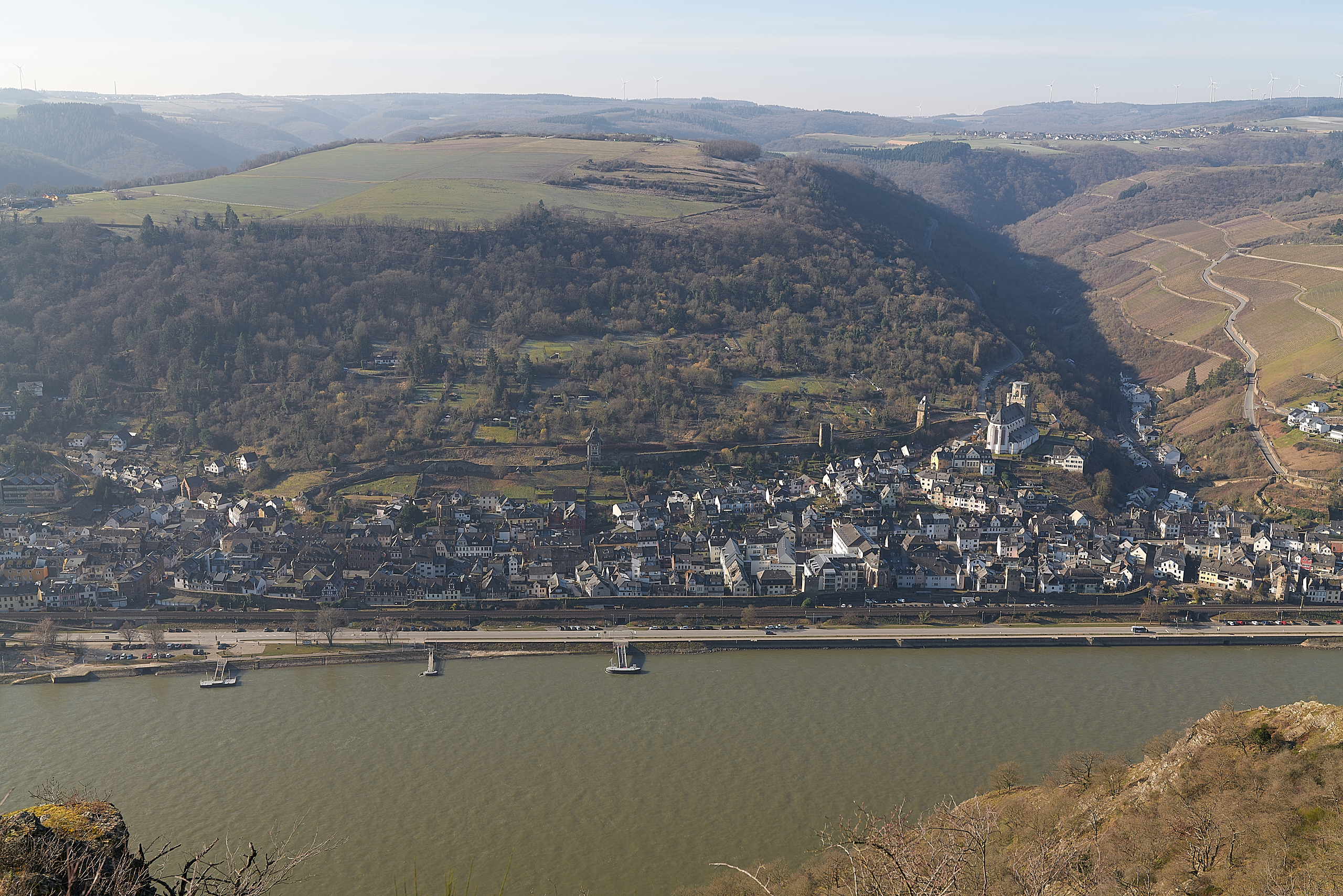
The towers along the wall vary: round, square, stretching upward. The most striking is the Ochsenturm, the “Ox Tower,” connected to one of the local legends. The story is not unique to the Rhine, but here it has taken on its own form: they say a girl was imprisoned in the tower out of jealousy or for breaking a vow, where she spent the rest of her life. Versions of the plot differ, but the central motif remains — guilt, punishment, and a memory that does not disappear with the person. Such stories are typical of medieval towns, but in Oberwesel they especially “stick” to the place, because the walls and towers themselves have survived almost unchanged, and the imagination does not need to add anything.
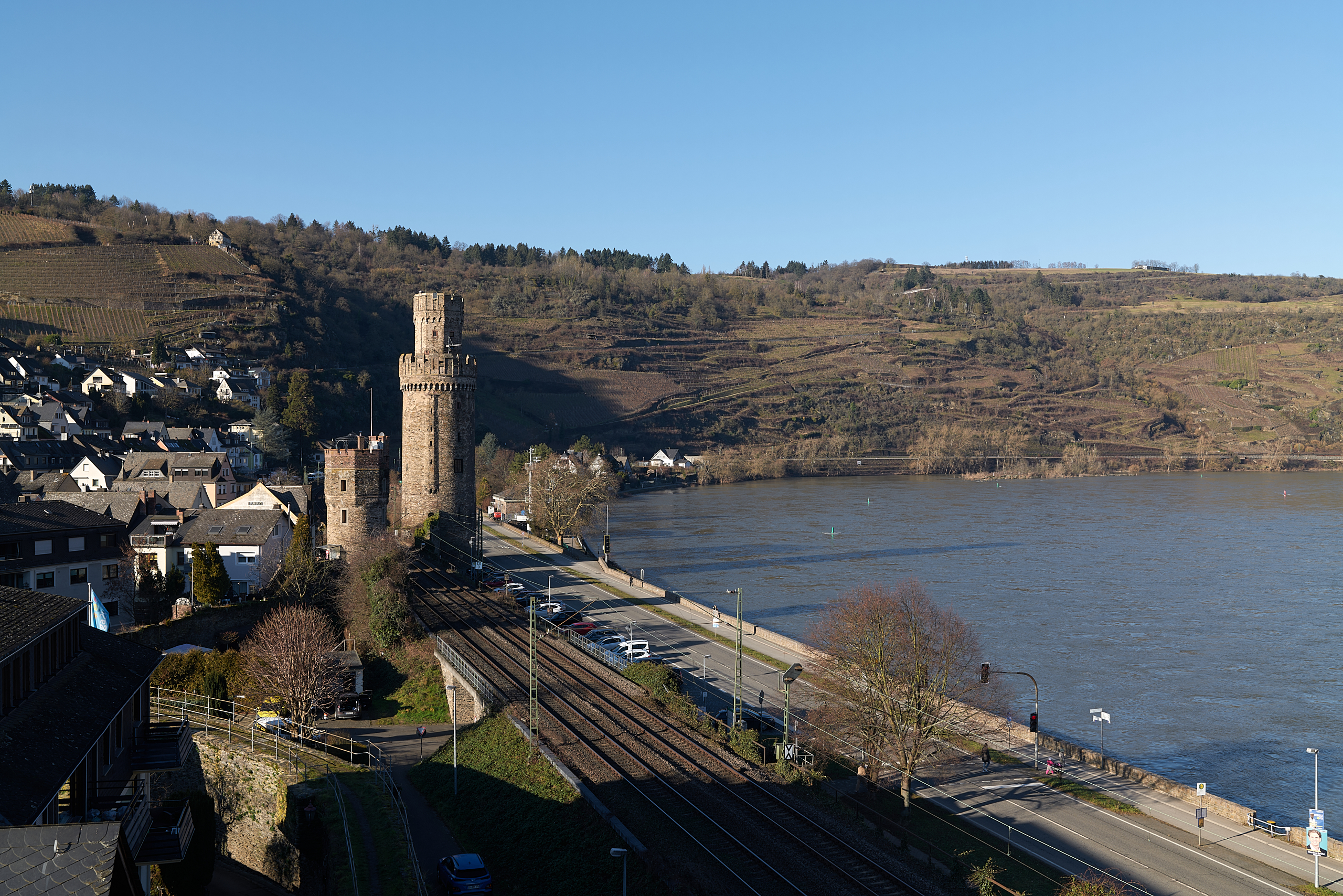
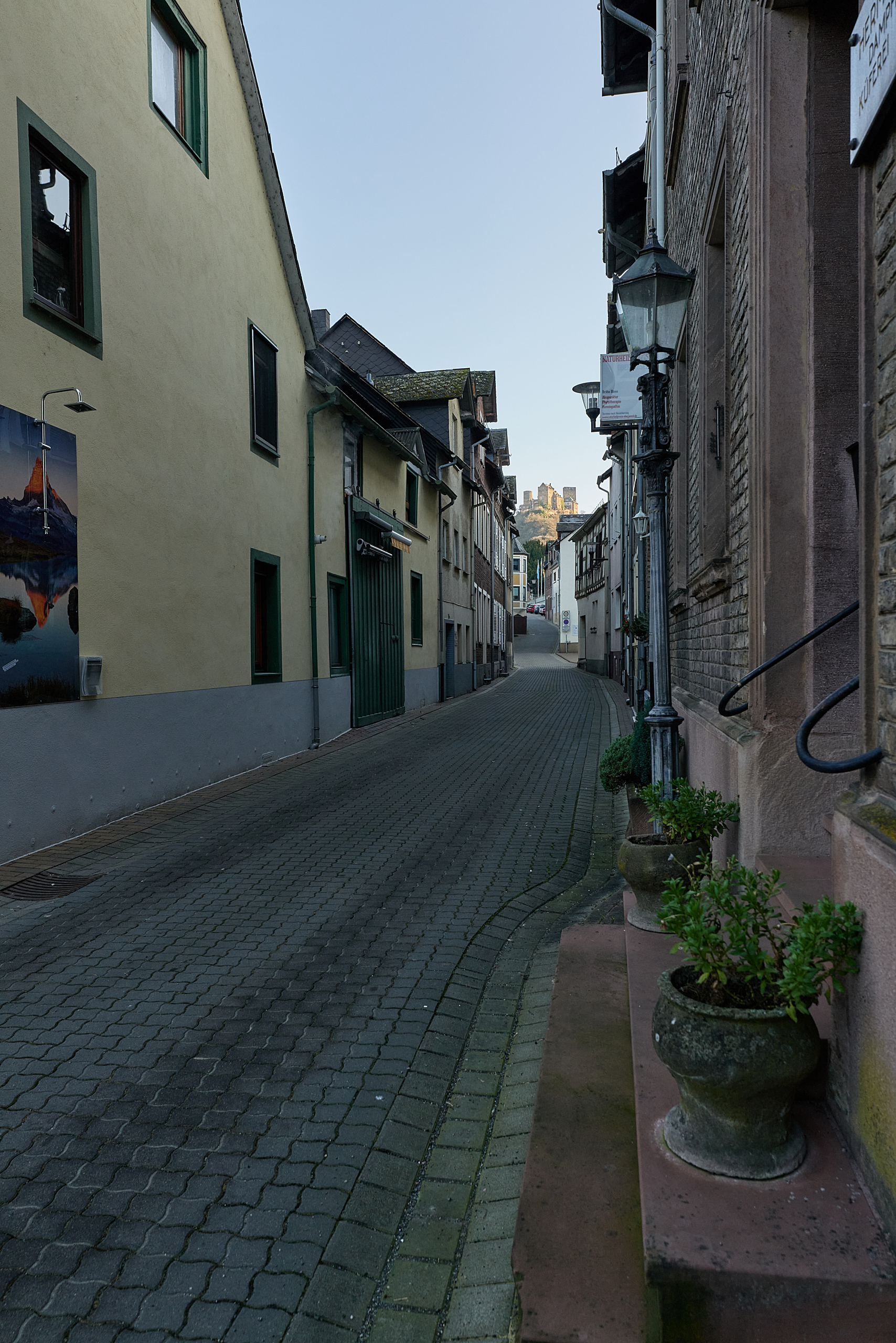
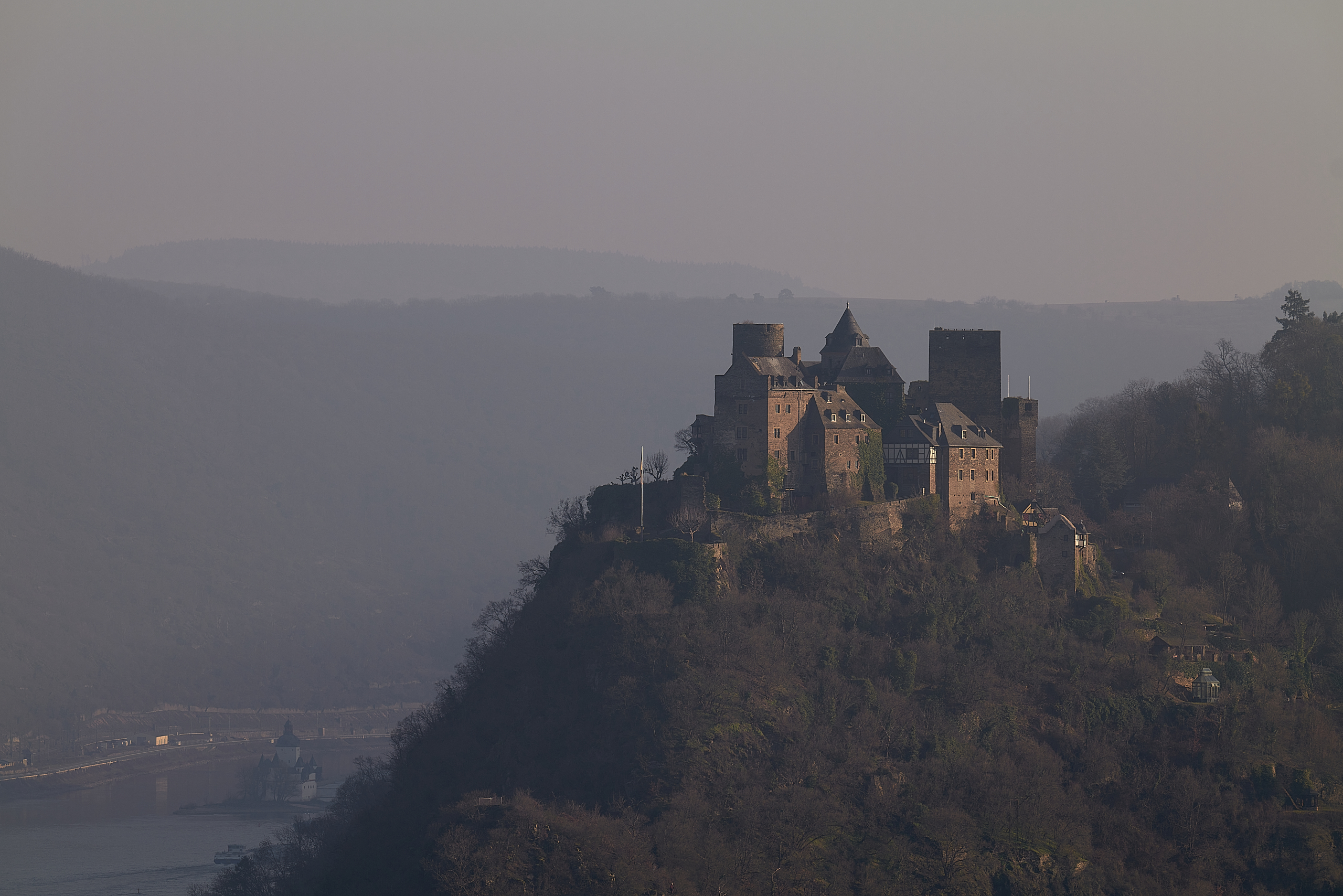
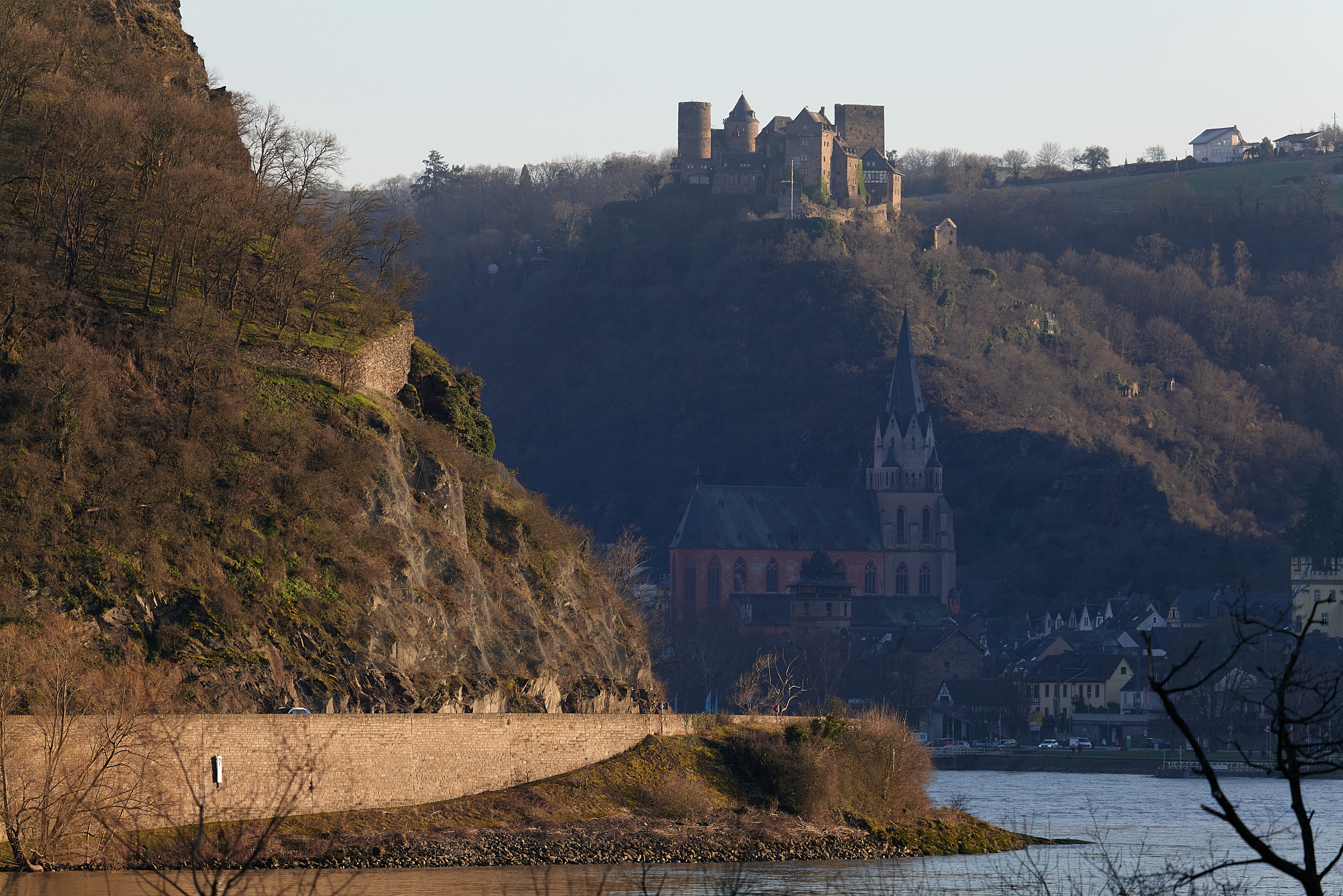
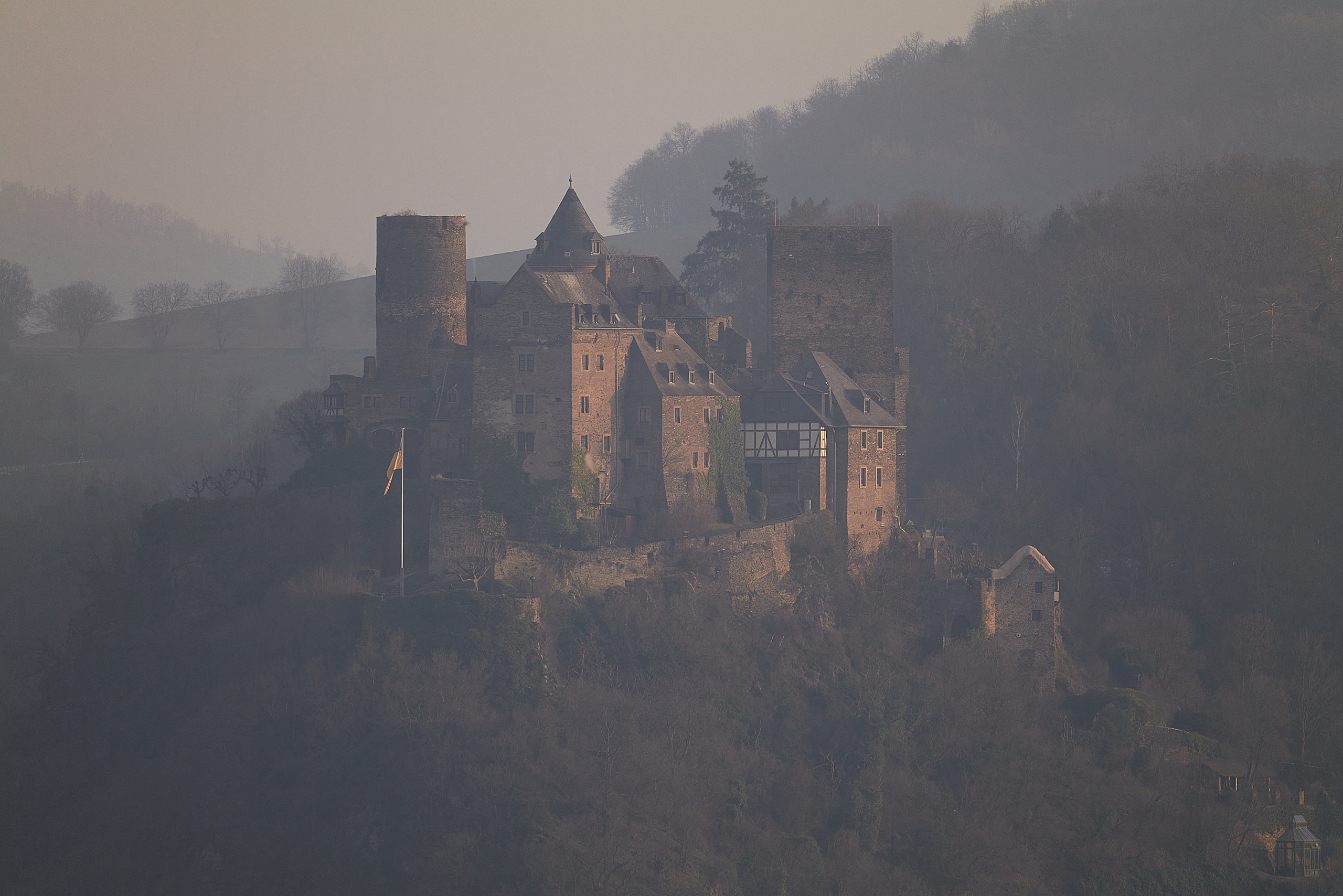
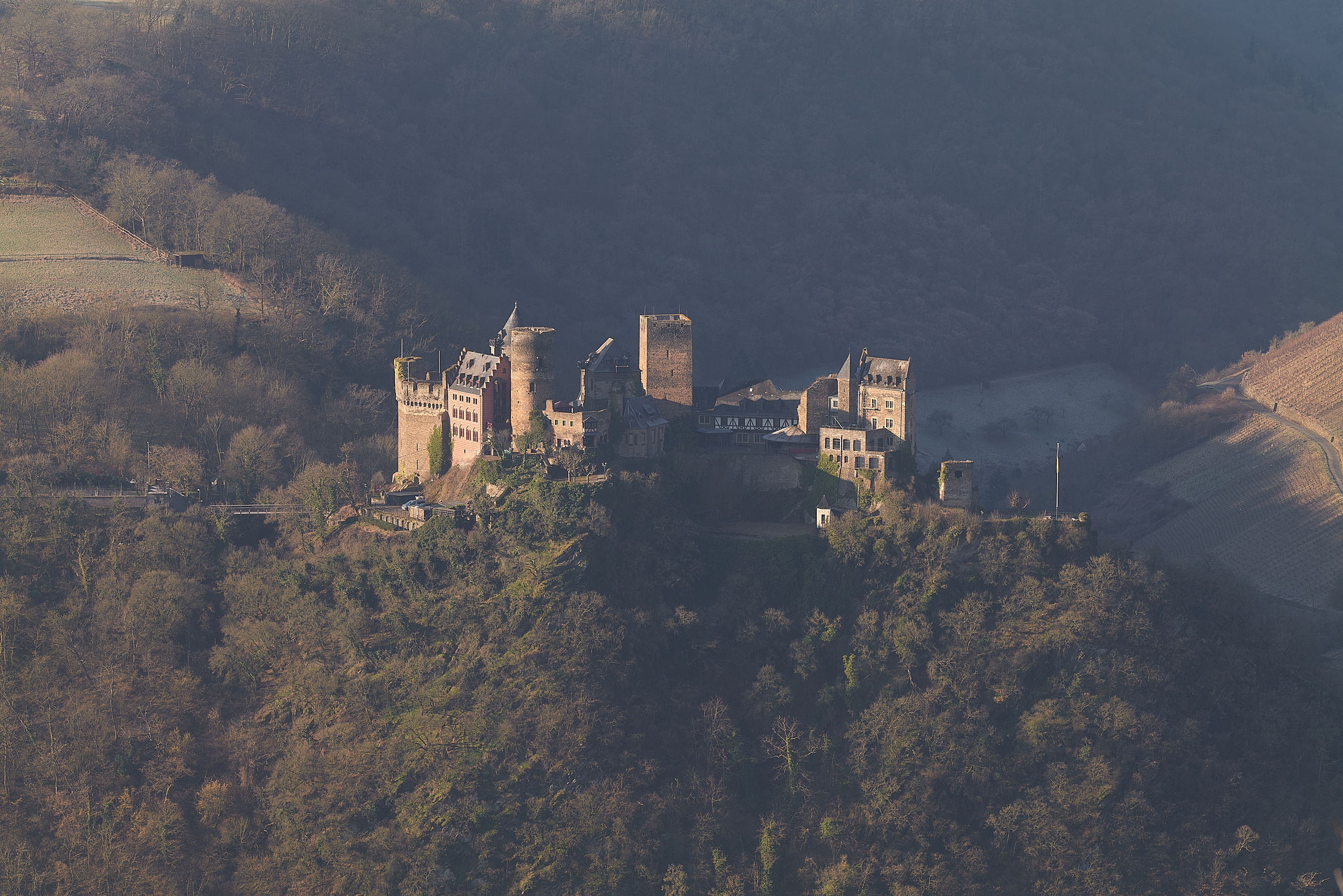
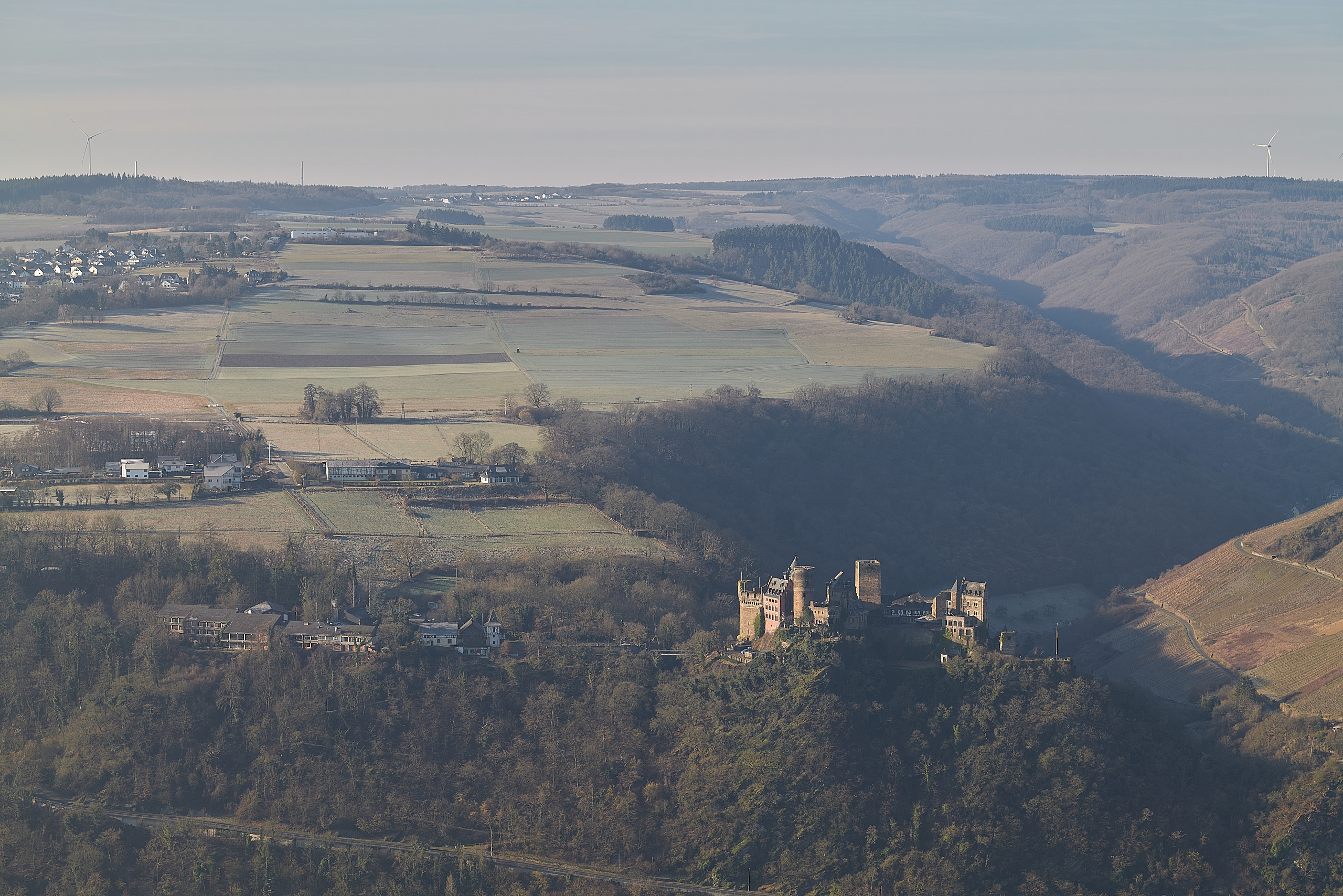
Above the town rises Schönburg Castle. Today it is a restored castle turned into a hotel, but its history is much older. The first fortifications on this site appeared in the 12th century, and for a long time it served as a residence and stronghold for control over the territory. Like many castles in the Rhine Valley, it was destroyed in the 17th century during the wars, and later restored in more recent times. Now it looks cohesive, but if you look closely, you can see where the authentic medieval masonry ends and the 19th–20th century reconstruction begins.
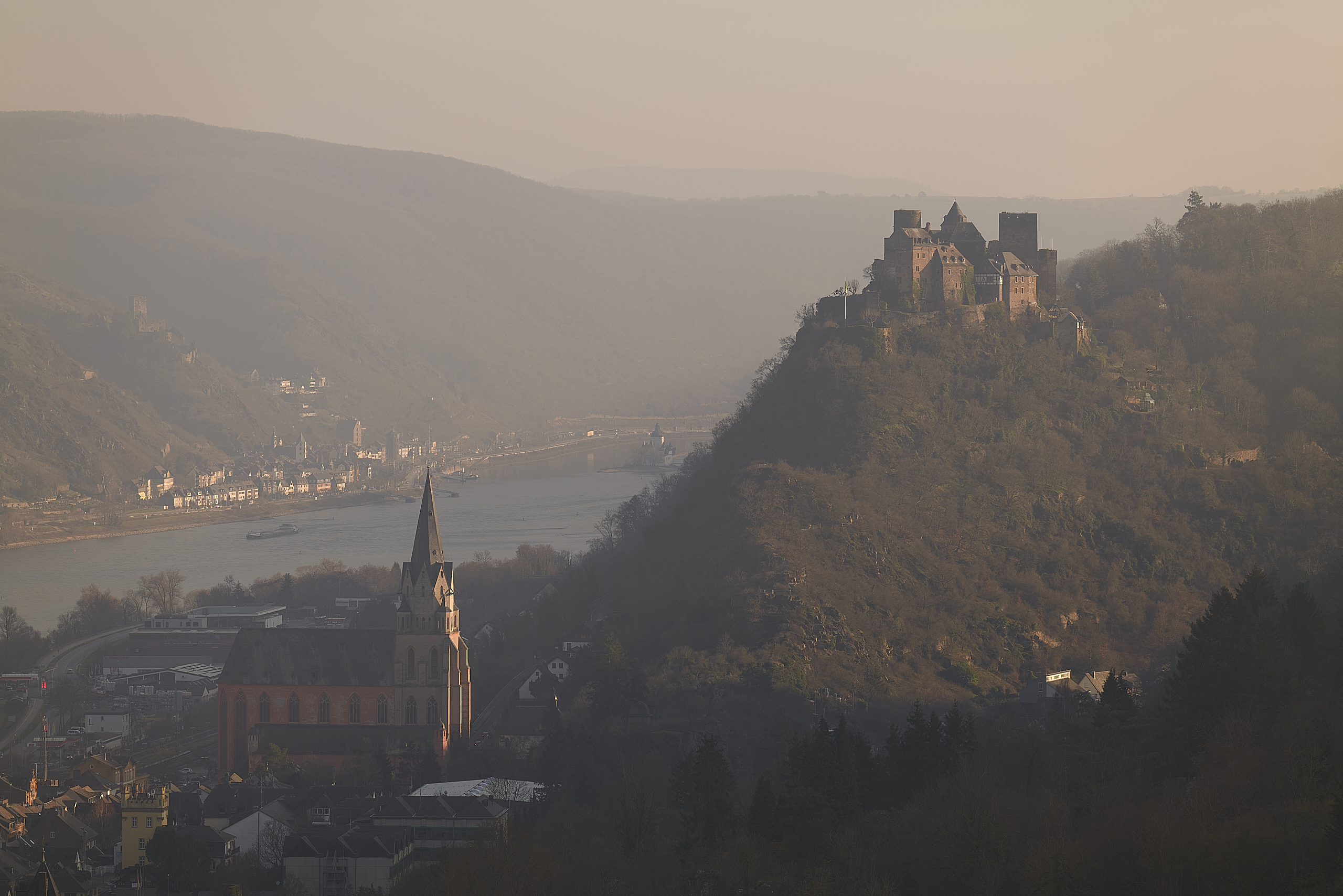
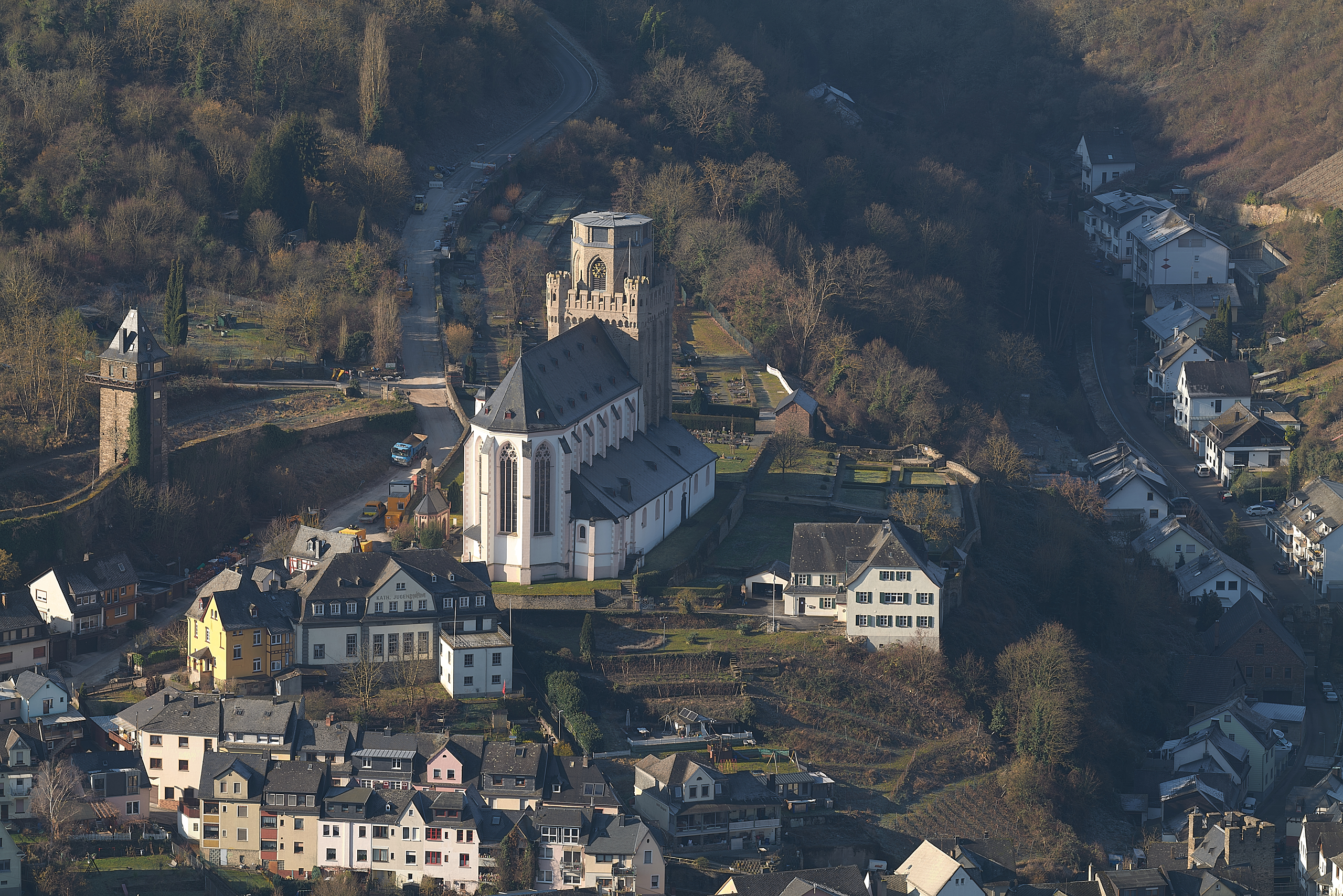
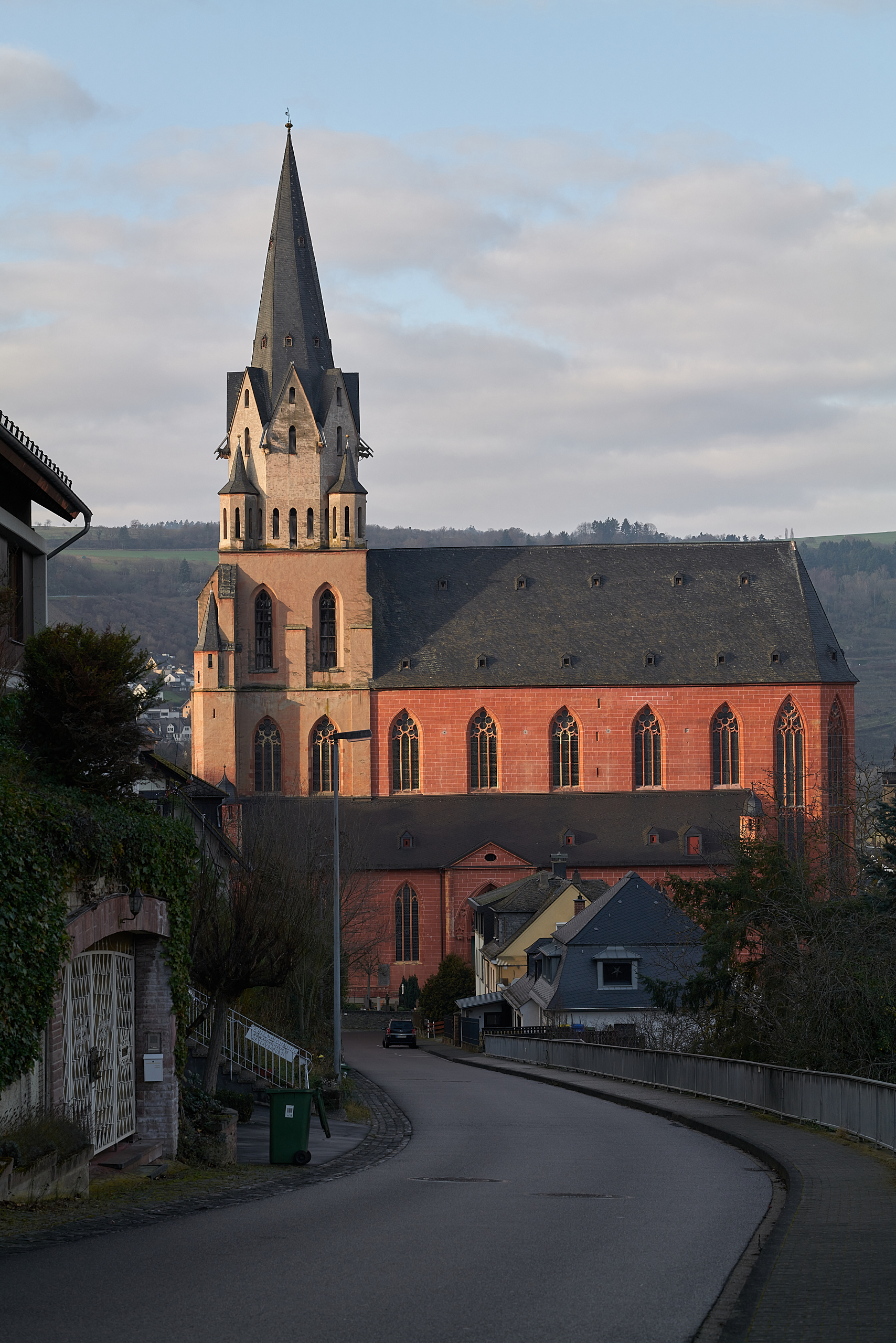
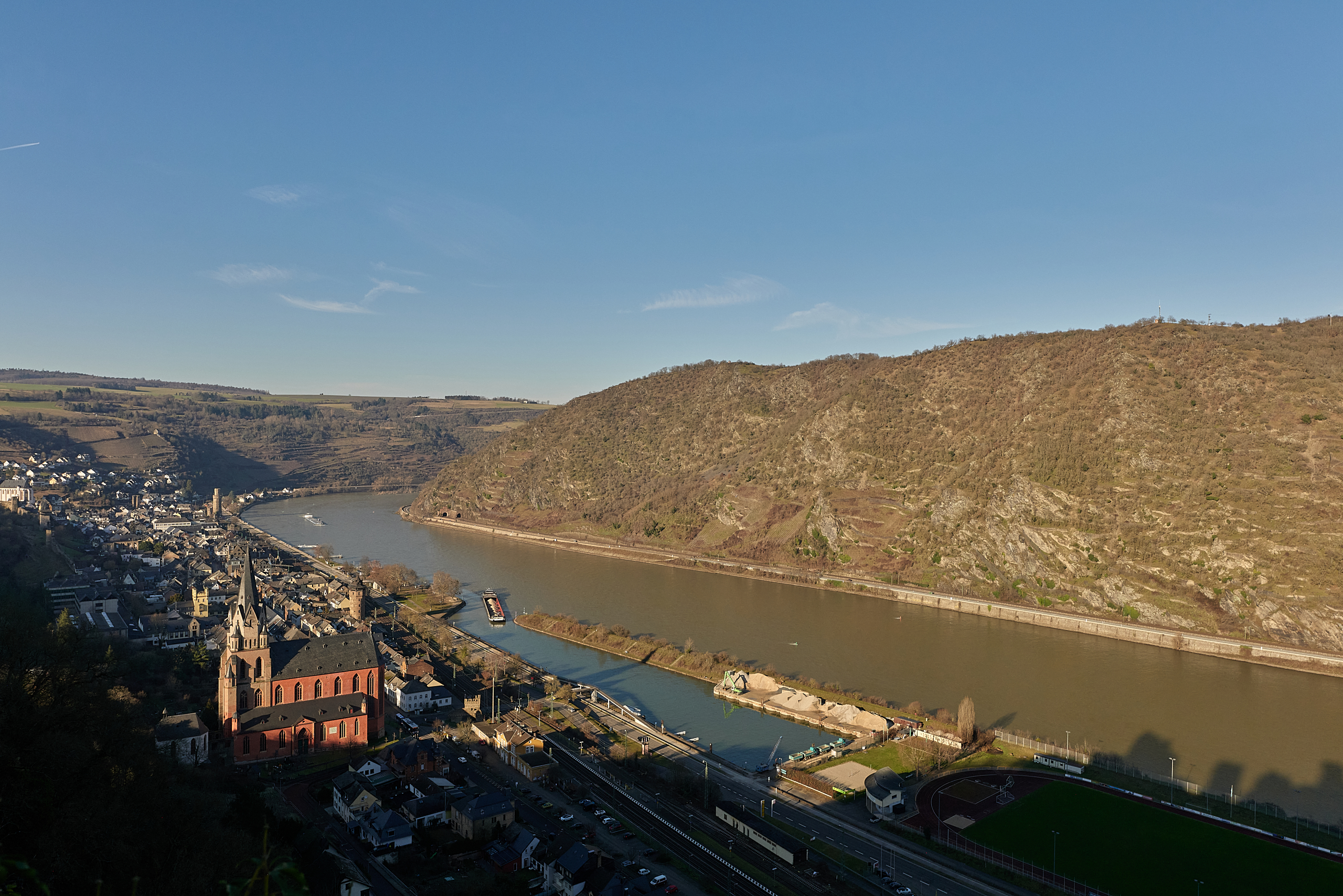
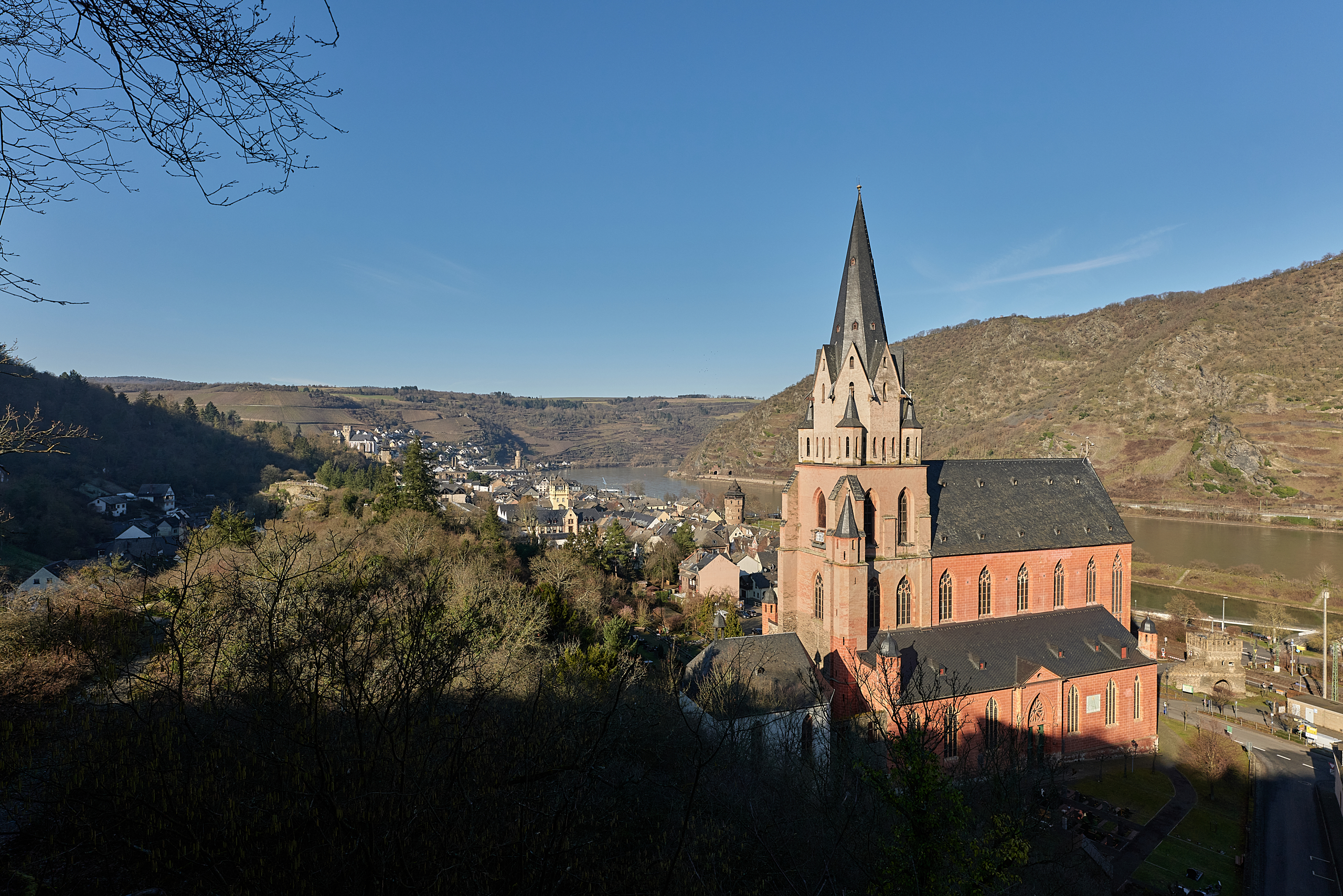
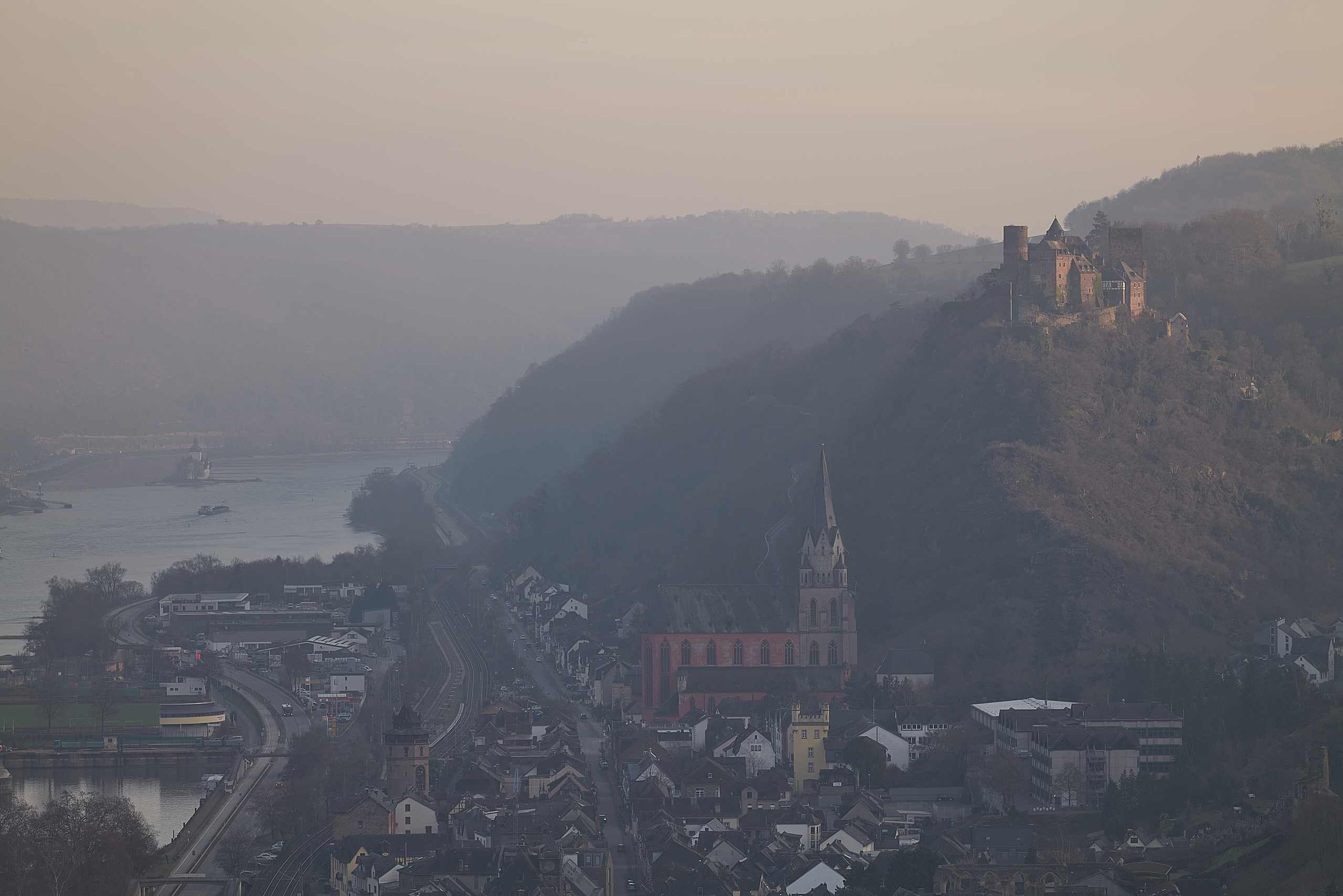
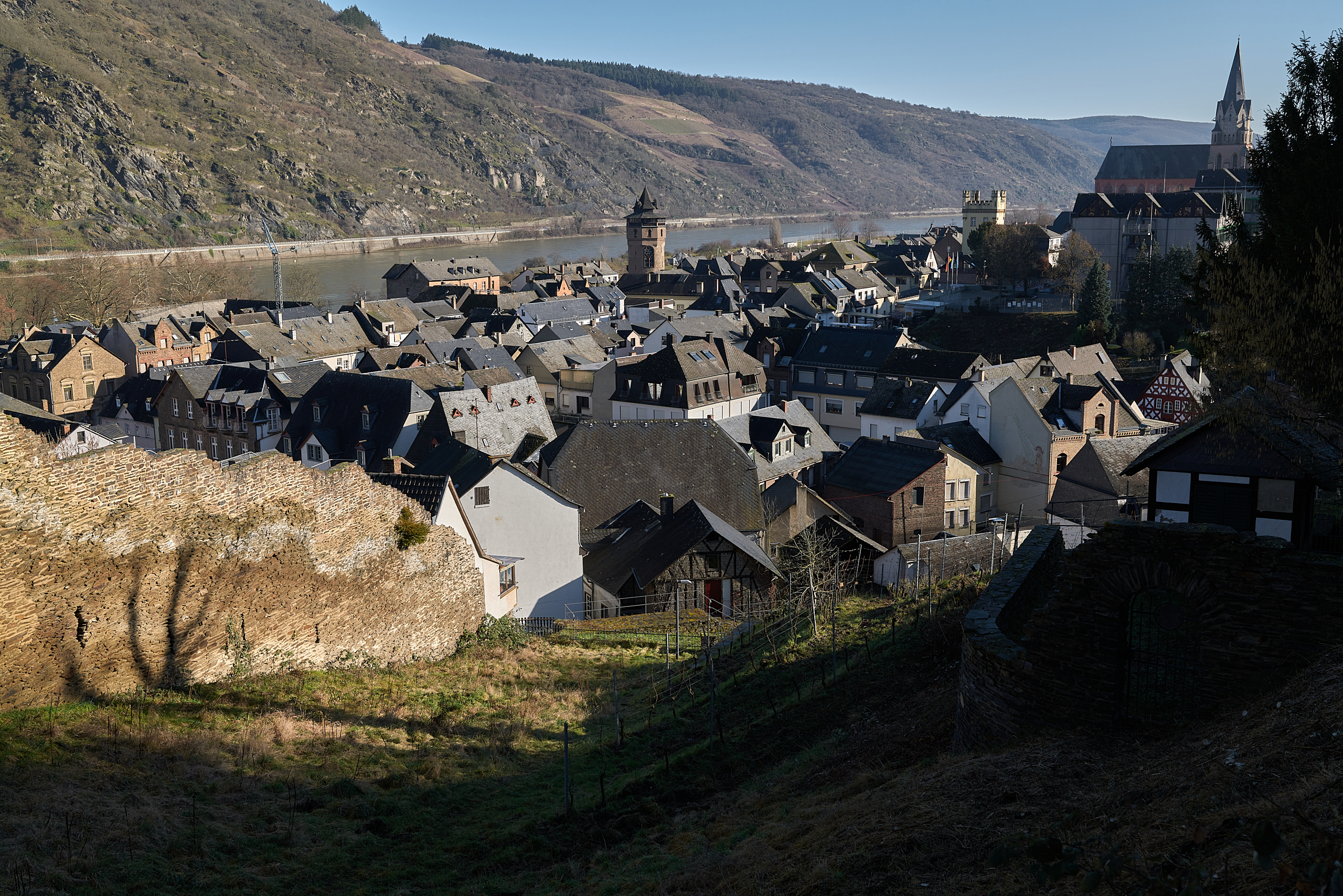
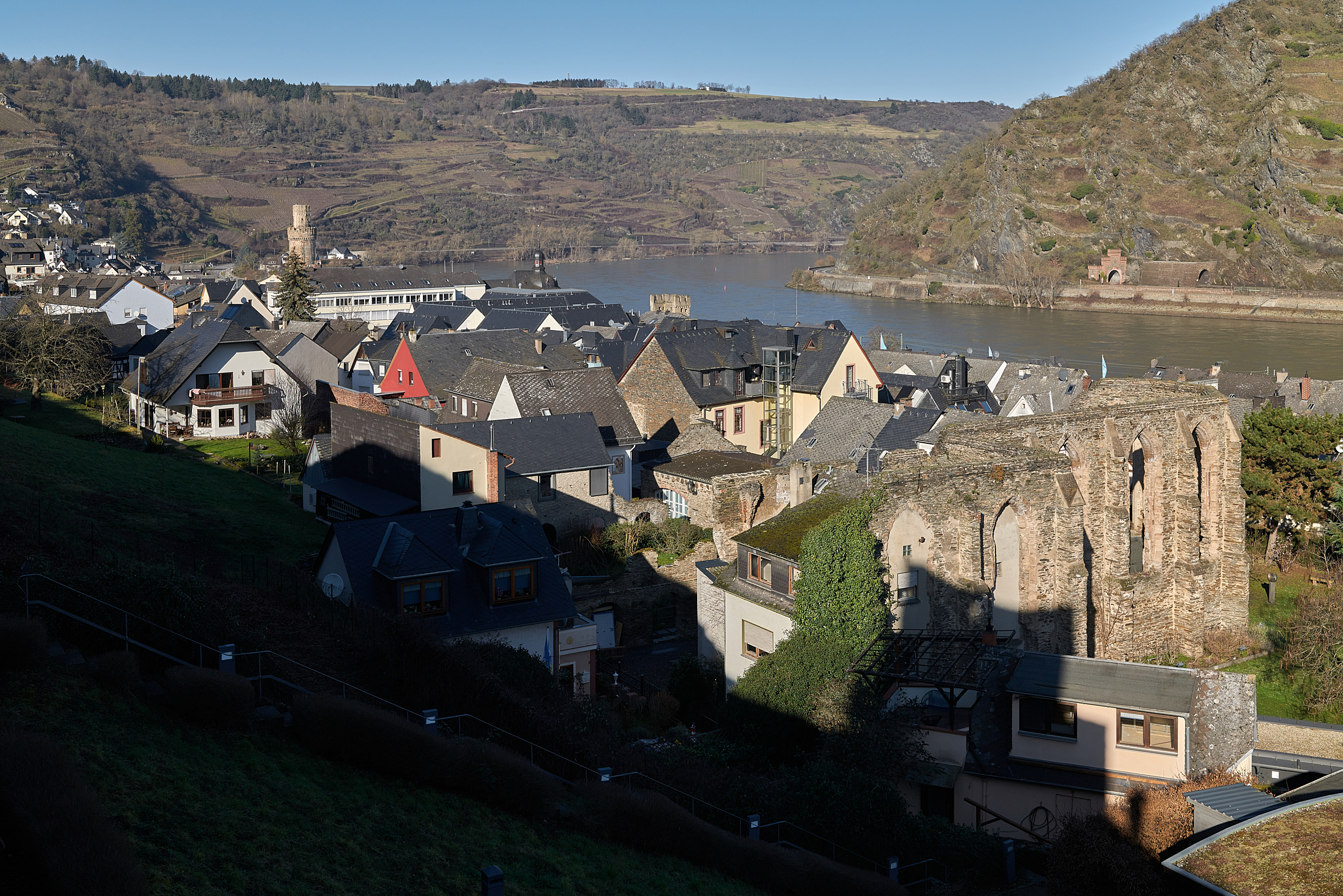
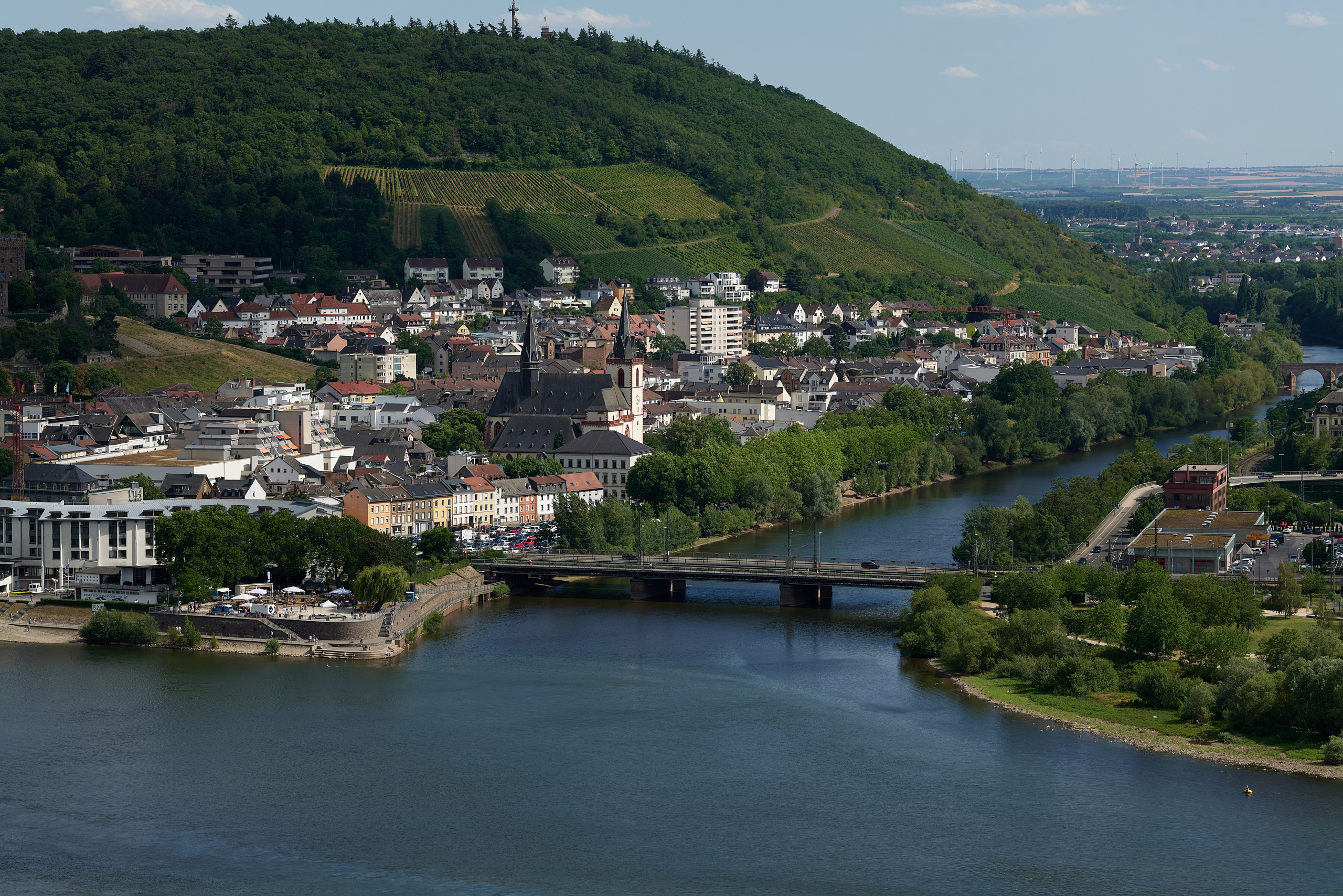
From the castle, the view of the town explains a great deal. Oberwesel did not grow chaotically — it developed within the walls, along streets leading to the river. And in the centre of this space stands the town’s main building — the Liebfrauenkirche Oberwesel.
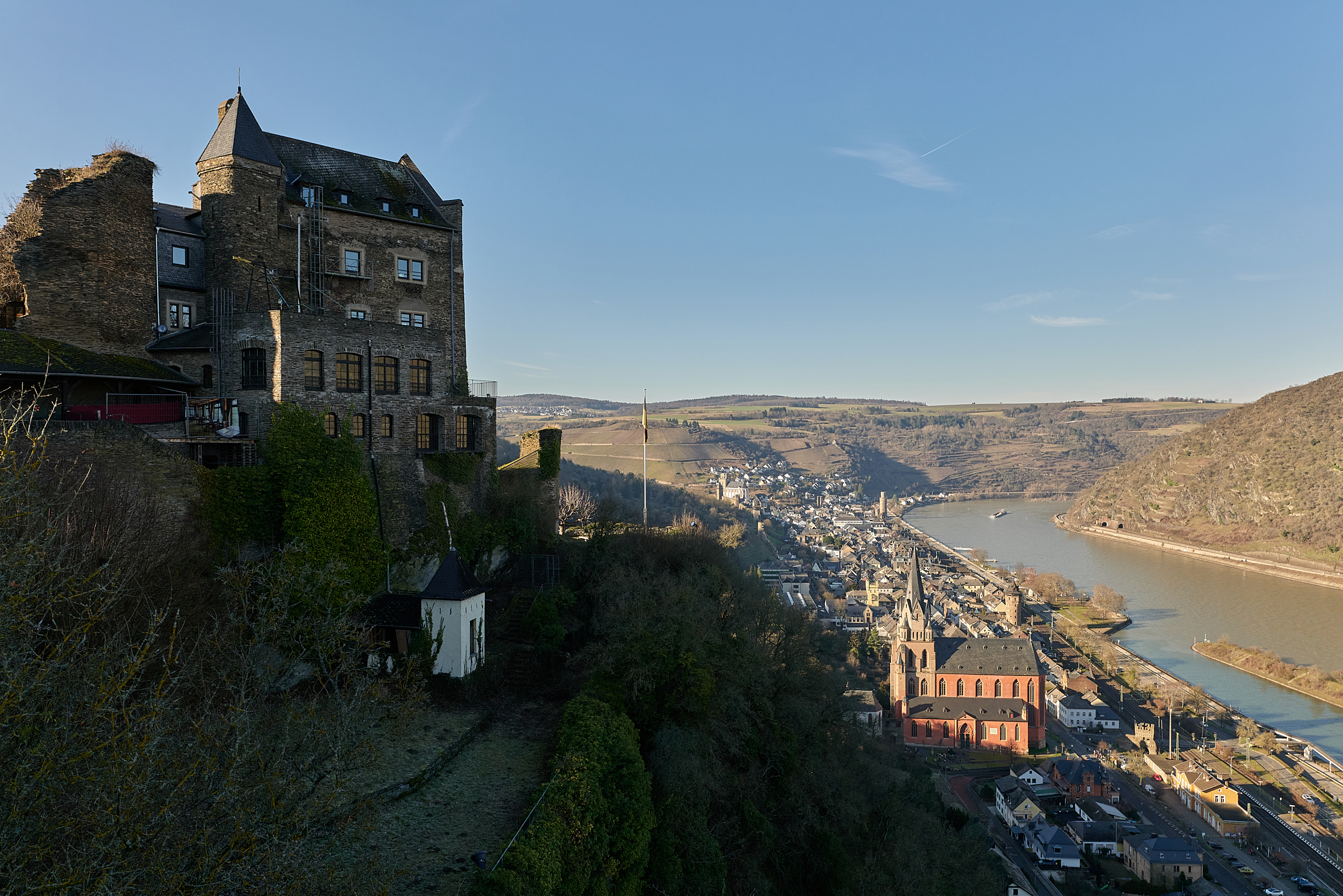
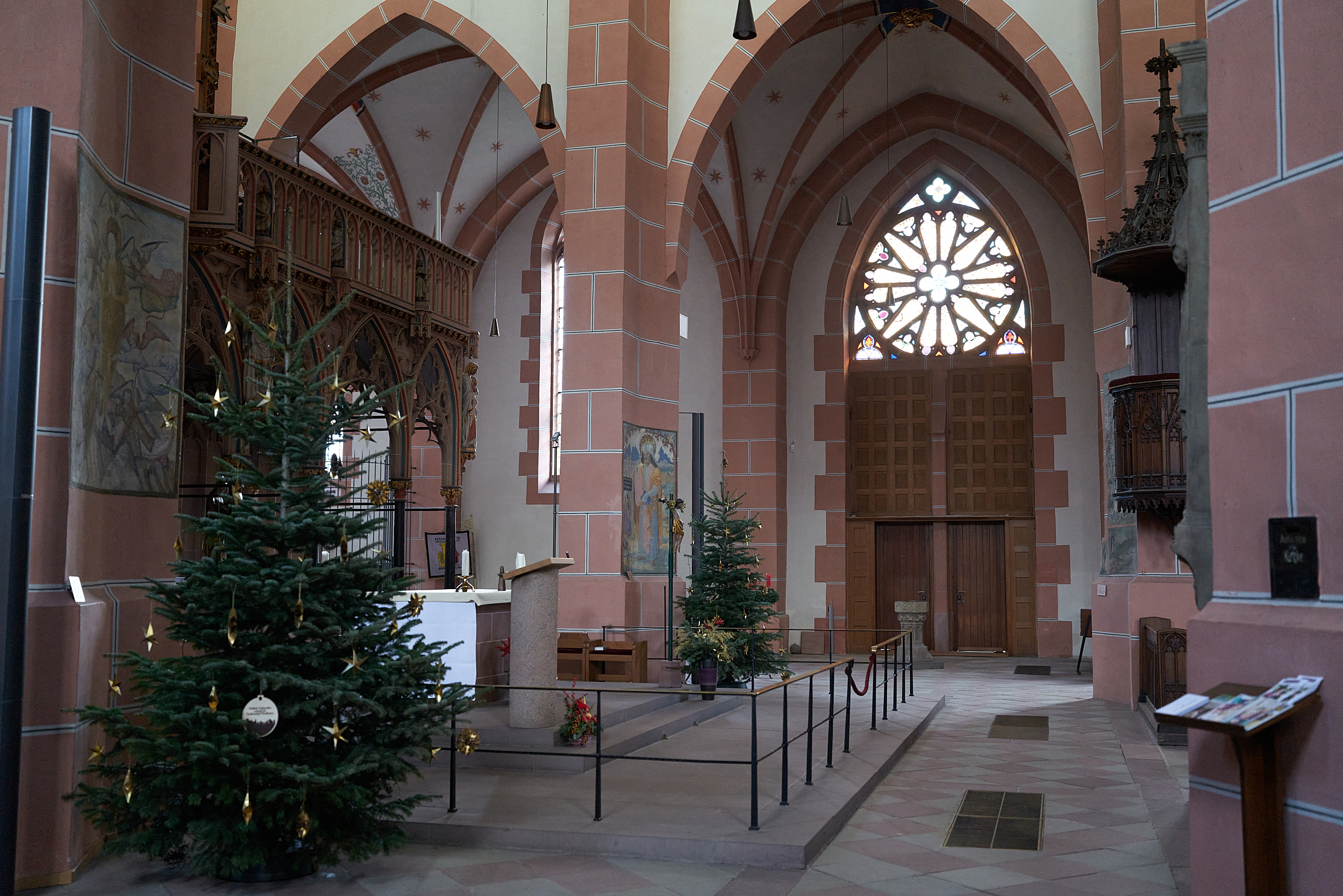
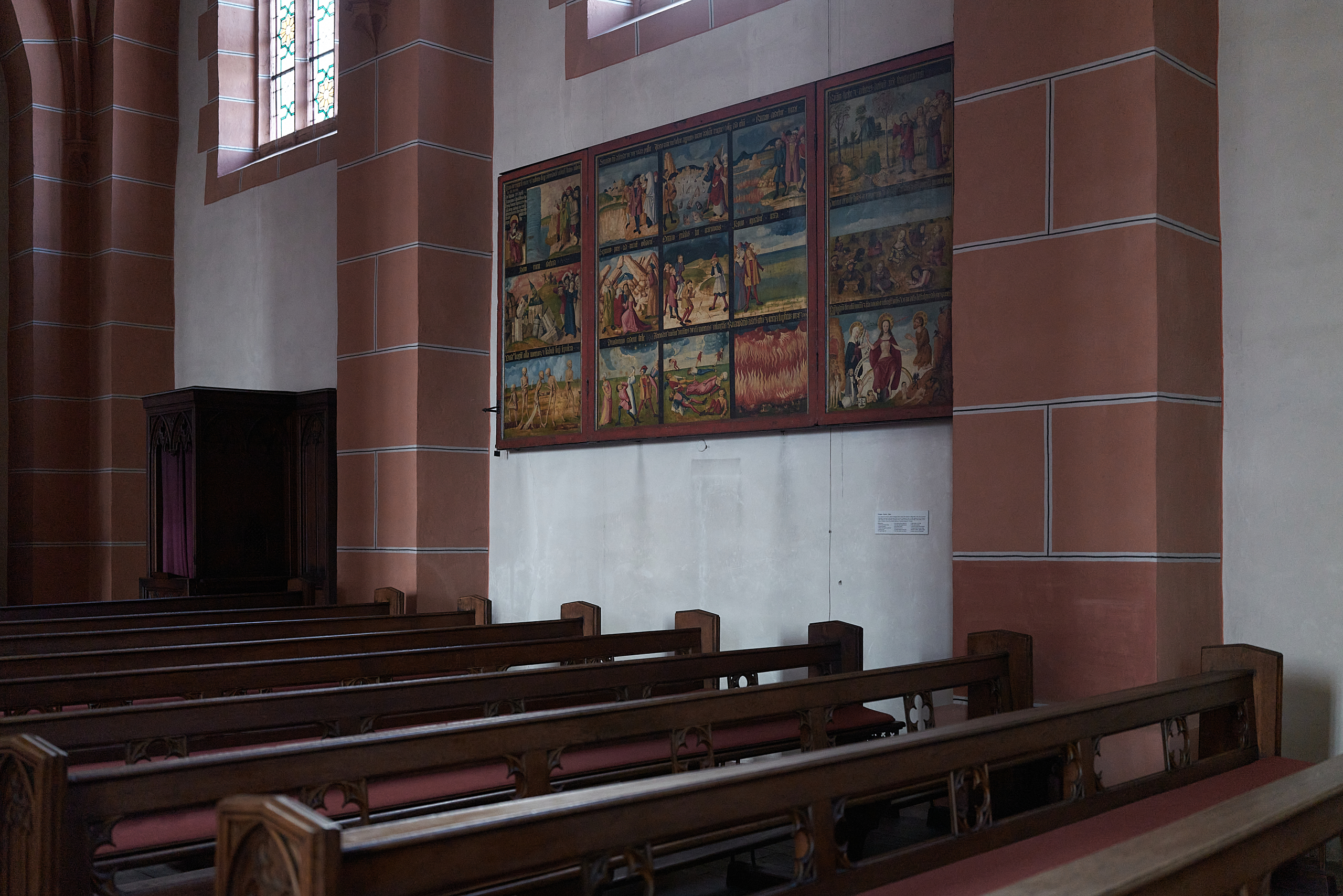
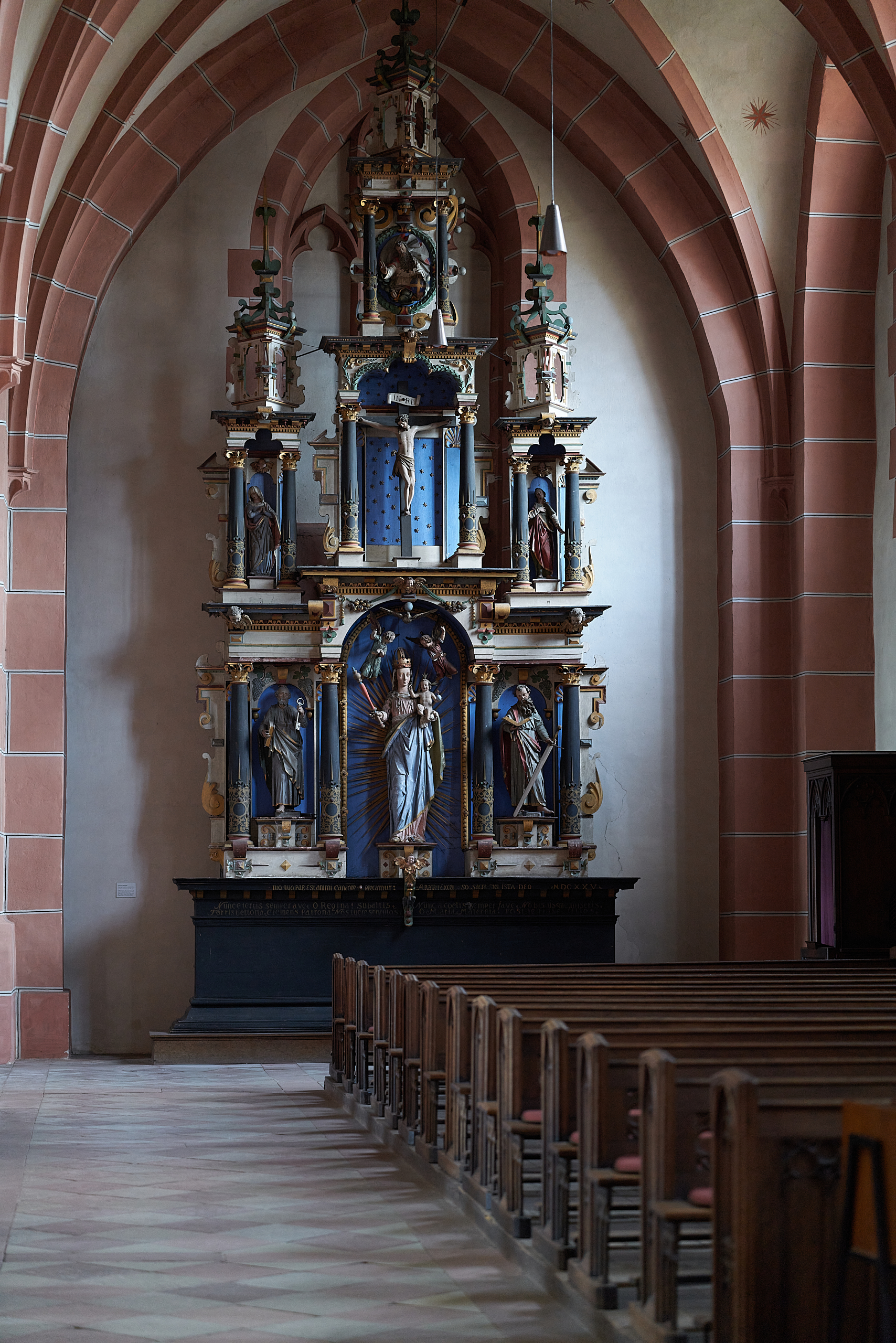
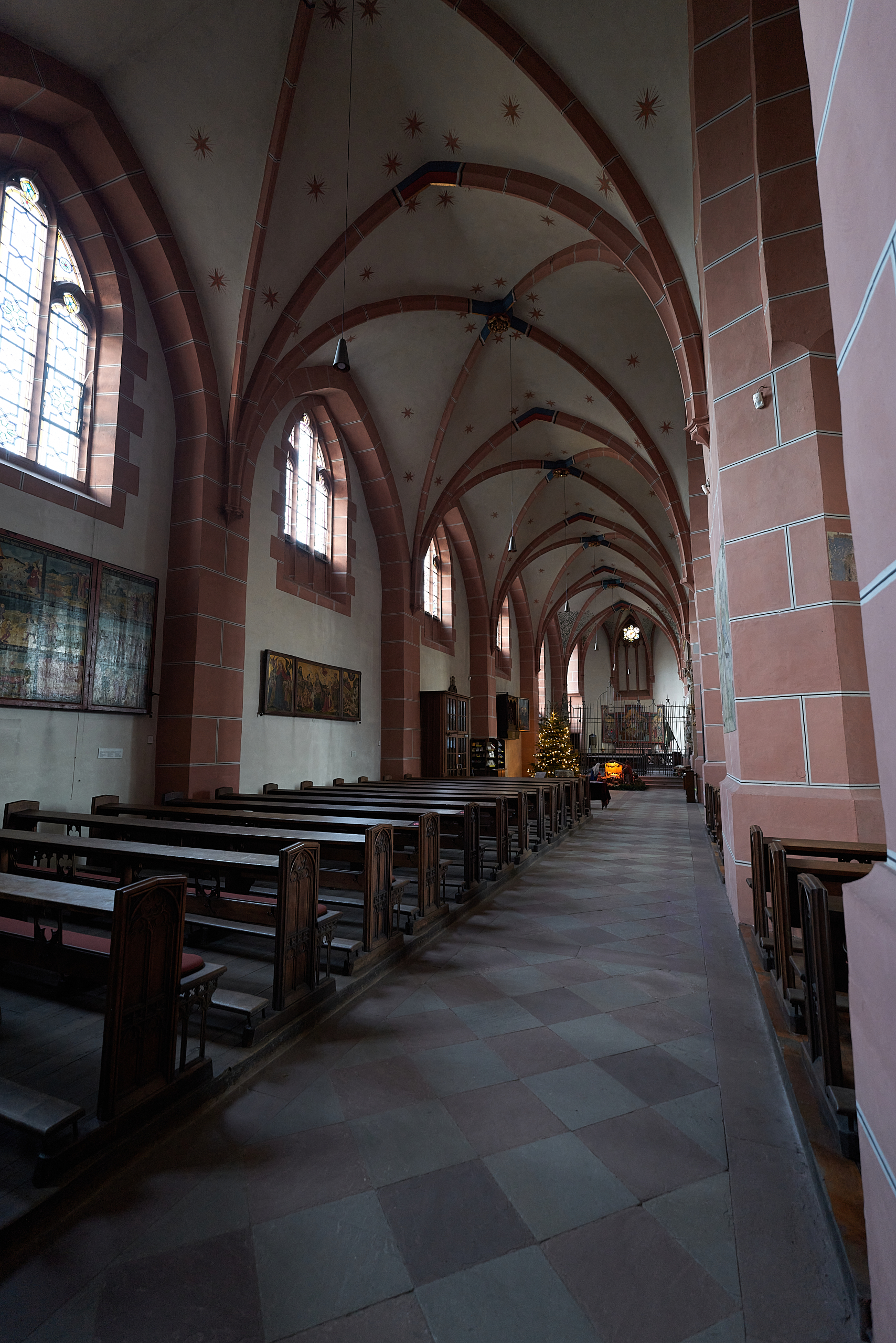
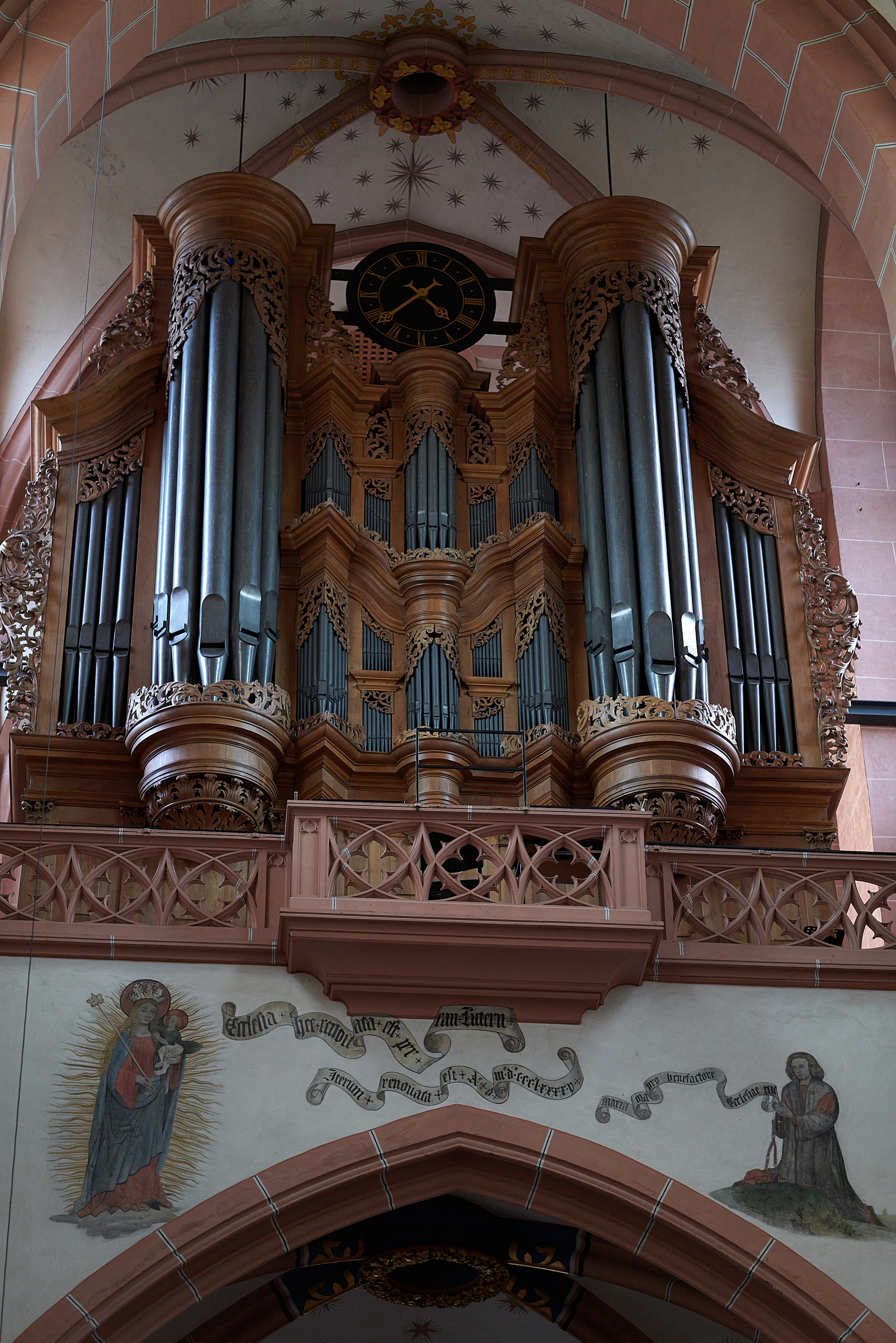
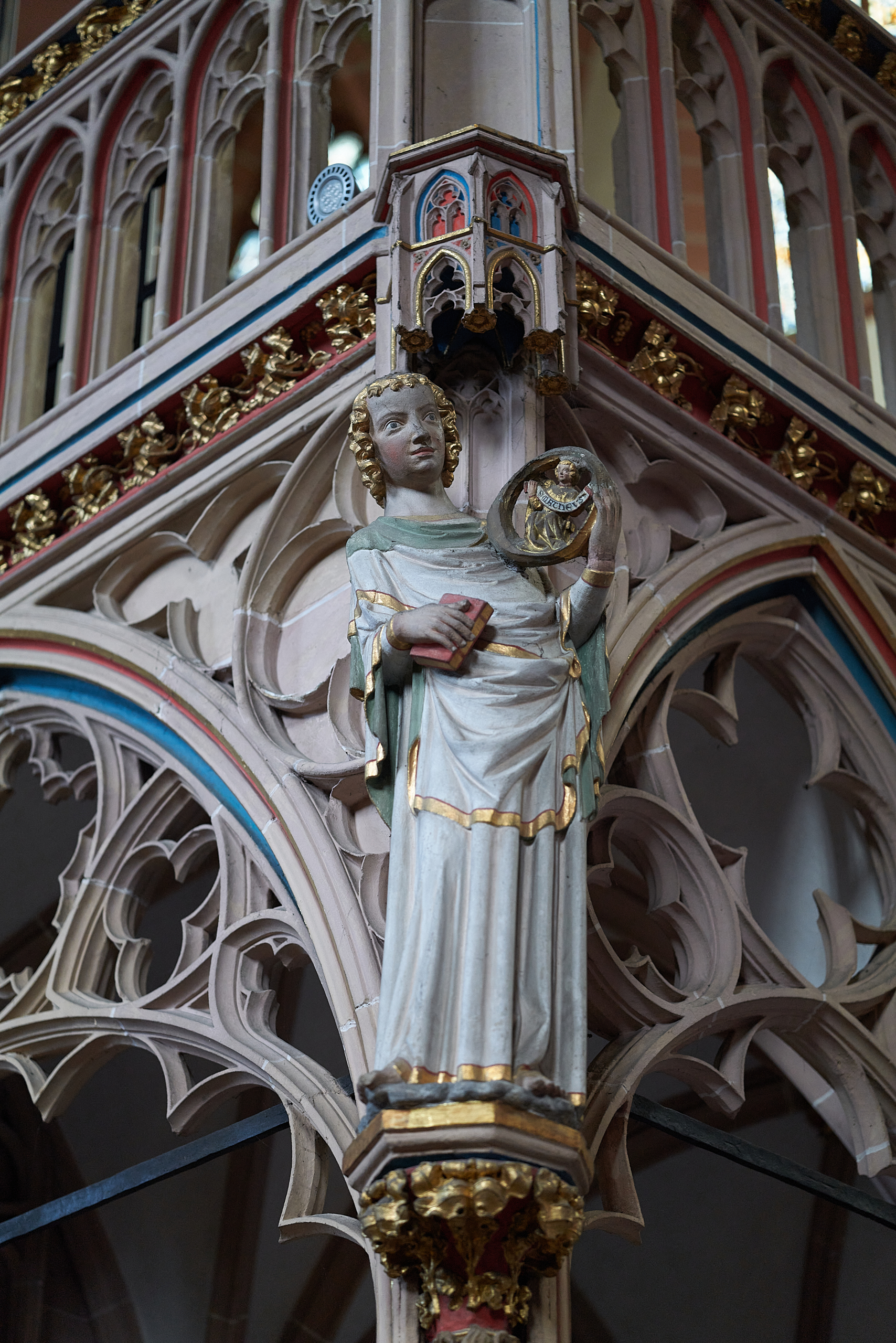
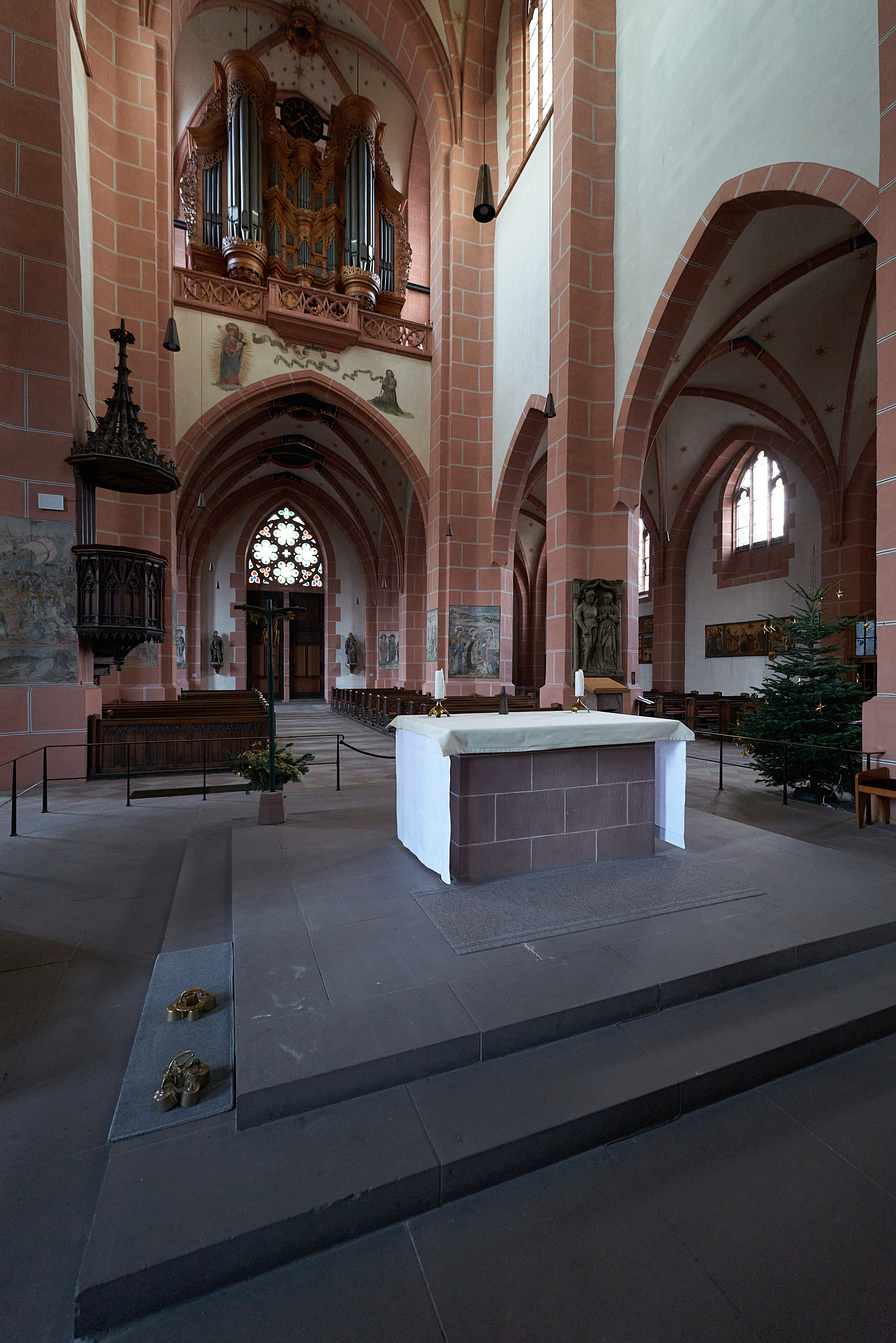
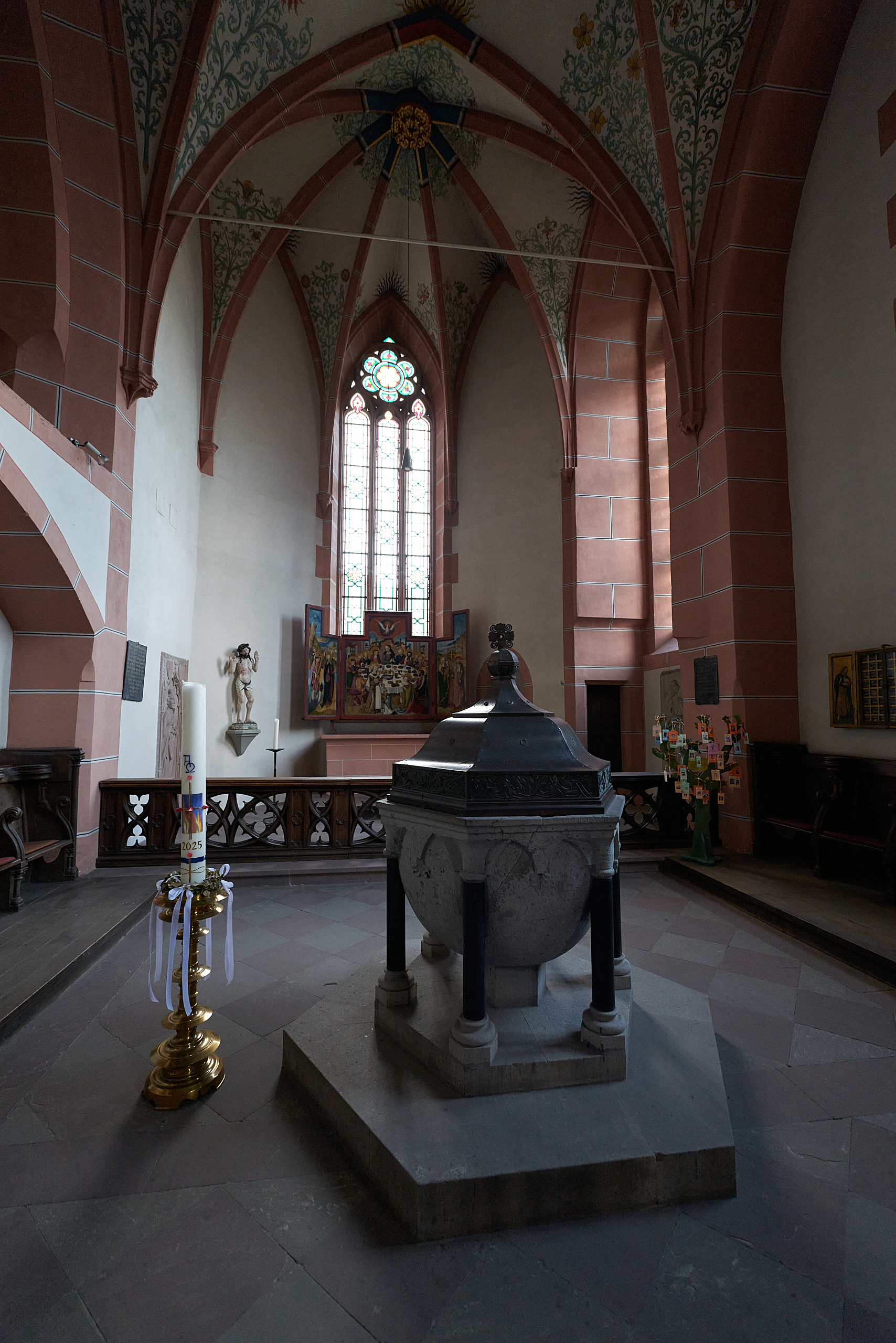
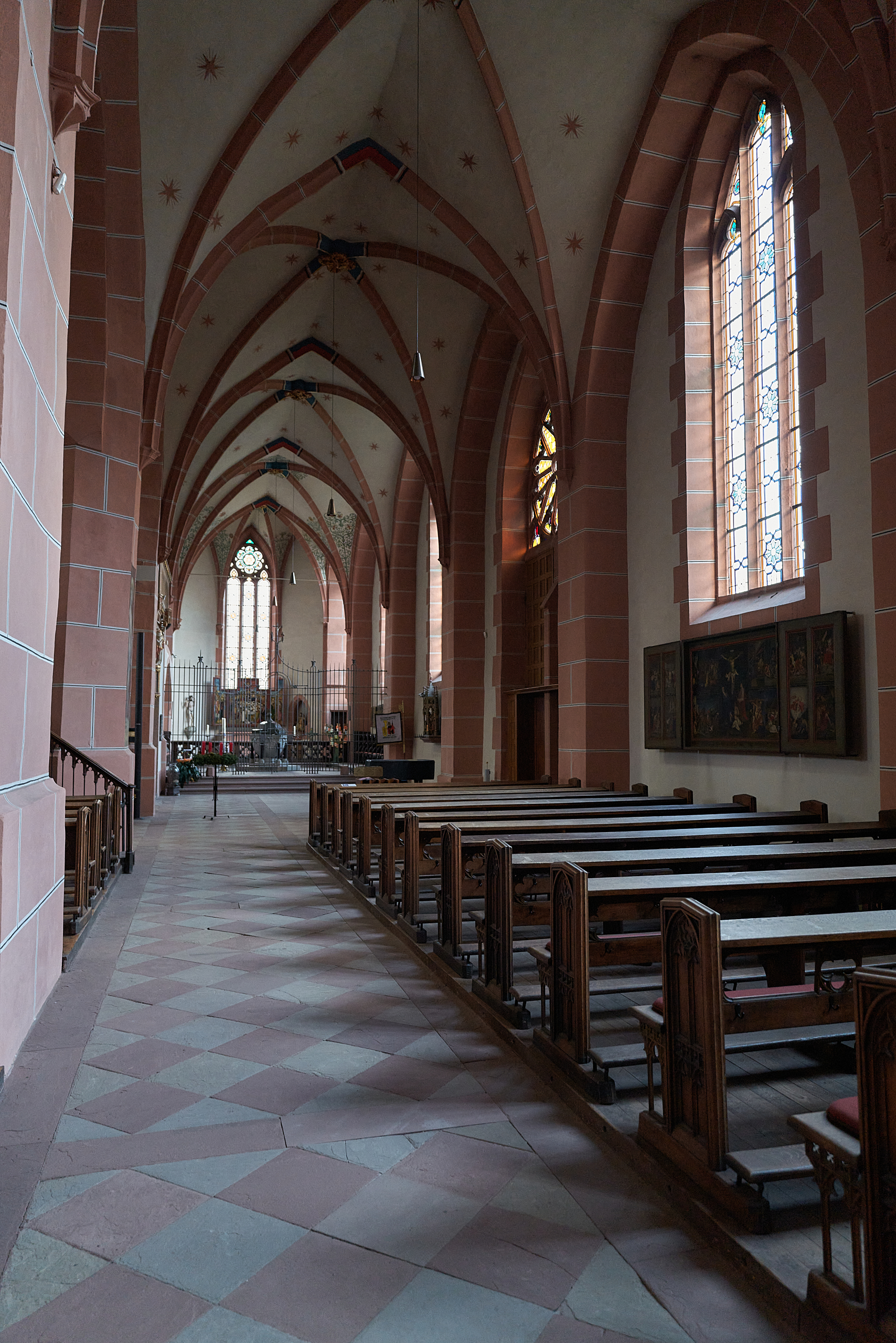
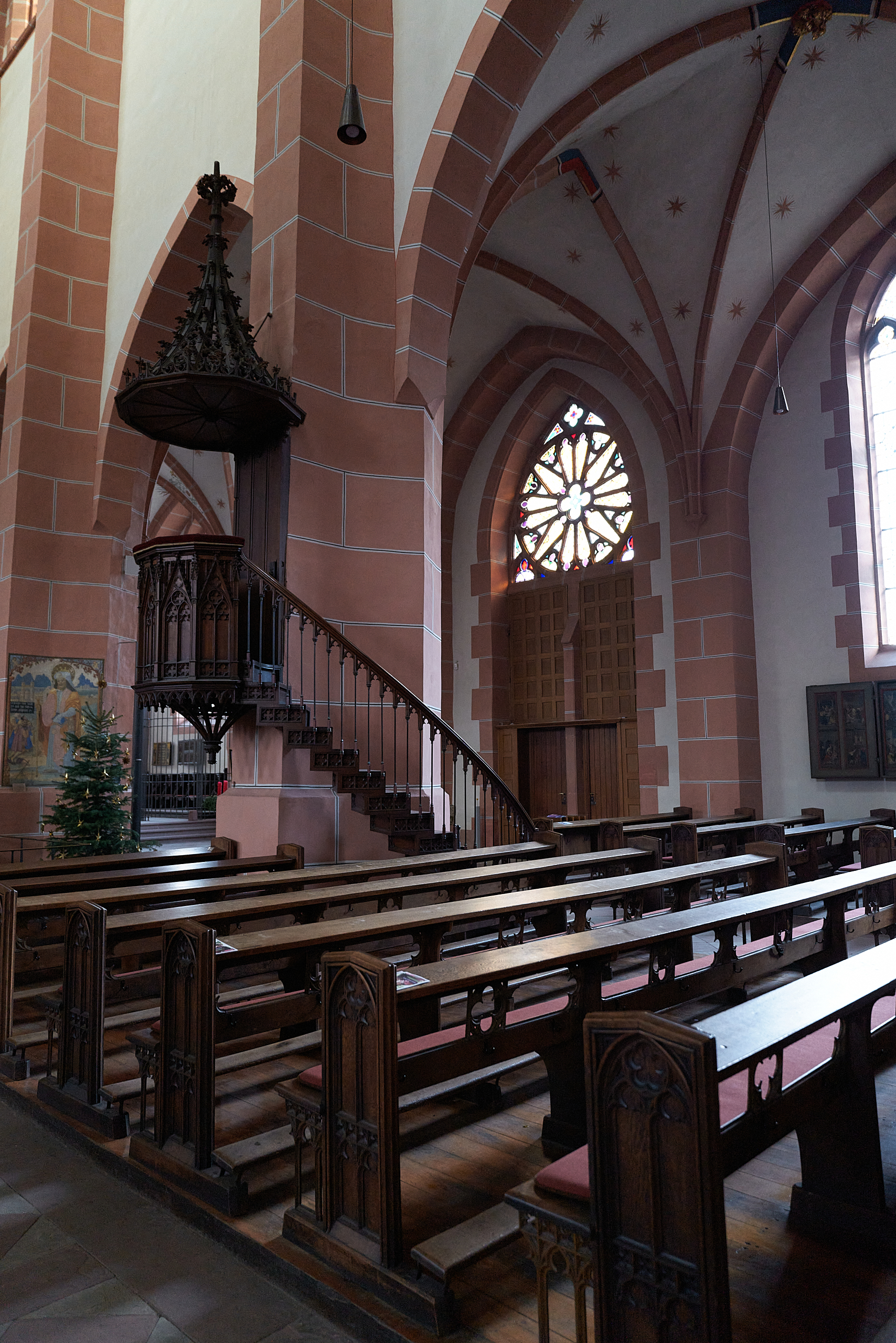
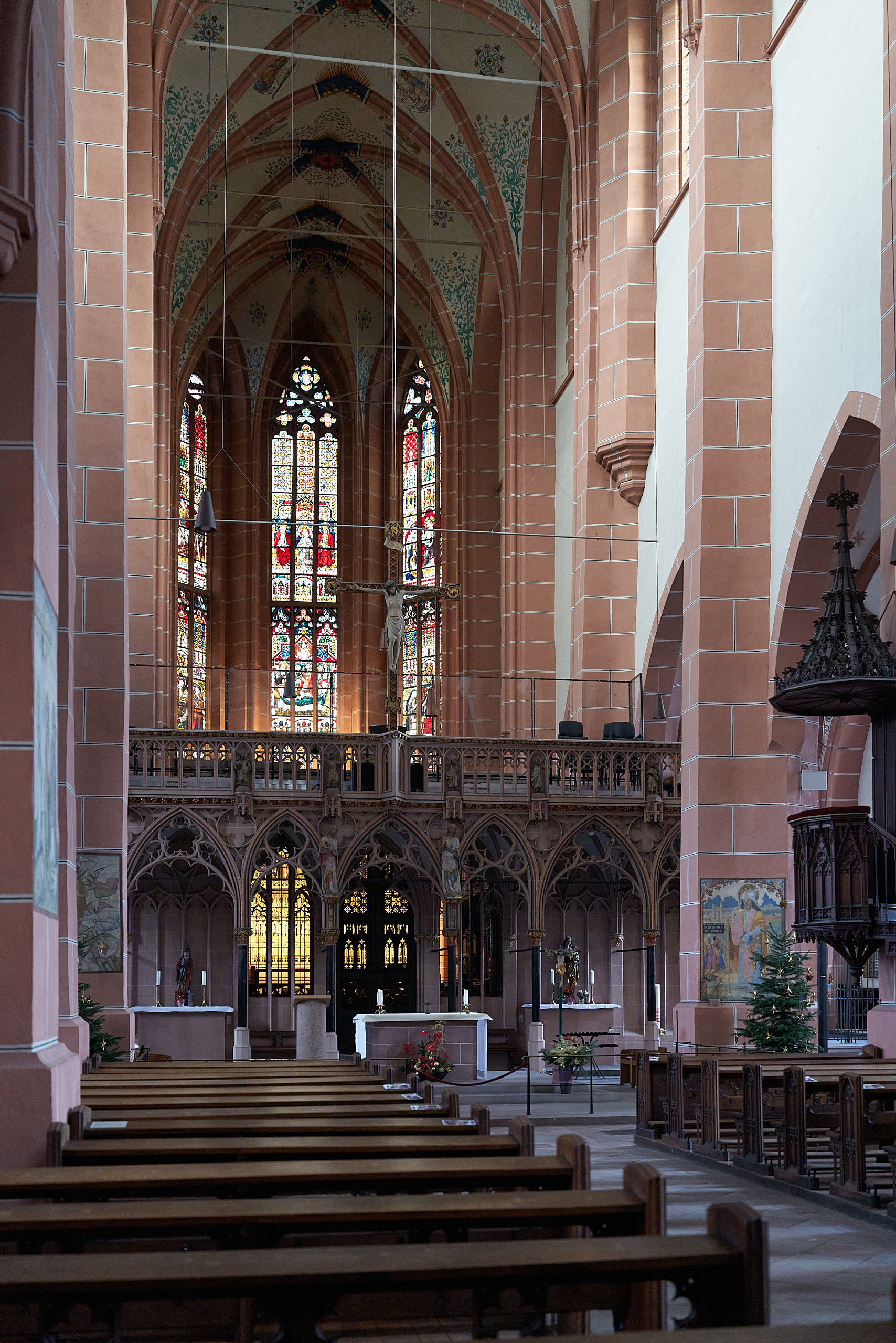
This church is one of the brightest examples of Gothic architecture in the region. Construction began in the 14th century, and it was immediately conceived as the town’s main temple. Tall windows, slender lines, thoughtful construction — everything here is subordinated to the logic of Gothic architecture, but without excessive showiness. It is not a cathedral on the scale of Cologne, but precisely a town church, executed at a very high level.
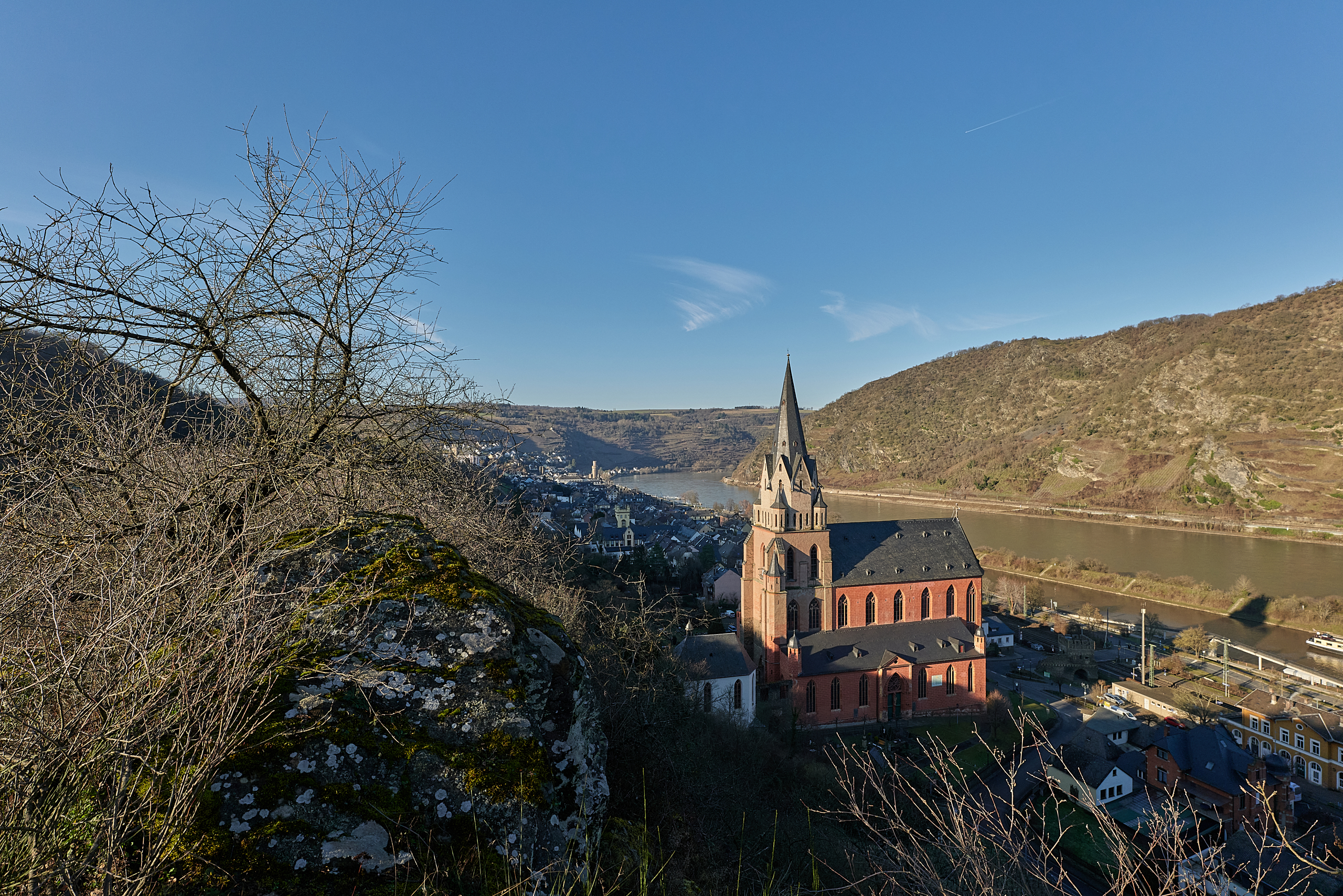
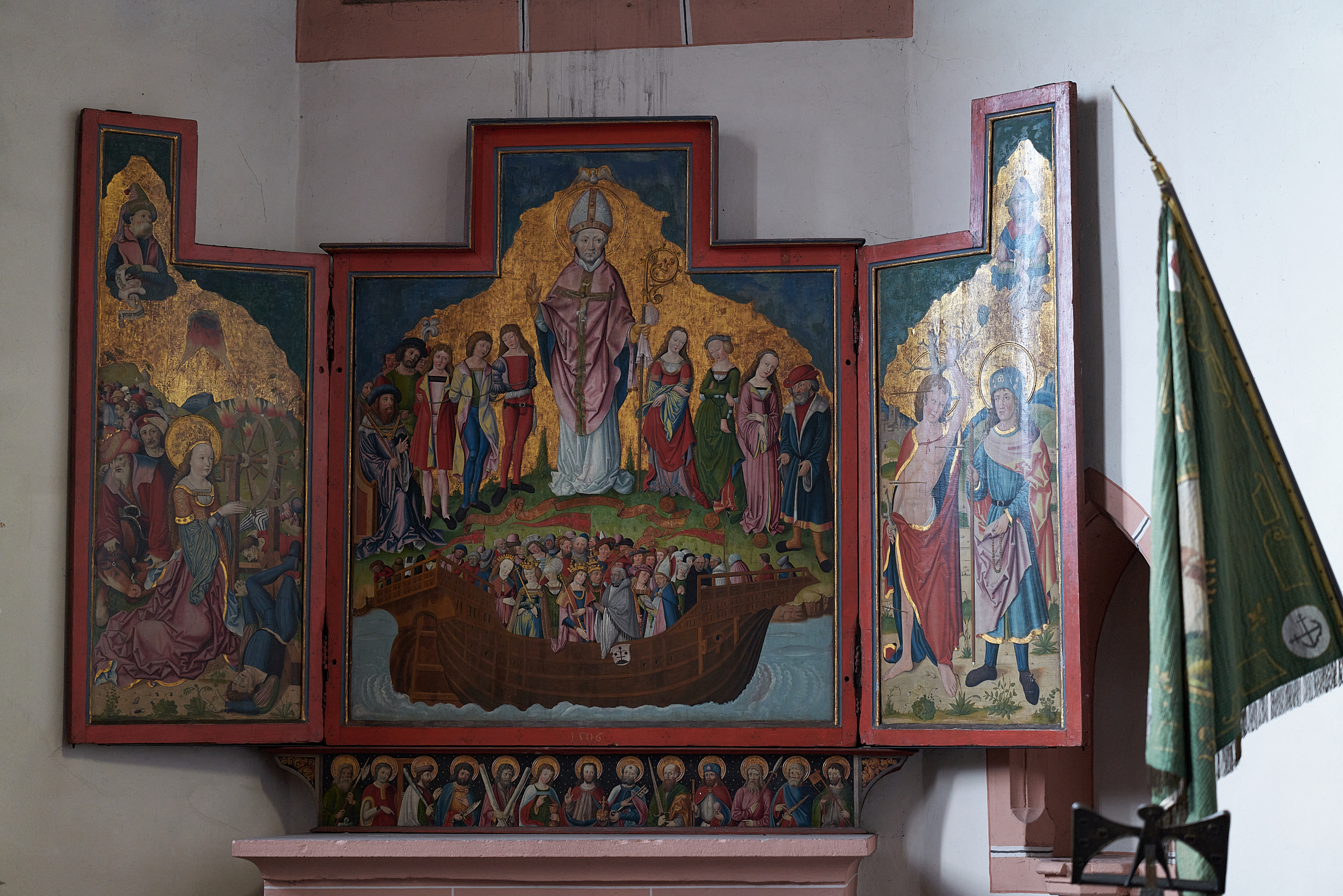
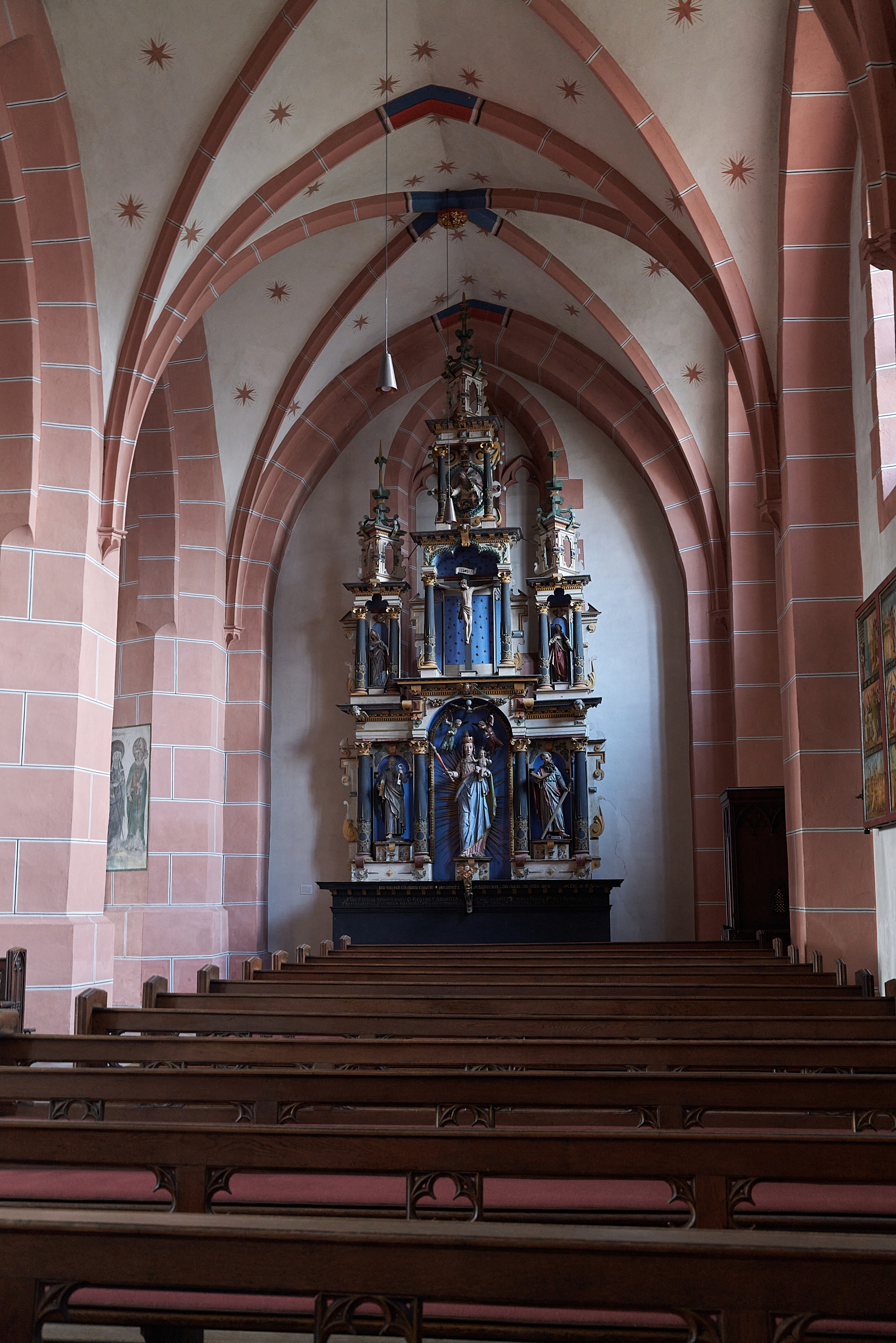
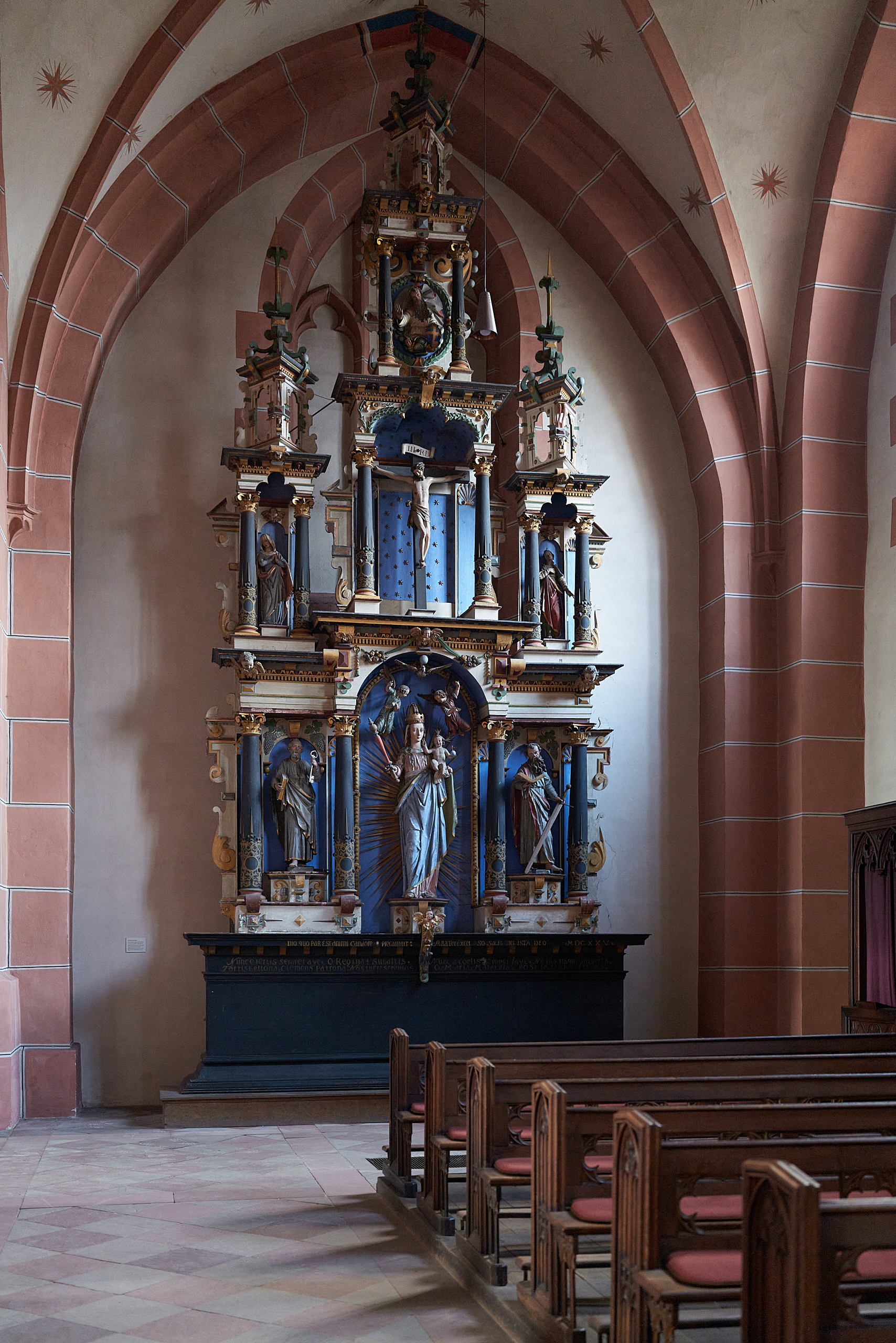
Inside stood a famous Gothic altarpiece — the very one later called the “Golden Altar.” It was a complex composition of dozens of figures carved from wood and covered in gold leaf. These figures created an entire visual narrative typical of the late Middle Ages: scenes from the life of Christ, saints, biblical episodes. The altar was not merely decoration, but an important part of the town’s religious life.
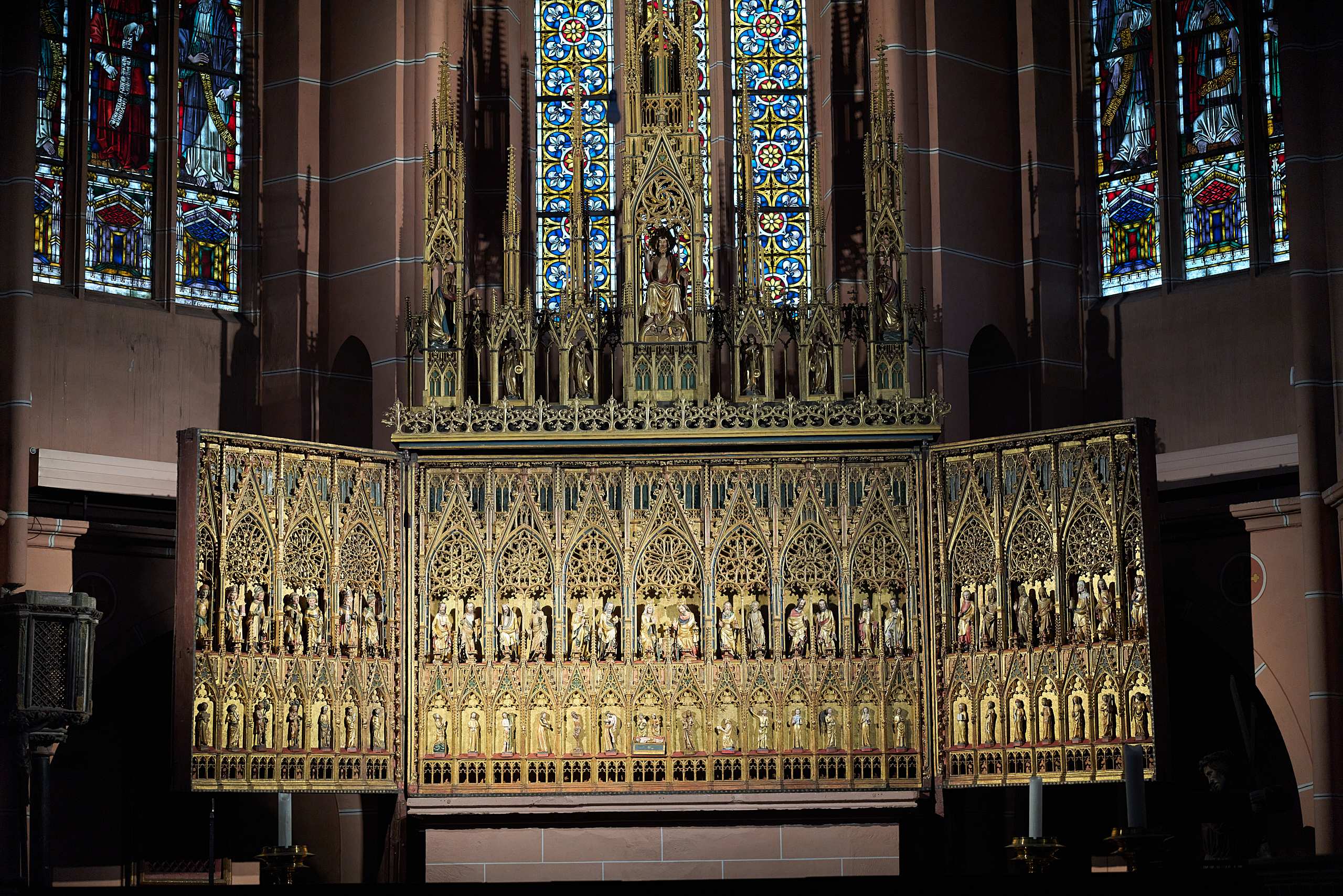
And it is with this altar that one of Oberwesel’s most famous stories of the 20th century is connected. In 1975, the church became the site of a sensational theft: at night, unknown persons broke in and removed more than fifty figures from the altar. Judging by how it was done, it was not random people — the figures were carefully dismantled without destroying the whole structure. This meant the criminals knew exactly what they were taking and how to handle it.
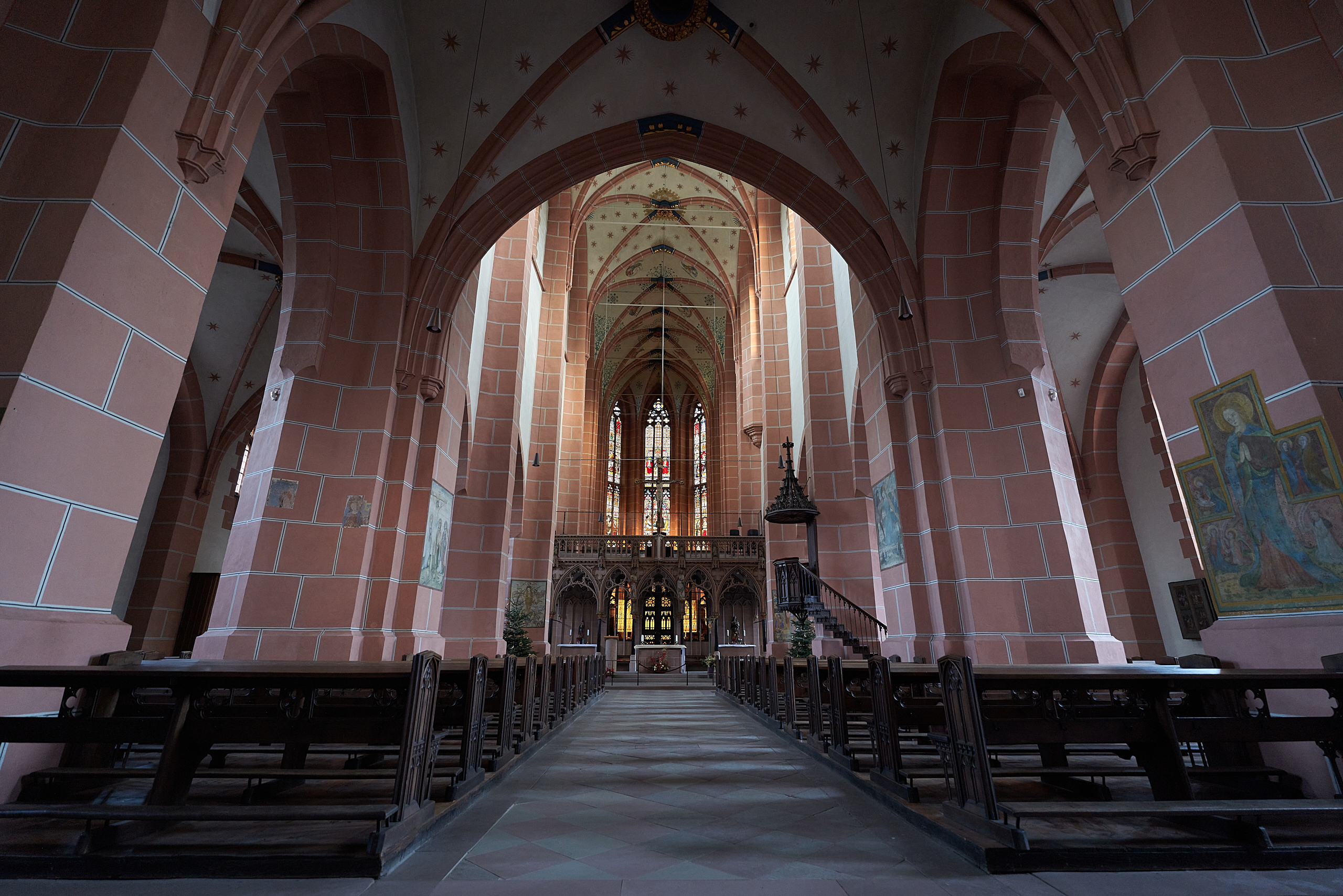
After the theft, some of the figures disappeared for many years. Some later surfaced on the antiquarian market, some were returned, but the original altarpiece could not be fully restored. In the end, it was decided to create reconstructions of the missing elements, and today visitors see a combination of authentic details and modern copies. This story has no beautiful ending with the complete return of what was lost, but it well illustrates how even in modern times medieval art remains vulnerable and precious.
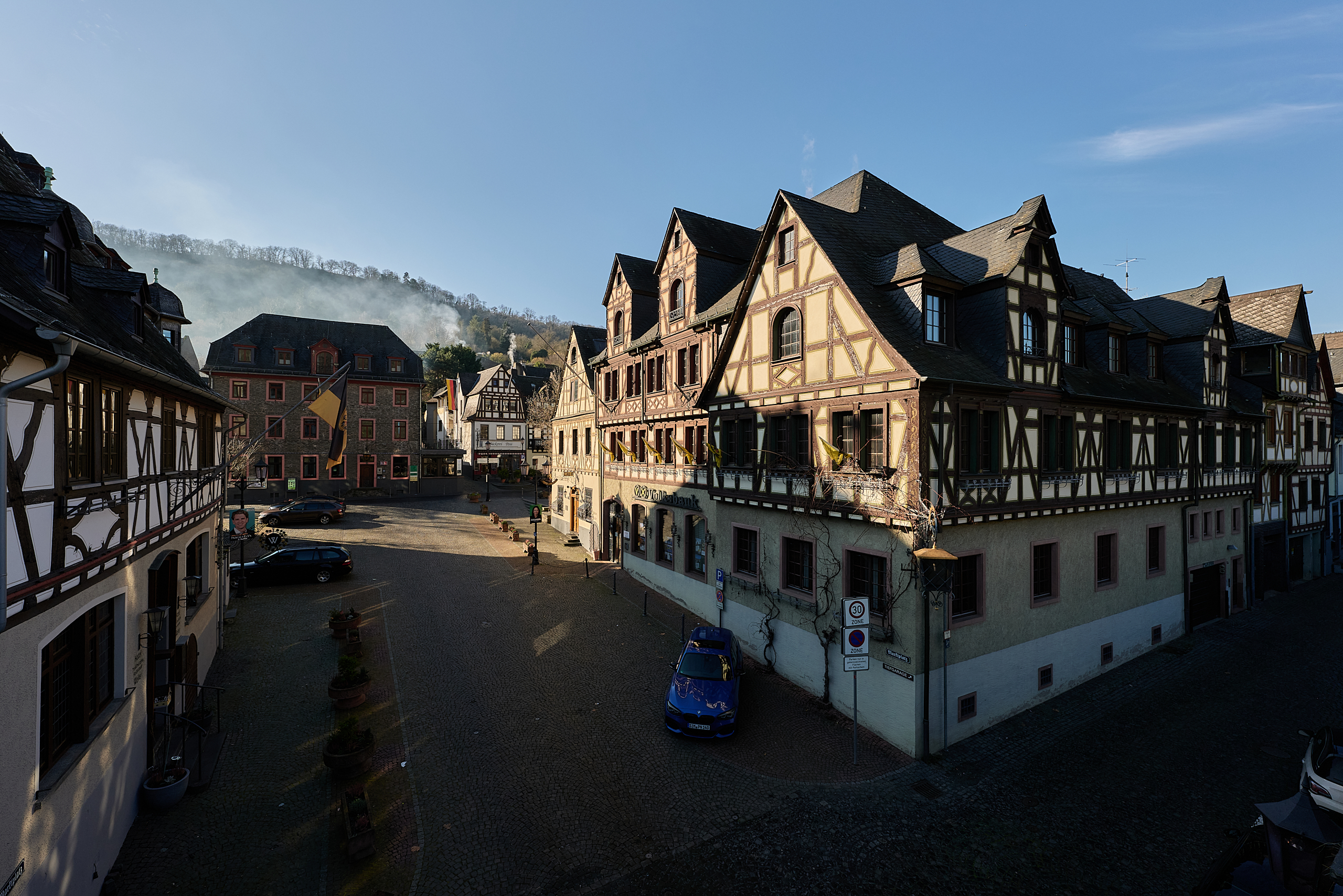
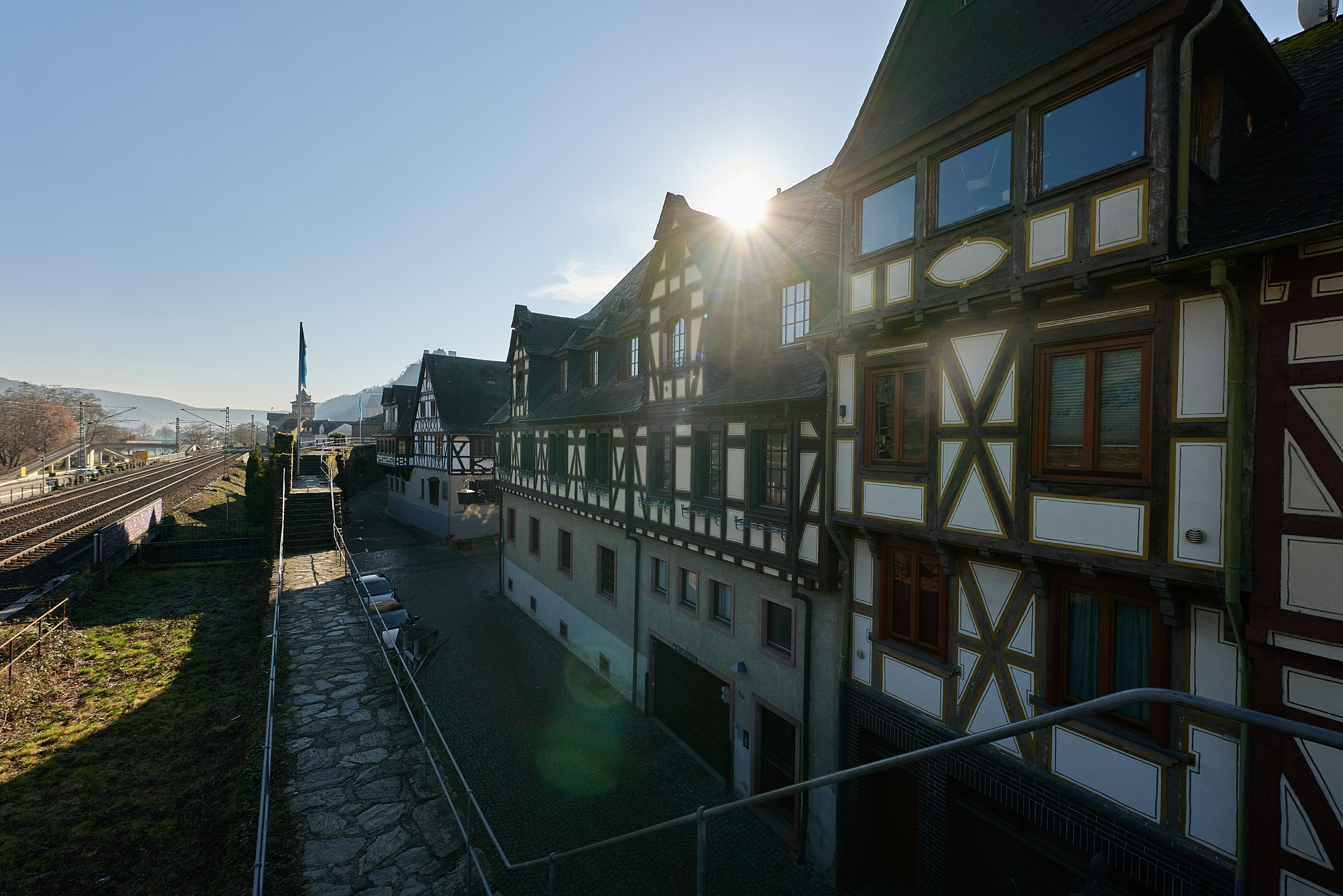
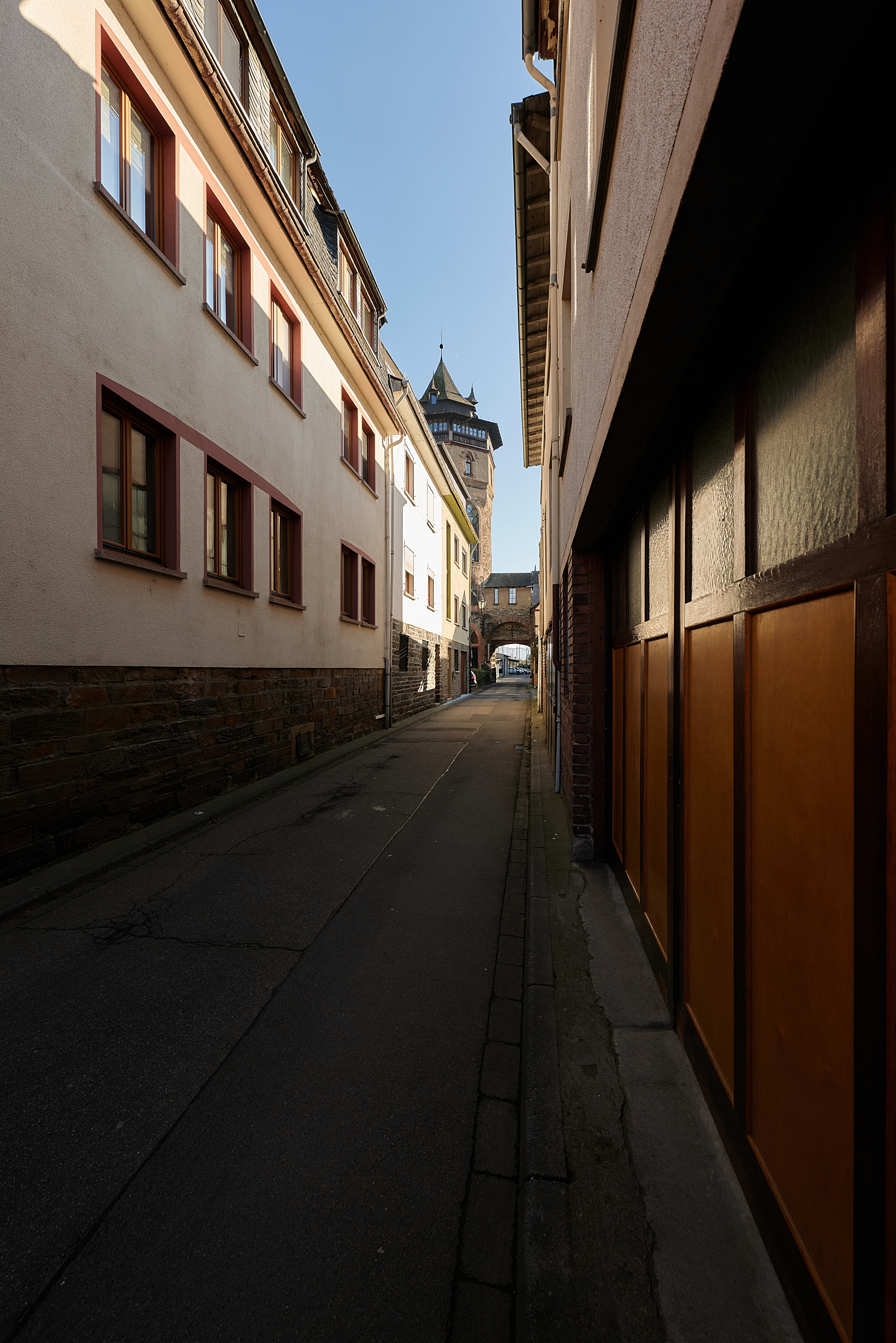
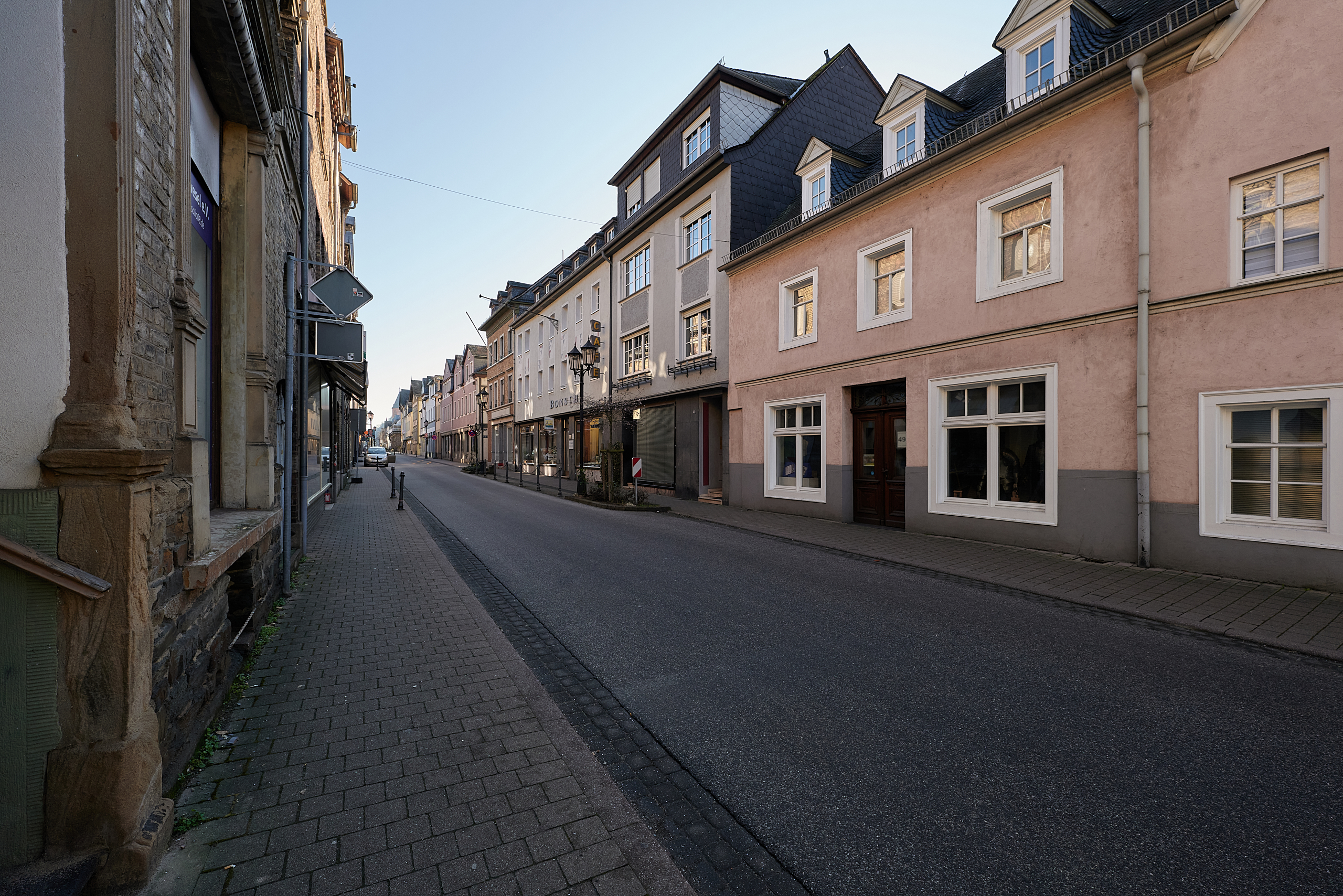
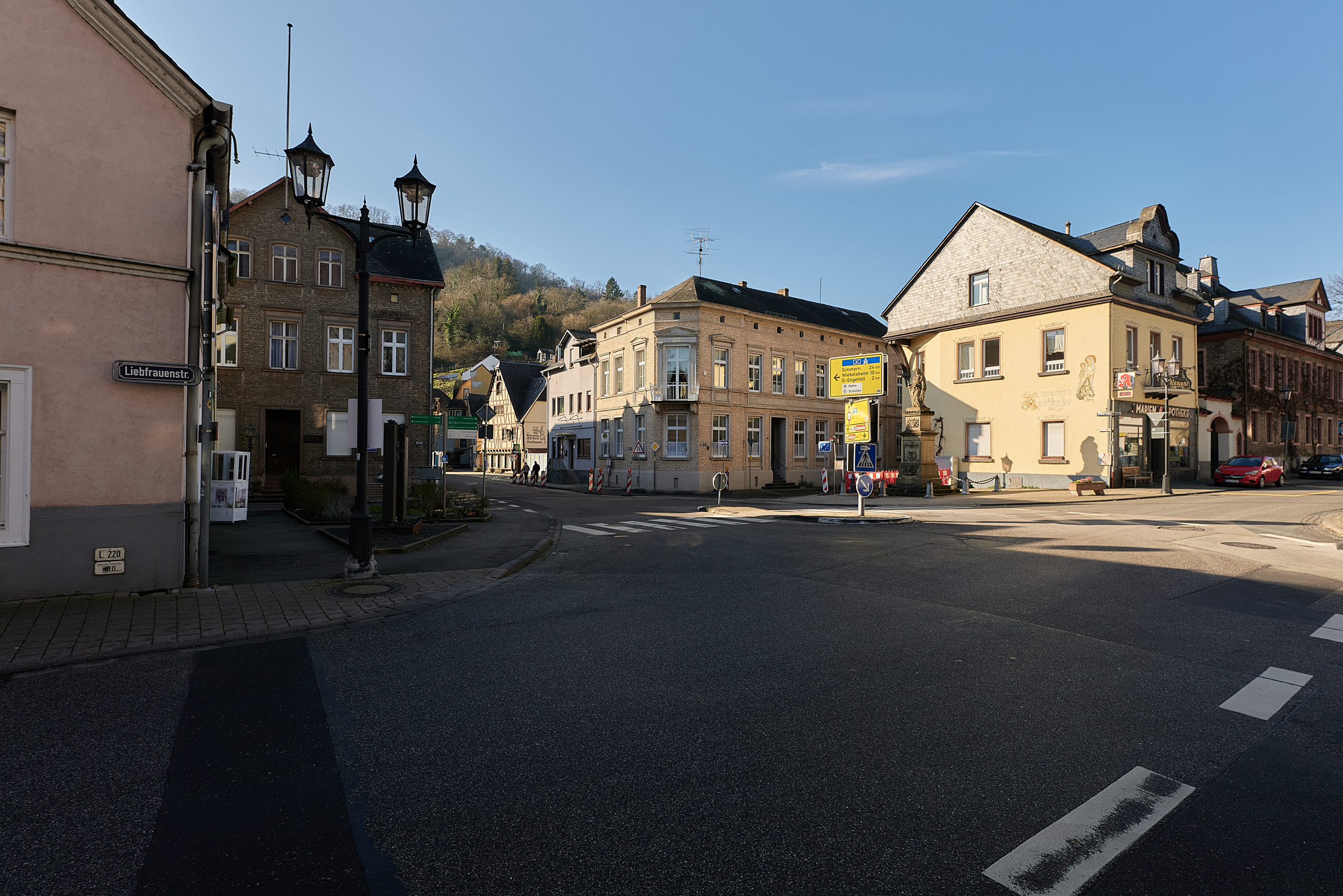
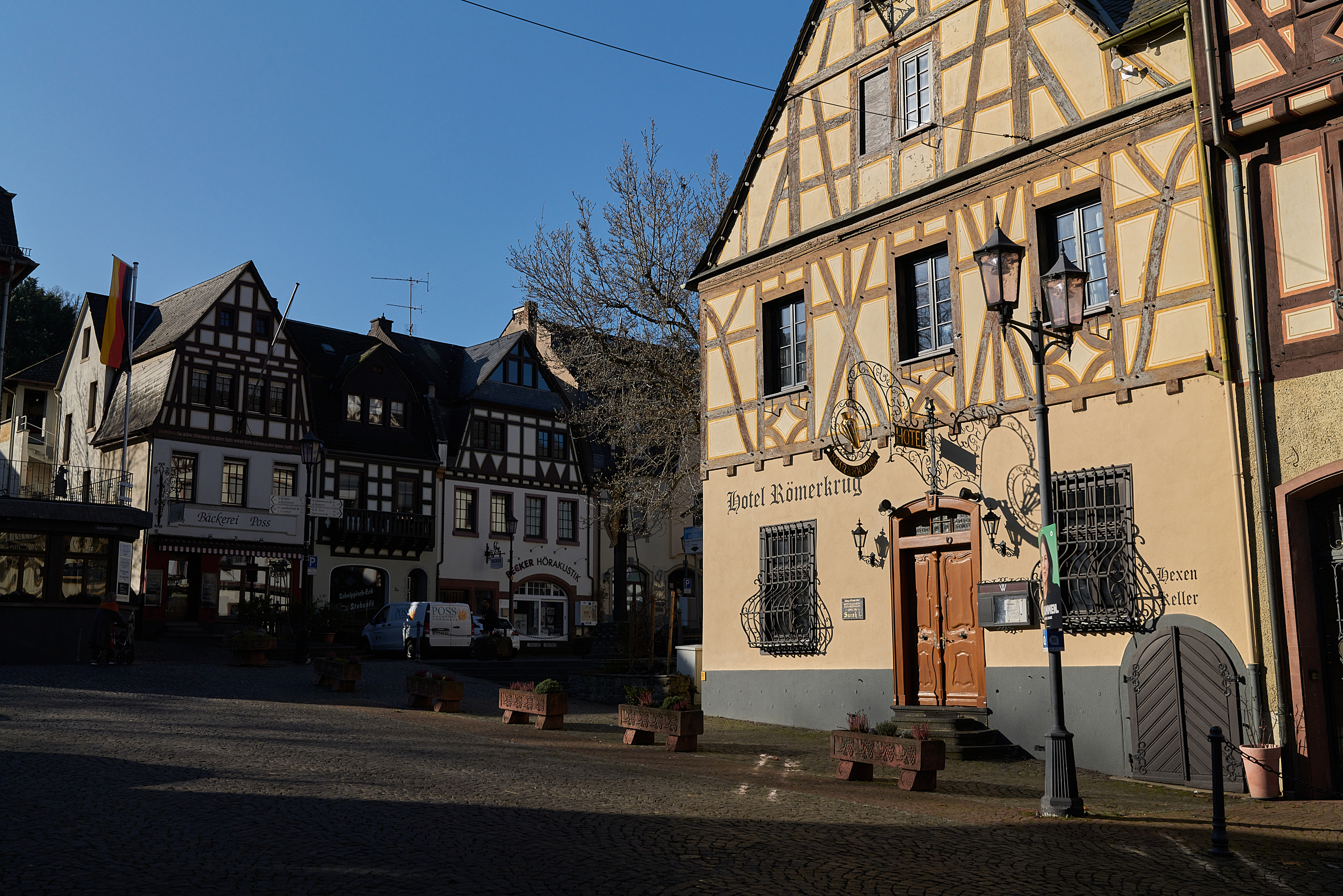
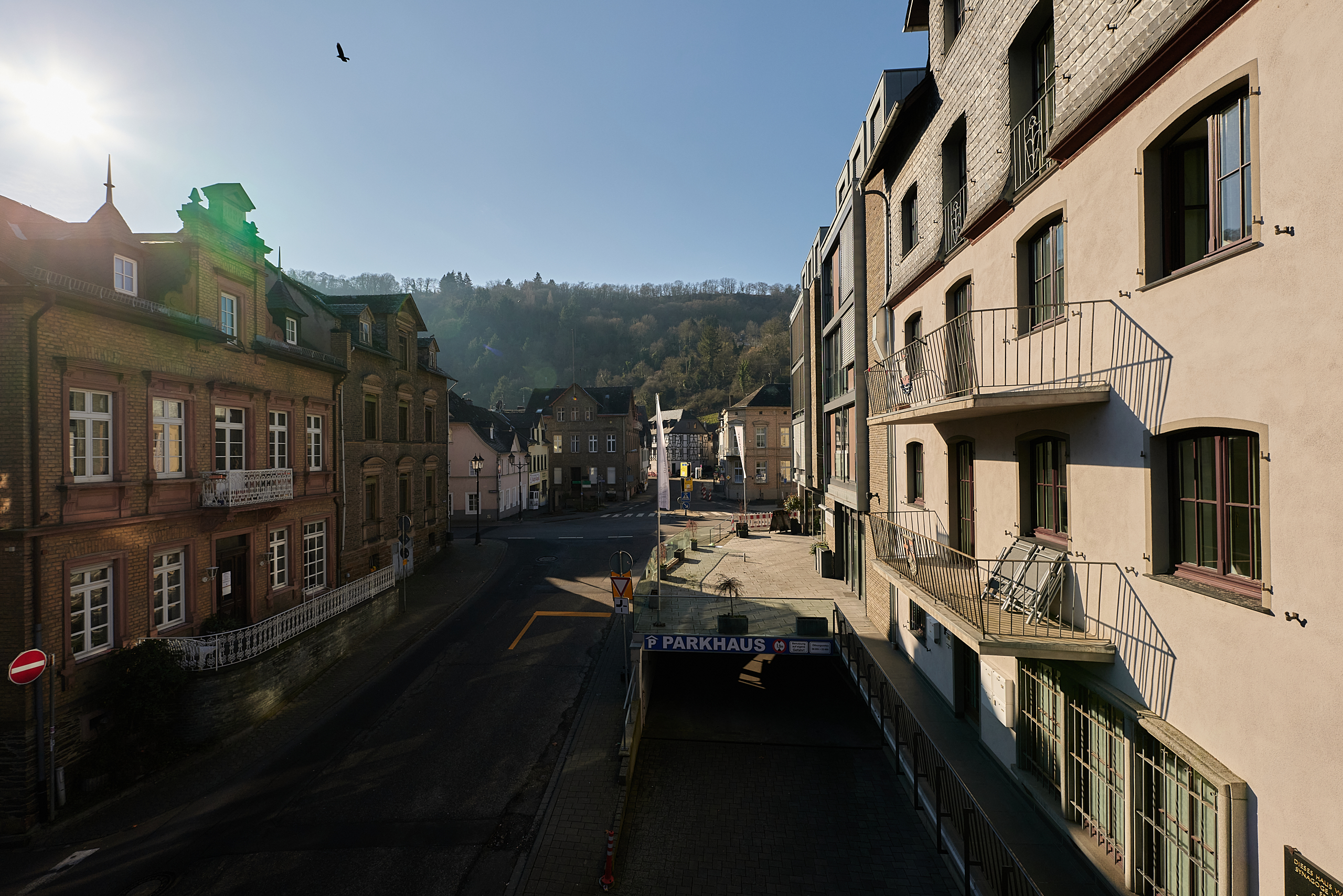
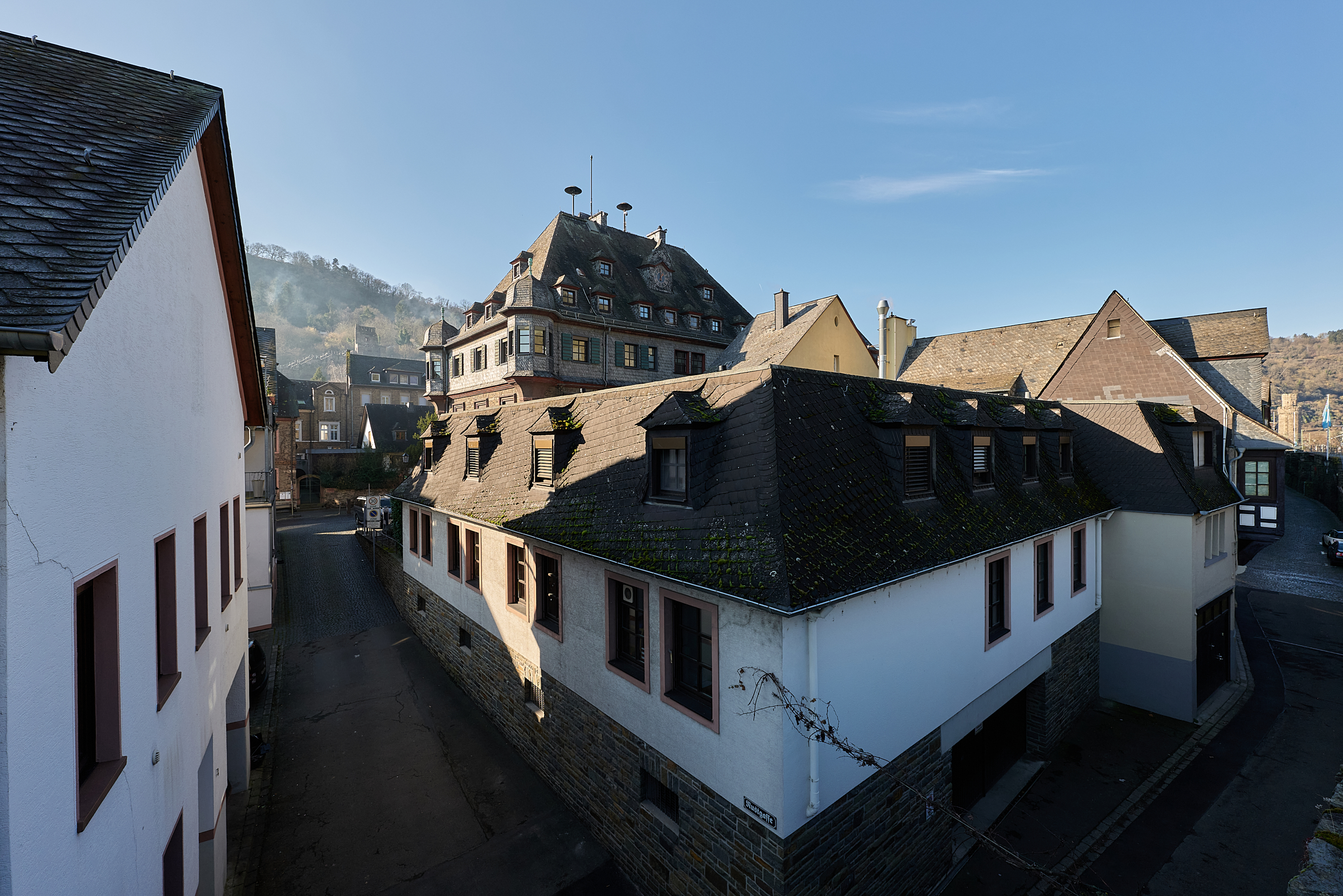
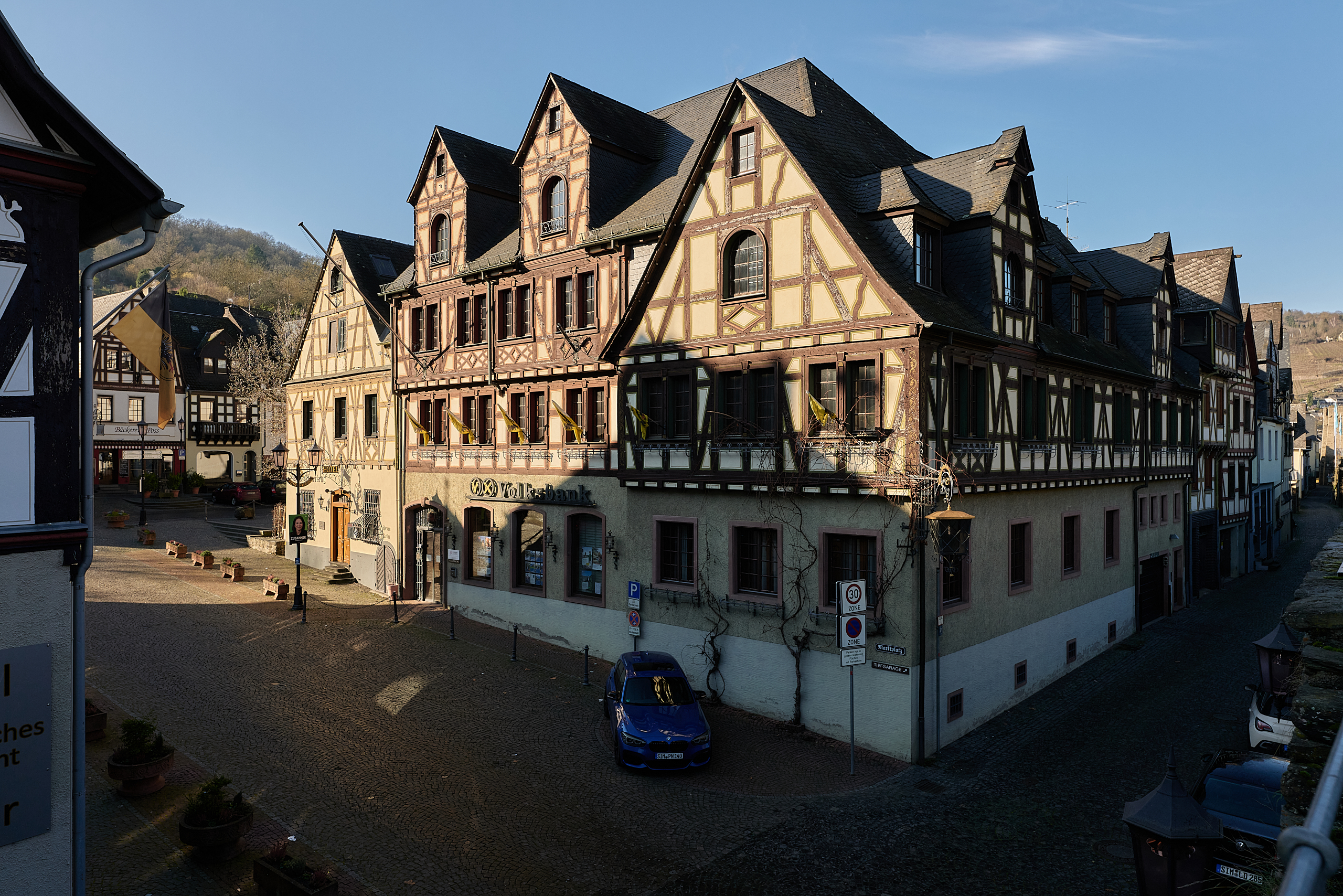
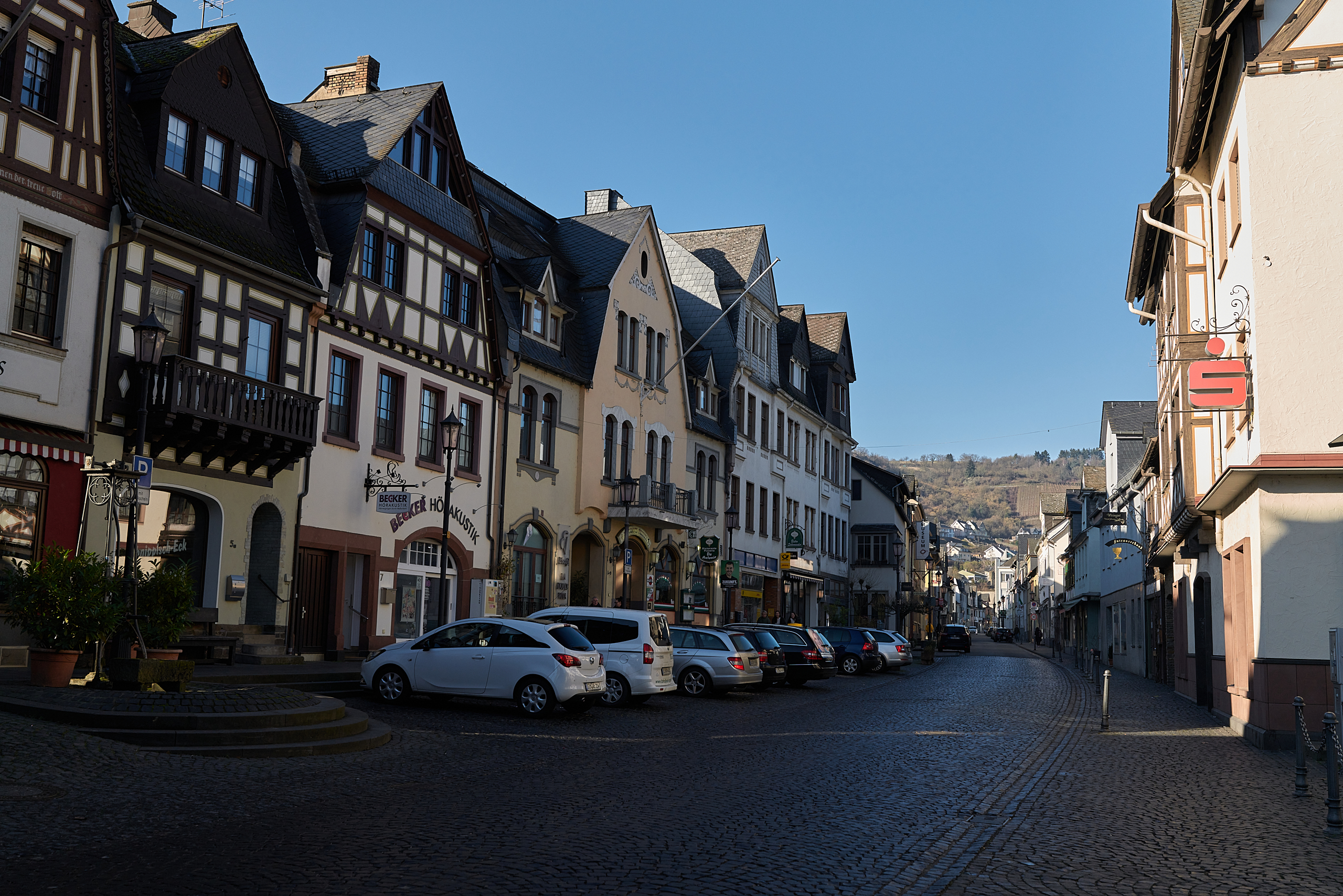
If you leave the church and walk through the town, it becomes clear that Oberwesel does not live only in the past. There is ordinary life here: homes, cafés, wine estates. But the architecture constantly reminds you where it all came from. Many buildings have retained the half-timbered structure typical of the region, although a significant part was rebuilt in later periods. The streets are narrow, with uneven relief, and in almost every turn you feel the logic of medieval planning.
Separately, it is worth mentioning winemaking. The slopes around the town are covered with vineyards belonging to the Mittelrhein region. It is not Germany’s largest wine-growing area, but one of the most difficult in terms of work: the grapes grow on steep slopes, and many operations are still performed by hand. The main variety is Riesling, and Oberwesel has historically participated in the trade of this wine, sending it down the Rhine further north.
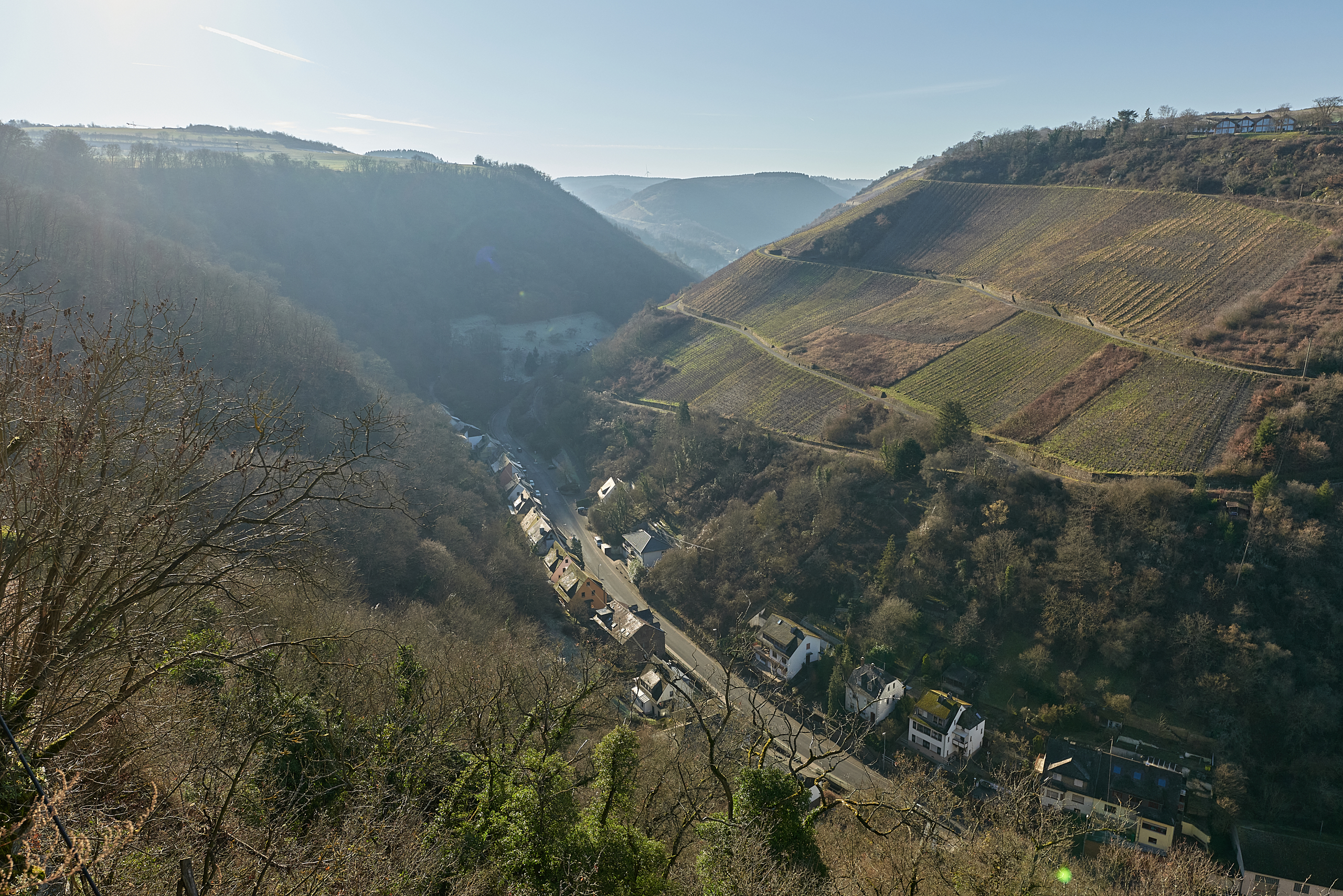
Today winemaking remains an important part of the local economy, but not the only one. Tourism plays a major role. People come here not for entertainment, but for the atmosphere: to walk along the wall, climb up to the castle, enter the church, look at the Rhine from above. Unlike more hyped places, everything here happens more calmly, without crowds, and this largely defines the impression of the town.
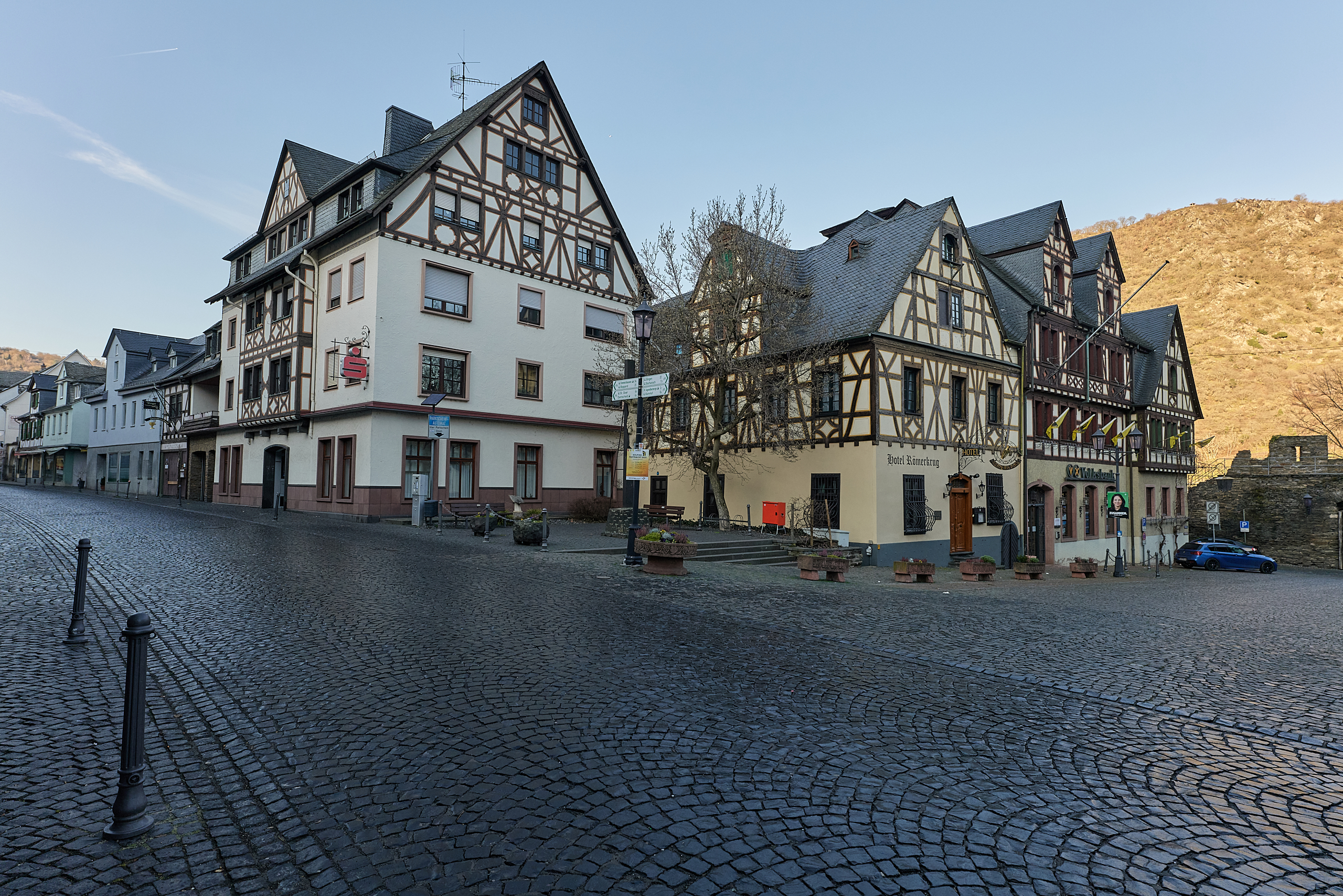
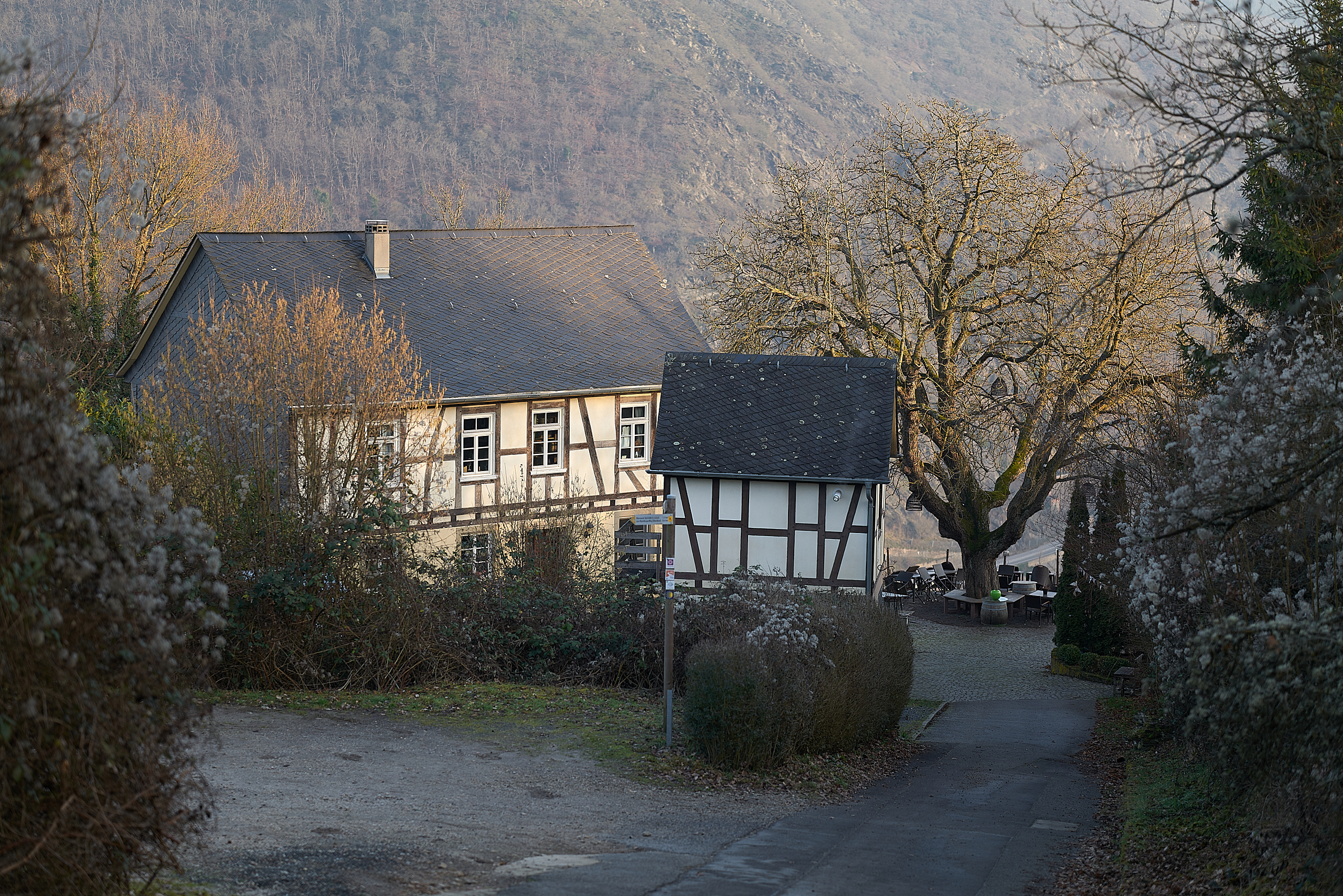
There is also a cultural layer connected with literature and history. Nearby stands the Günderrodehaus — a small house on the hill associated with the writer Karoline von Günderrode. This place became widely known thanks to the filming of the historical series “Heimat,” where it was used as one of the key locations. The house itself has been restored and is open to visitors, and the view from there over the Rhine Valley is considered one of the most characteristic of the region.
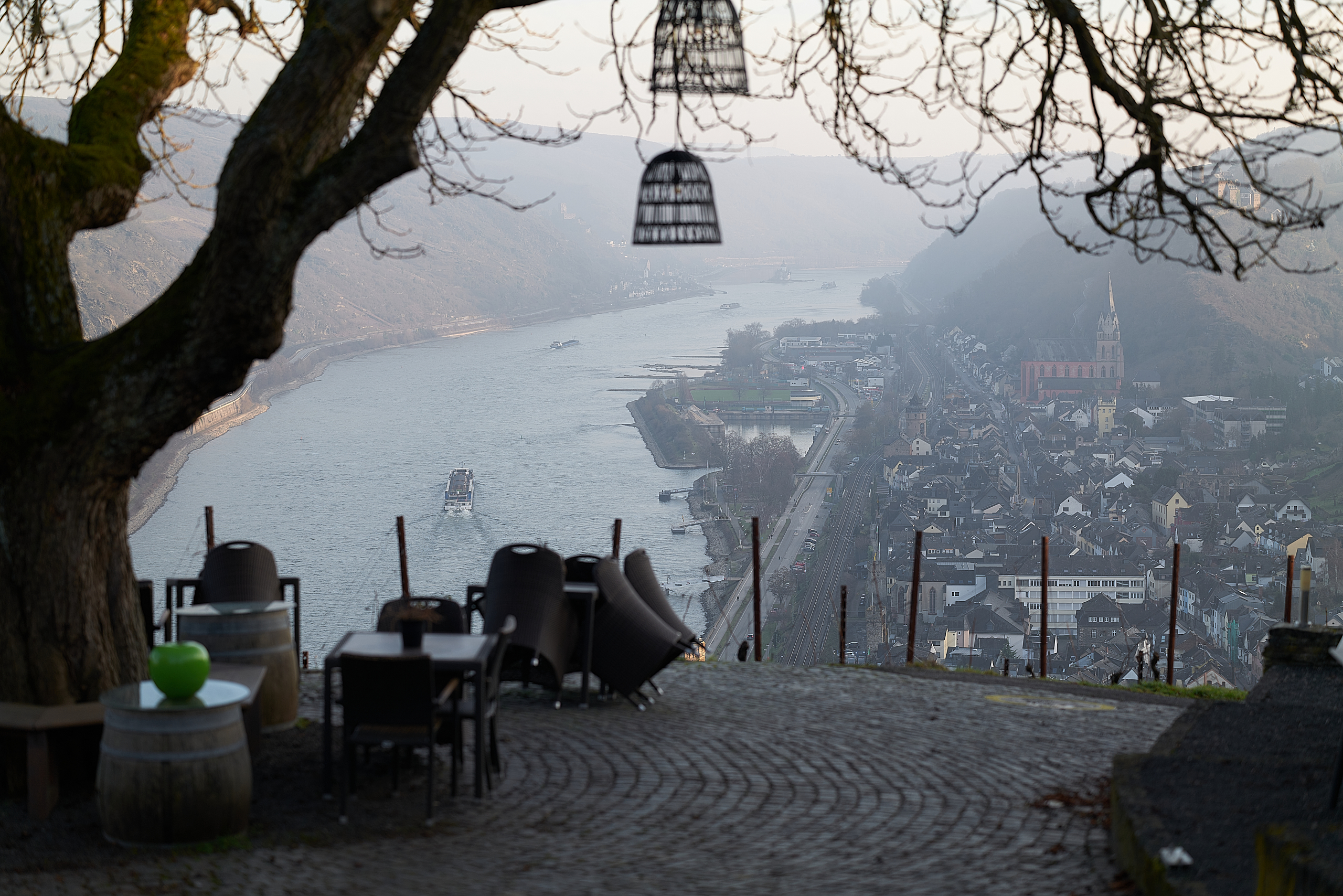
If one tries to describe Oberwesel briefly, it is a town where almost everything that makes it special is connected not with individual sights, but with how they connect with each other. Walls, towers, church, castle, vineyards — individually, these can be seen in many places in Germany. But here they have been preserved in such a combination that has hardly changed over the centuries. And that is precisely why the town is perceived not as a set of objects, but as a cohesive environment in which the past is not separated from the present, but simply continues to exist alongside it.
Gallery