Dresden is a city you cannot simply pass through without stopping. It seems to ask you to lift your head, slow your pace, and touch its walls. Every stone speaks here, every sculpture whispers, every spire holds not only architectural beauty but also a secret meaning laid there by the hands of masters. At the same time, it is a city-scar, a city-monument, a city that rose from the ashes.
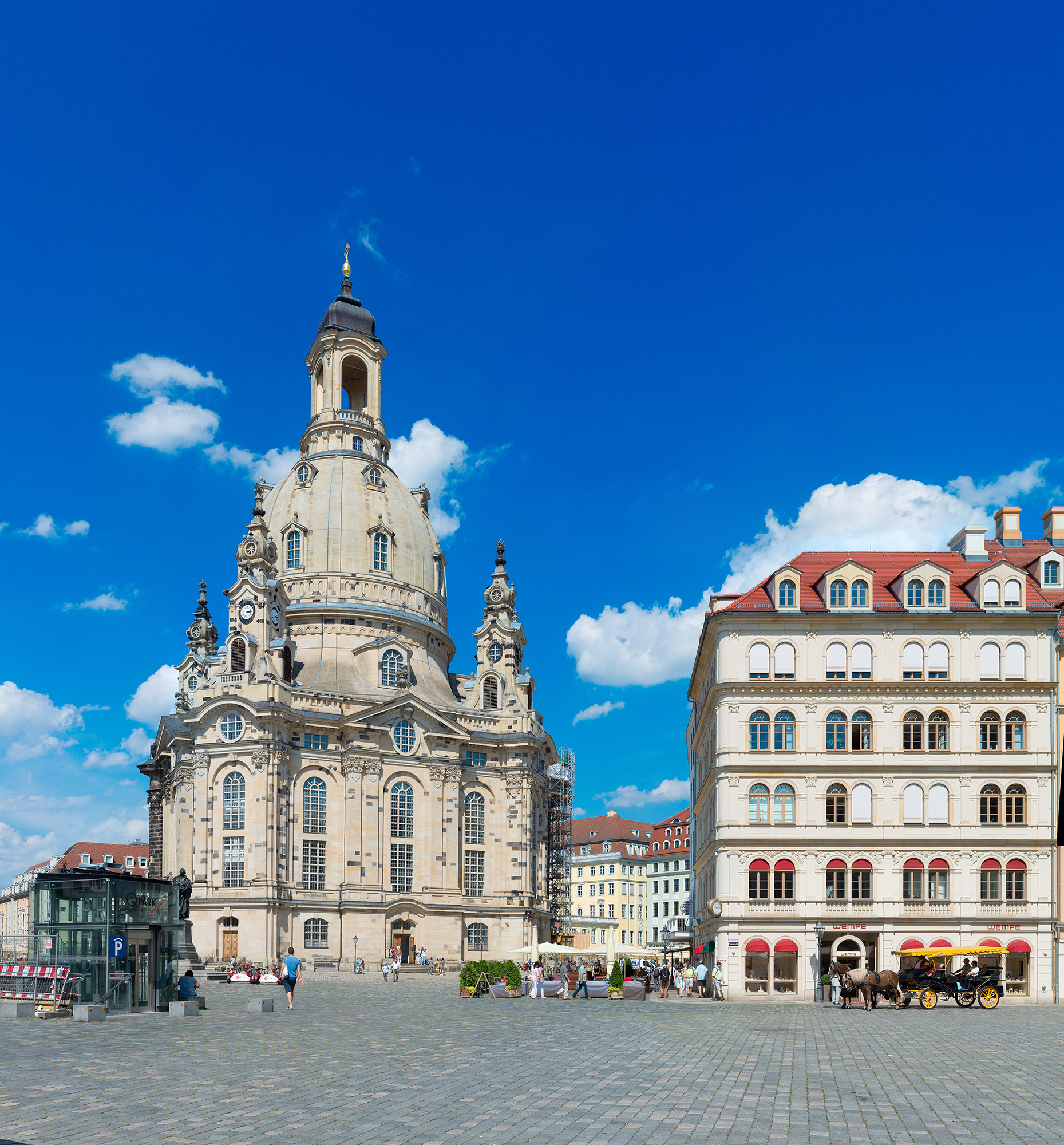
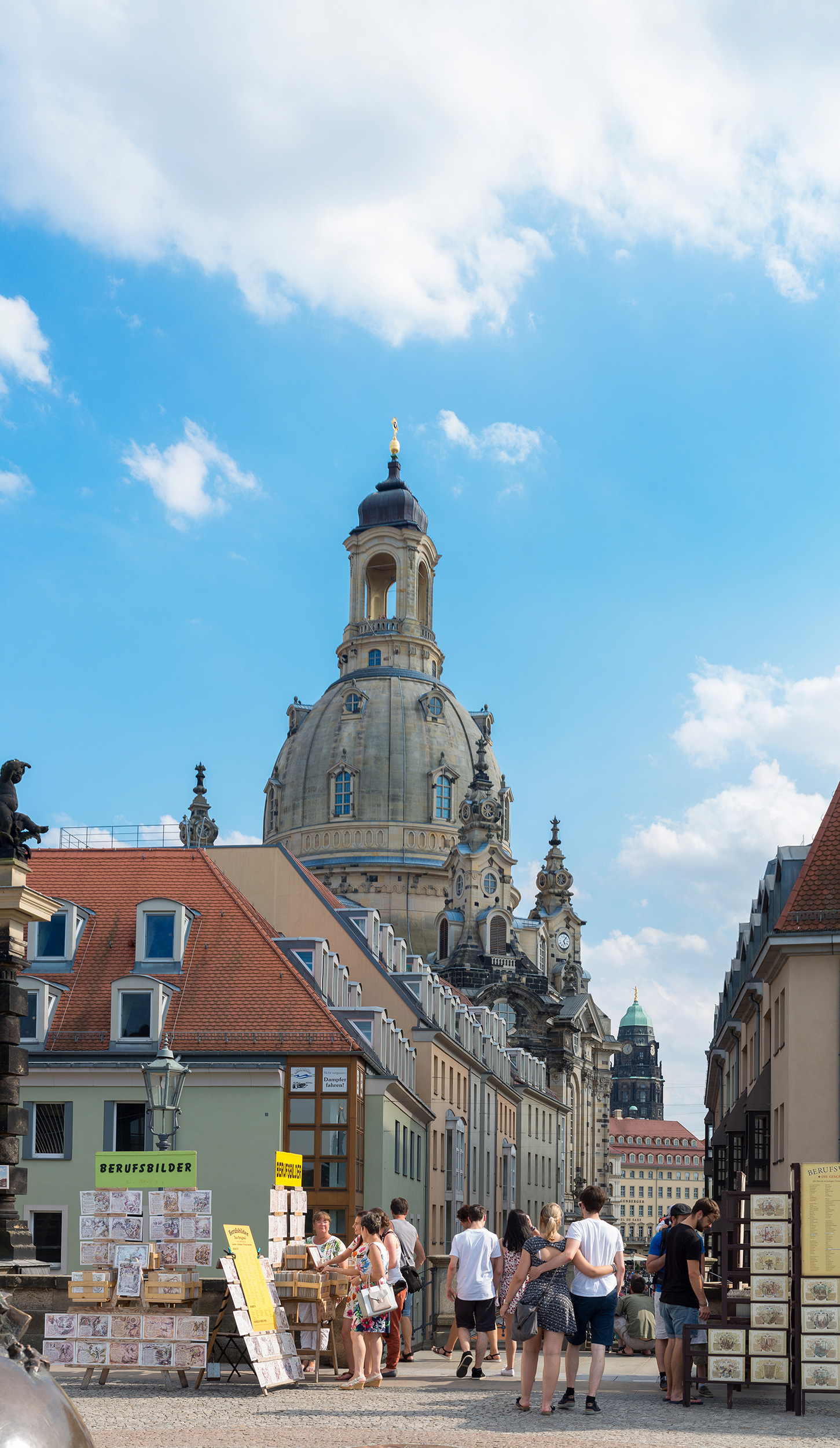
The walk begins best at Neumarkt. Today this square feels bright and festive, surrounded by elegant 18th-century façades. Yet not so long ago it was a heap of blackened rubble. In February 1945, thousands of tons of bombs turned the center of Dresden into a sea of fire, and the Frauenkirche — the city’s symbol — collapsed in the heat. For decades, its ruins stood untouched: mute, charred, a warning. Only in the 21st century did its reconstruction begin: stone by stone, as if piecing together a giant puzzle. The dark, burned blocks visible within the bright walls today are no mistake of the restorers but a memory. And atop the dome shines a cross donated by an Englishman — the son of a pilot who took part in the bombing. This cross is not mere decoration: it is a symbol of reconciliation, faith transformed into forgiveness.
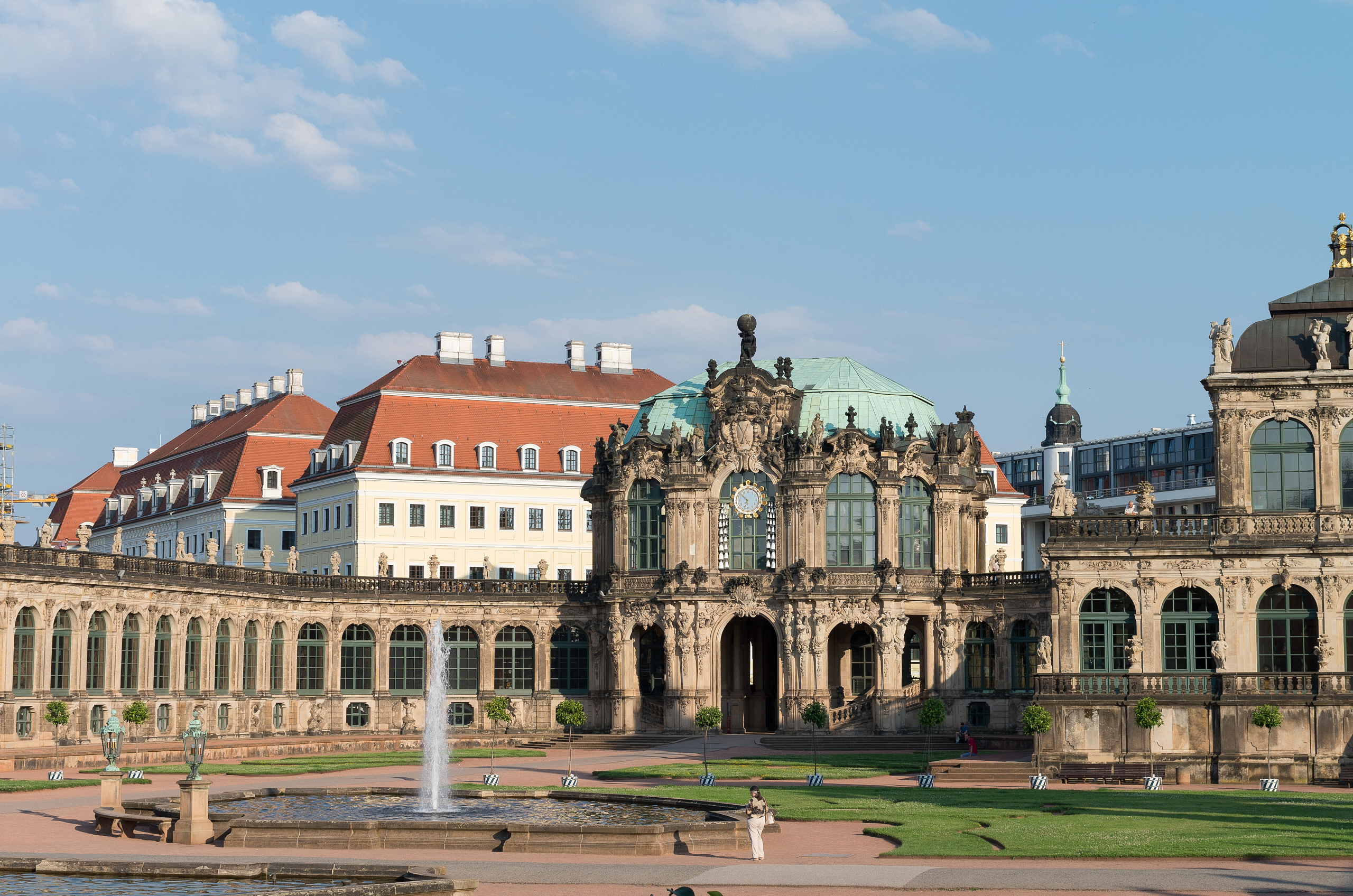
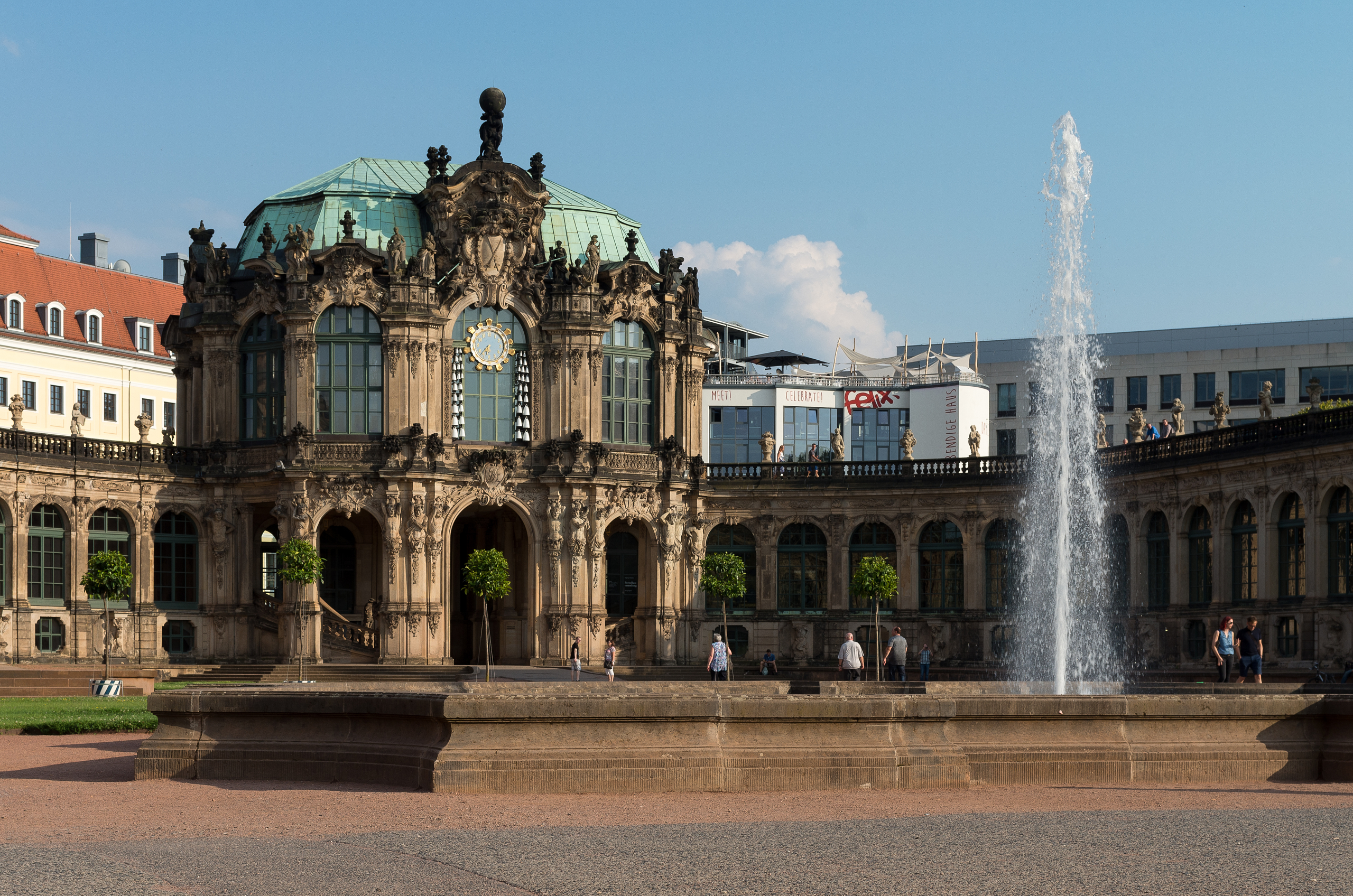
From the Frauenkirche the path leads to the Zwinger. Not simply a palace, but a baroque theater beneath the open sky. Augustus the Strong conceived it as a glittering stage for his power. Yet a careful eye sees more: the Zwinger’s sculptures hide an entire world of allegories. There are the seasons: spring with its wreath of flowers, summer with sickle and sheaf, autumn with grapes and fruit, winter wrapped in a cloak. There are the elements and planets, the ancient gods and heroes — Venus, Mars, Jupiter. This is not mere ornament, but a frozen calendar and a cosmos, a reminder that the Elector ruled over time and the universe. And if you look closely, you notice little mascarons — tiny faces hidden in the ornament. Stone jokes of the masters, their wink to posterity.
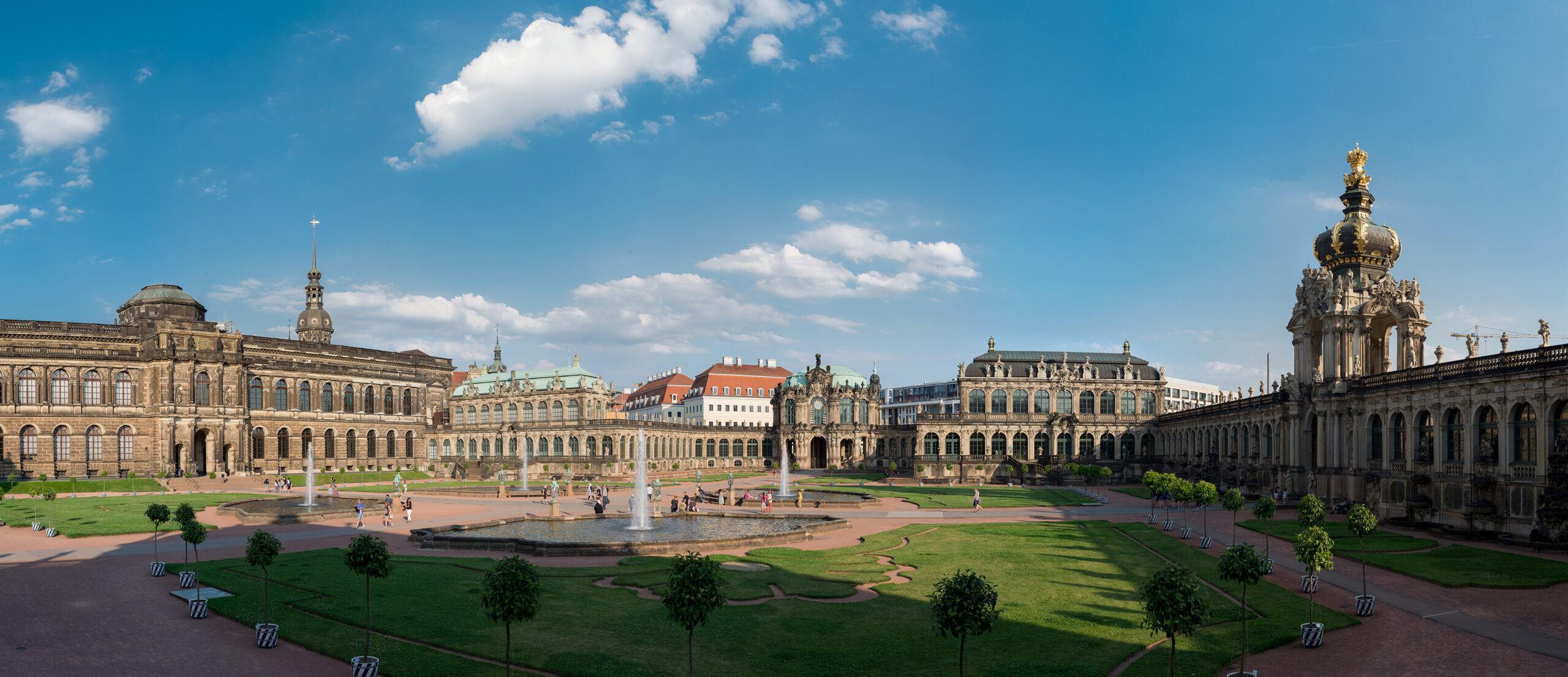
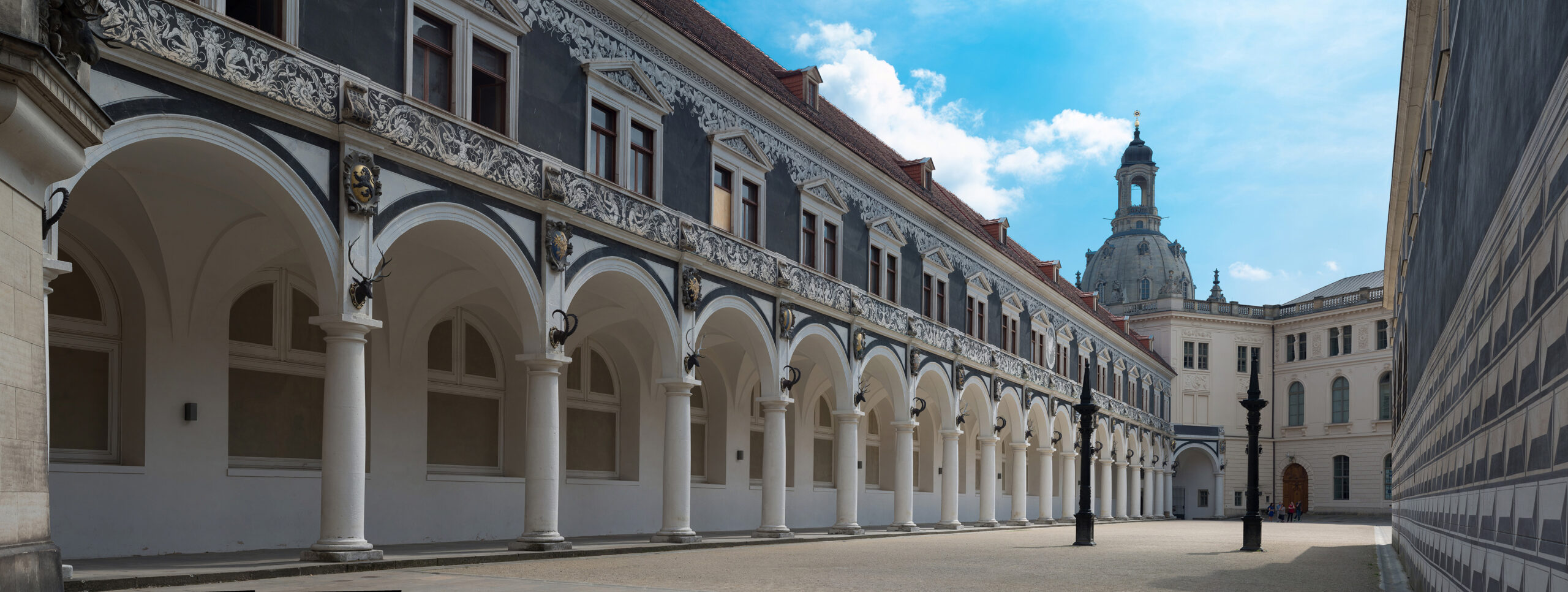
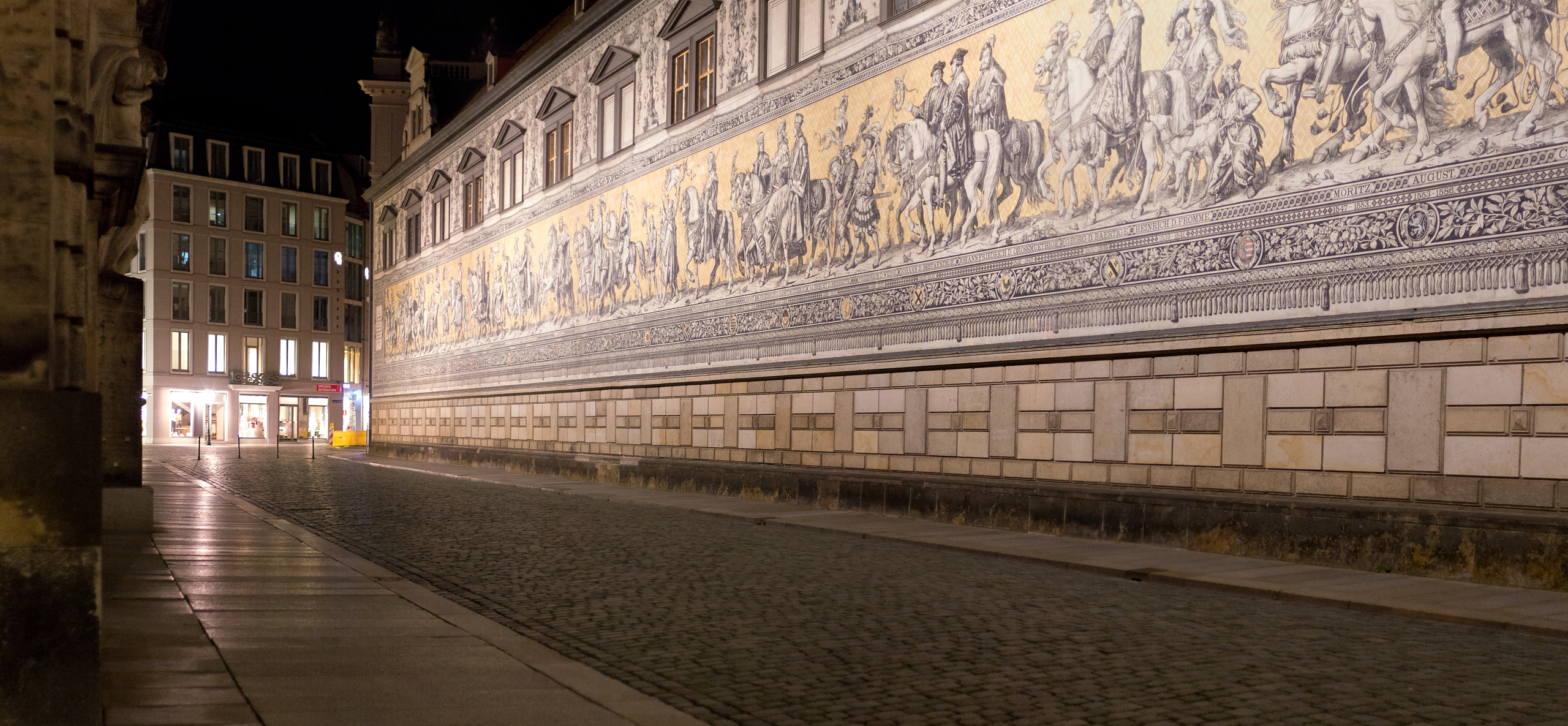
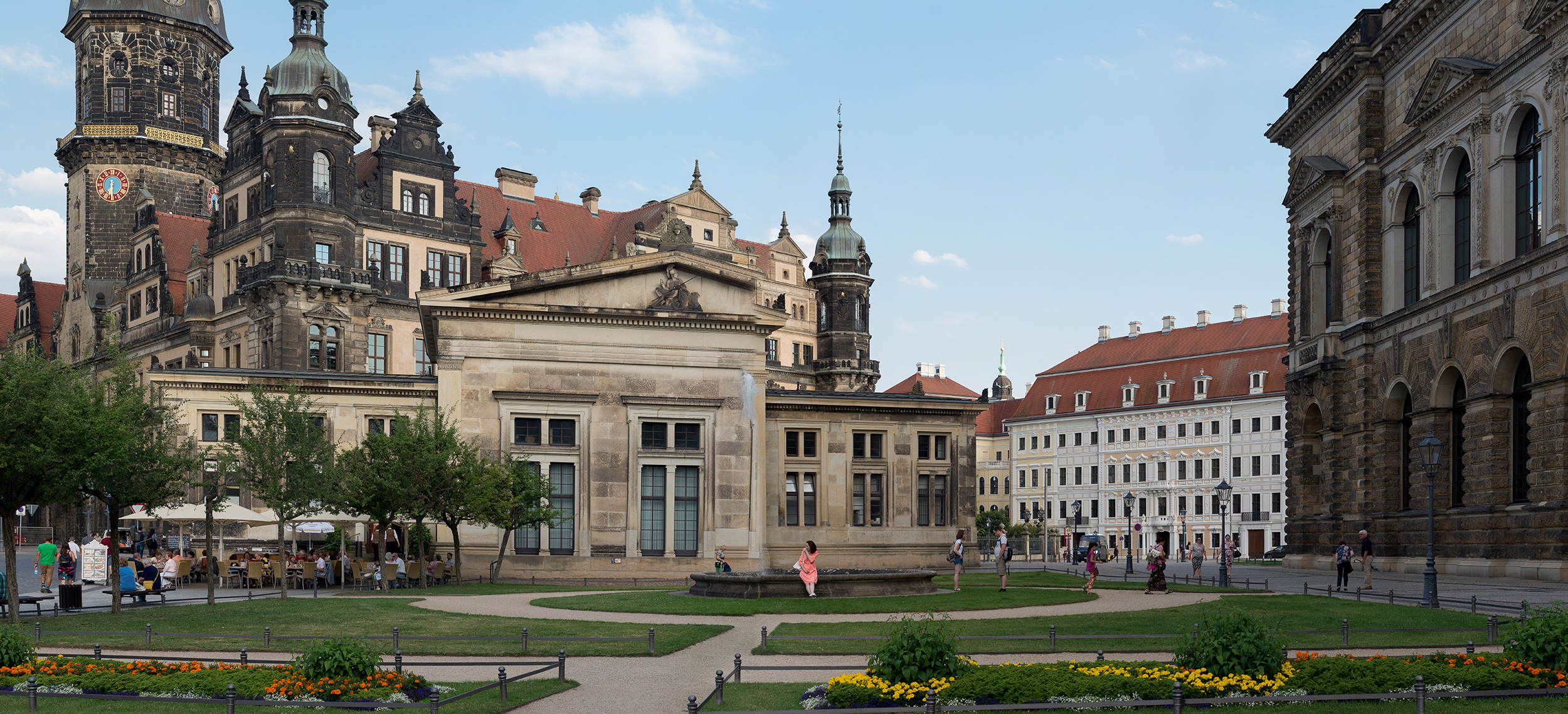
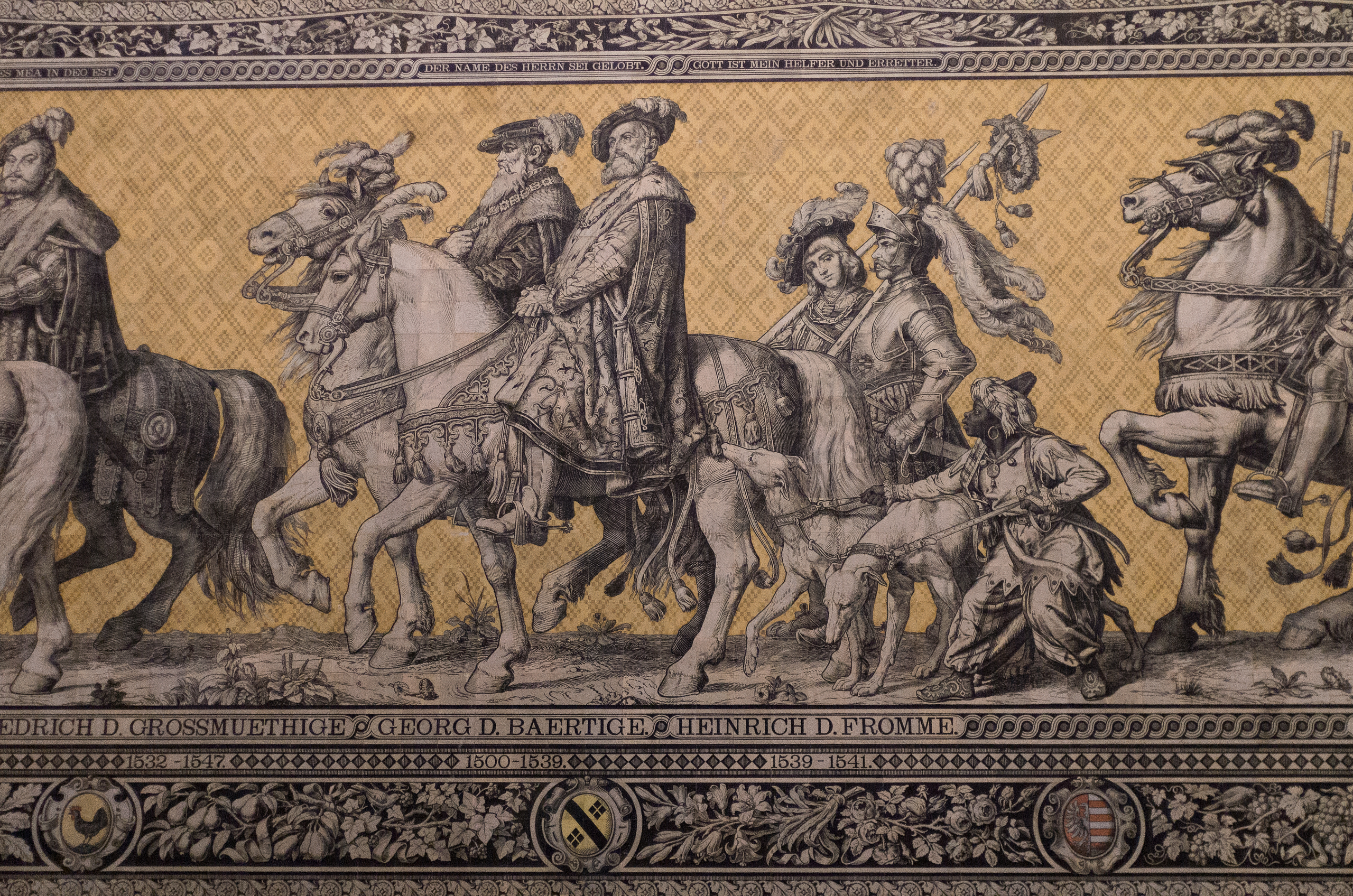
Not far away rises the Residenzschloss. Its walls endured Gothic, Renaissance, Baroque, and the fiery storm of war. But its special pride is the “Procession of Princes” on Augustusstraße. 101 meters of porcelain, 24,000 tiles forming a parade of Saxon rulers. And again, allegories: alongside electors and kings appear knights, scholars, musicians — for power without culture is dead. Remarkably, during the bombing, the mural was almost unharmed. It was as if history itself chose to preserve the city’s face.
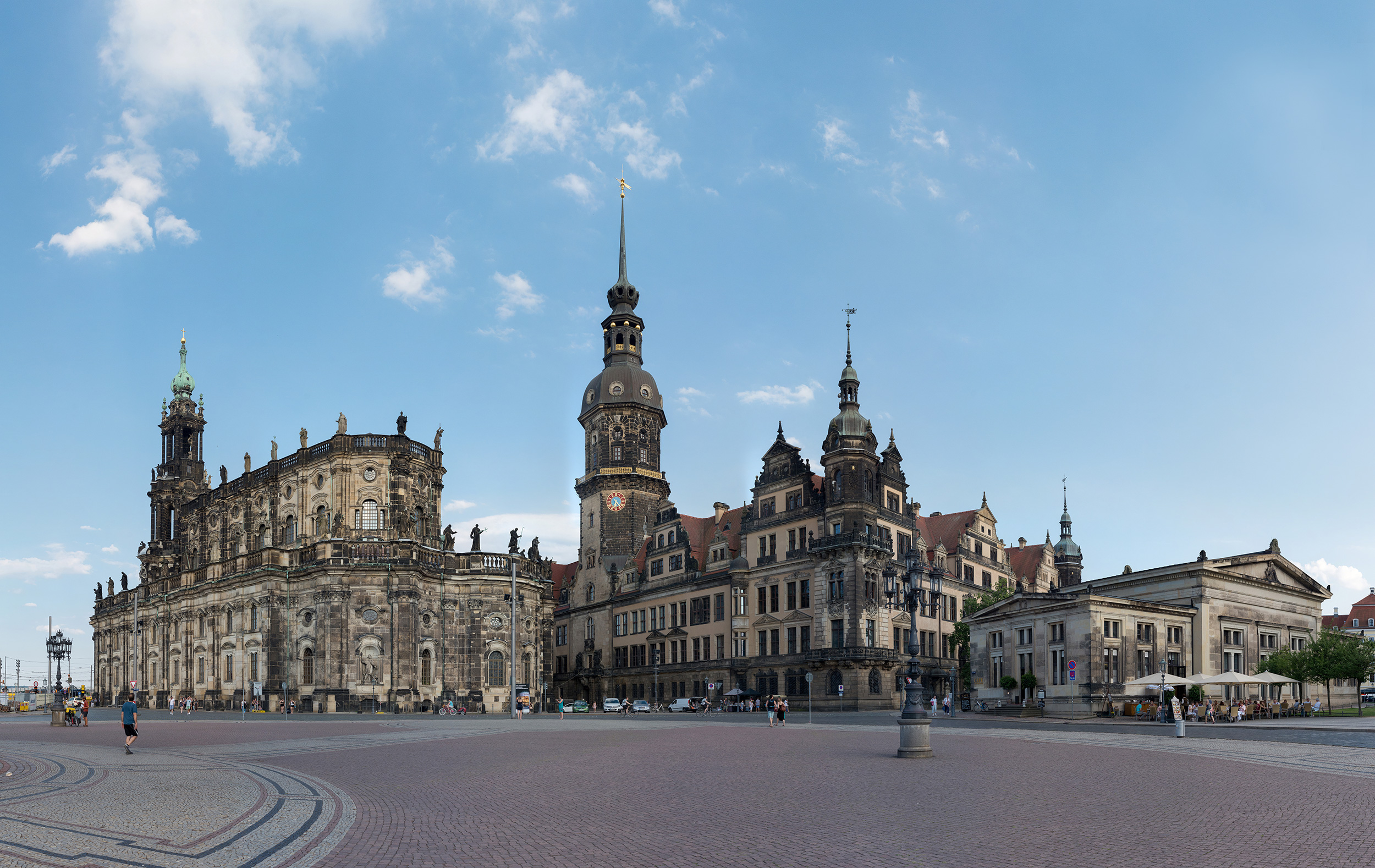
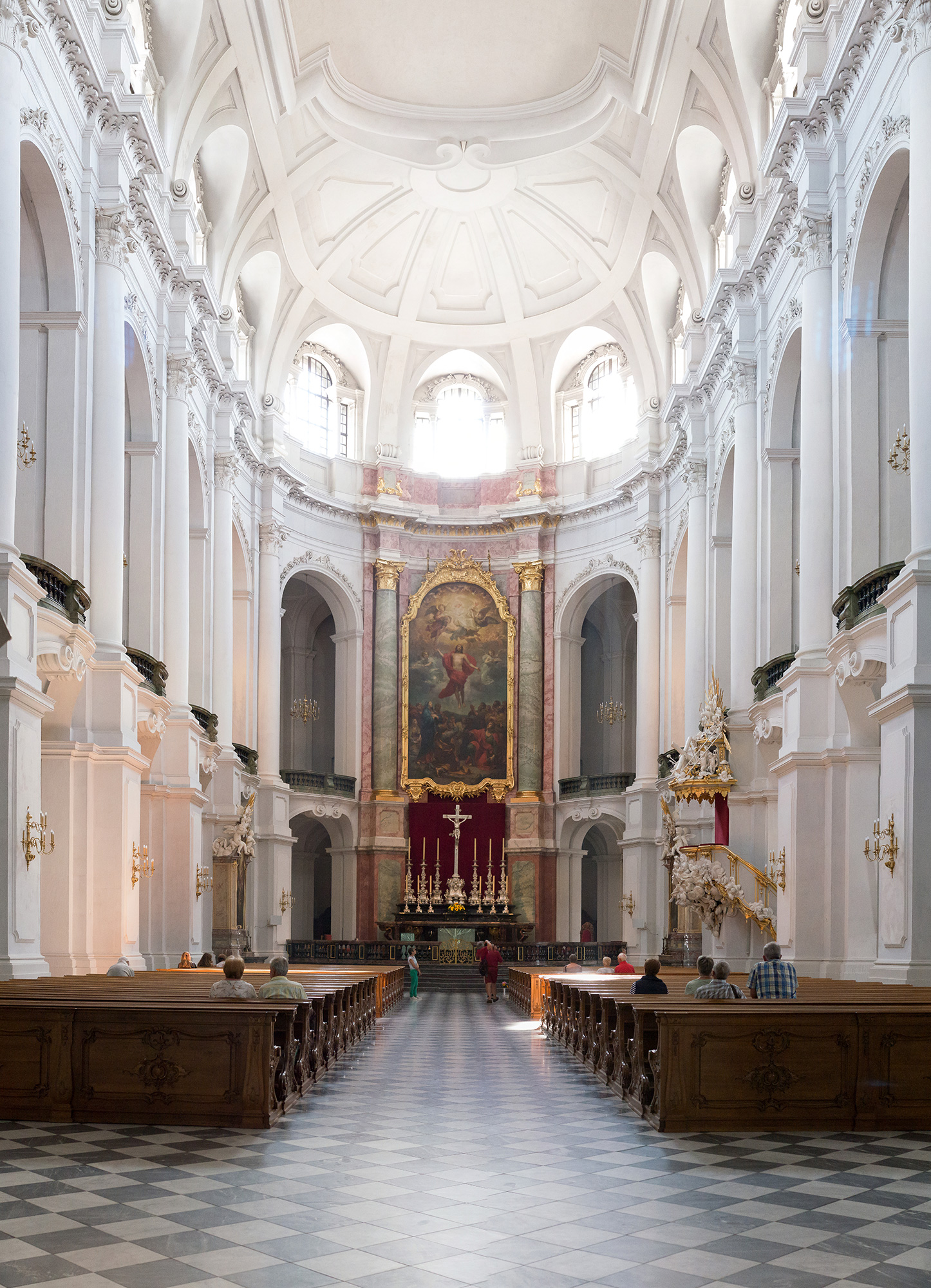
On the neighboring square towers the Hofkirche — the Cathedral of the Holy Trinity. Its façade is adorned with 78 statues of saints. They stand along the roof’s edge like sentinels, gazing upon the city. In this lies a special meaning: the Catholic church in Protestant Dresden seemed to say to its citizens — we are not enemies, we protect you. In the crypt rest the hearts of Saxon rulers, among them the heart of Augustus the Strong. His body was buried in Kraków, but his heart remained here, in the city he loved.
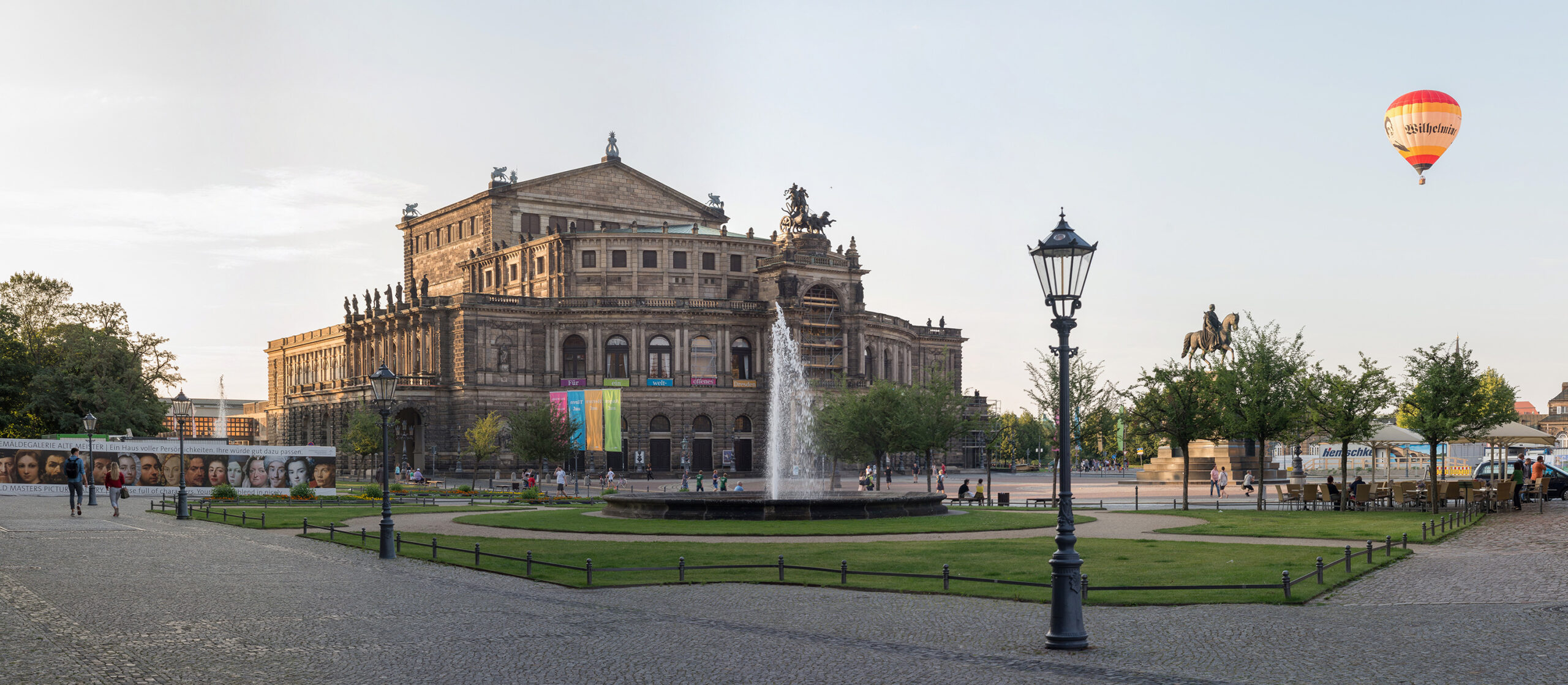
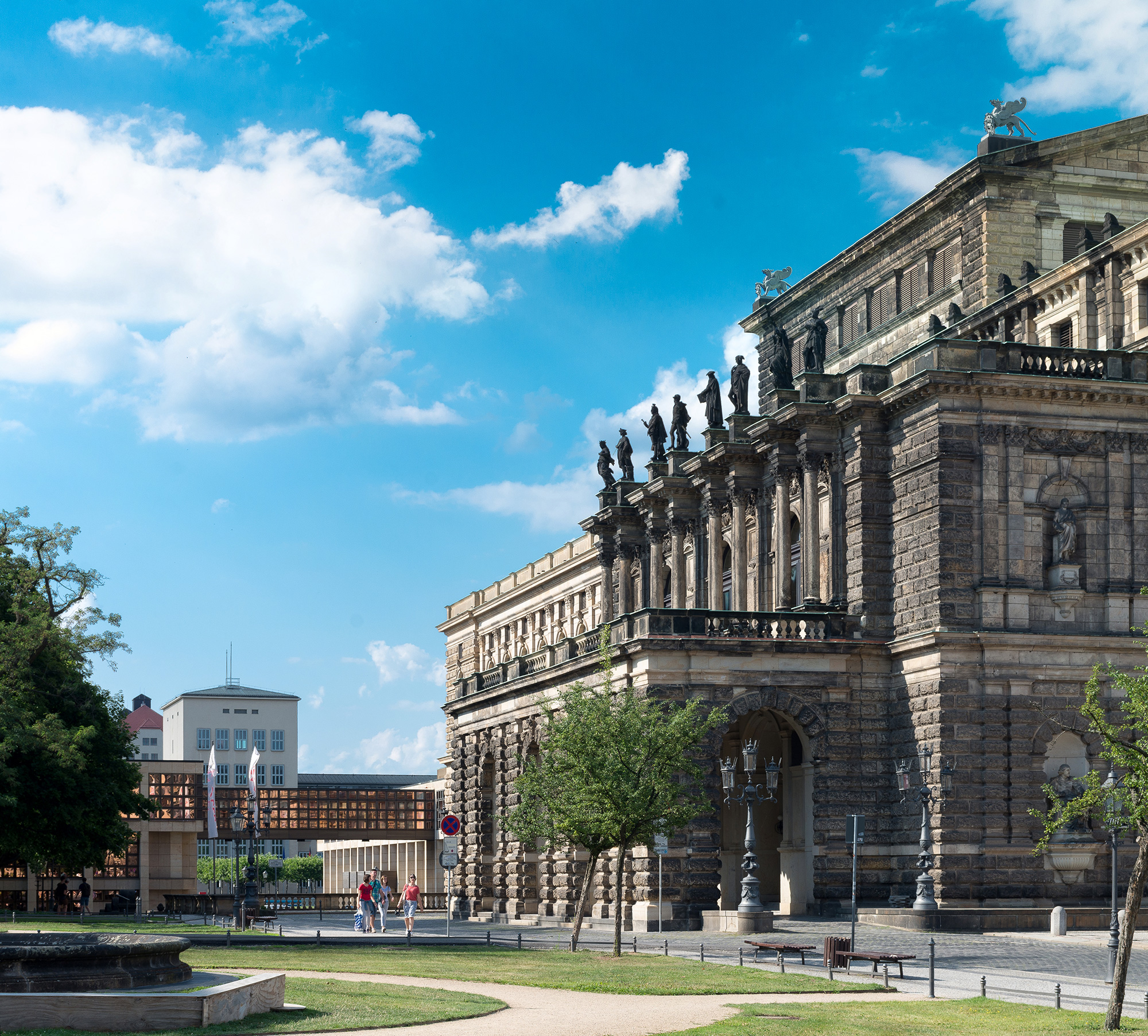
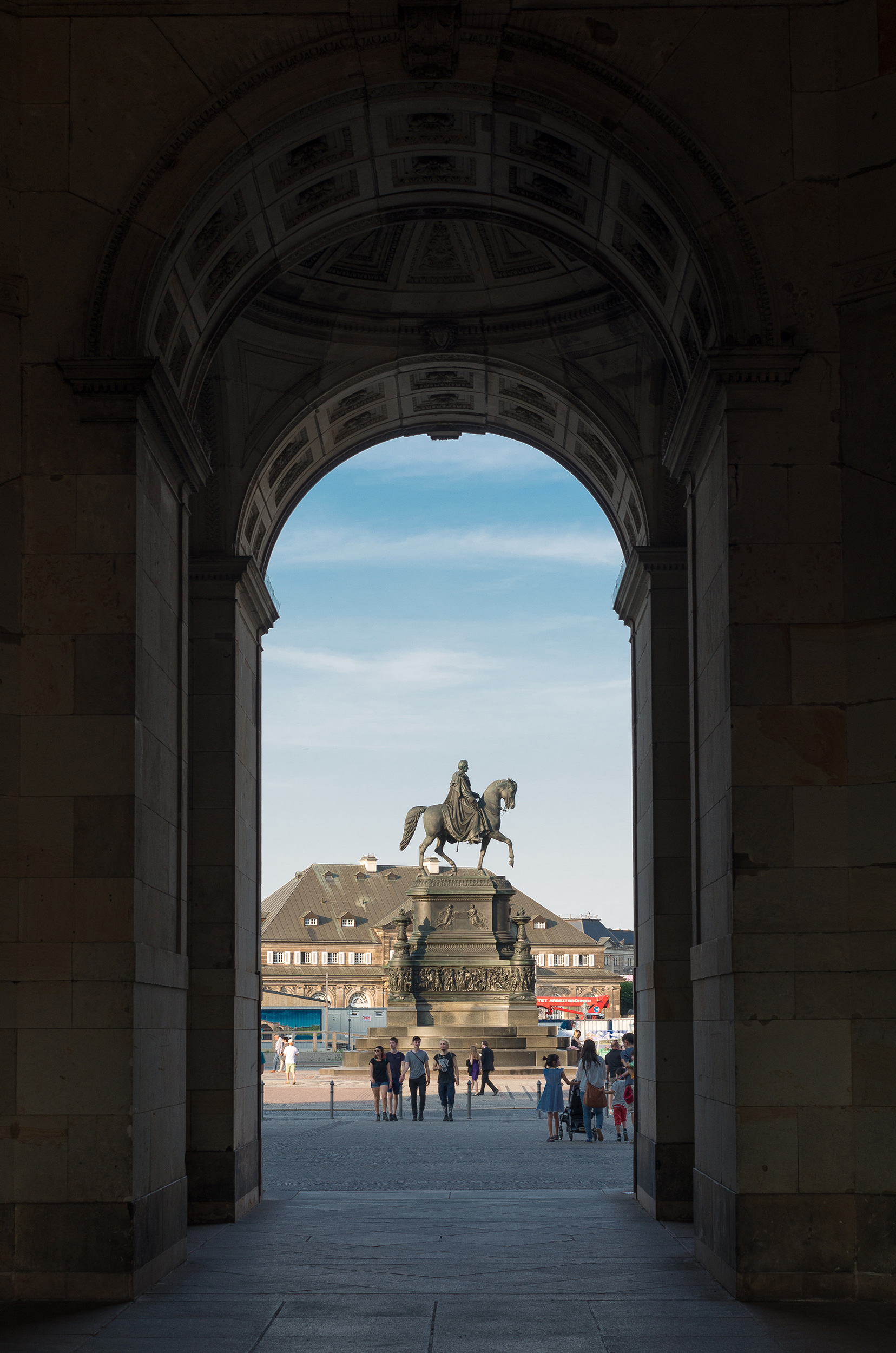
A little apart stands the Semperoper. A theater that rose from the ashes twice: first after the 19th-century fire, then after the bombing. Its façade bears allegories of Music, Drama, Poetry, and on the roof a quadriga with Dionysus and Pan. Dionysus — god of wine and inspiration, Pan — god of music and joy. Together they crown the opera as if to remind: art must bring joy like wine and cleansing like music.
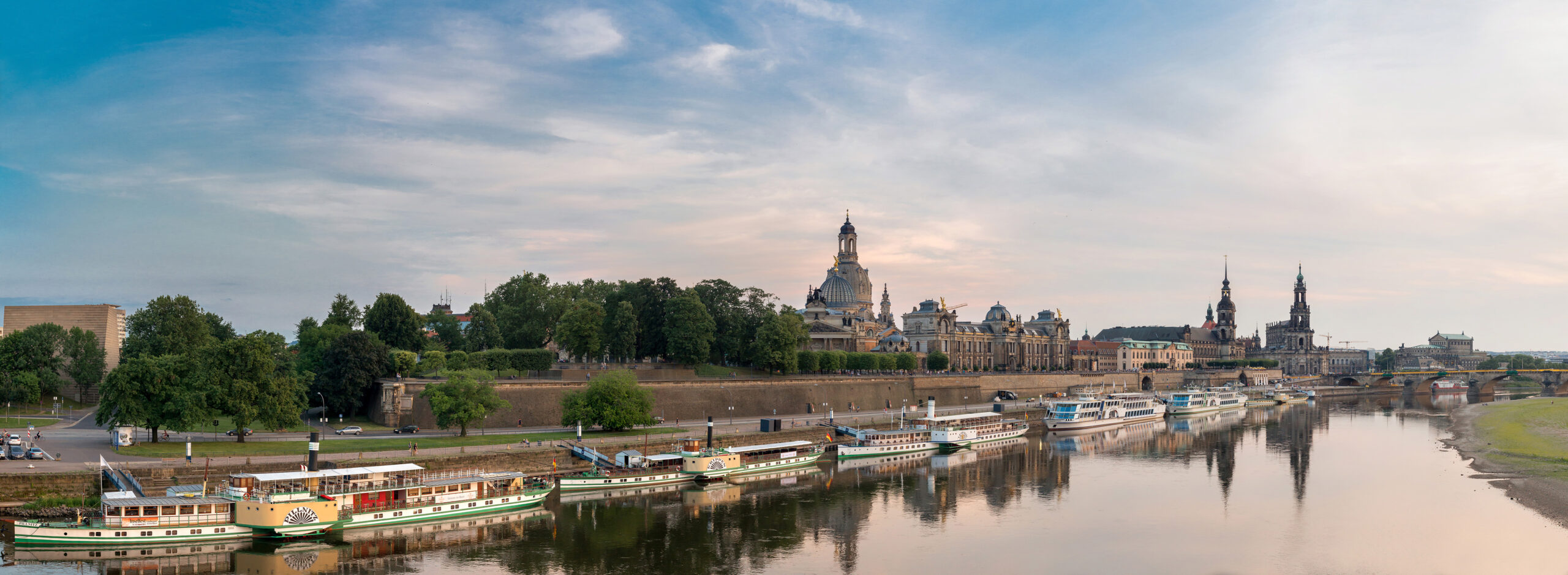
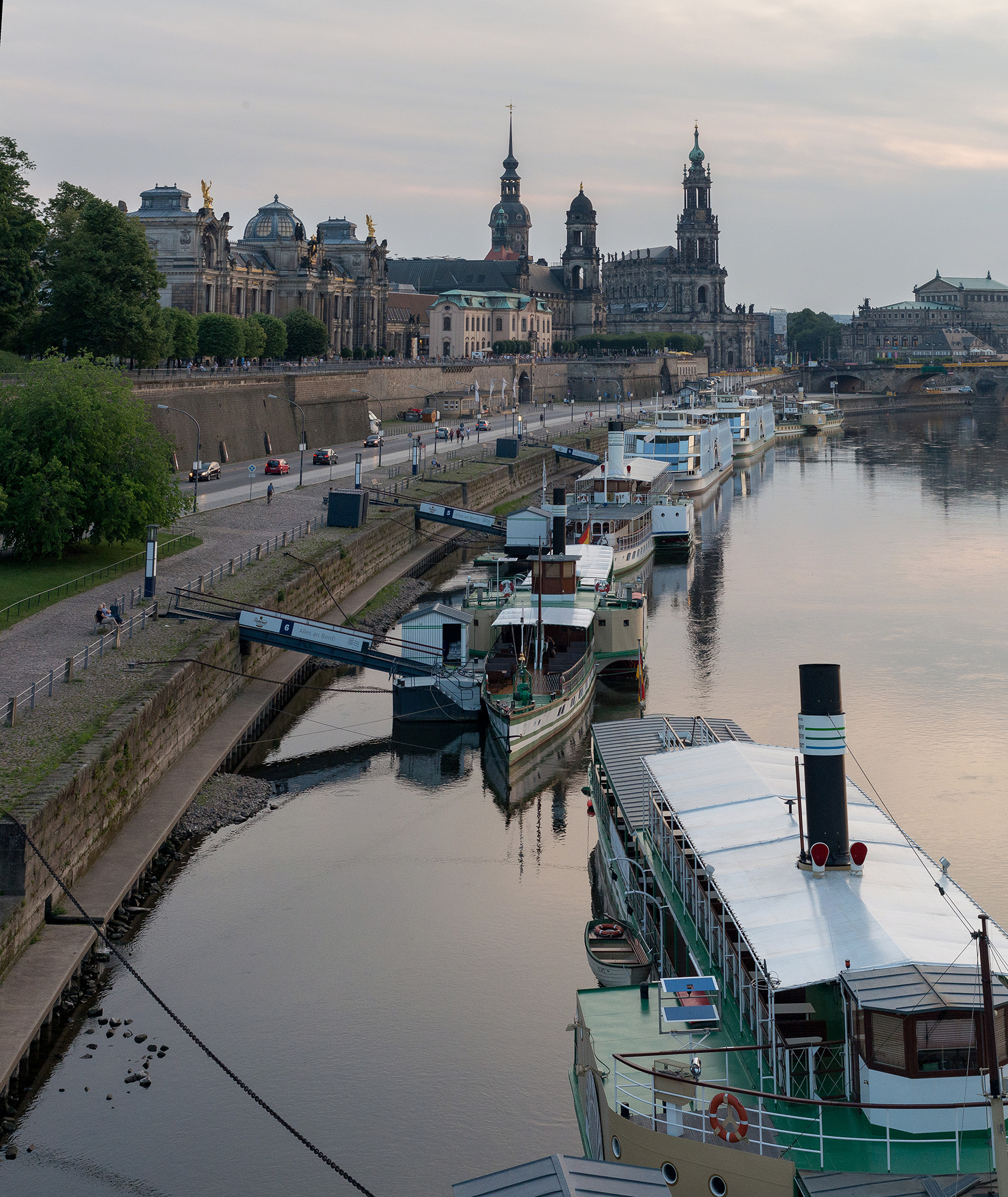
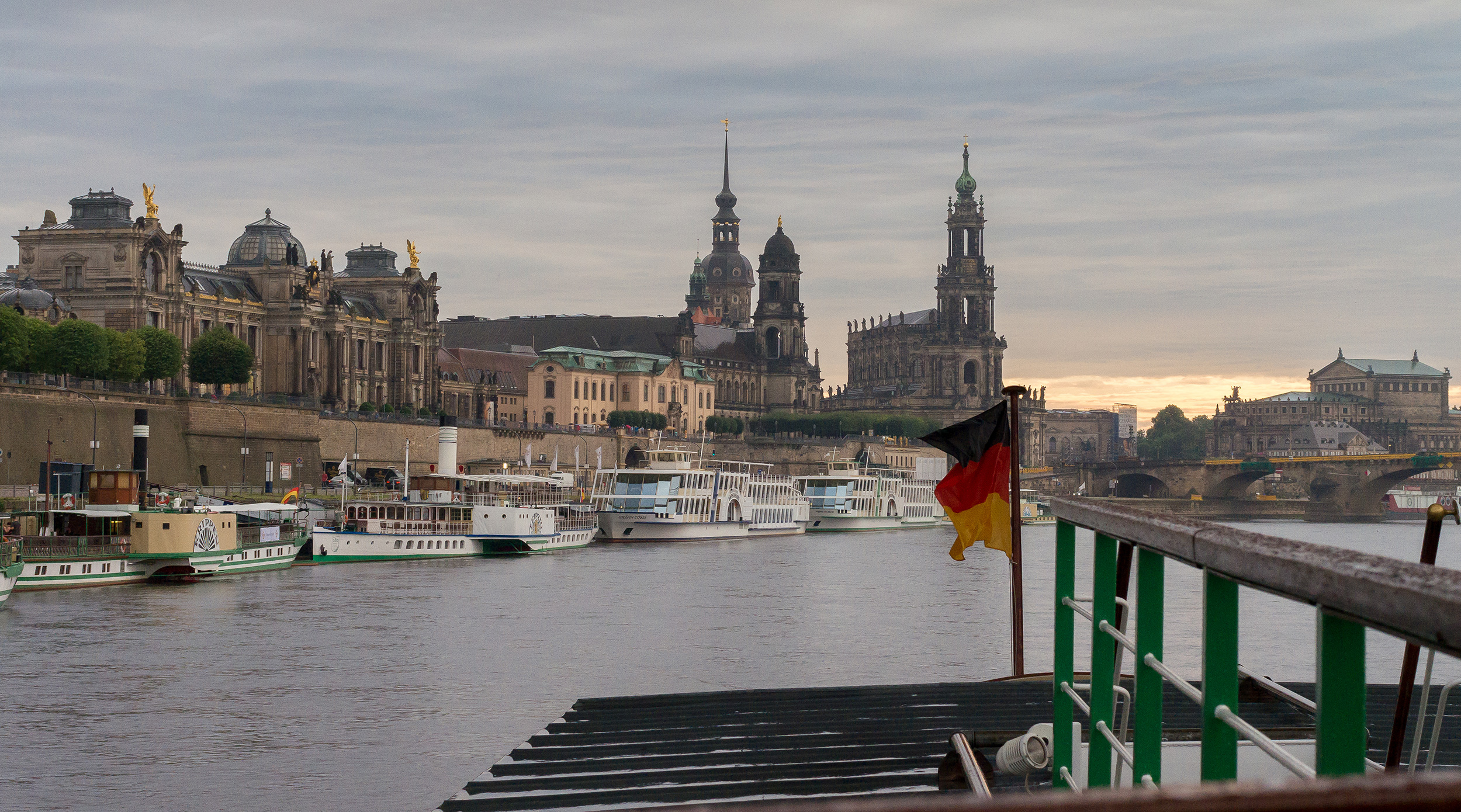
Nor should one miss the Brühl’s Terrace. Called the “balcony of Europe,” it indeed unveils the city in a special way. Above the Elbe rise domes and spires, in evening light they reflect in the water, and the Augustus Bridge connects the banks like a golden thread. Even here, on this promenade, sculptures carry meaning: figures of sciences and arts remind that Dresden is not only power and trade but also muse and thought.
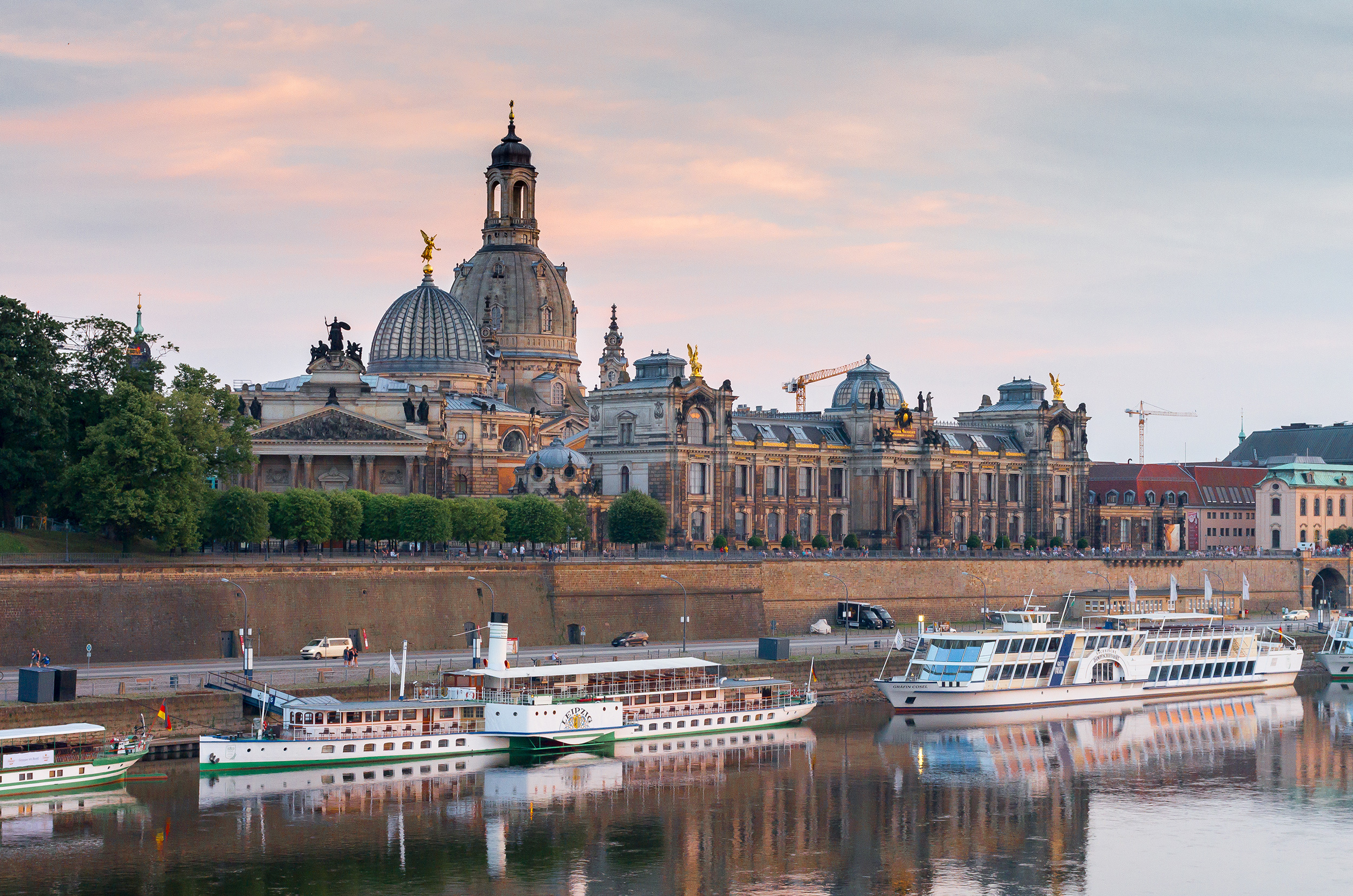
The finest end of the walk lies on the opposite bank of the Elbe. This is the famous “Canaletto View” — the spot from which the painter Canaletto created his panoramas of the city. And if you set your camera there, the lens captures the same harmony as three centuries ago: the dome of the Frauenkirche, the spires of the Hofkirche, the crown of the Zwinger, the clean lines of the bridges.
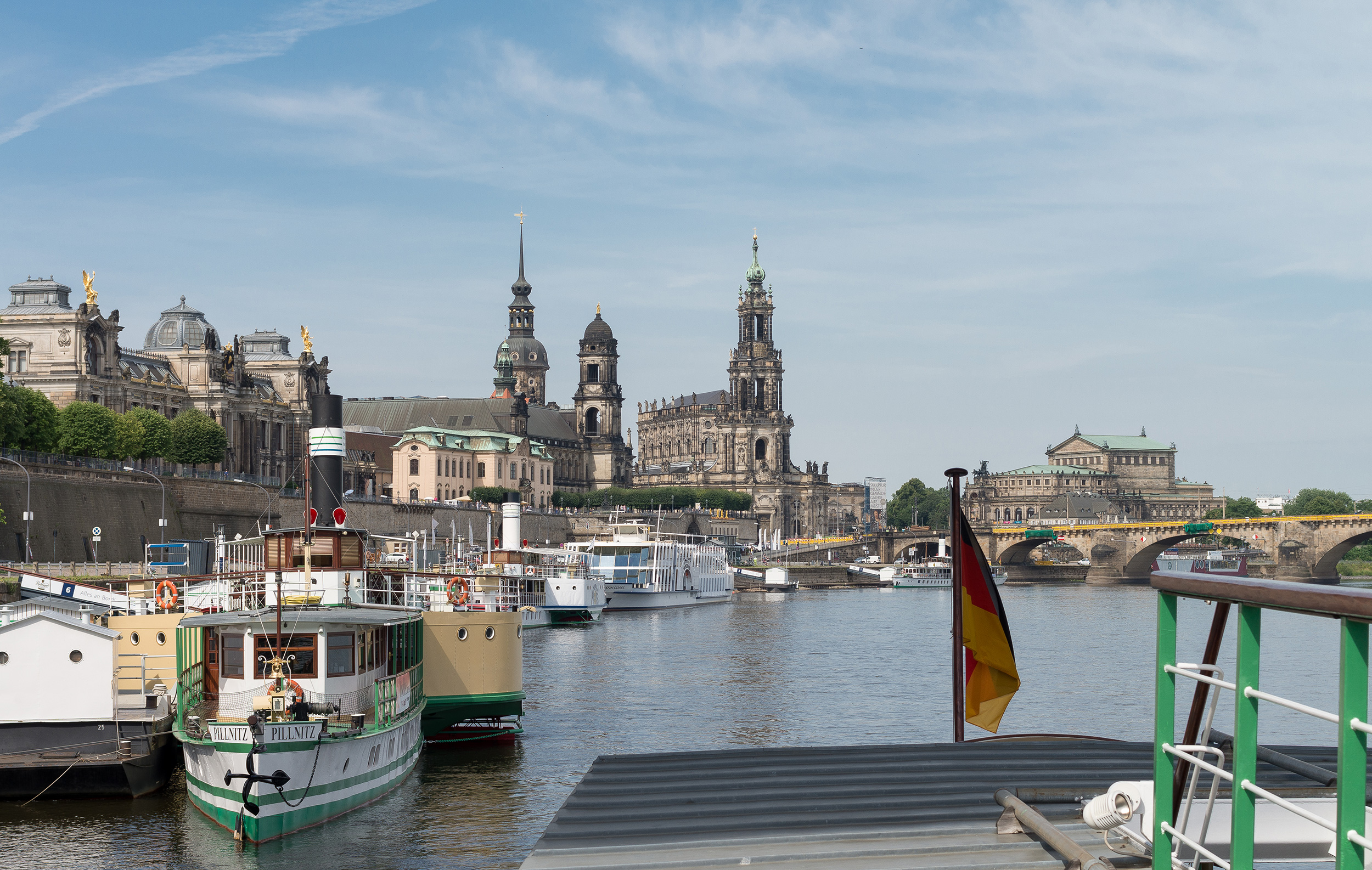
Dresden’s story does not end with its beauty. In 2004 the Elbe Valley was inscribed on the UNESCO World Heritage List, recognition that the city risen from ruins had once again become a treasure of Europe. Yet in 2009 the status was lost: a new bridge disrupted the historic landscape, and Dresden became the first European city to be struck off the list. For many, it was pain and shame. But time showed: paper does not decide what beauty is. Dresden did not cease to be itself. Its baroque spires did not fade, its sculptures did not fall silent, its music did not die away.
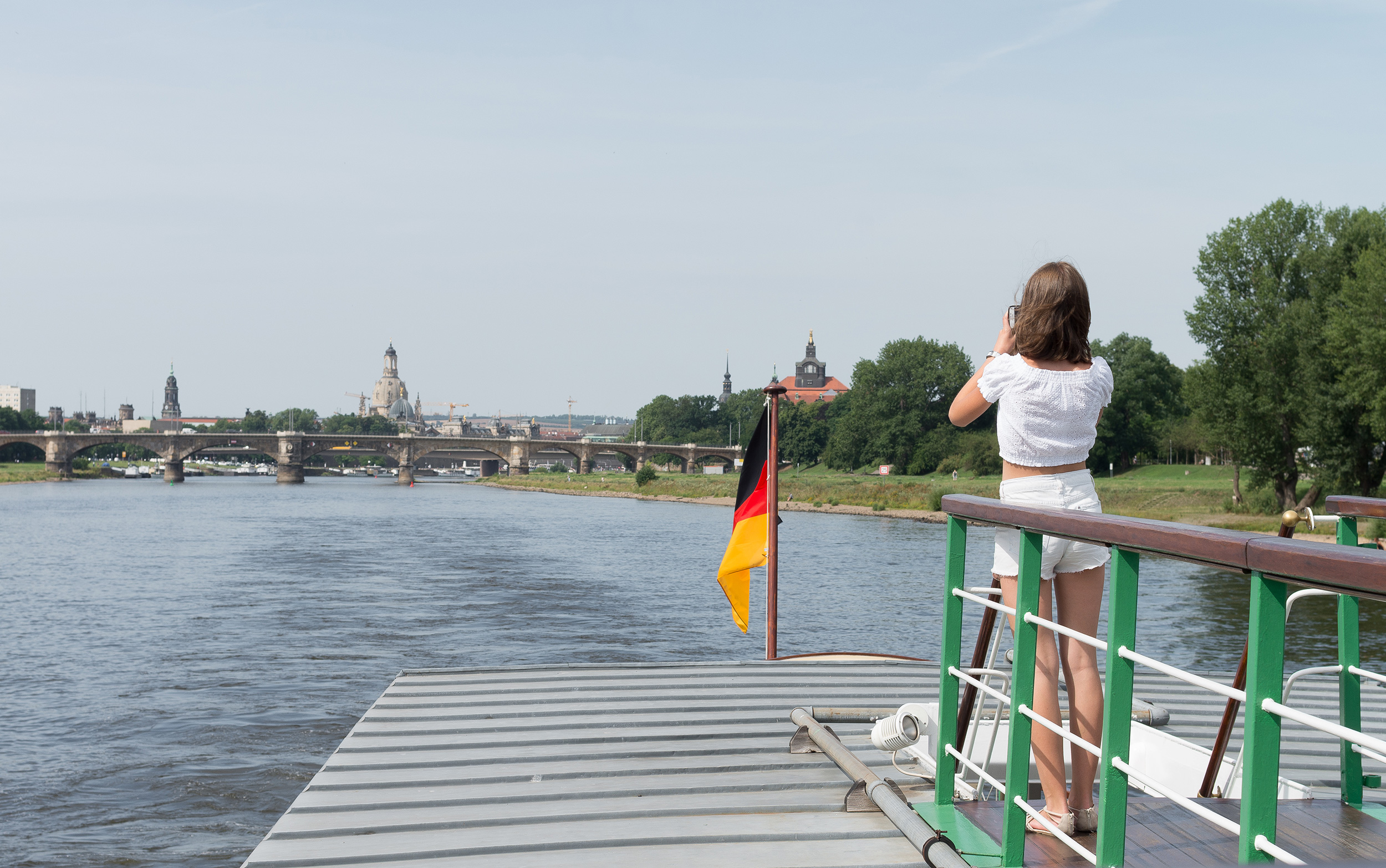
Dresden remains the pearl of Europe. A city that keeps its scars and turns them into adornment. A city where stone can speak, where sculptures whisper allegories, where past and present weave into a single pattern. It is not merely architecture. It is living history, carved in stone, that one can not only see but also hear — if one stops and listens.
Gallery:
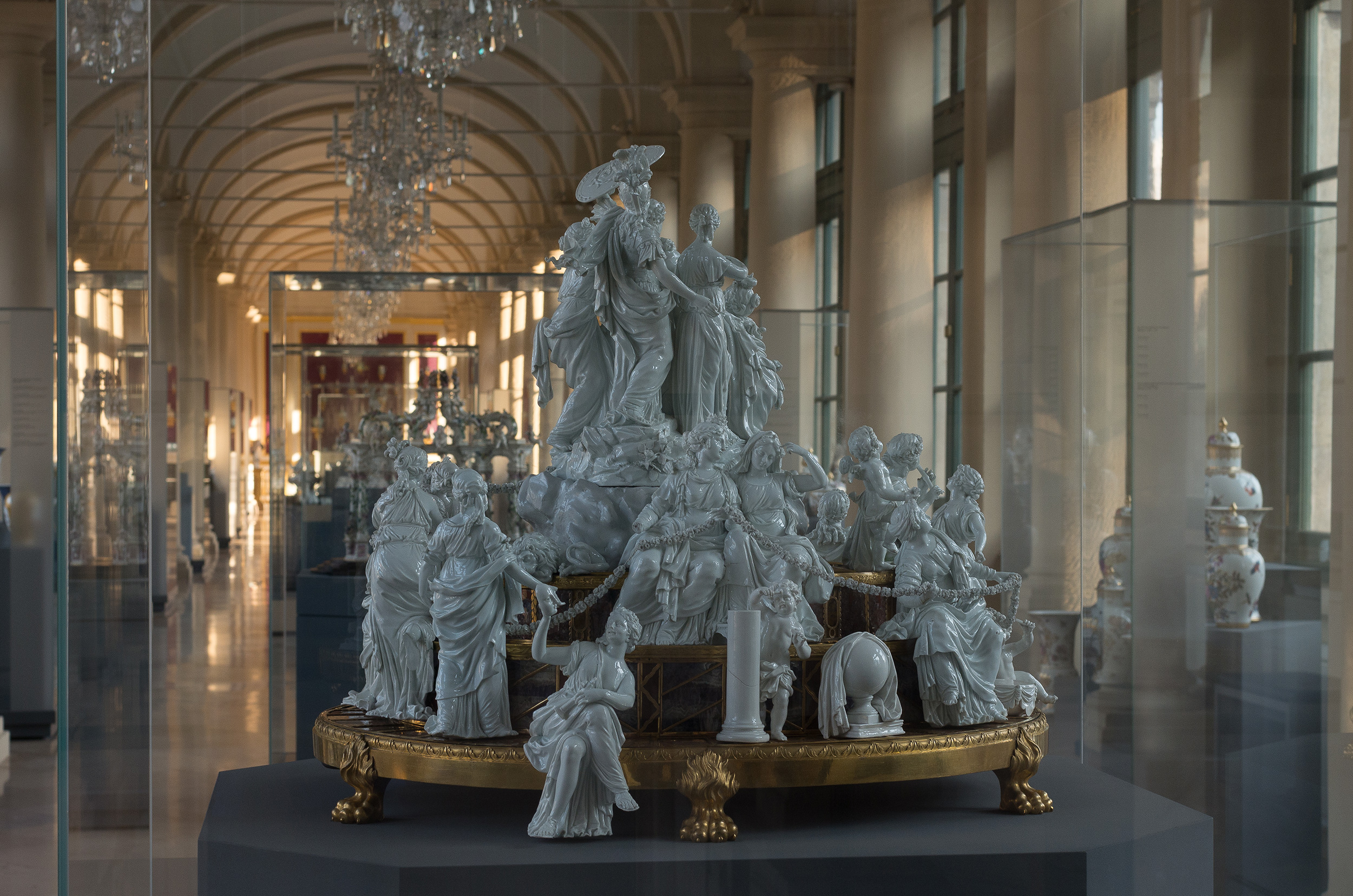
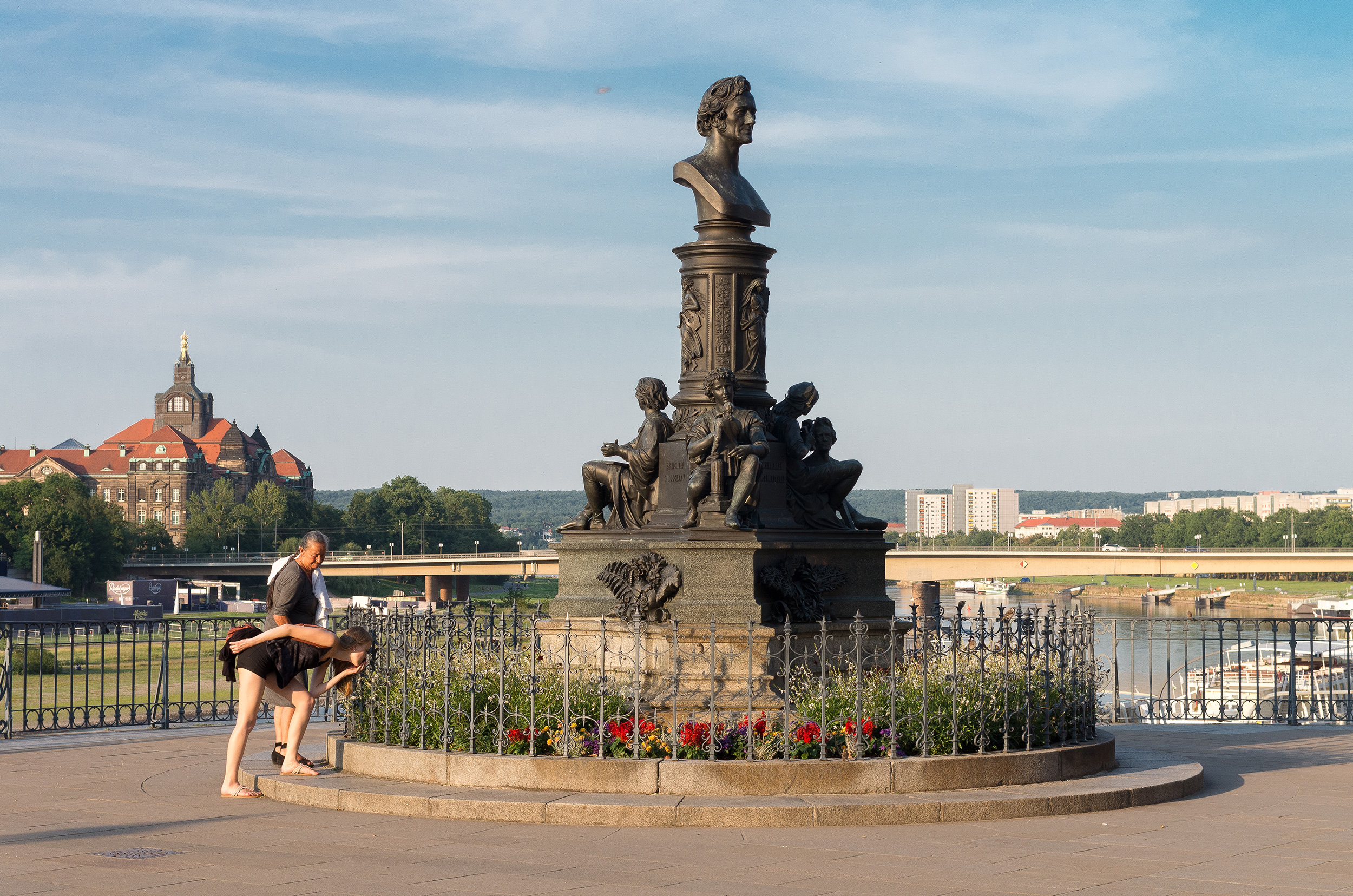
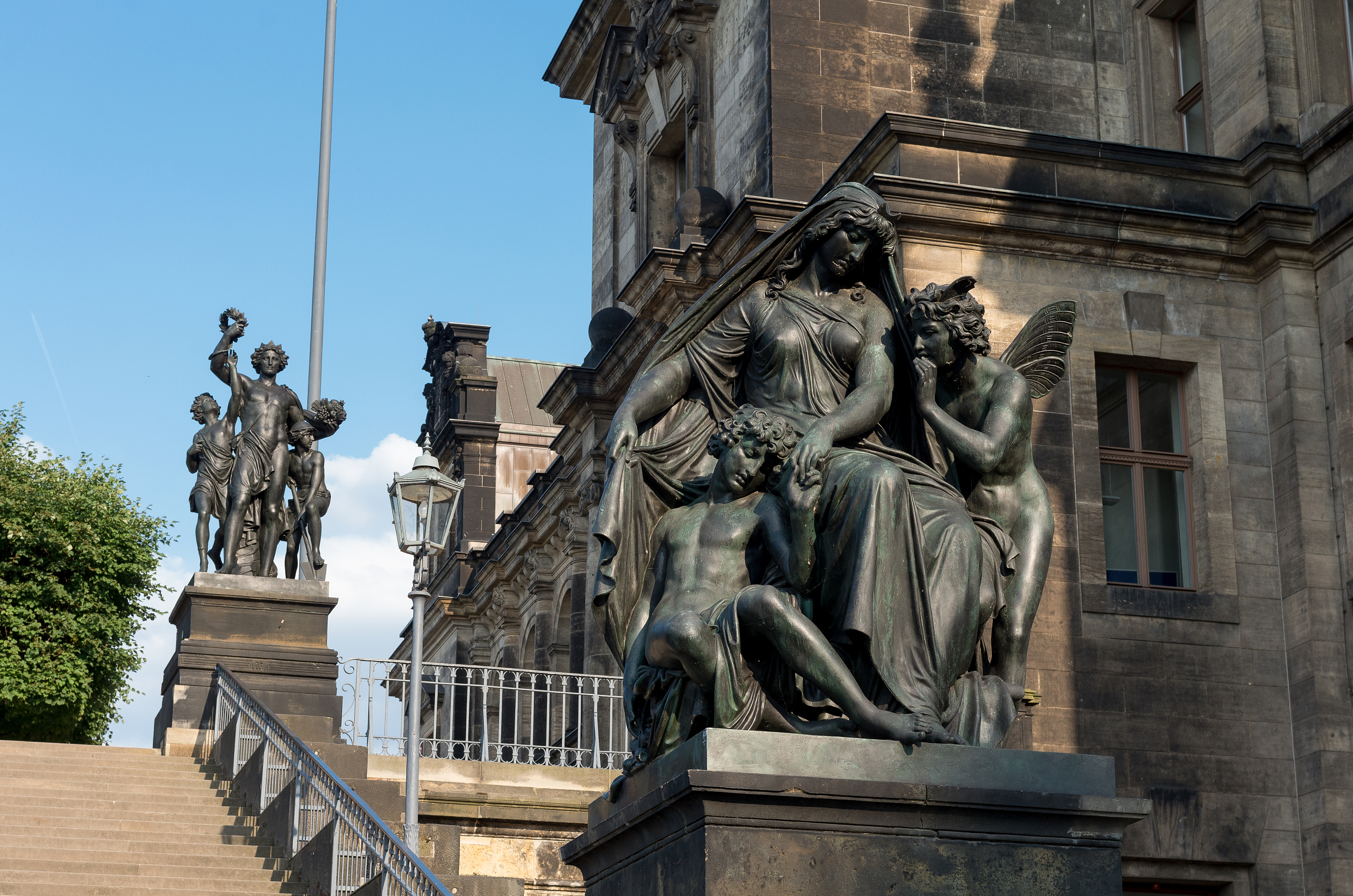
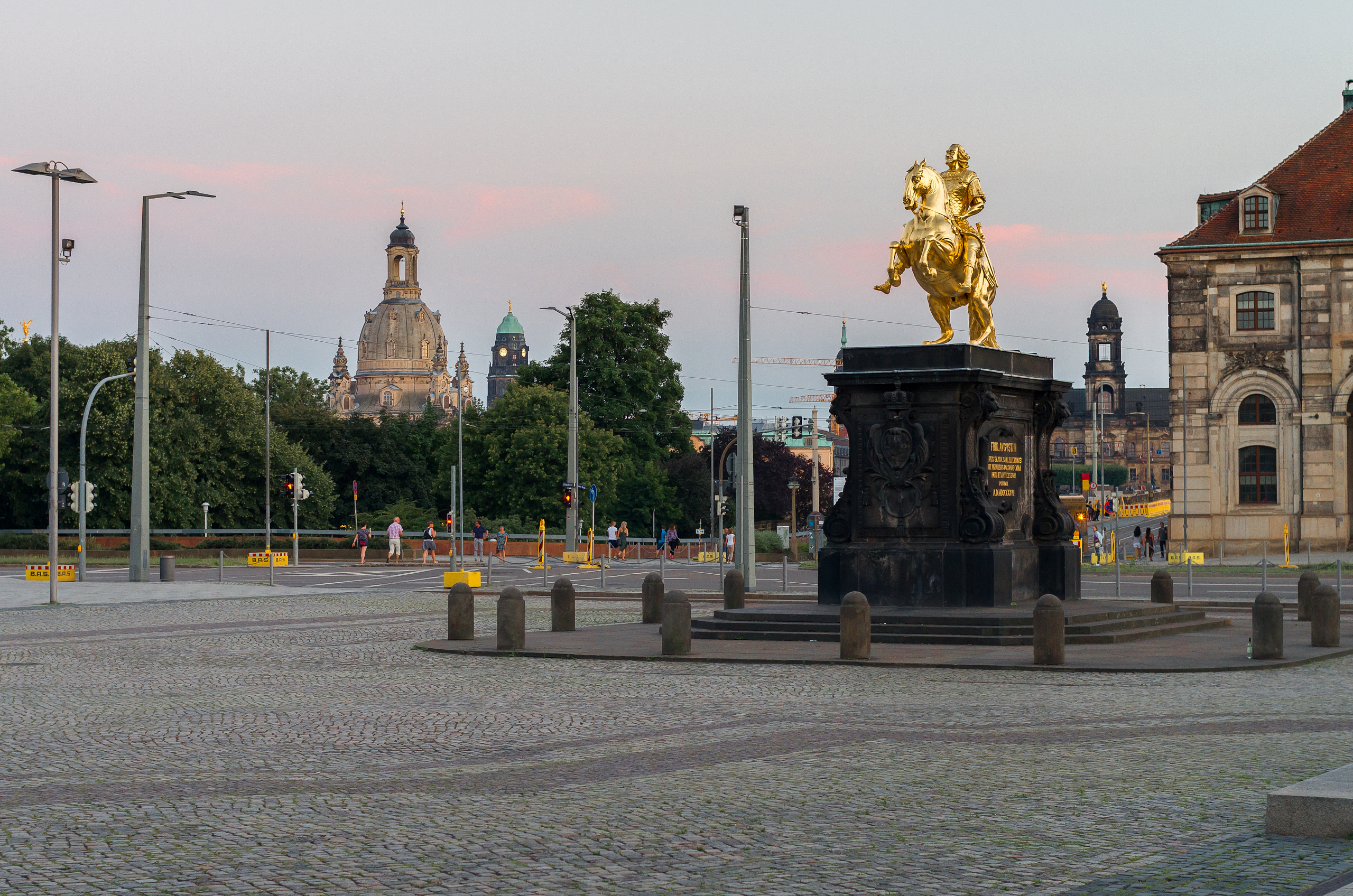
Author of text and photo, Evgeniy Bierich